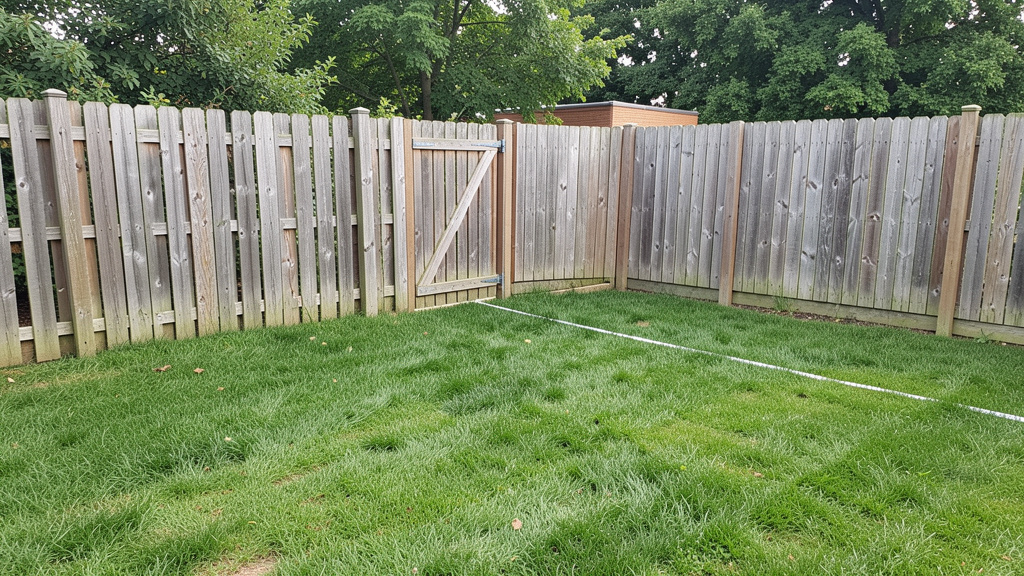
How to Build a Boundary Fence That Respects Legal Lines, Reduces Dispute Risks, and Creates Enduring Value Through Thoughtful Stewardship
A fence is far more than wood, vinyl, or metal standing between properties. It is a physical manifestation of ownership, a silent agreement between neighbors, and a foundational element of your home’s identity. Yet countless homeowners embark on fence projects without first answering the most critical question: Exactly where does your property end and your neighbor’s begin? This single oversight has ignited neighbor disputes requiring mediation, forced expensive fence relocations years after installation, and complicated property transactions. This comprehensive guide transforms fence building from a simple DIY project into a deliberate act of property stewardship. We’ll walk you through every phase—from verifying invisible boundary lines with professional-grade diligence to selecting materials that honor both legal requirements and aesthetic vision—ensuring your fence becomes a source of confidence, not contention, for years to come.
Introduction: The Invisible Line That Changes Everything
Imagine planting a row of young evergreens along what you believe is your property line. Years later, as the hedge matures, new neighbors present documentation showing your living fence encroaches onto their land. Suddenly, your peaceful sanctuary becomes a source of tension. This scenario repeats across communities, not from malice, but from a universal human tendency: we trust visible markers like old fence lines, sidewalk edges, or casual neighbor comments over documented legal boundaries. Property lines exist independently of physical features—they are mathematical constructs defined in deeds, plats, and survey records, often invisible without verification. A fence built without confirming these lines doesn’t just risk future conflict; it actively introduces ambiguity where none existed before. Professional surveying practices consistently emphasize that boundary verification is not an optional preliminary step but the critical foundation of any permanent landscape structure. This guide merges practical construction wisdom with essential legal and surveying insights, empowering you to build with clarity. Whether you’re defining rural acreage, securing a suburban backyard, or clarifying a narrow urban lot, the principles herein transform uncertainty into informed action. Your journey to a precisely placed fence begins not with post holes, but with profound respect for the line that separates yours from theirs.
Why Property Definition is the Critical Foundation of Fence Building
Before selecting a single picket or post, understanding the profound implications of property definition reshapes your entire project mindset. A fence serves three interconnected purposes: physical demarcation, legal documentation, and relational boundary. Neglecting any one dimension risks undermining the others. Consider the psychological weight of a misplaced fence: it may unintentionally communicate disregard to neighbors, invite scrutiny during property transactions, and create lingering uncertainty. Conversely, a precisely placed fence fosters neighborhood harmony, supports perceived property value, and provides quiet assurance that your investment is legally sound.
The financial considerations extend beyond initial construction. Relocating a fence after installation typically costs significantly more than the original build due to demolition, disposal, new materials, and labor. Disputes involving boundary ambiguities may require mediation or legal consultation, with associated time and expense. Title considerations related to encroachments can complicate future transactions. Real estate professionals note that unresolved boundary questions may delay sales or prompt buyer negotiations. One illustrative scenario involved a property sale where a boundary feature installed years prior required resolution before closing—a situation preventable with upfront verification.
Beyond finances, relational dynamics matter deeply. Boundary discussions can either strain or strengthen neighbor connections. Projects where neighbors jointly verify lines and communicate openly about expectations often report strengthened community bonds. As mediators observe: “The fence itself is rarely the core issue. It’s the perceived intention behind its placement.” This underscores a vital truth: property definition isn’t about distrust—it’s about creating shared clarity. A fence built with documented precision becomes a neutral, respected landmark rather than a contested symbol. It transforms potential friction points into opportunities for collaborative stewardship. When you invest time in accurate definition upfront, you’re constructing peace of mind, legal awareness, and neighborhood goodwill that compounds in value year after year.
The Boundary Blueprint Framework: Five Steps to a Legally Sound and Beautiful Boundary Fence
Forget generic “how-to-build-a-fence” guides. This framework integrates surveying diligence, legal awareness, design intelligence, and construction precision into a single, actionable system. Each step builds upon the last, creating irreversible momentum toward a confident outcome. Skipping any phase risks cascading complications. Follow this sequence thoughtfully—your future self, your neighbors, and your property stewardship will benefit.
Step 1: Verify Your Property Lines with Documented Evidence
This is the most critical phase of your entire project. No amount of craftsmanship compensates for a fence built without boundary confirmation. Verification requires moving beyond assumptions to documented evidence. Begin by locating your property’s legal description. This resides in your deed (available through your county recorder’s office or online portal) and typically references a recorded plat map or metes-and-bounds description. Do not rely solely on diagrams in closing documents—they may be simplified or outdated. Next, explore your county’s GIS (Geographic Information System) portal. Most counties offer free online mapping tools where you can view parcel boundaries overlaid on aerial imagery. While helpful for orientation, GIS maps should not be relied upon for survey-grade accuracy. These are often compiled from multiple sources with varying precision; discrepancies can occur, especially in older subdivisions.
Your definitive action: engage a licensed land surveyor. This is a prudent investment in certainty. A professional surveyor will:
– Research historical records at the county courthouse
– Locate existing property monuments (iron rods, concrete pins, stone markers) using specialized equipment
– Set new, durable monuments where originals are missing or degraded
– Produce a certified plat of survey showing boundary lines, dimensions, easements, and restrictions
– Physically mark corners with visible flagging and stakes
Costs vary by region, lot size, and terrain complexity, but represent a small fraction of potential future complications. When selecting a surveyor, verify state licensure, request references for residential boundary work, and confirm professional liability coverage. During the survey, be present if possible. Walk the property with the surveyor. Ask: “Where exactly are the pins? Can I see them?” Take dated photographs of marked corners showing contextual landmarks. If your property hasn’t been surveyed recently, or if neighboring lots have changed hands, a current survey provides essential clarity. Existing fences, sheds, or landscaping installed by previous owners may not align with true boundaries. Why this step is crucial: Property lines are legal constructs, not visual guesses. Verification transforms uncertainty into documented fact. Common pitfalls to avoid: Using an old fence line as reference; trusting memory over documentation; assuming sidewalk or curb edges align with property boundaries (they often do not); skipping verification to conserve resources. Thoughtful alternative: Some jurisdictions maintain public survey records or offer boundary clarification services for straightforward lots. However, this rarely provides the physical marking and certified documentation a licensed surveyor delivers. There is no reliable shortcut—thorough verification is consistently more economical long-term.
The Fundamental Principle: A fence built without verified boundaries doesn’t define your property—it introduces uncertainty where clarity once existed.
Step 2: Navigate the Legal Landscape and Neighbor Dynamics
With boundaries confirmed, shift focus to permissions and partnerships. This phase prevents bureaucratic delays and relational friction. First, investigate regulatory requirements. Contact your local building department (city or county) to determine:
– Permit requirements (often triggered by fence height, pool proximity, or corner lot location)
– Height restrictions (front yard versus side/rear yard; common patterns include lower heights in front zones)
– Setback requirements (distance from property line, street, or structures)
– Material considerations (e.g., visibility requirements at intersections; restrictions in certain zones)
– Historical district or HOA guidelines (which may include additional specifications)
Request written guidelines where available. Take notes during communications and retain correspondence. Many departments provide downloadable resources. Simultaneously, review title documents to identify:
– Easements (utility, drainage, access): Fences should not obstruct these. Utility easements typically require unobstructed access zones.
– Covenants, Conditions & Restrictions (CC&Rs): Common in subdivisions; may include guidance on fence style, color, or materials.
– Existing boundary agreements: Previous owners may have formalized arrangements regarding shared features.
Now, engage your neighbors thoughtfully. This is strategic relationship management. Schedule a brief, friendly conversation before finalizing plans. Bring your survey documentation. Say: “I’m planning to install a new fence along our shared boundary and wanted to share the surveyor’s marks to ensure we’re aligned. I’d value your perspective on style and maintenance.” Key discussion points:
– Confirm interest in a shared fence (cost-sharing, joint ownership considerations)
– Discuss aesthetic preferences (privacy versus openness; material compatibility)
– Clarify maintenance expectations (who maintains which side? how are repairs handled?)
– Address existing features (tree roots near the line; irrigation systems)
Document mutual understandings in writing. A simple email summarizing decisions (“Per our conversation, we agree to share costs for a privacy fence along the surveyed line, with maintenance responsibilities split equally”) creates valuable clarity. For formal shared fences, a notarized boundary line agreement filed with the county provides enduring protection. If a neighbor is unresponsive or hesitant, remain calm and factual. Share copies of your survey and relevant municipal guidelines. Avoid emotional language. If tensions arise, pause discussions and consider involving a neutral third party. Never proceed with construction while active disagreements remain unresolved. Why this step is crucial: Regulatory compliance avoids future complications; neighbor collaboration transforms potential friction into shared understanding. Common pitfalls to avoid: Assuming no permit is needed without verification; building before neighbor discussion; overlooking easements; relying solely on verbal agreements. Thoughtful alternatives: Use shared digital tools to exchange design ideas. Many municipalities post permit requirements online—research thoroughly. If concerns arise during construction: Pause work. Revisit survey marks together. Offer to involve the surveyor for clarification. A brief pause to resolve concerns is far more efficient than addressing complications later.
Step 3: Design Your Fence for Clarity, Compliance, and Character
Design begins where law, landscape, and neighbor considerations intersect. Your fence must thoughtfully address municipal guidelines, neighbor perspectives, and your functional needs. Start with placement strategy. Two primary approaches exist:
– On the line: Posts centered directly on the surveyed property line. Requires neighbor agreement for shared fences. Maximizes usable space but involves shared ownership considerations.
– Setback: Entire fence structure placed entirely within your property (e.g., a modest setback from the line). Simplifies ownership and maintenance. Recommended when neighbor collaboration isn’t feasible or for added clarity.
For most residential boundaries, a small setback provides a practical buffer. Next, select materials through a boundary-focused lens. Not all fences serve property definition equally. Consider visibility, longevity, and visual impact:
| Material | Boundary Clarity | Longevity | Relative Cost | Boundary Suitability | Key Consideration |
|---|---|---|---|---|---|
| Wrought Iron | ★★★★★ (High) | Very Long | Premium | Excellent | Unmistakable visual line; allows sightlines; professional installation recommended |
| Vinyl Privacy | ★★★★☆ (Medium-High) | Long | Moderate | Very Good | Clean line; low maintenance; ensure precise post placement |
| Cedar Privacy | ★★★☆☆ (Medium) | Moderate | Moderate | Good | Natural aesthetic; requires maintenance; select stable grades to minimize movement |
| Chain Link | ★★★★☆ (Medium-High) | Moderate-Long | Budget | Good | High visibility of line; affordable; powder-coated options enhance appearance |
| Split Rail | ★★☆☆☆ (Low) | Moderate | Moderate | Contextual | Ambiguous boundary; best suited for rural settings where precision is less critical |
| Living Hedge | ★☆☆☆☆ (Very Low) | Variable | Budget | Not Recommended Alone | Roots spread; growth obscures line; high dispute risk without permanent marker |
Cost and longevity are relative indicators; obtain local quotes and consider climate impacts. Longevity assumes proper installation and maintenance.
Height and style must align with local guidelines while serving your purpose. For clear boundary definition:
– Privacy fences (solid boards): Ideal for rear yards where seclusion is needed. For fences on the line, boards are typically installed on the outside of posts (neighbor-facing side), placing the structural element on your property while presenting a finished surface outward—a detail respecting both ownership and aesthetics.
– Semi-private (shadowbox, lattice top): Balances privacy with neighborly openness. Shadowbox design (boards staggered on both sides) is ideal for shared fences—both properties see an identical, attractive face.
– Open designs (picket, ranch rail): Best for front yards where boundary marking without visual barrier is desired. Ensure post spacing and alignment are meticulously straight—any wavering undermines the line’s clarity.
Address terrain thoughtfully. On slopes:
– Stepped design: Fence sections remain level, “stepping” down the slope. Creates clear horizontal boundary markers. Best for moderate slopes. Requires precise post height calculations.
– Racked design: Entire fence follows the slope contour. Maintains consistent board alignment. Best for gentle slopes. Requires flexible rail systems or custom-cut rails.
– Hybrid approach: Step major transitions, rack minor undulations. Consult experienced installers for significant slopes.
Incorporate “line reinforcement” details:
– Install a continuous, level string line between corner posts before construction—this becomes your visual guide.
– Use contrasting post caps to make the boundary line visually distinct.
– For long runs, add subtle markers at intervals: uniquely shaped caps, small engraved plaques (“Property Line”), or strategic low-level lighting.
Why this step is crucial: Design choices either reinforce or obscure the legal boundary. A well-designed fence communicates intentionality and respect. Common pitfalls to avoid: Choosing materials prone to warping or sagging; ignoring slope impacts on height compliance; installing boards on the “wrong” side of posts for shared fences; selecting overly ornate designs that distract from the boundary’s purpose. Thoughtful alternatives: For boundary clarity on a budget, chain link with consistent privacy slats offers definition affordably. Refreshing an existing fence with a uniform, neutral color can visually “tighten” the line. If terrain challenges emerge: Pause and revise the design plan. Forcing a predetermined design onto challenging ground compromises boundary integrity.
Step 4: Construct with Precision on the Verified Boundary
Execution is where planning meets the ground. Precision here immortalizes your verified boundary. Begin with layout—a phase where careful measurement matters. Using your surveyor’s marked pins as anchors:
1. Stretch a bright mason’s line tightly between corner pins. Use line levels to ensure horizontality.
2. Verify alignment with a long carpenter’s level at multiple points.
3. For long runs, set intermediate “sight stakes” to maintain straightness. Stand at one end and sight down the line—adjust until all stakes align perfectly.
4. Mark post hole centers with spray paint directly under the string line. Double-check measurements against your survey documentation.
Post setting is the structural and symbolic heart of boundary definition. For wooden posts:
– Dig holes to appropriate depth (typically one-third the post length or per local frost depth guidelines) and sufficient width.
– Place gravel at the hole bottom for drainage.
– Insert post, then use a post level to ensure plumb on two adjacent sides simultaneously.
– Brace securely before setting.
– Fill with concrete mixed per specifications. Slope concrete away from the post to shed water.
– Critical boundary step: Before concrete sets, re-check post alignment against your string line using measurements from multiple reference points. Even minor misalignment compounds across the fence run.
For maximum boundary integrity on shared lines:
– Use adjustable post anchors for metal posts—allows precise alignment before final tightening.
– Install a continuous bottom rail slightly above grade to prevent soil contact and rot, maintaining a clean visual line.
– When attaching boards, use consistent spacers for uniform gaps. Uneven spacing creates visual “waviness” that undermines boundary clarity.
– For privacy fences on the line, install boards on the outside face of the posts (facing the neighbor). This places the structural post entirely on your property while presenting a finished surface outward—a detail respecting both legal ownership and neighbor aesthetics.
Incorporate subtle boundary markers during construction:
– Embed a small, weatherproof metal tag stamped “PROPERTY LINE” into the concrete footing of corner posts (visible only if excavated, serving as future verification).
– Install low-voltage LED path lights exactly on the line at regular intervals. At night, these create a gentle illuminated boundary—functional, beautiful, and unambiguous.
– For corner posts, use a distinctive cap to visually signal boundary transitions.
Quality control checkpoints:
– After post setting (before concrete cures): Verify all posts align perfectly with the string line.
– After rail installation: Check rail levelness at multiple points.
– After board installation: Sight down the entire fence line from both sides. Walk the neighbor’s side—does the line appear straight and intentional?
– Final inspection: Photograph the completed fence from multiple angles with survey pins visible. File these with your property records.
Why this step is crucial: Construction precision transforms surveyed coordinates into a permanent, visible boundary. Careful execution preserves the legal clarity you established. Common pitfalls to avoid: Setting posts before verifying alignment; ignoring plumb in two directions; using inconsistent board spacing; placing footings off-line then “adjusting” posts; neglecting drainage details that cause future leaning. Thoughtful alternatives: Rent equipment for post-hole digging. Use recycled concrete chunks for partial backfill where appropriate—but never compromise on alignment verification. If misalignment is discovered: Do not force correction. Remove and reset the post properly. Forcing alignment stresses the entire structure and creates a visible distortion in the boundary line.
Step 5: Document, Maintain, and Future-Proof Your Boundary
Your fence is now built—but your stewardship continues. Documentation creates an enduring record that protects future owners and prevents “boundary amnesia.” Immediately after completion:
– Photograph the fence from both sides, including close-ups of corner posts with survey pins visible.
– Create an “As-Built” diagram: Sketch the fence line on a copy of your survey plat, noting materials, post spacing, and any deviations. Date and sign it.
– File these documents with your property records. Consider providing copies to adjacent neighbors.
– Share documentation with your real estate agent for future transactions.
Establish a maintenance rhythm that preserves boundary integrity:
– Seasonal: Clear vegetation within a foot of the fence line on both sides (prevents moisture retention and root pressure). Trim branches touching the fence.
– Annual: Inspect posts for deterioration, check footings for cracks, tighten loose hardware. Re-stain or seal wood fences per manufacturer guidelines.
– Periodic: Re-check fence alignment against original survey pins. Soil movement or frost heave can cause subtle shifts. Address leaning posts promptly—small corrections prevent major issues.
Future-proof against common boundary considerations:
– Tree growth: Document existing trees near the line with photos. If roots threaten the fence, discuss root barriers proactively. Never cut major roots without consultation.
– Neighbor turnover: When adjacent properties sell, proactively introduce yourself to new owners. Share copies of the survey and fence documentation. A brief conversation prevents future uncertainty.
– Easement access: If your fence borders a utility easement, install a discreet, accessible gate (with utility company notification) for access. Label it clearly: “UTILITY ACCESS – DO NOT BLOCK.”
– Technology integration: Consider adding QR code plaques on corner posts linking to digital copies of your survey and fence documentation. Future owners scan for instant clarity.
Create a “Boundary Binder”—a physical or digital folder containing:
– Certified survey plat
– Permit approvals
– Neighbor agreements
– As-built photos and diagram
– Maintenance records
– Warranty documents for materials
Store this with your other critical property documents. Update it after any fence repairs or modifications. This binder becomes invaluable during property sales, resolving neighbor questions, or addressing municipal inquiries. Why this step is crucial: Documentation transforms a physical structure into a recognized boundary reference. Maintenance ensures the fence continues to accurately represent the line for years. Common pitfalls to avoid: Assuming future owners will “just know”; neglecting vegetation management that obscures the line; failing to update records after repairs; discarding survey documents after construction. Thoughtful alternatives: Use cloud storage for digital documentation. Create a simple laminated summary card for your home files. If storm damage occurs: Photograph the damage before moving anything. When repairing, re-verify alignment against original survey pins—do not simply rebuild along the damaged fence’s position.
Deep Dive: Material Selection Through a Boundary Integrity Lens
Material choice carries profound implications for how clearly and enduringly your fence communicates the property line. Beyond aesthetics and budget, evaluate each option through the lens of boundary integrity. Wood remains popular but presents unique considerations for precise definition. Pressure-treated pine offers affordability but may warp or twist over time—especially lower-grade lumber. This movement can create a visibly wavering boundary line. For boundary-critical applications, specify higher-grade cedar or redwood. These woods resist movement better and maintain straighter lines. Crucially, consider kiln-dried-after-treatment (KDAT) lumber where available. Standard pressure-treated wood is saturated with preservatives and installed wet; as it dries, movement occurs. KDAT lumber is dried post-treatment, minimizing this effect. When installing wood boards, use two corrosion-resistant fasteners per rail (not nails) to prevent board loosening and shifting. For maximum line stability, consider board-on-board or shadowbox patterns where overlapping boards compensate for minor individual movement.
Vinyl (PVC) fencing excels in boundary definition due to dimensional stability. Quality vinyl won’t warp, rot, or require painting. However, material quality varies. Inspect sample boards: flex them gently. Premium vinyl (often with internal reinforcement) feels rigid. For boundary clarity, choose styles with clean lines—flat-top privacy panels or ranch rail designs. Avoid overly ornate tops that distract from the fence’s linear purpose. Critical installation note: Vinyl expands and contracts with temperature changes. Installers must leave appropriate expansion gaps at end posts and between panels per manufacturer specifications. Failure causes buckling or gaps that distort the boundary line. Verify the installer’s experience with vinyl on boundary lines—proper expansion management is essential for long-term integrity.
Metal fences offer exceptional boundary precision. Wrought iron provides a permanent, unmistakable line. Modern aluminum alternatives mimic iron’s elegance at lower weight and maintenance, with powder-coated finishes resisting corrosion. Both materials maintain alignment for decades when installed correctly. Key boundary-focused details:
– Specify posts set to appropriate depth in concrete for stability.
– For shared lines, choose “neighbor-friendly” designs where the attractive side faces outward (e.g., smooth rails on both sides).
– Install a continuous bottom rail above grade to prevent soil contact and maintain a clean visual line.
– Consider adding subtle vertical accent posts at intervals to reinforce the boundary rhythm visually.
Chain link is often dismissed as utilitarian, but it serves boundary definition remarkably well when thoughtfully executed. Its transparency reduces “blind barrier” psychology, potentially easing neighbor dynamics. For enhanced definition:
– Choose dark powder-coated fabric (less visually obtrusive than galvanized silver).
– Install privacy slats in a consistent pattern to create a deliberate visual line.
– Use terminal posts (corner/end posts) that are larger in diameter than line posts for visual weight at boundary transitions.
– Add a decorative top rail cap for a finished appearance.
Composite fencing blends wood aesthetics with vinyl stability. However, verify expansion characteristics with the manufacturer. Ensure your installer uses fastening systems designed for the material—visible fasteners can loosen as the material moves. For boundary integrity, select styles with straight, clean profiles rather than heavily textured surfaces that visually “blur” the line.
Natural barriers like hedges require extreme caution for property definition. While beautiful, living boundaries are inherently ambiguous. Roots spread beyond the visible plant line; growth obscures exact placement; maintenance differences create uneven appearances. If choosing a living fence:
– Plant entirely within your property (with a meaningful setback from the line).
– Select slow-growing, narrow cultivars.
– Install a low, permanent marker (like a buried landscape edging strip) at the true property line behind the hedge.
– Document the hedge location relative to survey pins in your Boundary Binder.
Material longevity directly impacts boundary reliability. A fence requiring frequent replacement introduces repeated opportunities for placement errors during rebuilds. Investing in longer-lasting materials creates a more permanent boundary marker. Always review material warranties that cover structural integrity—not just surface finish. When obtaining quotes, ask installers: “How do you ensure the fence line remains straight and true to the property line over time with this material?” Their answer reveals expertise in boundary-focused construction.
Navigating Common Friction Points: Slopes, Shared Fences, and Disputes
Even with meticulous planning, real-world complexities arise. Anticipating these friction points transforms potential challenges into manageable situations. Uneven terrain presents frequent construction considerations. On moderate slopes, the stepped fence approach provides clear boundary definition. Each level section creates a distinct visual marker. Precision is critical: use levels to establish consistent step heights. Calculate step height by dividing total elevation change by the number of steps—aim for uniform increments. Install a small marker at each step transition labeled “PROPERTY LINE” to reinforce intentional design. For steeper slopes, racked fencing (following the contour) may be necessary for structural stability. Here, boundary clarity relies on impeccable post alignment. Set posts plumb relative to the slope. Install rails with flexible connectors or custom-cut angles. The key to maintaining boundary integrity: ensure the top rail follows a consistent contour. A wavering top line visually confuses the boundary. Sight down the top rail from multiple angles during installation—adjust until it flows smoothly. For extreme slopes, consult a landscape professional; sometimes a small terraced element at the property line provides a stable foundation while enhancing boundary definition.
Shared fence dynamics require equal parts diplomacy and documentation. The guiding principle: clarify expectations upfront. Even if a neighbor enthusiastically agrees to share costs today, future owners may not honor that understanding. Formalize mutual understandings. A simple Boundary Line Agreement might include:
– Exact fence location relative to survey pins (attach plat excerpt)
– Cost-sharing arrangement and payment schedule
– Maintenance responsibilities
– Process for future repairs or replacement
– Signatures of current property owners
– Notarization and filing with the county recorder (where applicable)
This document travels with the property deed, informing future owners. For cost-sharing, use transparent methods. When selecting materials for shared fences, prioritize “neutral” aesthetics—avoid highly personalized styles that may clash with future neighbor preferences. Shadowbox design is ideal: both properties see identical, attractive faces. Install all hardware (hinges, latches) on your side of the line to avoid future access questions. If a neighbor declines participation, build entirely on your property with a setback. While this uses minimal additional space, it grants full control and eliminates future conflict vectors. Document your unilateral installation with photos and notes: “Fence installed within Lot boundaries per survey dated [date], with notification provided to adjacent owner.”
When disagreements arise—and they occasionally do—respond with calm professionalism. Common triggers include:
– Boundary location questions: Retrieve your survey documentation. Propose: “Let’s engage a mutually agreed professional to verify. I’ll cover a portion of the cost.” If surveys differ, request reconciliation between professionals. Most differences stem from missing pins or calculation variances—often resolvable without escalation.
– View or light concerns: Acknowledge their perspective empathetically. Explore compromises: adjust height in specific sections, switch to semi-private design, or add decorative elements. Municipal guidelines often address reasonable views—know your local ordinances.
– Maintenance differences: Refer to written agreements. If none exists, propose a mediated solution: “Let’s consult a professional to assess needed repairs and determine a fair approach.” Document all communication.
Escalation protocol:
1. Pause: Stop all construction or maintenance activities.
2. Document: Photograph the area, gather all records (survey, permits, communications).
3. Communicate: Request a calm, in-person meeting. Use “I” statements: “I feel concerned about the alignment” versus accusatory language.
4. Mediate: Engage a neutral third party (community mediator, respected neighbor). Many communities offer low-cost mediation services.
5. Professional counsel: Only as a last resort. Consult an attorney specializing in property matters. Often, professional communication resolves matters efficiently.
Prevention remains vastly preferable. Legal principles regarding boundary acceptance underscore why precision and documentation matter. Courts often consider parties with documented surveys and good-faith communication favorably. Your documentation isn’t just paperwork—it’s foundational clarity. When tensions rise, remember: the fence is temporary; the relationship and legal boundary are enduring. Prioritize preserving both with patience and respect.
Your Questions, Answered
Q: How much does a professional property survey typically cost, and is it really necessary if my lot seems straightforward?
A: Costs vary significantly by region, lot size, terrain, and complexity. While seemingly an added expense, verification is profoundly valuable. “Straightforward” lots can harbor hidden complexities: missing original pins, discrepancies between historical records and current measurements, or undocumented easements. A survey provides legally recognized documentation. Consider it an investment that prevents complications exponentially more costly—relocation expenses, dispute resolution, or transaction delays. Many surveyors offer boundary retracement services focused solely on verifying lines. Always request a written scope of work before engaging services.
Q: Can I legally build my fence exactly on the property line, or must it be set back?
A: Legality depends entirely on local ordinances and neighbor agreements. Many municipalities permit fences directly on the line, but this creates shared ownership implications. If built precisely on the line, the fence may legally involve both properties in most jurisdictions. This requires neighbor consent for installation, maintenance, or removal. Without written agreement, building on the line risks future disputes when ownership changes. A modest setback onto your property is often the wisest choice—it maintains clear ownership while visually defining the boundary. Always verify with your local building department and consult your survey documentation. When in doubt, the setback approach provides greater long-term flexibility and reduces relational friction.
Q: My neighbor refuses to discuss the fence or sign any agreement. How should I proceed?
A: Proceed unilaterally but meticulously. First, confirm your survey is current and pins are clearly marked. Send a certified letter (return receipt requested) to your neighbor: “Per survey dated [date], I plan to install a fence entirely within my property boundaries, set back [X] inches from the surveyed line. Construction will begin on [date]. I’ve attached the survey excerpt for your records.” This creates documented proof of good-faith effort. Build the fence entirely on your property with a conservative setback. Avoid any features extending toward their property (e.g., post caps overhanging the line). Maintain impeccable records of all communications and construction photos. While not ideal, this approach legally protects you. If hostility persists, avoid direct confrontation; communicate only in writing. Most neighbors soften once they see professional, non-intrusive construction.
Q: How do easements affect fence placement, and what happens if I accidentally build over one?
A: Easements grant others legal right to access part of your property (utilities, drainage, shared driveways). Fences should not obstruct easements. Typical utility easements require clear access zones. Building over an easement risks required modification at your expense, potential fines, or liability if emergency access is blocked. Always identify easements on your survey plat or title report before design. If your fence must cross an easement (e.g., along its edge), install a lockable gate with clear labeling (“UTILITY ACCESS”) and provide access information to the easement holder (utility company, HOA). If you accidentally build over an easement, contact the easement holder immediately. Most will allow relocation if done promptly and cooperatively. Document all communications. Prevention is critical: mark easement boundaries with temporary stakes during layout and double-check measurements.
Q: What’s the most cost-effective way to verify property lines without hiring a full surveyor?
A: While a professional survey is strongly recommended for certainty, limited alternatives exist for low-risk scenarios: 1) Request boundary information from your county assessor’s office—they may provide basic dimensions (accuracy varies widely). 2) Locate existing pins yourself using a metal detector (search near lot corners; look for capped iron rods). Verify findings against your deed description. 3) Hire a surveyor for “pin setting only”—they locate and mark corners without producing a full plat, often at reduced cost. Critical caution: These methods carry significant risk. Missing pins, misinterpretation, or outdated records can lead to errors. If your property has never been surveyed, has irregular shape, or neighbors have recently installed fences, professional surveying is non-negotiable. The modest savings aren’t worth potential significant consequences. Think of surveying as foundational verification for your fence.
Q: How do I handle a fence when my property line runs through an existing tree?
A: This requires careful balancing of boundary integrity and tree preservation. First, consult an arborist to assess root zones and health impacts. Never cut major roots without professional guidance. Options include: 1) Offset the fence: Create a small curved or angled section around the tree trunk, staying entirely on your property. Document this deviation on your as-built diagram. 2) Shared agreement: If the tree straddles the line, discuss joint care with your neighbor. A written agreement specifying maintenance responsibilities is essential. 3) Elevated design: Install fence sections on either side of the tree with a gap, using the tree itself as a natural boundary marker (only if both parties agree). Never build fence posts so close to the trunk that roots are severed or soil grade is altered significantly. Photograph the tree’s location relative to survey pins before construction. Remember: trees grow and shift; a rigid fence against a trunk will eventually be damaged. Prioritize the tree’s health—it’s a living feature with its own considerations in many areas.
Q: Are there specific fence styles or features that legally strengthen my property claim?
A: While no fence style “creates” ownership, certain features support boundary clarity in legal contexts. Courts may consider physical markers (“monuments”) when resolving disputes. A well-maintained fence consistently aligned with survey pins for many years can serve as evidence of accepted boundaries under certain legal doctrines—but only if placement was intentional and documented. Features that support your position: 1) Precise alignment: Fence built exactly per a recent survey. 2) Durability: Long-lasting materials signal permanence. 3) Maintenance records: Documentation showing consistent upkeep reinforces intentional boundary recognition. 4) Neighbor agreements: Written acknowledgments of the fence line’s location. Avoid features that weaken clarity: fences built haphazardly, frequent relocations, or styles that obscure the line (dense hedges without underlying markers). The strongest position combines a professionally verified line with a well-documented, maintained fence placed deliberately on that line.
Q: What should I do if my neighbor’s existing fence is clearly on my property?
A: Proceed with caution and empathy. First, verify with a new survey—never assume based on visual inspection. If confirmed: 1) Assess impact: Is the encroachment minor or significant? Does it obstruct use of your property? 2) Review history: How long has it been there? Encroachments existing many years may have legal implications depending on jurisdiction. 3) Initiate dialogue: Approach neighbor calmly: “I recently had a survey done and noticed the fence appears slightly on my side. I’d like to understand the history and find a fair solution.” 4) Explore options: They may agree to relocate it, grant a formal license to keep it (documented), or share relocation costs. 5) Consult a professional before taking action—property law is complex and jurisdiction-specific. Never remove or alter their fence unilaterally. Most cases resolve amicably with documentation and respectful communication. Prioritize preserving the relationship; legal resolution isn’t worth permanent neighborhood tension.
Q: How do HOA rules interact with municipal fence regulations and property lines?
A: HOA rules typically supplement municipal law. However, they often impose additional standards. Always check both: 1) Municipal codes set legal requirements (height limits, setback requirements). 2) HOA CC&Rs may add aesthetic guidelines (approved materials, colors, styles), maintenance obligations, or placement specifications. HOAs can enforce rules through fines or liens, making compliance critical. Submit fence plans to your HOA before applying for municipal permits. Include survey excerpts showing placement. If HOA rules seem restrictive, review your state’s HOA statutes—some limit architectural control over boundary fences. Document all submissions and approvals. When HOA and municipal requirements appear to conflict, municipal law generally prevails for safety/legal issues, but HOA enforcement on aesthetics may still apply. Proactive communication with HOA board members often resolves ambiguities before formal submission.
Q: Can weather or soil conditions cause a properly built fence to shift off the property line over time?
A: Yes—this is why ongoing maintenance matters. Frost heave in cold climates can lift posts; expansive soils swell and contract with moisture; heavy rainfall can erode soil around footings. However, a properly installed fence with appropriate footings (below frost line where applicable), gravel drainage, and concrete collars resists movement significantly. Annual inspections catch minor shifts early. If a post leans: 1) Determine cause (soil erosion? root pressure?). 2) For minor shifts, brace and monitor. 3) For significant movement, excavate and reset the post after re-verifying alignment with original survey pins. Never “pull” a leaning post back into place without addressing the root cause—this stresses the entire structure. Document any corrections in your Boundary Binder. In high-risk areas (steep slopes, flood zones), consider installing permanent reference markers a few feet behind corner posts to re-establish the line if fence damage occurs.
Q: What documentation should I provide to future buyers about my boundary fence?
A: Compile a “Boundary Transfer Package” for your real estate agent: 1) Certified survey plat showing fence location. 2) As-built photos with survey pins visible. 3) Copy of permit approvals. 4) Signed neighbor agreements or Boundary Line Agreement. 5) Maintenance records and warranty documents. 6) Your Boundary Binder summary. This transparency builds buyer confidence, prevents post-offer survey surprises, and demonstrates responsible ownership. Disclose any known boundary discussions (even resolved ones) per your state’s real estate disclosure laws. Proactively addressing boundary clarity often accelerates sales and builds trust. Agents note that properties with documented boundaries face fewer inspection contingencies and close more smoothly.
Q: Are there eco-friendly fence options that still provide clear property definition?
A: Absolutely. Sustainable choices can enhance boundary clarity while reducing environmental impact. Consider: 1) FSC-certified wood: Cedar or redwood from responsibly managed forests. Specify KDAT lumber to minimize movement. 2) Recycled composite: Made from recycled materials; won’t warp or require chemical treatments. Choose styles with clean lines for definition. 3) Reclaimed materials: Salvaged timber or metal offers unique character with low embodied energy—ensure structural integrity is verified. 4) Living fences with hard boundaries: Plant native shrubs set back from a low stone or metal marker placed precisely on the line. The permanent marker defines the boundary; plants provide softening. Avoid older pressure-treated wood formulations; modern options are safer but still require careful disposal. For maximum eco-impact, design for longevity—fewer replacements mean less resource consumption over time. A well-built fence lasting decades is greener than multiple short-lived replacements, regardless of material.
Conclusion: Your Property, Thoughtfully Defined
You now hold a complete system for transforming fence building from a routine project into an act of intentional property stewardship. The journey we’ve walked together—from verifying invisible lines with professional diligence to embedding boundary markers into your maintenance rhythm—reveals a profound truth: the most enduring fence is one built with unwavering respect for the line that defines it. Three principles anchor this entire framework: First, certainty precedes construction. Never let impatience override verification. That survey documentation is your project’s compass. Second, clarity cultivates community. Transparent communication with neighbors transforms potential friction into shared understanding. Third, documentation defends legacy. Your Boundary Binder ensures today’s precision protects tomorrow’s peace of mind.
Embrace the 24-Hour Rule before breaking ground: Dedicate one full day to three non-negotiable actions. Morning: Review your property survey documentation and mark corner pins with fresh flagging. Afternoon: Contact your local building department to confirm requirements and restrictions. Evening: Draft a friendly message for your neighbor conversation, attaching the survey excerpt. This single day of preparation prevents years of uncertainty. It costs nothing but time, yet yields immeasurable returns in confidence and clarity.
Zooming out, your fence exists within a larger ecosystem of property stewardship. It connects to drainage patterns, tree root systems, neighborhood aesthetics, and community trust. By building with precision and purpose, you contribute to a culture where boundaries are respected not as barriers, but as foundations for harmonious coexistence. You create a legacy of clarity that future owners will appreciate—a quiet testament to thoughtful homeownership. The line you define today shapes not just your yard, but your relationship with the land and those who share the landscape around you. Build wisely. Build precisely. Build with respect.
Explore Our Complete Property Stewardship System:
Understanding Property Surveys: Decoding Plats and Pins | Neighbor Communication Toolkit: Templates for Fence Discussions | Fence Material Deep Dive: Longevity, Cost, and Climate Considerations | The Homeowner’s Guide to Easements and Encroachments | Seasonal Fence Maintenance Calendar: Preserve Your Boundary for Decades | Resolving Property Disputes: Mediation Strategies That Work | Designing with Terrain: Fences for Slopes, Curves, and Challenging Lots