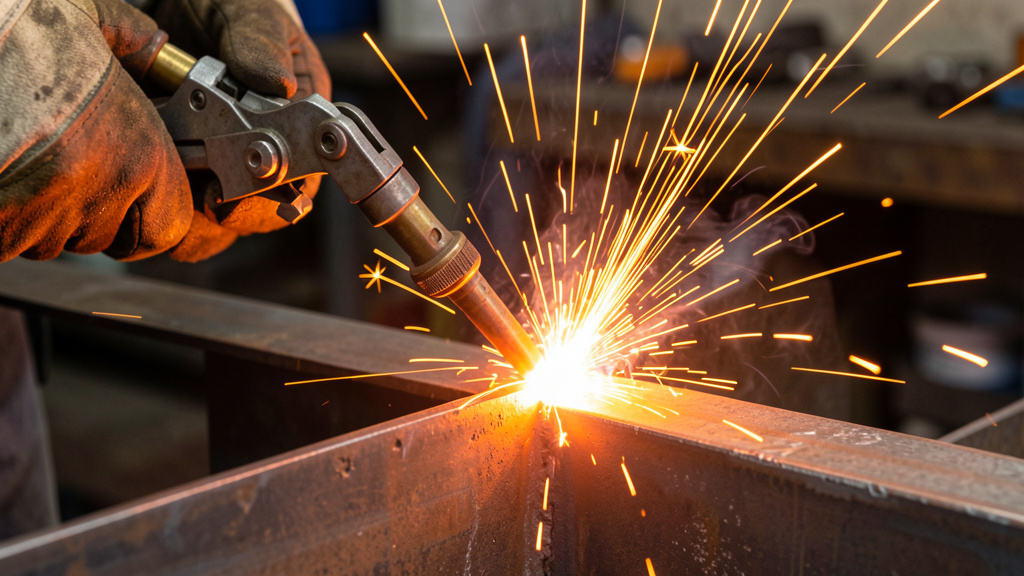
From Gear Selection to First Spark—Build Confidence with Step-by-Step Techniques, Safety Protocols, and Real Project Walkthroughs
Welding transforms scrap metal into functional heirlooms, repairs broken tools with permanent strength, and unlocks creative freedom many DIYers never experience. Yet for every inspiring project video online, countless beginners face frustration from spatter-covered attempts, confusing equipment choices, or safety concerns that stall progress before the first spark flies. This guide bridges that gap—not with oversimplified shortcuts or intimidating industrial jargon, but with a clear, safety-rooted roadmap designed specifically for home workshops. You’ll learn precisely how to select equipment matching your budget and goals, prepare metal like a pro, execute clean welds through deliberate practice, and avoid subtle mistakes that compromise joint integrity. Whether reinforcing a garden gate, crafting custom shelving brackets, or restoring vintage furniture, these principles turn uncertainty into capability.
Introduction
Metal joining sits at the heart of human innovation—from ancient blacksmiths forging tools to modern artisans shaping functional art. For the home craftsman, welding represents more than a technical skill; it’s a gateway to self-reliance, creative problem-solving, and tangible accomplishment. Yet stepping into this world requires respecting its inherent demands. Unlike woodworking or painting, welding involves intense heat, electrical currents, ultraviolet radiation, and material transformations that demand informed preparation. Drawing from established safety frameworks by the American Welding Society (AWS) and Occupational Safety and Health Administration (OSHA) guidelines adapted for non-industrial settings, this resource prioritizes protocols that prevent the most frequent home workshop incidents: burns from molten spatter, respiratory irritation from fumes, and eye damage from arc flash. We begin not with equipment specs or technique drills, but with mindset. The most successful home welders approach each project with deliberate patience—testing settings on scrap metal, verifying joint fit-up twice, and treating safety gear as non-negotiable ritual. This foundation transforms welding from a daunting task into a deeply satisfying craft where every spark builds competence. Remember: the goal isn’t perfection on the first try. It’s consistent, safe progress where each weld teaches you something new about metal, heat, and your own capabilities.
The Home Welder’s Decision Framework: Choosing Your Path to Permanent Metal Joining
Before unboxing a single piece of equipment, clarity prevents costly missteps. Many beginners purchase a “starter welder” based on price alone, only to discover it lacks the power for their intended projects or requires frustrating technique adjustments. Others invest heavily in professional-grade gear they rarely use. This three-step framework eliminates guesswork by aligning your unique context with proven methodology, refined through analysis of common project patterns across residential workshops—from garage organizers to backyard furniture—and validated against equipment accessibility, learning curves, and real-world safety constraints.
Step 1: Clarify Your Project Goals and Metal Types
Start with concrete examples, not abstract categories. Instead of “I want to weld metal,” define:
– Project Examples: Repairing a wrought-iron fence post? Building a steel-frame plant stand? Fabricating brackets for floating shelves? Restoring a vintage motorcycle frame?
– Metal Thickness: Measure existing items. Is it thin sheet metal (like a car fender)? Medium stock (angle iron for shelves)? Thick structural pieces (gate hinges)?
– Metal Type: Most home projects involve mild steel (magnetic, affordable, welds easily). Stainless steel requires different techniques and gas. Aluminum demands specialized equipment (TIG or MIG with spool gun) and is generally not recommended for absolute beginners. Critical check: Use a magnet. If it sticks firmly, you’re likely working with weldable steel. If not, research further before proceeding.
Why this step is crucial: Welding thin metal with excessive heat causes burn-through. Welding thick metal with insufficient power creates weak, shallow welds. Matching process to material prevents wasted time, damaged projects, and safety risks from repeated failed attempts.
Common mistake to avoid: Assuming “all steel is the same.” Galvanized steel (common in hardware store tubing) releases hazardous fumes when welded. Always grind away the coating at the weld zone or choose non-galvanized alternatives for indoor projects.
Real-world scenario: A maker planned to build a desk frame using square tubing from a big-box store. Unaware the tubing was galvanized, they welded without adequate ventilation and experienced headaches. Solution: Switched to bare mild steel tubing, ground joints clean, and added cross-ventilation with a box fan. Subsequent welds were clean, strong, and symptom-free.
Step 2: Match the Welding Process to Your Needs
Four processes dominate home workshops. This comparison cuts through marketing hype with practical realities:
| Process | Best For Home Use When… | Avoid If… | Typical Starter Cost | Learning Curve | Key Limitation |
|---|---|---|---|---|---|
| MIG (GMAW) | You prioritize speed, clean results on steel from thin sheet to medium thickness, and minimal cleanup. Ideal for furniture, brackets, automotive repairs. | Budget is very limited; you lack access to shielding gas; welding frequently outdoors in wind. | $350–$800 | Gentle (like using a hot glue gun) | Gas shielding disrupted by breeze; requires gas cylinder storage |
| Flux-Core (FCAW) | Welding outdoors (wind-resistant), on rusty/dirty metal, or with limited budget. Great for farm repairs, trailer fixes, heavy gates. | You demand pristine, spatter-free welds; working indoors without strong ventilation (fumes are heavier). | $250–$600 | Moderate (similar motion to MIG) | More spatter = extra grinding; welds slightly less smooth |
| Stick (SMAW) | Budget under $200; welding thick steel, cast iron, or dirty/rusty metal outdoors. Common for farm equipment, structural repairs. | Welding thin metal; seeking clean aesthetics; limited patience for slag chipping. | $150–$400 | Steep (requires precise arc length control) | Slag removal needed; frequent rod changes; harder on thin metal |
| TIG (GTAW) | Precision work on stainless steel, aluminum, or visible joints where appearance matters (art sculptures, bike frames). | Absolute beginner; budget under $800; speed is priority. Requires significant hand coordination. | $700–$1,500+ | Very steep (two hands + foot pedal) | Slow process; sensitive to contamination; expensive setup |
Why this step is crucial: Choosing incorrectly leads to discouragement. A beginner using a stick welder on thin bike rack tubing will likely burn holes. Someone using MIG outdoors on a breezy day will get porous, weak welds due to gas disruption.
How to decide:
– Limited budget + outdoor projects? → Flux-core welder (gasless).
– Moderate budget + garage/workspace + mostly steel projects? → MIG welder (with gas).
– Future aluminum/stainless needs? → Begin with MIG for steel practice; plan for TIG later.
Nuance: Many modern “MIG” machines are dual-process: they run flux-core wire without gas and MIG wire with gas. This offers incredible flexibility for home users. Prioritize this feature if your budget allows—it lets you weld indoors cleanly (with gas) and tackle outdoor repairs (flux-core mode).
Counter-example: A hobbyist bought an entry-level stick welder to build a steel fire pit. Struggled with rod sticking, uneven beads, and thick slag. After frustration, the machine sat unused. Had they invested slightly more in a dual-process machine, results would have been cleaner with less physical strain.
Step 3: Prioritize Safety Gear and Workspace Setup
Safety isn’t an “add-on”—it’s the first component of your welding system. This step happens before plugging in the welder.
– Non-negotiable gear: Auto-darkening helmet (adjustable shade), flame-resistant jacket (cotton or leather, never synthetics), welding gloves (gauntlet style), safety glasses (worn under helmet), respirator with appropriate filters for fumes.
– Workspace essentials: Non-flammable floor (concrete), clearance from combustibles, fire extinguisher (ABC type) mounted visibly, dedicated ventilation (fan blowing outward through a window), welding curtain to protect others from arc flash.
– Critical protocol: Do a “spark audit” before starting. Sparks travel surprisingly far—check under benches, behind walls, and overhead for dust, paper, or solvents. Keep sand nearby for hot slag disposal.
Why this step is crucial: Arc flash (photokeratitis) feels like sand in your eyes hours after welding—painful but usually temporary. However, repeated exposure accelerates long-term eye issues. More urgently, a single spark igniting sawdust under your bench can cause fire in minutes. Safety protocols protect not just you, but your home and family.
Budget-friendly adaptation: No dedicated garage? Create a temporary zone in a driveway: lay down cement board as a fireproof base, position workpiece on metal sawhorses, and use a portable welding screen. Always inform household members when welding.
Real-world consequence: Documented incidents show sparks lodging in wall cavities after welding near wooden structures, smoldering for hours before igniting. Proper spark containment and post-weld inspection prevent such disasters.
The Fundamental Principle: The strength of your weld is determined not by the equipment you own, but by the preparation you invest and the safety protocols you honor. A well-executed bead on poorly prepared metal fails faster than a modest weld on meticulously cleaned, properly fitted joints.
Section 1: Safety First—Non-Negotiable Protocols for Home Welders
Safety in welding operates on layered defense. No single item guarantees protection, but together they create robust safety. Let’s dissect each layer with actionable detail, moving beyond generic “wear a helmet” advice to why specifics matter and how to implement them sustainably in a home context.
Understanding Arc Radiation: Beyond “Welder’s Flash”
The electric arc emits intense ultraviolet (UV), visible, and infrared (IR) radiation. UV causes arc eye (photokeratitis)—a sunburn on your cornea. Symptoms (pain, tearing, light sensitivity) often appear hours post-exposure, creating false confidence during welding. IR radiation contributes to long-term eye health concerns. Visible light intensity can cause retinal strain with prolonged direct viewing.
– Helmet requirements: Fixed-shade helmets force you to flip the helmet down before striking the arc—a major cause of accidental exposure. Auto-darkening helmets (ADH) are strongly recommended for beginners. They stay clear until the arc starts, allowing precise torch placement and reducing neck strain. Ensure it has:
– Adjustable shade range (e.g., 9–13)
– Delay control (lets you see the weld pool solidify)
– Sensitivity adjustment (prevents false triggering)
– Certification: Look for ANSI Z87.1+ markings
– Critical nuance: Very low-cost ADHs may have inconsistent performance. A quality entry-level ADH ($120–$200) pays for itself in comfort and safety. Test functionality if possible.
– Peripheral protection: Radiation reflects off light surfaces. Wear safety glasses under your helmet with side shields. A cotton welding cap (brim forward) shields your scalp and ears from UV sneaking under the helmet.
Real-life analogy: Think of arc radiation like concentrated sunlight. You wouldn’t stare at the sun unprotected—yet the welding arc is significantly more intense. Your helmet isn’t “dark sunglasses”; it’s a precision optical filter calibrated to block harmful wavelengths while allowing useful light through.
Respiratory Protection: Invisible Threats Demand Visible Action
Welding fumes contain metal oxides, ozone, and other compounds. Short-term exposure can cause temporary flu-like symptoms. Long-term risks warrant consistent protection. Galvanized steel releases zinc oxide—a potent irritant.
– Ventilation hierarchy (most to least effective):
1. Source capture: Fume extractor arm near the weld pool (ideal but costly for homes)
2. Cross-ventilation: Two fans—one blowing fresh air in near your feet, one blowing fumes out near the ceiling
3. Personal respirator: NIOSH-approved half-mask respirator with P100 filters and organic vapor cartridges (for ozone). Ensure a tight seal.
– Critical rule: Never rely solely on a simple dust mask. It blocks particles but not gases like ozone.
– Special case—galvanized steel: If welding is unavoidable, grind a wide strip along the joint to remove coating first. Weld with maximum ventilation and appropriate respiratory protection. Better yet: replace with bare steel for indoor projects.
– Myth busting: “I’ve welded without a mask and feel fine.” Symptoms can be delayed or subtle. Cumulative exposure matters. Protecting your lungs is non-negotiable.
Documented pattern: Home welders working in enclosed spaces without ventilation report discomfort after short sessions. Adding cross-ventilation significantly reduces symptoms. This isn’t theoretical—it’s physics. Move the air.
Fire Prevention: The Post-Weld Vigilance Protocol
Welding sparks can travel considerable distances and lodge in hidden crevices, smoldering before igniting.
– Pre-weld checklist:
– Remove combustibles within a wide radius (cardboard, rags, solvents, sawdust). Sweep floor thoroughly.
– Cover immovable items (wooden beams, insulation) with welding blankets.
– Have a fire extinguisher (ABC type) and bucket of sand within arm’s reach.
– Assign a “fire watch” person if others are home—someone not welding who monitors for sparks.
– Post-weld protocol:
After finishing, do not leave the area immediately. Actively inspect:
1. Check under and behind your workpiece.
2. Feel walls, floors, and nearby objects for warmth.
3. Look for smoldering embers in cracks or debris.
4. Maintain awareness of the area for a significant period after welding.
– Emergency prep: Know how to use your extinguisher (PASS method: Pull pin, Aim low, Squeeze handle, Sweep side-to-side). Practice once.
True story: A homeowner welded a bracket onto a steel beam. Sparks fell into a gap between the beam and drywall. He left shortly after. Hours later, smoke alarms activated. Firefighters found significant charring inside the wall. Adherence to post-weld inspection would have caught it early. This isn’t fear-mongering—it’s documented cause-and-effect.
Electrical Safety: Respecting the Current
Even standard household-voltage welders carry significant current.
– Cord management: Use a heavy-duty extension cord rated for the welder’s amperage (check manual). Never daisy-chain cords. Keep cords dry and away from sharp edges.
– Grounding clamp: Attach directly to clean, bare metal on the workpiece—not to a rusty bench or painted surface. Poor grounding causes erratic arcs and shock risk. Clean a spot with a wire brush first.
– Moisture protocol: Never weld in damp conditions. Stand on a dry surface. Ensure hands are dry before touching equipment.
– Machine maintenance: Unplug before changing tips, nozzles, or wire. Store in a dry location. Check cables periodically for damage.
Safety mindset shift: Treat every welding session with ritualized checks, focused attention, and respect for the energy involved. This isn’t paranoia; it’s professionalism scaled to your workshop.
Section 2: Understanding Welding Processes—MIG, Stick, TIG, and Flux-Core Compared
Choosing a process is like selecting the right saw for a cut—each excels in specific contexts. Let’s move beyond brochure specs to lived experience: how each feels to operate, what projects they truly shine on, and hidden considerations.
MIG Welding (GMAW): The Home Workshop Workhorse
How it works: A continuous wire electrode feeds through a gun, melting into the joint. Shielding gas flows from the gun nozzle, protecting the molten weld pool.
The hands-on experience: Pull the trigger—wire feeds, gas flows, arc strikes instantly. Motion is smooth and consistent. The arc is relatively quiet, with minimal spatter when settings are correct. You see the weld pool clearly through the helmet.
Ideal home projects:
– Steel furniture (tables, chairs, shelves)
– Automotive repairs (exhaust patches, bracket fabrication)
– Decorative metal art (scrolls, signage)
– Repairing lawn equipment frames
Critical setup nuance:
– Wire selection: For mild steel, ER70S-6 wire is standard. Diameter matters:
– Smaller diameter for thin metal
– Medium diameter (e.g., .030″) for versatility across common thicknesses ← Best starter choice
– Larger diameter for thicker metal
– Gas mix: Common blends offer good penetration and stable arcs. Pure CO2 is cheaper but creates more spatter.
– Polarity: MIG always uses DCEN (torch connected to negative terminal). Verify your machine setting.
Beginner pitfall: “Bird-nesting”—wire tangling at the drive roll. Caused by incorrect drive roll tension, clogged liner, or mismatched feed speed.
Fix: Cut tangled wire, clear liner, adjust tension until wire feeds smoothly without slipping. Practice on scrap first.
Why it dominates home workshops: Low physical demand (no chipping slag), fast travel speed, forgiving arc on moderate settings, and clean results requiring minimal cleanup. For most common home steel projects, MIG offers the smoothest learning curve to satisfying results.
Flux-Core Arc Welding (FCAW): The Outdoor Problem-Solver
How it works: Uses a tubular wire filled with flux powder. When melted, the flux creates its own shielding gas and forms a slag layer over the weld. No external gas tank needed (“gasless” mode).
The hands-on experience: Louder crackling sound than MIG. More visible sparks and spatter. After welding, you must chip off the brittle slag crust to reveal the weld underneath. Arc is more tolerant of wind, rust, or mill scale.
Ideal home projects:
– Farm equipment repairs (plows, trailers)
– Outdoor gate/fence fabrication (windy conditions)
– Welding on rusty or painted metal (after light grinding)
– Heavy structural repairs where appearance isn’t critical
Critical setup nuance:
– Wire selection: Common types suit dual-shield machines. Ensure your welder is set to “Flux-Core” mode (changes polarity).
– Technique adjustment: Hold gun at a slight drag angle versus MIG’s push. Travel speed slightly slower to allow slag formation.
– Ventilation imperative: Flux-core produces significantly more fumes than gas-shielded MIG. Never use indoors without robust exhaust.
Beginner pitfall: Porous welds caused by moisture in flux, welding too fast, or contaminated metal.
Fix: Grind joint clean, adjust travel speed, store wire properly in a dry container.
Strategic advantage: For the home welder with limited budget or frequent outdoor needs, flux-core eliminates gas cylinder hassles and wind sensitivity. Accept the trade-off: more cleanup for greater environmental flexibility. Many dual-process machines let you switch between MIG (gas) and flux-core modes—ideal versatility.
Stick Welding (SMAW): The Rugged Traditionalist
How it works: A consumable electrode rod (coated in flux) is clamped in a stinger. Arc strikes between rod tip and workpiece. Flux melts to create shielding gas and slag.
The hands-on experience: Requires striking an arc like a match (scratch start) or tapping (lift arc). Demands constant hand adjustment to maintain a tight arc length. Slag must be chipped off after cooling. Distinctive sputtering sound.
Ideal home projects:
– Heavy farm machinery repairs
– Cast iron welding (with specialty rods)
– Thick steel in dirty conditions
– Emergency field repairs (minimal equipment needed)
Critical setup nuance:
– Rod selection:
– 6013: General purpose, smooth arc, easy slag removal (best beginner rod)
– 7018: Stronger welds, low-hydrogen (for critical joints), harder to strike arc
– 6011: Deep penetration, good on dirty metal, AC/DC compatible
– Polarity: Most rods require DCEP (rod positive). Check rod packaging.
– Amperage guide: Rough estimate = rod diameter factor × 10. Adjust based on weld appearance.
Beginner pitfall: Rod sticking—happens when arc length collapses. Caused by low amperage, slow movement, or poor striking technique.
Fix: Increase amps slightly, practice quick strike-and-lift motion on scrap, keep rod dry.
Why it persists: Unmatched portability (small machines run on generators), ability to weld through light rust/paint, and low equipment cost. However, the steep learning curve frustrates many beginners. Only choose stick if your projects demand its strengths and you commit to deliberate practice. For most home decor/repair projects, MIG or flux-core offers faster success.
TIG Welding (GTAW): The Precision Artisan
How it works: Non-consumable tungsten electrode creates arc. Filler rod is added manually with the other hand. Shielding gas (pure argon) protects the pool.
The hands-on experience: Requires exceptional coordination: foot pedal controls heat, one hand holds torch steady, the other dips filler rod rhythmically. Silent hiss of gas, brilliant visible arc. Weld pool looks like liquid mercury.
Ideal home projects:
– Aluminum fabrication (bike parts, custom brackets)
– Stainless steel art or kitchenware
– Thin metal work requiring zero burn-through
– Critical joints where appearance and strength are paramount
Critical setup nuance:
– Tungsten selection:
– Ceriated (grey tip): Excellent all-around for DC welding (steel, stainless), easy starts, non-radioactive ← Recommended for beginners
– Lanthanated (gold/blue): Good alternative, versatile
– Gas flow: Moderate flow rate. Too low = contamination; too high = turbulence.
– Polarity: DCEN for steel/stainless; AC required for aluminum (needs machine with AC capability).
Beginner reality check: TIG has the steepest learning curve. Expect many hours of dedicated practice just to lay a consistent bead on scrap steel. Filler rod technique alone takes significant time to master.
When to wait: Unless your projects specifically require aluminum or stainless steel welding, or you have mentorship access, begin with MIG. Build foundational metal knowledge first. TIG rewards patience but punishes rushing. Many home welders successfully start with MIG, then add a TIG machine years later when project needs evolve.
Hidden requirement: TIG demands meticulous cleanliness. Metal must be spotless—degreased, brushed with dedicated stainless steel wire brush. Contamination ruins welds.
Process Decision Flowchart (Text-Based)
Still unsure? Answer these questions:
1. What’s your primary metal?
– Aluminum → TIG (if committed to learning) or seek professional help
– Stainless steel → TIG (best) or MIG with appropriate gas (advanced)
– Mild steel → Continue to Q2
2. Where will you weld most?
– Indoors, controlled garage → MIG (with gas)
– Outdoors, windy area → Flux-core (gasless) or Stick
3. What’s your budget for all gear (machine + safety + accessories)?
– Under $300 → Stick welder (accept steep learning curve)
– $300–$600 → Dual-process MIG/flux-core machine (best value)
– $600+ → Quality MIG machine + gas setup
4. What projects excite you most?
– Clean furniture/art → MIG
– Farm repairs/outdoor fixes → Flux-core or Stick
– Precision metal art → TIG (long-term goal)
This isn’t about “best” process—it’s about best fit for your reality. Honesty here prevents frustration later.
Section 3: Essential Gear Deep Dive—What You Really Need (and What You Can Skip)
Walking into a welding supply store or browsing online reveals overwhelming choices. This section cuts through noise with a prioritized, budget-conscious gear list validated across home workshop setups. We categorize items as Non-Negotiable, Highly Recommended, or Situational—with clear justification.
The Core System: Machine, Wire, and Gas
Welder Selection Criteria Beyond Price:
– Duty Cycle: A “140-amp” machine might have a low duty cycle at max amperage (short welding time, long cooling). For home projects (short welds), moderate duty cycle at your typical amperage is sufficient. Check specs carefully—cheap machines often inflate max amperage while hiding low duty cycles.
– Input Voltage: 110V machines plug into standard outlets (convenient) but max out around 140A—enough for metal up to 1/4 inch. 220V machines require dedicated outlet installation but offer higher power for thicker metal. Recommendation: Start with 110V unless you know you’ll regularly weld thick steel.
– Brand Support: Choose brands with accessible parts and service networks. Avoid no-name brands on marketplace sites—repairing them is often impossible. Local welding supply stores may offer refurbished certified machines with warranties.
– Dual-Process Advantage: Machines labeled “MIG/Flux-Core” let you switch modes via a dial. This is the single most valuable feature for home users. Example workflow: Use MIG mode with gas for clean indoor shelf brackets; switch to flux-core mode for repairing a rusty trailer hitch outdoors.
Wire and Consumables:
– MIG Wire: ER70S-6 medium-diameter spool (2–5 lbs). Store in airtight container with desiccant packs—moisture causes sputtering and porosity.
– Flux-Core Wire: Common type spool. Same storage caution.
– Contact Tips: Buy a tip kit (multiple sizes). Tip wears out; having spares avoids project delays. Match tip size exactly to wire diameter.
– Gas Nozzle: Ceramic nozzles resist spatter buildup better than metal. Keep a spare.
– Drive Rolls: Ensure your machine’s drive rolls match wire type (V-groove for solid wire, U-groove for flux-core). Some machines include interchangeable rolls.
Shielding Gas Setup (For MIG):
– Tank Size: Medium-sized tank is ideal for home use—large enough for multiple projects, manageable to move. Avoid tiny disposable bottles—they’re expensive per use and impractical.
– Rental vs. Purchase: Most suppliers rent tanks with refill fees. Purchasing outright costs more upfront but saves long-term. Tip: Call local suppliers—some offer “swap” programs.
– Regulator: Must match gas type. Buy a dual-stage regulator for consistent flow.
– Hose and Fittings: Ensure compatibility with your welder’s gas inlet.
– Critical Safety: Secure tank upright. Never store in living spaces or vehicles. Close valve when not in use.
Situational Skip: Gas heater (prevents issues in cold garages)—only needed in consistently cold environments. Start without; add later if needed.
Safety Gear: Precision Over Price Tags
Auto-Darkening Helmet (ADH):
– Minimum specs: Adjustable shade range, delay control, sensitivity adjustment, multiple sensors, ANSI Z87.1 certified.
– Viewing area: Larger lenses reduce neck strain—worth the slight premium.
– Battery: Solar-assist models last years. Avoid models requiring frequent battery changes.
– Test before buying: If possible, verify instant darkening with no flicker.
– Budget path: Reputable brands offer entry-level ADHs ($120–$180) that outperform no-name models. This is not the place to gamble.
Protective Clothing:
– Jacket: Heavy cotton or split-sleeve leather. Never wear synthetics (polyester, nylon)—they melt onto skin causing severe burns. Button all closures.
– Gloves: Gauntlet-style welding gloves protect wrists from sparks. Choose goatskin for dexterity (MIG/TIG) or cowhide for durability (Stick). Keep dry gloves nearby.
– Apron: Optional but useful for seated work (TIG). Leather preferred.
– Head/Neck: Welding cap (cotton, brim forward) under helmet. Flame-resistant neck gaiter for overhead welding.
– Footwear: Leather boots (no exposed laces), steel-toed preferred. Never sandals or cloth shoes.
Respiratory Protection:
– Minimum: Half-mask respirator with P100 particulate filters and organic vapor cartridges (for ozone).
– Fit check: Seal mask to face, inhale sharply—mask should collapse slightly with no air leaks.
– Upgrade: Powered Air-Purifying Respirator (PAPR) with welding helmet attachment—blows filtered air across your face, cooler and more comfortable for long sessions. Significant investment but transformative for frequent welders.
– Critical: Replace filters/cartridges per manufacturer schedule. Don’t guess.
Situational Skip: Expensive leather welding jacket for occasional light MIG work—dense cotton hoodie and long sleeves suffice if you maintain strict spark awareness. But for regular use, proper gear prevents painful reminders.
Workspace Essentials: Building Your Zone
Fire Safety Trio:
1. ABC Fire Extinguisher: Mounted visibly within reach of workspace. Check pressure gauge monthly.
2. Welding Blankets: Fiberglass/ceramic sheets to drape over nearby combustibles. Reusable and heat-resistant.
3. Spark Catcher: Simple metal tray or bucket of sand placed under workpiece.
Ventilation System:
– Budget: Two box fans. Position one low near your feet blowing fresh air in, one high near ceiling blowing fumes out. Creates cross-flow.
– Intermediate: Fan mounted in window with flexible ducting directing airflow outward.
– Advanced: Portable fume extractor arm positioned near weld zone.
– Non-negotiable: Never weld in a sealed room. Air exchange is mandatory.
Workholding and Prep Tools:
– Clamps: Vise grips (locking pliers), C-clamps, magnetic welding clamps (hold pieces at 90 degrees). Why critical: Holding metal with your hand while welding is dangerously common among beginners. Clamps free both hands and ensure precise alignment.
– Angle Grinder: 4.5-inch with cutoff wheel (for trimming) and flap disc (for cleaning/prep). Safety note: Always use with guard and wear safety glasses under helmet.
– Wire Brushes: Dedicated stainless steel brush for stainless/aluminum (prevents contamination), carbon steel brush for mild steel. Label handles clearly.
– Chipping Hammer & Wire Brush: Essential for stick and flux-core welding to remove slag.
– Measuring Tools: Steel square, tape measure, center punch.
Situational Skip: Expensive welding table. Start with sturdy metal sawhorses and a thick steel plate clamped on top. Many home welders build their first table using their new welding skills—a rewarding milestone project.
Budget Tier Breakdown (Total Gear Cost)
| Tier | Budget | Machine | Safety Focus | Best For |
|---|---|---|---|---|
| Essential Starter | $400–$600 | Dual-process MIG/flux-core (110V) | ADH helmet, respirator, gloves, fire extinguisher | First-time welders focused on steel projects; indoor/outdoor flexibility |
| Confident Builder | $700–$1,000 | Quality MIG (110V/220V convertible) + gas setup | Premium ADH, leather jacket, PAPR respirator, grinding station | Regular DIYers building furniture, art, or frequent repairs |
| Specialized Path | $1,000+ | TIG machine (or high-end MIG) | Full PPE suite, dedicated ventilation, welding table | Aluminum/stainless projects, precision work, or serious hobbyists |
Critical reminder: Allocate meaningfully to safety gear. Your body is irreplaceable.
Section 4: Preparing Your Metal—The Secret to Clean, Strong Welds
Industry observation consistently shows that a majority of weld issues originate before the arc strikes—not from poor technique, but from inadequate preparation. Contaminants like oil, rust, or mill scale create gas pockets (porosity), weaken fusion, and cause erratic arcs. This section transforms preparation from a tedious chore into a strategic advantage with repeatable protocols.
Step-by-Step Metal Cleaning Protocol
Phase 1: Degreasing (Non-Negotiable for All Metals)
– Why: Oil, grease, or fingerprints vaporize under arc heat, potentially introducing hydrogen into the weld pool. Hydrogen can contribute to delayed cracking.
– How:
1. Wipe area with clean rag soaked in acetone or dedicated weld-prep solvent.
2. Use a fresh rag for final wipe—never reuse a dirty rag.
3. For heavy grease: Scrub with stainless steel wire brush after solvent application.
– Critical nuance: Avoid chlorinated solvents—they can form hazardous compounds when heated. Verify solvent is weld-safe.
– Budget alternative: Isopropyl alcohol works for light oils but evaporates slower.
Phase 2: Rust, Paint, and Mill Scale Removal
– Why: These barriers prevent proper fusion between base metal and weld. Result: weak “cold lap” where weld sits on metal but doesn’t bond into it.
– Tool selection guide:
– Light surface rust/paint: Flap disc on angle grinder. Creates ideal “tooth” for weld adhesion.
– Heavy rust/mill scale: Grinding disc or wire wheel cup brush.
– Tight corners/edges: Hand wire brush or sanding sponge.
– How far to clean? Minimum 1 inch beyond the intended weld path on all sides. For critical joints (load-bearing), clean entire piece.
– Visual cue: Metal should shine with uniform gray color—no dark spots, streaks, or discoloration.
Phase 3: Joint Fit-Up and Alignment
– Why: Gaps force you to “fill space” rather than fuse edges. This requires more heat, increases distortion, and creates weak, concave welds.
– Gap tolerance:
– Thin metal: Zero gap ideal. Minimal gap acceptable.
– Medium metal: Small gap acceptable.
– Thick metal: Bevel edges to create V-groove; gap less critical with proper technique.
– Clamping technique:
1. Dry-fit pieces first. Check alignment with square.
2. Clamp at both ends and midpoint.
3. Tack weld at ends before removing clamps (see Section 5).
– Pro tip: For square corners (like frames), use magnetic welding clamps—they hold 90-degree angles perfectly without obstructing your view.
Real-world failure analysis: A maker welded a shelf bracket with visible rust at the joint. Under load, the weld peeled away cleanly from the base metal—a classic cold lap failure. Had they spent moments grinding the joint clean, the weld would have fused deeply, distributing stress properly. Preparation isn’t optional; it’s structural integrity.
Special Cases: Galvanized, Aluminum, and Stainless Steel
Galvanized Steel (Zinc-Coated):
– Hazard: Zinc vaporizes at welding temperatures, causing severe respiratory irritation.
– Protocol:
1. Grind away zinc coating widely on all sides of the weld path.
2. Weld with maximum ventilation and appropriate respiratory protection.
3. Strong recommendation: Replace with bare mild steel for indoor projects.
– Myth: “Just hold your breath.” Zinc oxide exposure is cumulative and dangerous. Never compromise here.
Aluminum:
– Challenge: Aluminum oxide layer melts at a much higher temperature than the base metal, causing contamination.
– Protocol:
1. Degrease with acetone.
2. Brush vigorously with dedicated stainless steel wire brush (never used on steel). Brush in one direction only.
3. Weld promptly—oxide reforms quickly.
4. Use AC TIG or MIG with 100% Argon gas and spool gun.
– Critical: Aluminum often requires preheating thick sections to avoid cracking. Not beginner-friendly.
Stainless Steel:
– Challenge: Improper heat control can affect corrosion resistance.
– Protocol:
1. Degrease meticulously.
2. Brush with dedicated stainless brush (cross-contamination from steel causes rust spots).
3. Use lower heat input, faster travel speed.
4. For critical applications, use “low-carbon” grades or consult welding references.
– Beginner path: Stick to mild steel initially. Stainless demands precision.
Moisture Control: The Silent Weld Challenge
Water introduces hydrogen into the weld environment.
– Outdoor metal: Wipe with dry rag. If damp, use gentle heat to evaporate moisture (do not overheat).
– Cold mornings: Metal “sweats” when brought into warm garage. Let it acclimate before welding.
– Storage: Keep project pieces off concrete floors. Store on wooden pallets or metal racks.
– Wire storage: Keep spools in sealed plastic bins with silica gel desiccant. Moist wire causes sputtering and porosity.
Verification test: After cleaning, run a gloved finger over the joint. It should feel uniformly rough (from grinding), not slick or gritty. Shine a flashlight at a low angle—contaminants cast tiny shadows. When in doubt, clean again.
Section 5: Mastering the Weld—Step-by-Step Techniques for Each Process
Theory meets practice here. We break down the physical motions, machine settings, and mental focus required for success—framed not as rigid rules, but as adaptable principles. Every welder develops personal rhythm; these are the foundational patterns to build upon.
Universal Pre-Weld Checklist (Do This Every Time)
- Machine Setup:
- Verify polarity (MIG: DCEN; Flux-core/Stick: DCEP)
- Set voltage/amperage per chart (start mid-range; adjust after test welds)
- Confirm wire feed speed (MIG/flux-core) or rod type (Stick)
- Check gas flow (MIG: steady hiss)
- Workspace Safety:
- Fire extinguisher accessible
- Ventilation active
- Clamps secure, no hands near weld zone
- Helmet down, gloves on
- Test Weld:
- Strike arc on scrap metal identical to your project
- Evaluate bead: Smooth? Consistent width? Good penetration?
- Adjust settings before touching project piece
Skipping this checklist causes most beginner frustrations. Respect the ritual.
MIG Welding Technique: The Push Motion
Optimal Settings Starting Point (for medium wire on medium steel):
– Voltage: Moderate range
– Wire Speed: Moderate range
– Gas: Common blend at moderate flow
Body Positioning:
– Stand comfortably, feet shoulder-width apart.
– Brace elbow against hip or workbench for stability.
– Keep torch cable draped over shoulder to reduce drag.
The Motion Sequence:
1. Position: Hold torch at slight forward angle (pushing direction). Tip close to metal.
2. Strike Arc: Pull trigger—wire feeds, arc initiates instantly.
3. Travel: Move steadily along joint. Imagine “pushing” the weld pool.
4. Speed Cue: Listen to the arc—”bacon frying” sizzle = good. Loud popping = too fast; deep buzz = too slow.
5. Stop: Release trigger before reaching end of joint to avoid crater.
Bead Characteristics to Target:
– Ideal: Uniform width, slight crown, smooth ripples.
– Too Hot: Wide, flat bead; excessive spatter; burn-through on thin metal.
– Too Cold: Narrow, ropey bead; poor fusion at edges; stubbing.
– Too Fast: Thin, weak bead; undercut (groove melted into base metal edge).
– Too Slow: Wide, convex bead; excessive heat distortion; burn-through.
Critical Practice Drill:
On scrap steel, draw a straight line with chalk. Weld exactly on the line. Goal: Consistent bead width covering the line completely. Repeat until motion feels fluid. Then practice circles, figure-8s. Muscle memory builds confidence.
Flux-Core Welding Technique: The Drag Motion
Optimal Settings Starting Point (for medium wire on medium steel):
– Voltage: Moderate to higher range
– Wire Speed: Moderate to higher range
– No gas required
Key Technique Shift from MIG:
– Hold torch at slight backward angle (dragging direction).
– Maintain slightly longer stick-out than MIG.
– Travel speed slightly slower than MIG to allow slag formation.
Slag Management Protocol:
1. After welding, let piece cool briefly (slag cracks as it cools).
2. Use chipping hammer at angle to pop off slag.
3. Wire brush remaining residue.
4. Inspect weld: Should be smooth, uniform. If pitted, slag wasn’t fully removed—re-brush.
Wind Advantage:
Flux-core’s self-shielding nature makes it ideal for breezy conditions where MIG gas would blow away. If welding outdoors and wind is present, flux-core mode is often the practical choice.
Stick Welding Technique: The Dance of Arc Length
Optimal Settings Starting Point (for common rod on medium steel):
– Amperage: Moderate range
– Polarity: DCEP (rod positive)
Striking the Arc (Two Methods):
– Scratch Start: Like lighting a match—scratch rod tip sharply across metal, then lift to small gap.
– Tap Start: Tap rod tip vertically on metal, then lift slightly. Less spatter, preferred by many.
Maintaining Arc Length:
– Critical rule: Arc length should approximate rod diameter.
– Visual cue: Watch the flux coating—it should melt just behind the arc. If rod sticks, arc is too short. If excessive spatter, too long.
– Motion: Drag rod at slight angle with steady hand. Whip motion not needed for general-purpose rods.
Slag Removal Sequence:
1. Wait until weld is cool enough to touch safely.
2. Chip from end toward start—slag peels off easier.
3. Wire brush thoroughly. Inspect for slag inclusions (dark lines in weld)—indicates technique issue or contaminated rod.
Beginner Drill:
Practice striking and holding a steady arc on scrap without moving. Goal: Maintain consistent gap for several seconds. Repeat until muscle memory develops. This foundational skill separates frustration from progress.
TIG Welding Technique: The Three-Limb Coordination
Optimal Settings Starting Point (for common tungsten on medium steel):
– Amperage: Moderate range DCEN
– Gas Flow: Moderate Argon flow
– Pedal: Start low, ramp during weld
Hand/Foot Positioning:
– Torch hand: Rest pinky on workpiece for stability. Hold torch at slight angle.
– Filler hand: Hold rod like pencil, tip resting outside gas shield until needed.
– Foot: Practice pedal control on scrap—smooth ramp up/down.
The Welding Sequence:
1. Start: Press pedal to low setting, initiate arc, then raise to working distance.
2. Pool Formation: Hold until small molten pool forms.
3. Add Filler: Dip rod tip into front edge of pool, then withdraw. Repeat rhythmically.
4. Travel: Move torch slowly as pool advances. Keep tungsten out of pool (contamination ruins weld).
5. Stop: Gradually reduce pedal, hold until pool solidifies, then release.
Critical Nuances:
– Tungsten Contamination: If tungsten touches weld pool or filler rod, stop immediately. Grind tip to sharp point on dedicated grinder (never use same wheel as steel).
– Gas Coverage: Keep torch nozzle close for best shield. Listen for steady hiss.
– Practice Path: Start with autogenous welds (no filler) on thin steel. Master pool control first. Add filler only after consistent beads.
Patience reminder: TIG mastery takes deliberate hours. Celebrate small wins—a clean start, a steady pool. Progress compounds.
Tack Welding: The Foundation of Precision
Tack welds are small, temporary welds holding pieces in alignment before final welding.
– Procedure:
1. Clamp pieces perfectly aligned.
2. Weld small spot at each end of joint.
3. Release clamps. Check alignment.
4. Add middle tack if joint is long.
– Why critical: Prevents pieces shifting during final weld. Reduces heat distortion by “locking” geometry early.
– Pro tip: For square frames, tack all four corners before welding full seams. Check diagonals with tape measure—equal measurements = perfect square.
Managing Heat and Distortion
Metal expands when hot, contracts when cool—causing warping.
– Prevention Strategies:
– Skip Welding: Weld short segment, skip space, return later. Distributes heat.
– Backstep Technique: Weld short segments moving opposite travel direction. Each new segment overlaps previous cooled section.
– Clamping: Secure workpiece firmly to heavy steel table. Mass absorbs heat.
– Preheating: For thick metal, use gentle heat before welding. Reduces thermal shock.
– Correction: If warping occurs, use hammer on dolly (anvil) to gently stretch metal back. Advanced technique—practice first.
Real project example: Building a rectangular steel frame. Weld opposite corners first (tack), check square, then weld full seams using backstep technique on each side. Result: Frame stays true without clamps during final welds.
Section 6: Troubleshooting Common Weld Defects—Causes and Fixes
Even experienced welders encounter imperfections. The difference lies in systematic diagnosis. This section functions as your on-demand repair manual—match the symptom, apply the solution. Each defect includes visual description, root cause analysis, and actionable correction.
Porosity: Tiny Holes in the Weld Bead
Visual ID: Cluster of small holes on weld surface or cross-section.
Why it weakens weld: Creates stress concentration points; reduces effective weld area.
Root Causes & Fixes:
| Cause | Diagnostic Clue | Solution |
|——-|—————–|———-|
| Moisture in wire/base metal | Holes concentrated at start | Store wire dry; preheat damp metal; grind joint dry |
| Inadequate gas shielding (MIG) | Porosity worse on windy side | Increase gas flow moderately; add wind barrier; check for leaks |
| Contaminated metal (oil, paint) | Porosity along entire bead | Degrease thoroughly; grind joint to bright metal |
| Drafty workspace | Porosity inconsistent | Relocate weld zone; use welding curtains |
| Clogged nozzle/spatter buildup | Gas flow visibly restricted | Clean nozzle; replace contact tip; use anti-spatter spray |
Prevention Protocol: Always perform test weld on scrap in your actual workspace. Inspect bead under bright light. If porosity appears, troubleshoot before welding project.
Undercut: Groove Melted Along Weld Edge
Visual ID: Thin notch or groove where weld bead meets base metal edge. Feels like a sharp ridge when running fingernail across.
Why it weakens weld: Creates crack initiation site; drastically reduces fatigue strength.
Root Causes & Fixes:
– Travel speed too fast: Arc doesn’t deposit enough filler.
→ Fix: Slow down travel speed; increase wire feed slightly.
– Voltage too high: Arc digs aggressively into base metal.
→ Fix: Reduce voltage slightly; test on scrap.
– Gun angle too steep: Directing arc energy into edge.
→ Fix: Maintain proper travel angle; keep arc focused on center of joint.
– Excessive stick-out (MIG/flux-core): Longer wire = less stable arc.
→ Fix: Keep nozzle at recommended distance.
Critical Check: Run fingernail perpendicular across weld edge. If it catches in a groove, undercut is present. Grind smooth and reweld with corrected settings.
Spatter: Scattered Metal Droplets Around Weld
Visual ID: Tiny metal balls stuck to base metal near weld bead. Requires grinding to remove.
Why it matters: Cosmetic issue primarily, but indicates inefficient process; cleanup wastes time.
Root Causes & Fixes:
| Cause | Process Most Affected | Solution |
|——-|————————|———-|
| Voltage too low | MIG | Increase voltage slightly; listen for smoother “sizzle” |
| Dirty base metal | All | Clean joint thoroughly before welding |
| Incorrect gas mix | MIG | Use common blend; avoid pure CO2 if spatter excessive |
| Worn contact tip | MIG/Flux-core | Replace tip; ensure size matches wire diameter |
| Long stick-out | Flux-core | Reduce stick-out; maintain consistent distance |
Pro Cleanup Tip: Apply anti-spatter spray to nozzle and workpiece area before welding. Spatter wipes off easily while warm. Never use on TIG welds—contaminates tungsten.
Lack of Fusion: Weld Sitting “On” Metal, Not “In” It
Visual ID: Weld bead appears rounded on top with sharp edges where it meets base metal. Cross-section shows gap between weld and base metal.
Why it’s critical: Creates immediate failure point under load. Most dangerous defect for structural projects.
Root Causes & Fixes:
– Insufficient heat: Amperage/voltage too low for metal thickness.
→ Fix: Increase heat settings; verify with test weld on scrap of same thickness.
– Travel speed too fast: Arc doesn’t dwell long enough to melt base metal edges.
→ Fix: Slow travel speed significantly; watch for molten pool wetting both edges.
– Contaminated joint: Rust, paint, or oil blocking fusion.
→ Fix: Grind joint to bright, clean metal; degrease.
– Poor technique (Stick/TIG): Rod/tungsten not directed at joint edges.
→ Fix: Angle electrode toward leading edge of pool; ensure pool flows into both sides.
Verification Test: After welding, cool piece completely. Grind cross-section through weld. Fusion zone should show smooth transition into base metal. If line exists, lack of fusion is confirmed—reweld with higher heat.
Cracking: Visible Fractures in Weld or Heat-Affected Zone
Visual ID: Linear breaks in weld bead (hot crack) or adjacent to bead (cold crack). May appear immediately or later.
Why critical: Catastrophic failure risk. Never ignore cracks.
Root Causes & Fixes:
| Crack Type | Timing | Primary Cause | Solution |
|————|——–|—————|———-|
| Hot Crack | During cooling | Material composition; excessive restraint | Use appropriate filler; reduce clamping pressure; preheat thick sections |
| Cold Crack | Hours/days later | Hydrogen embrittlement; material factors | Bake rods per spec; degrease meticulously; use low-hydrogen rods; preheat |
| Crater Crack | At weld end | Shrinkage stress in unfilled crater | Use “crater fill” function if available; circle torch at end before releasing trigger |
Emergency Protocol: If crack appears:
1. Grind out entire cracked section plus margin beyond.
2. Clean cavity thoroughly.
3. Preheat area gently.
4. Reweld with recommended settings for crack type.
5. Allow to cool slowly (cover with welding blanket).
Prevention is paramount: For critical joints (load-bearing brackets, structural frames), follow established welding codes for preheat and procedures. When in doubt, consult a qualified welding professional.
Concave vs. Convex Bead Profile
Concave Bead (Sucked In):
– Cause: Too much heat, too slow travel, or excessive wire feed.
– Risk: Reduced throat thickness = weaker weld.
– Fix: Increase travel speed; reduce voltage/wire speed.
Convex Bead (Ropey):
– Cause: Too little heat, too fast travel, or insufficient wire feed.
– Risk: Poor fusion at edges; stress concentration.
– Fix: Decrease travel speed; increase voltage/wire speed.
Ideal Profile: Slight crown on weld. Smooth transition into base metal.
Teaching Tool: Keep a “settings journal.” Note metal thickness, machine settings, and bead appearance for each practice session. Patterns emerge quickly—your personal reference guide.
Section 7: Three Starter Projects with Full Walkthroughs
Theory solidifies through application. These projects progress logically from foundational skills to integrated workflow—each designed to build confidence while producing useful items. All use mild steel and MIG/flux-core techniques. Measurements include metric conversions.
Project 1: The Practice Plate—Mastering Bead Control
Why start here? Eliminates joint-fit pressure. Focus purely on machine settings, hand motion, and bead appearance.
Materials:
– Scrap mild steel plate, 6″x6″ (15×15 cm), medium thickness
– Clamps
– Angle grinder with flap disc
– Wire brush
Step-by-Step:
1. Prep: Grind entire surface to remove rust/mill scale. Wipe with acetone.
2. Machine Setup:
– MIG: Medium wire, moderate voltage/wire speed, gas
– Flux-core: Medium wire, moderate voltage/wire speed
3. Technique Drills (in order):
– Straight Lines: Draw chalk lines apart. Weld precisely on each line. Goal: Consistent width, no wandering.
– Weave Beads: Weld wider beads using slight side-to-side motion. Goal: Uniform ripples, even edges.
– Circles & Figure-8s: Practice changing direction smoothly. Goal: No starts/stops visible.
4. Evaluation:
– Good bead: Smooth ripples, consistent width, slight crown, fused edges.
– Adjust settings based on defects (refer to Section 6).
5. Progression: Once straight beads are consistent, add overlapping beads to build height—simulating multi-pass welding.
Skill Gained: Muscle memory for travel speed, gun angle, and arc control. This plate becomes your personal settings reference.
Project 2: Floating Shelf Bracket—Precision Fit-Up and Tack Welding
Why this project? Teaches critical joint preparation, square alignment, and controlled heat input on a functional item.
Materials:
– Angle iron, 12 inches (30 cm) total length (2 pieces)
– Flat bar, 6 inches (15 cm) long (1 piece)
– Clamps (magnetic square clamps ideal)
– Steel square, tape measure, center punch
– Angle grinder, wire brush
Design: L-shaped bracket with gusset plate for reinforcement.
Step-by-Step:
1. Cutting:
– Cut two angle iron pieces to equal length.
– Cut flat bar to length.
– Safety: Wear safety glasses; secure metal in vise.
2. Prep:
– Grind all cut edges smooth.
– Grind along intended weld zones to bright metal.
– Wipe with acetone.
3. Fit-Up:
– Position angle irons perpendicular. Verify 90 degrees with steel square.
– Clamp securely.
– Position gusset plate diagonally across inside corner. Clamp.
– Critical check: Measure diagonals of L-shape—must be equal. Adjust clamps until perfect.
4. Tack Welding:
– Place small tack weld at end of each joint.
– Release clamps. Re-check square.
– Add middle tack on long joints if needed.
5. Final Welding:
– Weld all joints using backstep technique (short segments, skip pattern).
– Start on gusset plate joints first (less heat distortion).
– Maintain consistent travel speed; listen for steady arc sound.
6. Cleanup:
– Chip slag (if flux-core).
– Grind weld toes smooth with flap disc.
– Wipe clean; apply rust-inhibiting oil or paint.
Pro Tip: Weld one bracket, then use it as a jig to align the second bracket—ensures perfect matching pair.
Real-World Application: Mounts to wall studs with lag bolts; supports shelf board. Test load capacity gradually.
Project 3: Garden Tool Rack—Integrated Workflow and Problem-Solving
Why this project? Combines cutting, grinding, fit-up, welding, and finishing into one cohesive workflow. Addresses real-world challenges like warping and alignment.
Materials:
– Square tubing, 24 inches (60 cm) long (1 piece for back)
– Flat bar, 18 inches (45 cm) total length (3 pieces for hooks)
– Scrap steel for mounting feet
– Angle grinder with cutoff wheel and flap disc
– Clamps, steel square, marker
Design: Horizontal backbar with three upward-curving hooks. Feet at ends for stability.
Step-by-Step:
1. Layout & Cutting:
– Mark backbar at intervals.
– Cut flat bar into three equal pieces for hooks.
– Cut two small scraps for feet.
2. Hook Shaping:
– Clamp flat bar in vise.
– Bend around pipe to form gentle curve.
– No torch? Use vise and hammer—requires patience.
3. Prep All Pieces:
– Grind cut edges smooth.
– Grind along all weld zones to bright metal.
– Degrease thoroughly.
4. Assembly Sequence (Critical for Squareness):
– Clamp backbar horizontally to workbench.
– Position first hook at mark. Use square to ensure 90-degree angle. Tack weld top and bottom.
– Position second hook at center mark. Tack.
– Position third hook at opposite mark. Tack.
– Check alignment: Sight down backbar—hooks should be parallel. Adjust before final welding.
– Tack feet to bottom ends of backbar.
5. Welding Strategy to Prevent Warping:
– Weld hooks using skip pattern: Weld top of hook 1, then top of hook 3, then top of hook 2. Repeat for bottom welds.
– Weld feet last.
– Use backstep technique on all seams.
– If warping occurs mid-weld, stop, let cool, then correct with clamps before continuing.
6. Finishing:
– Grind all welds smooth.
– Sand entire rack progressively.
– Wipe clean. Apply rust-resistant primer, then paint.
– Optional: Clear coat for weather resistance.
Problem-Solving Moment: During welding, the backbar bowed slightly. Solution: Clamped rack flat to steel table, welded remaining seams with increased skip pattern. After cooling, bow was eliminated. Lesson: Heat management is dynamic—adapt as you go.
Final Use: Mounts to garage wall or shed. Holds rakes, shovels, hoes securely. A functional testament to your new skills.
Section 8: Maintenance and Upgrades—Keeping Your Equipment in Top Shape
A well-maintained welder performs reliably for years. Neglect leads to frustrating arc issues, poor welds, and costly repairs. This section provides a sustainable care routine—simple enough for weekly practice, thorough enough for longevity.
Daily/Pre-Use Maintenance Checklist
- Inspect Cables: Check for cuts, fraying, or exposed copper. Repair immediately.
- Clean Nozzle: Use nozzle cleaning tool to remove spatter buildup inside and out. Clogged nozzles disrupt gas flow.
- Check Contact Tip: Look for wear or spatter buildup. Replace if wire feeds erratically.
- Verify Gas Flow (MIG): Listen for steady hiss; check regulator gauge.
- Clear Workspace: Remove slag/debris; ensure fire safety items are accessible.
Time investment: 2 minutes. Prevents troubleshooting later.
Weekly/Monthly Deep Maintenance
Wire Feed System (MIG/Flux-Core):
1. Liner Inspection: Remove gun nozzle and contact tip. Look through liner—should be clear. Blow out with compressed air if needed.
2. Drive Roll Cleaning: Wipe grooves with rag soaked in isopropyl alcohol. Remove embedded wire shavings.
3. Tension Adjustment: Feed wire into gloved hand. Adjust drive roll tension until wire feeds smoothly without slipping or crushing. Test on scrap.
Stick Welder Specifics:
– Stinger Inspection: Check for cracked insulation or loose connections.
– Ground Clamp: Clean contact surfaces with wire brush; ensure tight connection.
Machine Exterior:
– Wipe down with dry cloth.
– Use compressed air to blow dust from vents (prevents overheating).
– Never use liquids near electrical components.
Consumables Replacement Schedule
| Item | Replacement Trigger | Pro Tip |
|---|---|---|
| Contact Tip | Wire feeds erratically; visible wear | Keep spares on hand; match size exactly to wire |
| Gas Nozzle | Cracked, heavily spattered, or deformed | Ceramic nozzles resist spatter better |
| Drive Roll | Grooves worn smooth; wire slips | Match roll type to wire (V-groove solid, U-groove flux-core) |
| Liner | Frequent feeding issues; visible damage | Replace annually with heavy use |
| Electrode Holder (Stick) | Loose connection; cracked insulation | Safety critical—replace immediately if damaged |
Storage Protocol for Longevity
- Wire Spools: Seal in plastic bag with silica gel desiccant. Moisture causes rust and poor feeding.
- Gas Cylinder (MIG): Close valve tightly. Store upright, secured, in well-ventilated area away from heat sources.
- Machine: Cover with breathable cloth. Store in dry location.
- Electrodes (Stick): Keep in original container. For low-hydrogen rods, store in rod oven if available.
Smart Upgrades Path (When Ready)
- Spool Gun (for MIG): Enables aluminum welding. Worthwhile if aluminum projects emerge.
- Pulsed MIG Capability: Smoother welds on thin metal; reduced spatter. Often requires machine upgrade.
- Portable Fume Extractor: Significant comfort and health upgrade for frequent welders.
Your Questions, Answered
Q: What is the absolute easiest welding process for a complete beginner with no experience?
A: For most beginners working with mild steel indoors, a dual-process MIG/flux-core machine used in MIG mode (with gas) offers the gentlest learning curve. The continuous wire feed and stable arc allow focus on hand motion rather than rod manipulation. Start with simple bead-on-plate exercises before attempting joints.
Q: Can I safely weld galvanized steel in my home garage?
A: Welding galvanized steel releases zinc oxide fumes, which can cause severe respiratory irritation (“metal fume fever”). For home workshops, it’s strongly recommended to avoid welding galvanized steel indoors. If unavoidable: grind away the zinc coating widely along the weld path, use maximum cross-ventilation (two fans), wear a respirator with appropriate cartridges, and keep sessions very short. Better yet: replace with bare mild steel for indoor projects.
Q: How can I tell if my weld is actually strong enough for my project?
A: Visual inspection is the first step—look for consistent bead width, good fusion at the edges (no undercut or cold lap), and absence of cracks or porosity. For non-critical home projects (decorative items, light-duty brackets), this is often sufficient. For load-bearing applications (shelf supports, structural repairs), follow established joint designs, use adequate weld size, and consider destructive testing on identical scrap pieces. When safety is paramount, consult welding codes like AWS D1.1 or seek evaluation from a qualified professional.
Q: Why does my stick welder keep sticking the rod to the metal?
A: Rod sticking usually occurs when the arc length collapses. Common causes: amperage set too low for the rod diameter, moving the rod too slowly, or poor striking technique. Solutions: increase amperage slightly (refer to rod packaging guidelines), practice a quick “scratch-and-lift” motion on scrap metal, and ensure the workpiece grounding clamp is attached to clean, bare metal. Using a 6013 rod (more forgiving than 7018) also helps beginners.
Q: Is welding indoors in a standard attached garage ever safe?
A: Yes, with rigorous safety protocols. Critical requirements: robust cross-ventilation (one fan bringing fresh air in near floor level, another exhausting fumes out near ceiling), fireproof workspace (concrete floor, no combustibles within 10+ feet), welding curtain to protect others from arc flash, and appropriate respiratory protection. Never weld in a sealed space. If your garage is attached to living quarters, ensure fumes cannot migrate indoors. When in doubt, weld outdoors in a controlled temporary setup.
Q: How often should I replace the lens in my auto-darkening helmet?
A: Replace the outer protective cover lens whenever it becomes scratched, pitted, or cloudy—this is inexpensive and maintains visibility. The inner auto-darkening filter (ADF) module typically lasts years with proper care. Replace the ADF if you notice delayed darkening, flickering, inconsistent shading, or visible damage. Always follow the manufacturer’s guidelines and store the helmet in a protective case when not in use.
Q: What’s the real difference between MIG and flux-core welding for a home user?
A: MIG (using solid wire + shielding gas) produces cleaner, smoother welds with less spatter and is ideal for indoor projects on clean metal. Flux-core (using tubular wire with internal flux, no gas needed) is more tolerant of wind, rust, and outdoor conditions but produces more spatter and requires slag removal. For home users, a dual-process machine offers maximum flexibility: use MIG mode for garage projects requiring clean results, and flux-core mode for outdoor repairs where wind or dirty metal is a factor.
Q: Can I weld aluminum with my standard MIG welder?
A: Standard MIG welders designed for steel are generally not suitable for aluminum without significant modification. Aluminum requires 100% argon shielding gas, a spool gun (to prevent wire feeding issues with soft aluminum wire), and often machine settings optimized for aluminum. For occasional aluminum projects, TIG welding is the preferred method but has a steep learning curve. Most home welders start with steel projects and add aluminum capability later through equipment upgrades or professional services.
Q: How do I prevent my thin metal projects from warping or burning through?
A: Key strategies: use lower heat settings (reduce voltage/amperage), increase travel speed, employ skip welding or backstep techniques to distribute heat, clamp the workpiece firmly to a heavy steel backing plate (acts as a heat sink), and practice extensively on scrap of identical thickness. For very thin metal, consider pulse settings if your machine offers them, or use a series of small tack welds instead of continuous beads.
Q: What single piece of safety gear should I never skip, even for a “quick” weld?
A: Your auto-darkening welding helmet. Arc flash (photokeratitis) can occur in milliseconds, and symptoms often appear hours later—creating false confidence during brief welding. Unlike burns or fume exposure which may have immediate cues, eye damage is silent and cumulative. A quality helmet protects against UV/IR radiation, flying sparks, and allows clear visibility before striking the arc. Never compromise on eye protection, regardless of weld duration.
Q: How should I store welding wire to keep it dry and feeding smoothly?
A: Store wire spools in an airtight container (plastic bin with tight lid) along with silica gel desiccant packs. Moisture causes wire to rust, leading to sputtering, porosity, and feeding problems. For flux-core wire, moisture absorption is even more critical as it affects the internal flux. If wire has been exposed to humidity, baking it in a dedicated oven at low temperature (per manufacturer specs) may restore it—but prevention through proper storage is far more reliable.
Q: Where can I find affordable scrap metal to practice welding techniques?
A: Excellent practice sources include: local metal fabrication shops (often give away cutoff scraps), construction sites (with permission), automotive repair shops (exhaust parts, brackets), Habitat for Humanity ReStores, Facebook Marketplace/Craigslist “free” sections, and even your own household projects (old bed frames, broken tools). Always verify the metal type with a magnet (mild steel is magnetic) and clean thoroughly before welding. Start with pieces 1/8-inch thick for balanced practice.
Conclusion and Next Step
Recap: The Three Pillars of Home Welding Success
- Safety is non-negotiable: Your helmet, ventilation, fire protocols, and workspace setup form the unshakable foundation. Never shortcut these—even for “just one quick weld.”
- Preparation determines outcome: Clean metal, precise fit-up, and correct machine settings matter more than expensive equipment. Invest time here; it pays exponential dividends in weld quality.
- Deliberate practice builds mastery: Start simple (bead-on-plate), document your settings, learn from each weld’s feedback, and progress incrementally. Confidence comes from competence, not equipment.
The 24-Hour Rule
Within the next day, take one concrete step: Clear a 10-foot radius in your intended welding area. Sweep thoroughly, remove all combustibles, position your fire extinguisher visibly, and lay down a fireproof base (cement board or steel plate). This small act transforms intention into action and builds momentum for your first safe session.
The Big Picture
Welding is more than joining metal—it’s cultivating patience, precision, and problem-solving. Each project strengthens your connection to tangible creation in a digital age. You join a timeless lineage of makers who transform raw materials into solutions, art, and legacy. As your skills grow, you’ll repair what others discard, build what stores don’t sell, and see the world through the lens of possibility. Remember the craftsman’s truth: the most valuable weld isn’t the strongest bead—it’s the one that teaches you something new.
Explore Our Complete Workshop System:
Mastering MIG: From Beads to Beautiful Projects | Stick Welding Demystified: Rusty Metal Repairs Made Simple | Your First Welding Cart: A Practical Storage Solution | Metal Finishing Mastery: Grinding, Sanding, and Painting Welds | Sustainable Workshop: Repurposing Scrap Metal Creatively | Advanced Joint Designs for Structural Integrity | Troubleshooting Deep Dive: Fixing Welding Machine Issues