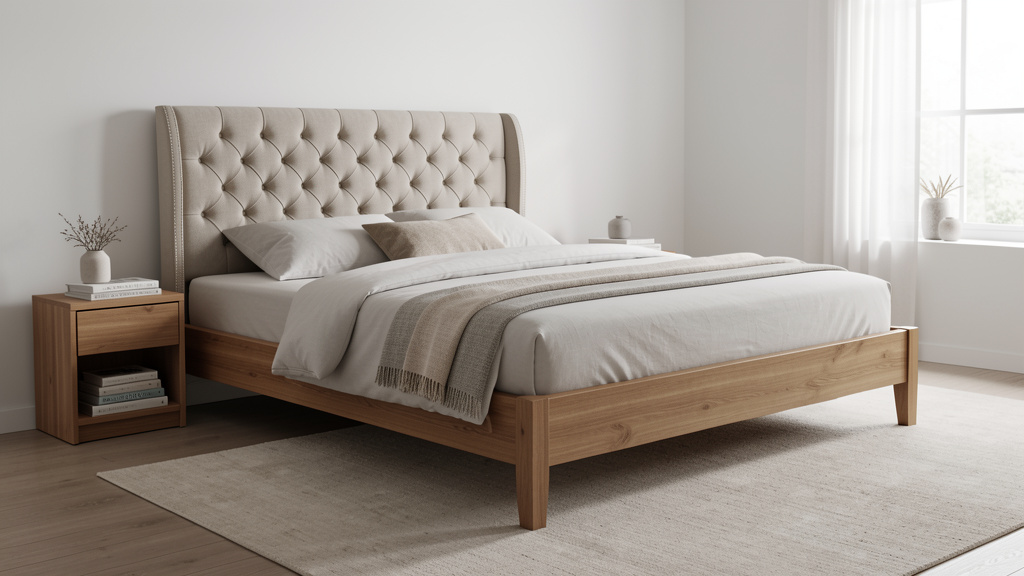
Move beyond aesthetics: A systematic framework to select a bed that supports your body, complements your room, and stands the test of time.
Selecting a bed represents one of the most significant furniture decisions for your home—a choice impacting daily comfort, room functionality, visual harmony, and long-term value. Yet many navigate this process overwhelmed by fragmented advice: style-focused content ignoring structural realities, retail sites emphasizing trends without context, or technical guides lacking aesthetic consideration. This resource bridges that gap. Drawing from established principles in spatial planning, furniture engineering, interior design practice, and observed usage patterns, we offer a decision-making system that honors both practical necessity and personal expression. Whether furnishing a first apartment, redesigning a primary suite, or solving a specific spatial challenge, this guide provides clarity to invest with confidence.
Introduction: Why Your Bed Choice Matters More Than You Think
Your bed typically occupies a significant portion of your bedroom’s visual and physical footprint. It serves as the room’s gravitational anchor—psychologically, functionally, and stylistically. Common feedback from bed buyers often highlights recurring challenges: overlooking structural compatibility (such as mattress-frame mismatches), misjudging spatial scale (beds that overwhelm compact rooms), and prioritizing fleeting trends over enduring comfort. These are not minor oversights; they can trigger cascading effects. A poorly supported frame may accelerate mattress wear, compromise sleep quality, or create safety concerns. An ill-proportioned headboard can disrupt room flow, making spaces feel cramped or disjointed. A style misalignment may lead to visual dissatisfaction or future renovation needs.
This guide is built upon a foundational insight drawn from furniture ergonomics and interior design principles: bed selection is not a single decision but a constellation of interconnected choices. The frame must support your body and mattress. The headboard must serve your posture and room architecture. The style must resonate with your daily rituals and long-term vision. When these elements align intentionally, your bed transcends furniture—it becomes a sanctuary engineered for rest. When they clash, even a high-investment purchase may feel like a compromise. We begin with a framework designed to replace guesswork with clarity.
The Bed Selection Framework: The 4-Pillar Method
Forget endless scrolling through online galleries or fixating on a single “dream headboard.” Sustainable bed selection requires evaluating four interdependent pillars. Neglecting any one pillar risks undermining the entire investment. This method, informed by spatial planning standards and furniture lifecycle considerations, ensures holistic decision-making. Work through each pillar sequentially—answering the embedded questions before moving forward. This prevents emotionally driven choices that satisfy one desire while creating new challenges.
Pillar 1: Structural Integrity – Building a Foundation for Rest
Structural integrity forms the non-negotiable foundation of your selection. Without it, aesthetics become secondary. This pillar addresses the hidden mechanics: how the bed supports weight, interfaces with your mattress, withstands daily use, and ensures safety. Many premature bed issues stem from overlooked structural details—such as inadequate slat spacing or weak joinery—rather than material quality alone. Ask these critical questions:
- What is your estimated total supported weight? Include mattress weight (typically 50–150 lbs), your body weight, partner’s weight, and occasional guests or pets. It is advisable to select frames with weight capacities exceeding your estimated total to ensure safety and longevity. A frame rated near your maximum load may experience stress over time.
- What slat system does it use? Solid slats (wood or metal) spaced ≤3 inches apart provide optimal support for most mattress types, especially memory foam and latex, which require consistent underlying support to maintain shape. Avoid frames with widely spaced slats (>4 inches) or flexible fabric/webbing systems unless explicitly certified by your mattress manufacturer. For existing foundations, verify frame compatibility—many modern platform beds eliminate the need for box springs, but mismatched heights can create awkward seating positions.
- How is the frame joined? Dovetail, mortise-and-tenon, or steel bolt-through joints generally demonstrate greater longevity than staples, nails, or cam locks in sustained use. If possible, gently test a floor model (or review detailed video demonstrations online). Noticeable wobble may indicate weak joinery. For metal frames, examine weld points—smooth, continuous beads often signal quality; inconsistent welds may indicate vulnerability.
- What is the center support configuration? Queen, king, and California king frames typically benefit from a robust center support beam with adjustable legs contacting the floor. This helps prevent bowing under weight. A simple test: press firmly on the center of the slat system. Minimal flex is acceptable; significant give may indicate inadequate support. For adjustable bases, confirm the frame is explicitly designed to accommodate movement—standard frames lack necessary clearance and reinforcement.
The Fundamental Principle: A bed frame’s enduring value lies not only in its visible design but in its unseen ability to preserve your mattress’s integrity and support your body’s alignment night after night.
Consider a hypothetical scenario: a couple purchases an upholstered platform bed with widely spaced wooden slats. Within months, their memory foam mattress develops a permanent indentation where slat flex occurred. The mattress warranty may be voided due to inadequate support. The solution often involves retrofitting (like adding a plywood sheet) or replacing the frame entirely. While individual experiences vary, this illustration underscores why verifying structural details upfront is a prudent step toward protecting your investment and comfort.
Pillar 2: Spatial Harmony – Making the Bed Work With Your Room
A bed that dominates a room can create psychological tension; one that feels lost undermines the space’s purpose. Spatial harmony balances scale, proportion, clearance, and traffic flow. This requires precise measurement—not estimation. Follow this protocol:
- Map Your Room’s True Dimensions: Measure floor-to-ceiling height (note low beams or sloped ceilings). Record exact wall lengths. Identify fixed obstacles: radiators, baseboard heaters, electrical outlets, windows, doors (swing direction matters!), and closet openings. Sketch this on graph paper or use a free room-planning app.
- Calculate Minimum Clearance Zones: Common ergonomic and accessibility guidelines suggest:
- Walkway Space: Minimum 24 inches (60 cm) on at least one side of the bed for comfortable access. Ideal is 30–36 inches (75–90 cm) on both sides for queen/king beds.
- Foot-of-Bed Clearance: Minimum 36 inches (90 cm) from the footboard to the opposite wall or furniture for unhindered movement and visual breathing room.
- Door Swing Clearance: Ensure bed placement doesn’t block any door’s full arc. Measure the door’s swing radius.
- Nightstand Access: Allow 2–3 inches (5–7.5 cm) between the bed frame and nightstand for easy sheet changes and cord management.
- Determine Ideal Bed Height: Measure from floor to top of mattress (not frame). Optimal seated height often aligns near your knee joint when sitting on the edge—typically 18–25 inches (45–63 cm) total. Why this matters:
- Too Low (<18″): May be difficult for those with mobility considerations to rise; can create a “sunken” feel; limits under-bed storage utility.
- Too High (>28″): May feel imposing in standard-ceiling rooms; challenging for children; disrupts visual proportion.
- Solution: If your preferred frame creates an awkward height, adjust via a low-profile mattress (4–6″) or a thin foundation. Test sitting on a chair of similar height before buying.
- Scale Headboard to Wall: A headboard often feels balanced when occupying roughly 60–80% of the wall width behind the bed. A massive headboard on a narrow wall may feel oppressive; a tiny headboard on a wide wall may look insignificant. For lower ceilings (<8 feet), very tall headboards may visually compress the space. For higher ceilings (>10 feet), a substantial headboard (floor-to-ceiling or tall upholstered) can add necessary vertical balance.
Imagine a studio apartment dweller with a compact bedroom. They admire a grand four-poster bed seen online. Placing it leaves minimal clearance—too narrow for a nightstand or comfortable walking. The bed consumes most of the floor space, making the room feel constrained. By selecting a low-profile platform bed with integrated storage and a modest headboard scaled to the wall, they gain functional floor space, maintain traffic flow, and create a sense of calm openness. Spatial harmony isn’t about restriction; it’s about intentional allocation of your most valuable resource: space.
Pillar 3: Lifestyle Alignment – Designing for How You Live
Your bed must serve your actual life—not an idealized version. This pillar confronts daily realities often glossed over in stylized content. Answer these honestly:
- Sleep Position & Body Needs: Side sleepers may appreciate padded headboards for shoulder support when reading. Back or stomach sleepers might prefer minimal headboards. Those with chronic discomfort may prioritize frames with rigid, closely spaced slats to help maintain mattress support. Consider adjustable bases if you regularly read, work, or watch TV in bed—they require specific frame compatibility.
- Storage Reality: Limited closet space? Prioritize frames with:
- Drawers: Built-in under-bed drawers (ideal for off-season clothing, extra linens). Ensure drawer depth and glide mechanism suit your needs—shallow drawers hold little; poor glides may jam.
- Lift-Up Storage: Hydraulic lift mechanisms allow access to deep storage cavities. Verify weight capacity of the lift system and ease of operation. Test if possible—some require notable upper body strength.
- Open Space: A simple platform frame with 10+ inches of clearance accommodates rolling bins or vacuum bags. Measure your storage containers first!
- Household Dynamics: Young children? Avoid frames with sharp corners, high footboards (tripping hazard), or climbable structures. Pets that share the bed? Choose durable, scratch-resistant upholstery (performance velvet, microfiber) over delicate fabrics. Shared bedroom? Discuss preferences openly: Does one need a headboard for reading? Does the other prefer minimal visual bulk? Compromise on frame style while personalizing bedside elements.
- Room Multi-Functionality: Is the bedroom also an office, guest room, or nursery? A daybed with trundle offers guest sleeping without dominating the space. A Murphy bed frame integrates vertically but requires precise wall mounting and clearance. For home offices, position the bed to avoid forcing you to face a wall while working—mental separation of functions matters.
- Long-Term Vision: Planning to move soon? Prioritize disassembly ease and portability (bolt-together frames over welded). Staying long-term? Consider materials known for durability (solid hardwood, forged steel). Anticipating family growth? Convertible frames (crib-to-toddler-to-full) offer value, but verify conversion kit availability and long-term structural soundness.
A freelance writer spends evenings reading in bed. She initially chose a sleek metal frame with no headboard. Within weeks, neck strain became noticeable. Switching to a frame with a generously padded, slightly reclined headboard transformed her experience—supporting her posture during extended reading sessions. This wasn’t a style failure; it was a lifestyle misalignment. Your bed should adapt to your rituals, not force you to abandon them.
Pillar 4: Aesthetic Cohesion – Weaving Style Into Substance
Style is the final pillar—not the first—because aesthetics must rest upon a solid foundation of the previous three pillars. When structural, spatial, and lifestyle needs are met, style selection becomes intentional rather than stressful. This pillar focuses on integration, not trend-chasing.
- Decode Your Room’s Existing Style Language: Stand in your doorway. What adjectives describe the space? Warm, minimalist, rustic, airy, collected? Identify dominant elements:
- Architectural: Crown molding (traditional), exposed beams (rustic), large windows (modern).
- Furniture Lines: Curved silhouettes (mid-century, French), straight lines (Scandinavian, contemporary), ornate carvings (Victorian, Baroque).
- Materials & Textures: Reclaimed wood (farmhouse), polished brass (glam), raw concrete (industrial), woven rattan (coastal).
- Color Palette: Earthy neutrals (bohemian, Japandi), high-contrast (modern), soft pastels (shabby chic).
- Choose a Bed Style That Converses, Not Competes: Your bed should feel like it belongs. A sleek, low-profile walnut platform bed complements clean-lined modern furniture. An iron canopy frame with delicate scrollwork harmonizes with vintage-inspired decor. Avoid jarring contrasts: a massive, dark Mission-style oak bed may overwhelm a room filled with light, airy Scandinavian pieces. Instead, seek bridges—like a platform bed with subtle tapered legs echoing mid-century influences elsewhere.
- Headboard as Focal Point or Supporting Actor: In a minimalist room, a textured upholstered headboard (channel-tufted, ribbed velvet) adds essential visual interest. In a room already rich with pattern and color (bold wallpaper, vibrant art), a simple, low-profile wooden headboard provides calming balance. Consider the headboard’s visual weight: a floor-to-ceiling upholstered panel feels substantial; a slim metal frame feels light.
- Material Synergy Matters: Repeat materials elsewhere in the room for cohesion. If your nightstands are walnut, choose a bed frame in a matching or complementary wood tone (avoid exact matches unless part of a set—slight variation adds depth). If your lighting features black metal, a black metal bed frame creates a subtle thread. Texture is equally important: a linen-upholstered headboard pairs beautifully with woven baskets and wool throws.
- Color Strategy Beyond “Neutral”: While beige and gray offer versatility, intentional color elevates a space. Deep navy on a headboard feels serene against light walls. Forest green adds earthy warmth. For flexibility, choose frames in natural wood tones or black/white—then introduce color via easily changed headboard upholstery (many frames allow reupholstering) or bedding. Test paint swatches or fabric samples against your wall color in both daylight and evening lighting before finalizing.
A designer working with a client who loved farmhouse aesthetics but lived in a compact urban condo avoided a massive reclaimed wood bed. Instead, she selected a platform frame with clean lines in light oak, paired with a headboard upholstered in subtle herringbone linen. The light wood echoed existing floating shelves; the linen texture connected to the woven rug and throw pillows. The result felt fresh, intentional, and authentically theirs—not a copied trend. True style cohesion feels inevitable, not forced.
Deep Dive: Understanding Bed Frame Types and Construction
With the 4-Pillar Framework guiding your priorities, let’s examine frame types in detail. Knowledge here helps prevent mismatches. We’ll explore construction, ideal use cases, considerations, and longevity factors for each major category.
Platform Beds: The Modern Standard
Platform beds feature a solid or slatted base designed to support a mattress directly—eliminating the need for a box spring. This creates a lower profile (typically 12–18 inches total height with mattress), fostering a grounded, contemporary aesthetic.
- Construction Variations:
- Solid Platform: A continuous surface (plywood, MDF, solid wood panels). Offers maximum mattress support but limits airflow. Ideal for foam mattresses requiring firm bases. Ensure the platform has ventilation holes or slots to support airflow.
- Slatted Platform: Most common. Wood or metal slats span the frame. Critical detail: slat spacing should be ≤3 inches for foam/latex mattresses. Look for center support beams with legs on queen+ sizes. Adjustable slats (angled near head/foot) offer slight ergonomic customization.
- Floating Platform: Creates an illusion of the bed hovering. Achieved via recessed base, hidden legs, or strategic lighting. Requires a relatively level floor—uneven surfaces may break the illusion. Best for modern, minimalist spaces where visual lightness is desired.
- Material Considerations:
- Solid Wood (Oak, Walnut, Maple, Teak): Known for durability and repairability. Can often be refinished if scratched. Heavier (typically requires two people to move). Kiln-dried wood helps prevent warping. Joinery matters—dovetail or mortise-and-tenon joints often signify quality over staples/nails. Price reflects wood type and craftsmanship.
- Engineered Wood (Plywood, MDF with veneer): More affordable and dimensionally stable than solid wood in humid climates. High-quality plywood with real wood veneer offers excellent value. Thin MDF with paper-thin veneer may chip easily and cannot be refinished. Check edge banding quality.
- Metal (Steel, Iron, Aluminum): Durable, relatively lightweight, and often cost-effective. Powder-coated finishes resist chipping. Weld quality is important—smooth, continuous welds at stress points are preferable. Bolt-together metal frames offer easy disassembly for moves. Can feel cool to the touch; pair with an upholstered headboard for warmth.
- Upholstered Frames: Wood or metal frame wrapped in fabric/leather. Adds comfort and style. Critical considerations: Foam density (higher density often correlates with durability), fabric durability rating (look for fabrics rated for residential use), and ease of cleaning (removable covers are ideal). Avoid frames where upholstery is glued directly to particleboard—reupholstering becomes difficult.
- Ideal For: Modern, minimalist, Scandinavian, Japandi, and contemporary styles. Excellent for apartments (lower profile feels less imposing), rooms with limited vertical space, and those seeking a clean-lined aesthetic. Generally compatible with memory foam, latex, and hybrid mattresses.
- Common Considerations:
- Verify slat spacing aligns with your mattress warranty requirements—assumptions can lead to support issues.
- Measure storage containers before buying. A “storage-friendly” frame with only 6 inches of clearance may not accommodate standard bins.
- Review assembly requirements. Some platform beds require significant time and tools. Customer reviews mentioning assembly experience can be helpful.
- Longevity Tip: For wood frames, periodically check bolt tightness (every 6–12 months). For metal frames, inspect weld points annually for hairline cracks, especially if moved frequently. Place felt pads under frame legs to protect flooring and prevent scratching during adjustments.
Panel Beds: Timeless Versatility
Panel beds feature a headboard and footboard connected by side rails, with panels (solid wood, slats, or decorative inserts) filling the headboard/footboard frames. They traditionally accommodate a foundation and mattress, creating a higher sleeping surface (20–28 inches total).
- Construction Nuances:
- Headboard/Footboard Panels: Can be flat, raised-panel (traditional), slatted (transitional), or feature carved details (ornate traditional). Solid wood panels are heaviest but most durable. Veneered panels are lighter but more susceptible to edge damage.
- Support System: Most require a foundation placed on metal rails within the frame. Verify the rail height accommodates your preferred foundation thickness. Some modern panel beds incorporate platform-style slats, eliminating the foundation need—check specifications carefully.
- Joinery: Mortise-and-tenon joints at the headboard/footboard-to-rail connections often provide greater strength than dowels or cam locks for supporting weight over time.
- Style Spectrum:
- Traditional: Ornate carvings, rich finishes, raised panels. Evokes classic elegance. Pairs with antique furniture, formal decor.
- Transitional: Clean lines, minimal ornamentation, mixed materials (e.g., wood frame with metal accents). Bridges traditional and contemporary. Highly versatile for evolving tastes.
- Modern: Flat panels, geometric cutouts, monochromatic finishes (matte black, white). Feels current without being trendy.
- Ideal For: Traditional, transitional, coastal, and rustic interiors. Homes where a higher bed profile feels appropriate (standard 8–9 ft ceilings). Those who prefer the classic “bed” silhouette or need height for under-bed storage bins. Excellent choice if you already own a quality foundation.
- Common Considerations:
- Foundation Requirement: Many shoppers buy a panel bed, then realize their existing foundation is worn. Factor the cost of a new foundation into your budget. Alternatively, seek panel beds explicitly designed as “foundation-free” with reinforced slats.
- Footboard Functionality: Do you need a footboard? It adds visual weight and can hinder bed-making or foot space. If you sit on the edge of the bed frequently, a footboard provides back support. If you have pets/kids who climb in, it offers a barrier. In tight spaces, omitting the footboard (choosing a headboard-only panel style) creates more open floor space.
- Proportion Awareness: A massive, ornate headboard/footboard combo may overwhelm a small bedroom. Scale the panel size to your wall width (refer back to Pillar 2). In tight spaces, a low-profile panel bed with a modest headboard maintains style without crowding.
- Longevity Tip: Panel beds with solid wood construction can last generations. Address scratches promptly with matching wood markers. Tighten all hardware annually. If the finish dulls, professional refinishing may restore luster—preserving sentimental or heirloom value.
Storage Beds: Maximizing Every Inch
Storage beds integrate functional compartments directly into the frame structure. They solve real problems but require careful evaluation of mechanism quality and usability.
- Drawer Systems:
- Built-In Drawers: Typically 2–4 large drawers on ball-bearing glides under the bed. Measure drawer interior dimensions—depth is often less than expected. Full-extension glides (allowing complete drawer pull-out) are essential for accessing items at the back. Soft-close mechanisms prevent slamming and extend glide life. Ideal for bulky items: extra pillows, seasonal clothing, luggage.
- Roll-Out Bins: Less common. Fabric or plastic bins on tracks. More affordable but less durable than wooden drawers. Best for lightweight items like linens.
- Lift-Up (Ottoman) Systems:
- Hydraulic Lift: Gas pistons assist raising the mattress platform. Crucial factors: Number of pistons (two minimum for queen+), piston rating (must exceed mattress + bedding weight), and ease of operation. Test in-store: lifting should feel smooth. The platform should lock securely in the open position. Access is deep but requires clearing the entire top surface to open.
- Manual Lift: Hinged platform lifted by hand. Less expensive but requires significant strength. Risk of dropping if not secured. Generally not recommended unless budget is extremely tight and user has ample upper body strength.
- Ideal For: Small apartments, studios, children’s rooms, guest rooms, homes with limited closet space. Urban dwellers where square footage is premium. Those who value organization and dislike clutter.
- Critical Evaluation Checklist:
- Mechanism Quality: Read reviews specifically mentioning “drawer glides,” “hydraulic pistons,” or “lift mechanism.” Failures here are frequently cited concerns.
- Mattress Compatibility: Lift-up systems require specific mattress types. Very thick mattresses (>14″) may not fit under the lifted platform. Memory foam mattresses can be heavy—verify piston capacity.
- Flooring Requirement: Lift-up beds need clearance under the frame for the platform to descend. Thick carpets can impede operation. Hard surfaces are often ideal.
- Daily Usability: How often will you access storage? If daily, drawers are more convenient than lifting the entire mattress platform. If seasonal (winter coats), lift-up may suffice.
- Assembly Complexity: Storage mechanisms add significant assembly steps. Allocate ample time. A second person is often helpful.
- Illustrative Scenario: A couple in a compact urban apartment used a lift-up storage bed to house off-season clothing, extra bedding, and luggage. They selected a model with dual hydraulic pistons rated for substantial weight (their mattress weighed approximately 85 lbs). After two years, the pistons operated smoothly. Their key insight: “We measured our vacuum storage bags before buying. The bed’s internal cavity was exactly 14 inches deep—perfect for our compressed winter coats. Never assume dimensions.”
Specialty Frames: Canopy, Four-Poster, Sleigh, and Daybeds
These frames serve distinct aesthetic and functional roles. Success hinges on matching them precisely to your space and needs.
- Canopy & Four-Poster Beds:
- Structure: Four vertical posts at corners. Canopy beds include a frame connecting the tops of the posts for draping fabric. Four-posters may or may not have the top frame.
- Spatial Demand: Require significant vertical and horizontal clearance. Minimum ceiling height: 9 feet for standard canopies; 10+ feet for dramatic effect. Posts add 4–8 inches to the bed’s footprint on each side—critical in small rooms. Measure meticulously.
- Style Impact: Create instant drama and intimacy. Canopies with sheer fabric soften light and add romance; heavy drapes offer privacy and sound dampening. Four-posters without canopy feel more open and architectural.
- Practical Considerations: Drapery adds cost and maintenance (washing/dusting). Ensure posts are structurally sound—wobbly posts are a safety hazard. Best suited for primary bedrooms where the bed is the undisputed focal point. Avoid in rooms with low ceilings or cramped layouts.
- Sleigh Beds:
- Structure: Characterized by a curved headboard and footboard resembling a sleigh. Traditionally wood, often with a rich finish.
- Aesthetic Role: Strong traditional or rustic statement. Evokes warmth, heritage, and solidity. Common in farmhouse, colonial, or lodge-style homes.
- Spatial Note: The curved footboard protrudes further into the room than a straight footboard. Verify foot-of-bed clearance (Pillar 2). Can feel bulky in contemporary or minimalist spaces unless intentionally used as a contrasting element.
- Comfort Factor: The curved headboard often provides excellent back support for sitting up in bed. The footboard offers a place to rest feet or drape blankets.
- Daybeds:
- Structure: Essentially a twin-sized sofa bed. Features a backrest (headboard) and often arms on both sides. May include a trundle bed that slides underneath.
- Primary Function: Space-efficient seating by day, sleeping by night. Ideal for guest rooms that double as offices, sunrooms, dorm rooms, or studio apartments.
- Trundle Consideration: Trundles add significant value but require floor clearance. Measure under-bed height with the trundle extended. Trundle mattresses are often thinner (4–6″)—factor comfort into guest experience. Ensure the trundle locks securely in place when extended.
- Style Integration: Choose upholstery that complements room decor. A daybed with tight back cushions feels more formal; loose cushions feel casual. Pair with a comfortable bolster pillow for daytime seating support.
Deep Dive: Headboard Selection – Function, Form, and Mounting
The headboard is your bed’s focal point—a tool for comfort, style, and spatial definition. Its selection involves nuanced decisions beyond appearance. Let’s examine options with precision.
Headboard Types: Beyond the Obvious
- Upholstered Headboards:
- Construction Layers: Frame (plywood/MDF) → High-density foam → Batting (for smoothness) → Fabric/Leather. Foam density is critical: lower-density foam may compress permanently over time, creating valleys. When possible, request foam density specifications.
- Tufting Styles: Button tufting (classic diamonds), channel tufting (vertical/horizontal grooves), biscuit tufting (rounded buttons). Tufting isn’t just decorative—it helps secure foam layers, preventing shifting and extending lifespan. Deep tufting offers more pronounced texture and support.
- Fabric Considerations:
- Performance Fabrics: Often stain-resistant, moisture-repellent, and antimicrobial. Ideal for homes with kids, pets, or allergy considerations. Feels like high-quality upholstery fabric.
- Velvet (Cotton, Polyester, Performance): Luxurious drape and light-catching texture. Performance velvet often resists crushing and stains better than cotton. Avoid in high-sunlight areas—may fade over time.
- Linen & Linen-Blends: Breathable, textured, relaxed aesthetic. Wrinkles are part of the charm. Blends with polyester may improve durability and reduce wrinkling.
- Leather Options: Genuine leather ages uniquely but requires conditioning. Bonded leather (shredded leather + polyurethane) is less durable and prone to peeling—research carefully. High-quality faux leather (polyurethane) offers a vegan option with good durability and easy cleaning.
- Functional Perk: Excellent sound absorption. Reduces echo in hard-surfaced rooms (wood floors, large windows). Placing against a shared wall may provide subtle noise dampening.
- Wood Headboards:
- Solid Wood: Heirloom quality. Can often be sanded and refinished if damaged. Grain variation is natural beauty. Heavier—requires secure mounting. Species matter: Oak (durable, prominent grain), Walnut (rich dark tone, softer), Maple (hard, light tone), Reclaimed Wood (unique character, eco-friendly consideration).
- Wood Slats: Modern, airy feel. Allows light and air circulation. Spacing between slats affects visual weight—tighter spacing feels more solid. DIY-friendly with quality lumber.
- Carved/Ornate: Traditional elegance. Adds significant visual weight. Best paired with simpler bedding to avoid visual clutter. Dusting requires attention to crevices.
- Metal Headboards:
- Wrought Iron: Classic scrollwork, often with a vintage feel. Very durable. Can feel cool/hard; pair with a quilt or throw for sitting comfort. Check weld points for smoothness—rough edges can snag fabric.
- Steel (Modern): Clean lines, geometric shapes. Powder-coated finishes in black, white, bronze, or matte colors. Lightweight yet strong. Ideal for industrial, modern, or minimalist spaces. Ensure finish is chip-resistant.
- Brass/Bronze: Adds warm metallic accent. Develops a patina over time (desired in some styles). Requires occasional polishing to maintain shine if preferred.
- Alternative & DIY Headboards:
- Reclaimed Door: Sand, seal, and mount horizontally or vertically. Adds instant character. Ensure structural integrity—repair cracks before mounting.
- Pallet Wood: Requires significant sanding and sealing to remove splinters and residues. Best for rustic, bohemian, or workshop-style rooms. Not recommended for allergy sufferers due to dust retention.
- Fabric Panel: Stretch durable fabric (upholstery-weight) over a plywood panel. Change fabric seasonally for instant room refresh. Mount securely to wall studs.
- Bookshelf Headboard: Functional storage for books, plants, decor. Must be securely anchored to wall studs—safety is non-negotiable. Depth should accommodate book sizes without protruding too far into sitting space.
Mounting Methods: Safety and Flexibility
How your headboard attaches is as important as its style. Safety must be paramount.
- Frame-Mounted Headboards:
- How it Works: Headboard bolts directly to the bed frame’s headboard brackets. Most common with complete bed sets.
- Pros: Stable, moves with the bed, no wall damage.
- Cons: Limited height adjustment. Requires compatible frame brackets. If you change frames later, the headboard may not fit.
- Critical Check: Verify bracket compatibility before purchasing headboard and frame separately. Measure bracket hole spacing.
- Wall-Mounted Headboards:
- How it Works: Headboard attaches directly to wall studs using heavy-duty French cleats, Z-clips, or mounting rails. The bed frame sits independently against it.
- Pros: Maximum stability (minimal wobble), allows precise height placement (e.g., aligning with window sill), works with any compatible frame underneath, creates a custom built-in look.
- Cons: Requires finding wall studs (use a stud finder—drywall anchors alone are insufficient for heavy headboards). Permanent wall modification. Bed position is fixed relative to headboard.
- Safety Imperative: For headboards over 30 lbs, mounting must hit at least two wall studs. Use hardware rated for 2–3x the headboard’s weight. Consult a professional if unsure. This is non-negotiable for safety, especially in homes with children.
- Freestanding Headboards:
- How it Works: Headboard has its own legs that rest on the floor behind the bed frame. Often seen with tall upholstered headboards.
- Pros: No wall mounting needed, easy to reposition, works in rental properties (no wall damage).
- Cons: Can shift if bumped; requires precise alignment with bed frame. Ensure legs are weighted or have non-slip pads. Best for lighter headboards or those with wide bases for stability.
- The Hybrid Approach: Some modern systems use a low-profile frame-mounted headboard plus a taller decorative wall panel behind it. The frame headboard provides functional back support; the wall panel adds height and style. Offers flexibility and visual interest.
Headboard Sizing: The Proportional Formula
Avoid the common mistake of choosing a headboard that feels “off.” Apply these proportional guidelines:
- Width: Headboard should be at least as wide as your mattress. Ideal width = Mattress width + 2 to 8 inches total (1–4 inches per side). This creates a balanced frame without overwhelming the bed. Example: For a Queen mattress (60″ wide), choose a headboard between 60″ and 68″ wide.
- Height: Measure from floor to top of headboard.
- Low Profile: 14–24 inches above mattress top. Modern, minimalist, ideal for low ceilings or rooms where you want visual openness.
- Standard: 24–48 inches above mattress top. Most versatile. Provides ample back support for sitting up. Suits standard 8–9 ft ceilings.
- Tall/Statement: 48+ inches above mattress top. Creates drama, defines space in large rooms or high ceilings. Can feel imposing in small rooms—use only if wall space and ceiling height support it.
- The Eye-Level Test: Sit on the edge of your current bed (or a chair at bed height). Have a helper hold a cardboard template of your desired headboard height against the wall. Does the top align comfortably with your upper back/shoulders when sitting? Does it feel supportive, not towering? This practical test often beats theoretical measurements.
A designer enhanced a client’s “cold, hotel-like” bedroom by replacing a generic 36-inch headboard with a custom 42-inch upholstered version in warm charcoal performance velvet. The extra height provided better back support for reading, while the fabric’s texture and color added coziness that connected to the room’s wool rug and linen curtains. The change transformed the room’s entire feel—a testament to the headboard’s disproportionate impact.
Deep Dive: Style Integration – From Farmhouse to Modern Minimalist
Style is deeply personal, yet successful integration follows observable patterns. This section translates abstract style names into concrete, actionable bed characteristics. Use this as a guide—not a rigid rulebook. Most homes blend influences; identify your dominant style and use these cues as anchors.
Defining Core Styles: Bed Characteristics Decoded
| Style Category | Frame Characteristics | Headboard Characteristics | Material & Color Palette | Pro Styling Tip |
|---|---|---|---|---|
| Modern | Clean lines, low profile, platform base, minimal ornamentation. Often metal or light wood. | Simple silhouette (rectangle, slight curve), upholstered or matching frame material. | Monochromatic (black, white, gray), warm wood tones (walnut, oak), metal accents. | Introduce warmth via textured bedding (chunky knit throw, linen sheets). Avoid clutter on nightstands. |
| Mid-Century Modern | Tapered legs, organic shapes, visible joinery, platform style. Wood is dominant. | Low profile, often upholstered in bold color or textured fabric; wood slats common. | Teak, walnut, rosewood tones; mustard yellow, olive green, burnt orange accents. | Pair with iconic lighting styles. Keep walls neutral to let bed shine. |
| Scandinavian | Light wood (pine, ash, beech), ultra-low profile, functional simplicity. Platform base. | Very low or absent; if present, light wood slats or simple upholstered panel. | White, light gray, pale wood; accents of soft blue, blush, forest green. | Layer textures: sheepskin rug, chunky wool blanket, woven baskets. Maximize natural light. |
| Industrial | Exposed metal frame (iron, steel), rivets, pipe details, often with wood slats. | Metal grid, distressed wood panel, or minimal upholstered. | Black, charcoal, raw steel; reclaimed wood; concrete accents. | Contrast hard materials with soft bedding. Add vintage-inspired light fixtures. |
| Farmhouse/Rustic | Solid wood (oak, pine), visible grain, distressed finish, panel or sleigh style. | Tall upholstered (linen, cotton) or substantial wood panel with beadboard/carving. | Whitewashed wood, barn red, sage green, cream; natural textures. | Mix antique elements (vintage quilt) with modern comforts. Add a chunky knit blanket. |
| Coastal | Light wood (driftwood finish), rattan/wicker accents, low platform. | Upholstered in light linen/cotton, rattan panel, or painted wood (white, seafoam). | White, sand, sky blue, sea glass green; natural fibers (jute, sisal). | Incorporate organic shapes (curved nightstand). Use sheer curtains for airy feel. |
| Traditional | Ornate carvings, rich wood finishes (cherry, mahogany), panel bed with footboard. | Tall, upholstered with button tufting; carved wood panel; often with crown molding detail. | Deep wood tones, burgundy, navy, gold accents; luxurious fabrics (velvet, silk). | Layer bedding: duvet cover, coverlet, decorative shams. Add a bench at foot of bed. |
| Bohemian | Eclectic mix: carved wood, metal frame, low platform. Often vintage or artisanal. | Maximalist: tapestry, macrame, colorful upholstered, mismatched panels. | Rich jewel tones (emerald, ruby, sapphire), patterns, global textiles. | Layer rugs, mix patterns fearlessly, incorporate plants and hanging textiles. |
| Japandi | Ultra-low platform, minimalist lines, light wood (ash, bamboo). No footboard. | Very low upholstered panel or absent; focus on mattress as focal point. | Light wood, white, black, muted earth tones; natural materials (paper, wood, stone). | Embrace negative space. Use a single piece of art above bed. Prioritize calm over clutter. |
| Glam | Upholstered frame (velvet, leather), metallic accents (brass, chrome), curved lines. | Tall, deeply tufted upholstered headboard; mirrored or acrylic details. | Metallics (gold, silver), jewel tones, black, white; high-shine finishes. | Add crystal or glass lamps. Use satin or silk bedding for luxe feel. |
Bridging Style Gaps: When Your Taste is Evolving
Few homes fit perfectly into one style box. You might love your home’s architecture but crave a more relaxed bedroom. Or you’re transitioning aesthetics. Here’s how to bridge gaps intentionally:
- The Anchor Piece Strategy: Choose a bed frame in a neutral, versatile style (e.g., a light oak platform bed with clean lines). This becomes your anchor. Then, express evolving style through the headboard and bedding. Swap a simple upholstered headboard for a rattan one to shift toward coastal. Change bedding from crisp white to earthy linen for Japandi warmth. The frame remains a stable investment while decor evolves.
- Material as Translator: Use materials to create harmony between disparate elements. If your room has traditional crown molding but you choose a modern metal bed frame, introduce wood through nightstands and a woven rug. The wood becomes the visual bridge, softening the contrast between old architecture and new furniture.
- The 60-30-10 Rule Applied to Beds: In color theory, 60% dominant color, 30% secondary, 10% accent creates balance. Apply this to your bed ensemble:
- 60%: Bed frame color (e.g., light oak)
- 30%: Headboard upholstery (e.g., warm gray linen)
- 10%: Accent pillow or throw color (e.g., terracotta)
This prevents the bed from feeling like a disjointed collection of parts.
- Respect Architectural Context: A soaring ceiling in a converted loft may call for a bed with presence—a tall headboard, substantial frame. A cozy attic bedroom with sloped ceilings calls for a low-profile bed that doesn’t fight the architecture. Let the room’s bones guide your scale decisions.
Color Psychology for Bedrooms: Beyond Personal Preference
Color influences mood and perception of space. Leverage this intentionally:
- Cool Tones (Blues, Greens, Lavenders): Promote calmness and relaxation. Often associated with lowered physiological arousal. Ideal for master bedrooms where wind-down is key. Light blues may make small rooms feel larger and airier. Avoid very dark shades in small, windowless rooms—they can feel cave-like.
- Warm Neutrals (Beiges, Taupes, Warm Whites): Create cozy, inviting atmospheres. Feel timeless and adaptable. Excellent backdrop for layering textiles. Choose undertones that complement your existing wood floors (e.g., pink-beige vs. yellow-beige).
- Earthy Tones (Terracotta, Olive, Clay): Ground a space, evoke nature, and add sophisticated warmth. Trending in Japandi and modern rustic styles. Pair with natural textures (wood, stone, wool) for harmony.
- Bold Statements (Navy, Charcoal, Deep Green): Create intimacy and sophistication in larger bedrooms. Use on headboards rather than entire frames for manageable impact. Balance with ample lighting and light-colored bedding to avoid heaviness.
- The Rental-Friendly Solution: If you can’t paint walls or commit to a colored headboard, use bedding and textiles to introduce your desired color psychology. A deep blue duvet cover delivers calming benefits without permanent change. Swap seasonally: light linens in summer, warm wools in winter.
A couple renovated a historic bungalow with original hardwood floors and moldings. They loved modern design but didn’t want the bedroom to feel sterile. Solution: A platform bed frame in a warm walnut tone (echoing the floor’s richness) with clean lines. The headboard was upholstered in a textured oat-colored performance fabric. Bedding featured subtle geometric patterns in charcoal and cream. The result honored the home’s heritage while feeling fresh and personal—a harmonious dialogue between old and new.
Navigating Special Scenarios and Constraints
Real homes present unique challenges. Generic advice often falls short. This section provides targeted solutions for common—but often overlooked—situations.
Small Space Solutions: Making Every Inch Count
- Optical Illusions with Color: Paint the wall behind the bed a shade darker than the other walls. This creates a “recessed” effect, making the bed feel built-in and the room deeper. Use a matte finish to avoid glare.
- Leggy Frames for Airiness: Choose a bed frame with slender, tapered legs (minimum 4–6 inches high). This allows light to flow underneath, visually lifting the bed and making the floor appear larger. Avoid solid platform bases that touch the floor on all sides—they can read as heavy and block sightlines.
- Mirror Magic (Used Sparingly): Place a large mirror on the wall opposite the bed (not directly facing it, which can feel unsettling for some). This reflects light and creates an illusion of doubled space. Ensure it reflects something pleasant—a window, artwork—not a closet door.
- Multi-Functional Nightstands: If bedside clearance is tight (<24 inches), skip traditional nightstands. Use:
- Wall-mounted shelves: Install a single floating shelf at elbow height when lying down. Holds lamp, book, phone.
- Over-bed caddies: For reading glasses, remotes—keeps essentials accessible without floor furniture.
- Narrow console tables: 10–12 inches deep fits in tight side clearances. Choose one with a lower shelf for books/baskets.
Sloped Ceilings and Awkward Alcoves
- Custom Sizing is Key: Standard bed sizes may not fit. Measure the alcove’s narrowest point. Consider a custom-width mattress (e.g., 54″ wide instead of standard 60″ Queen). Many retailers offer custom sizes. Pair with a simple platform frame built to match.
- Headboard Adaptation: In a sloped ceiling area, a tall headboard is impossible. Solutions:
- Low-profile upholstered panel mounted only on the vertical wall section.
- No headboard. Use large, comfortable pillows against the wall. Add wall sconces for reading light.
- Built-in shelving flanking the bed within the alcove—provides storage and defines the space without vertical obstruction.
- Lighting Strategy: Recessed ceiling lights may be impossible. Prioritize wall-mounted swing-arm sconces on either side of the bed. They provide focused reading light without taking up nightstand space and work regardless of ceiling angle. Plug-in versions avoid hardwiring.
Shared Bedrooms: Siblings, Roommates, Multi-Generational
- Bunk Beds Reimagined:
- Safety First: Guardrails on both sides of the top bunk. Ladder securely attached. Minimum 24 inches between bunks for sitting up. Verify weight limits exceed user weights with a buffer.
- Style Integration: Avoid institutional-looking metal bunks. Seek solid wood options with clean lines that match room decor. Paint to coordinate with walls.
- Personalization Zones: Add clip-on reading lights, removable fabric canopies (for privacy/fun), or under-bunk curtains. Assign color-coded bedding for ownership.
- Trundle Beds for Flexibility: Ideal for occasional guests in a child’s room or small guest room. Choose a trundle with locking wheels for stability when extended. Store a thin mattress topper on trundle for comfort.
- Dividing Shared Space: In a room shared by adults (roommates, multi-gen), use a low bookshelf or room divider screen between beds. Provides visual privacy without blocking light or making the room feel chopped up. Ensure pathways remain clear (minimum 30 inches).
Accessibility and Aging in Place
- Bed Height is Critical: Target 20–23 inches from floor to top of mattress. This aligns closely with standard chair height, making transfers safer and easier for many. Use a low-profile foundation or platform frame. Avoid high beds with thick mattresses unless an adjustable base compensates.
- Headboard Functionality: Choose a headboard with a solid, flat surface at sitting height (not deeply tufted). Provides stable back support when sitting up. Ensure it’s securely mounted—no wobble.
- Clearance for Mobility Aids: Maintain minimum 36 inches of clear floor space on at least one side of the bed for wheelchair access or walker maneuvering. Avoid footboards that obstruct this path.
- Grab Bar Integration: Consult an occupational therapist. Discreet grab bars can be mounted to the wall beside the bed or integrated into sturdy bed frames designed for accessibility. Never rely on headboard or frame for support unless explicitly engineered for it.
- Lighting Accessibility: Install rocker-style light switches (easier to operate than toggles) near the bed entrance and bedside. Use smart plugs with voice control for lamps. Ensure pathways are well-lit at night with low-level LED strips under the bed frame.
Pet Owners: Designing for Coexistence
- Frame Selection: Avoid frames with complex underskirts, deep valances, or enclosed bases where pets can hide toys (or themselves!). Open-frame designs (slatted platforms, metal frames with visible space) are easier to clean underneath. Ensure no small gaps where curious paws could get stuck.
- Upholstery Defense: For headboards and upholstered frames:
- Fabric: Performance velvet, microfiber, or Crypton fabric resist claws and clean easily. Avoid loose weaves (chenille) or delicate silks.
- Leather: Top-grain leather withstands claws better than bonded leather. Scratches can often be buffed out. Condition regularly.
- Placement: Position bed away from walls if pets jump on/off frequently—reduces wall scuffing. Use washable throws specifically for pet zones on the bed.
- Pet-Specific Additions: Install a discreet pet ramp or stairs for older dogs or small breeds to access the bed safely, reducing strain on their joints and preventing frantic jumping that damages frames. Choose models with non-slip surfaces and secure footing.
Addressing Common Frictions and Budget-Conscious Alternatives
Honesty about constraints leads to smarter decisions. Let’s tackle real-world frictions head-on with practical, dignified solutions.
Budget Realities: Value Beyond the Price Tag
- The Long-Term Perspective: Spreading the cost of a durable bed over many years can make a higher initial investment economical compared to frequent replacements. Factor in mattress protection: inadequate frame support may compromise mattress longevity. Invest in structural integrity first; aesthetics can often be upgraded later (e.g., reupholster headboard).
- Strategic Splurging vs. Saving:
- Splurge On: Frame construction (solid wood joints, steel welds), slat system quality, center support. These hidden elements are critical for longevity and mattress protection.
- Save On: Headboard upholstery fabric (choose durable but affordable performance fabric over delicate silks), ornate carvings, brand names on non-structural elements. A simple wood headboard can be painted or reupholstered later.
- Budget-Friendly Frame Options:
- Modular Platform Kits: Some companies offer tool-free assembly frames using quality materials at mid-range prices. Designed for disassembly—ideal for renters or frequent movers.
- Refurbished/Secondhand: Check local marketplaces or estate sales for solid wood frames. Sand and refinish for a custom look at a fraction of retail. Inspect thoroughly for cracks, loose joints, or damage.
- DIY Platform Frame: For the handy, build a simple slatted platform from lumber and plywood. Cost: under $100. Requires basic tools and skills. Ensure slat spacing is correct for your mattress. Countless detailed tutorials exist online.
- The “Good Enough” Headboard Hack: Skip the expensive upholstered headboard. Mount a large piece of plywood cut to size, wrap tightly with batting and durable fabric (like canvas or outdoor fabric), and secure to wall studs. Cost: under $50. Looks custom and provides excellent back support. Change fabric anytime.
Rental Property Constraints
- No Wall Mounting? No Problem:
- Freestanding Headboard: Choose one with wide, weighted legs. Place non-slip furniture pads underneath.
- Leaner Headboard: A tall, narrow upholstered panel simply leans against the wall behind the bed. Secure temporarily with removable adhesive strips rated for the weight (test first!). Easy to remove without damage.
- Fabric Backdrop: Hang a large tapestry, quilt, or heavy fabric panel using tension rods inside the window frame above the bed or with removable hooks. Adds color, texture, and a headboard-like focal point.
- Avoiding Security Deposit Disputes: Use furniture sliders under bed legs to move the bed for cleaning without scratching floors. Place felt pads under all frame contact points. Take dated photos of the room’s condition before moving in and after moving out.
Allergy and Asthma Considerations
- Frame Material Choice: Solid wood or metal frames are preferable to upholstered frames or those with fabric-covered bases, which may trap allergens. If choosing an upholstered frame, select one with a tight-weave, allergen-resistant fabric (look for “anti-microbial” or “allergy barrier” treatments).
- Headboard Strategy: Opt for wood, metal, or leather headboards over fabric-upholstered. If you prefer fabric, choose leatherette or tightly woven performance fabric that can be wiped clean. Avoid deep tufting where dust accumulates.
- Under-Bed Hygiene: Choose a frame with a solid platform base or tightly spaced slats to minimize dust buildup underneath. If using open slats, place a washable dust cover (like a flat sheet) over the slats beneath the mattress. Vacuum under the bed weekly with a HEPA-filter vacuum.
- Mattress Encasement is Essential: Regardless of frame choice, use a zippered, allergen-proof mattress encasement. This creates a barrier against dust mites. Wash bedding weekly in hot water (130°F+).
Eco-Conscious Selection
- Material Transparency: Seek brands that disclose wood sources (FSC-certified = responsibly harvested forests), foam certifications (GREENGUARD Gold for low emissions), and fabric origins (GOTS-certified organic cotton, OEKO-TEX certified fabrics free of harmful chemicals).
- Durability = Sustainability: The most eco-friendly bed is one you keep for decades. Prioritize solid wood construction, quality joinery, and timeless design over fast-fashion furniture.
- Secondhand First: Buying vintage or refurbished reduces demand for new resources and keeps furniture out of landfills. Solid wood frames from past decades are often highly durable. Refinish with low-VOC stains/sealants.
- End-of-Life Planning: Ask retailers about take-back programs or recycling options. Solid wood can often be repurposed; particleboard is harder to recycle. Choose frames designed for disassembly (bolt-together) over glued/welded units for easier future recycling.
Your Questions, Answered
Q: Can I use my existing box spring with a new platform bed frame?
A: Generally, no—and it’s not recommended. Platform beds are engineered to support the mattress directly. Adding a box spring raises the bed excessively (often 28+ inches), creating an awkward, potentially unsafe seating height and possibly voiding the mattress warranty. Most modern mattresses (especially foam and hybrids) perform best on solid or closely slatted platforms. If you prefer using a box spring, select a panel bed frame designed to accommodate it. Otherwise, recycle the box spring responsibly and embrace the platform bed’s lower profile.
Q: How do I know if a bed frame will support my specific mattress type (memory foam, latex, hybrid)?
A: Consult your mattress manufacturer’s warranty requirements—this is essential. Most require a solid surface or slats spaced no more than 3 inches apart. Memory foam and latex are particularly vulnerable to sagging on inadequate support. For slatted frames, measure the gap between slats. If exceeding 3 inches, add a bunkie board (thin plywood foundation) or request the retailer include additional slats. When in doubt, contact the mattress brand directly with the frame specifications before purchasing.
Q: My room has only one electrical outlet, and it’s behind where the bed will go. What are my options?
A: Safety first: Never pinch cords behind the bed frame or mattress. Solutions: 1) Use a low-profile, wall-mounted surge protector strip installed above the bed frame height (consult an electrician if hardwiring). 2) Run a flat, under-carpet cord cover from the outlet along the baseboard to a nightstand. 3) Choose battery-operated or rechargeable bedside lamps (many modern LED options last weeks per charge). 4) Installing additional outlets during renovation is a worthwhile investment for long-term convenience and safety.
Q: Is a headboard necessary? Can I skip it to save money or space?
A: Functionally, no—a headboard is not required for the bed to operate. Many platform beds are sold headboard-free. However, consider these factors: Comfort: Sitting up in bed without a headboard may strain your back; you’ll rely heavily on pillows. Protection: Headboards prevent wall scuffing from moving the bed or resting against it. Style: They anchor the bed visually. Space: In very tight rooms, omitting the headboard can create valuable clearance. If skipping, use large, firm pillows for support and place the bed slightly away from the wall (2–3 inches) to avoid wall contact.
Q: How do I clean and maintain an upholstered headboard, especially with kids or pets?
A: Prevention is key: Apply a fabric protector spray upon installation. For routine cleaning: Vacuum weekly with an upholstery attachment. For spills: Blot immediately (don’t rub) with a clean, damp cloth. Check the care label: “W” = water-based cleaner; “S” = solvent-only; “WS” = either. Test any cleaner on a hidden area first. For deep cleaning, hire a professional upholstery cleaner annually. For high-risk areas, choose performance fabrics with built-in stain resistance or use a removable, washable headboard cover.
Q: What’s the difference between a “foundation” and a “box spring,” and do I need either?
A: Terminology has evolved. Traditional Box Spring: Contains actual springs; designed to work with innerspring mattresses for added bounce and height. Rarely needed today. Foundation: A rigid, flat base (wood slats, metal grid, solid platform) that provides stable support. Most modern mattresses require a foundation—not a springy box spring. Platform beds are foundations. If your frame lacks adequate support (wide slat spacing), you need a separate foundation (often called a “bunkie board” if thin). Always verify compatibility with your mattress warranty.
Q: I have low ceilings (7.5 feet). What bed style won’t make the room feel cramped?
A: Prioritize low-profile designs: Platform beds with minimal headboards (under 36 inches total height). Avoid canopy beds, four-posters, tall upholstered headboards, or frames with high footboards. Choose light colors for the bed frame (white, light wood) to recede visually. Ensure ample lighting—dark corners can amplify a cramped feeling. Position the bed to maximize vertical sightlines; avoid placing it under the lowest point of a sloped ceiling. The goal is to preserve as much perceived vertical space as possible.
Q: Can I mix wood tones between my bed frame and other bedroom furniture?
A: Absolutely—and it’s often recommended for a collected, intentional look. The key is cohesion through repetition and balance. Choose one dominant wood tone (e.g., nightstands in walnut) and let the bed frame be a complementary secondary tone (e.g., light oak platform). Repeat the secondary tone elsewhere (e.g., a light oak mirror frame). Avoid stark contrasts (e.g., black bed frame with honey oak dresser) unless deliberately using color blocking. Varying wood tones add depth and prevent a “matched set” catalog feel.
Q: How do I safely move a heavy bed frame, especially up/down stairs?
A: Disassemble completely if possible—this is always safer. Remove headboard, footboard, slats. Carry components separately. For welded frames: 1) Clear the path completely. 2) Use moving straps to distribute weight across your shoulders (not just arms). 3) Have one person at the head, one at the foot; communicate clearly (“lifting,” “turning,” “stopping”). 4) Pivot on corners—don’t drag. 5) For stairs: Carry frame vertically (on its side) with the longest dimension parallel to the stairs. Never attempt alone. When in doubt, hire professional movers—cost is justified to prevent injury or damage.
Q: What should I do if my new bed frame squeaks or wobbles?
A: Squeaks and wobbles usually indicate loose hardware or inadequate support. 1) Tighten all bolts, screws, and connectors—check manufacturer’s diagram. 2) Place felt pads or rubber washers between metal-on-metal contact points (e.g., where rails meet headboard brackets). 3) Ensure the center support leg (on queen+ beds) is firmly touching the floor; adjust its height if possible. 4) Check floor levelness—a wobbly frame on an uneven floor needs shims under the short leg. 5) If persistent, contact the retailer; it may indicate a manufacturing defect covered under warranty. Never ignore significant wobble—it compromises safety and accelerates wear.
Q: Are adjustable bases compatible with all bed frames?
A: No. Adjustable bases require specific frame compatibility: 1) Must be a platform-style frame with open access underneath for the base’s motors and movement. 2) Headboard brackets must accommodate the base’s height and mounting points (many bases have adjustable headboard brackets). 3) Avoid frames with solid panels, deep valances, or footboards that obstruct the base’s foot-end movement. Always verify compatibility with both the adjustable base manufacturer and the bed frame retailer before purchasing. Many companies sell frames explicitly designed as “adjustable base compatible.”
Q: How often should I replace my bed frame?
A: There’s no fixed timeline—it depends entirely on construction quality, usage, and care. Solid wood frames with quality joinery can last decades or become heirlooms. Well-made metal frames often last 15–20+ years. Signs it’s time to replace: Persistent squeaking/wobbling that tightening doesn’t fix; visible cracks in wood or welds in metal; slats breaking frequently; center support failing; frame no longer supporting mattress properly (sagging). If the frame compromises your mattress support or safety, replace it promptly—don’t wait for total failure.
Conclusion: Your Path to the Perfect Bed
Selecting a bed is a meaningful act of self-care and spatial stewardship. It’s where your day begins and ends, where rest is cultivated, and where personal style finds its most intimate expression. By moving through the 4-Pillar Framework—Structural Integrity, Spatial Harmony, Lifestyle Alignment, and Aesthetic Cohesion—you transform a potentially overwhelming choice into a series of clear, confident decisions. You’ve moved beyond superficial trends to understand the hidden mechanics that protect your investment and support your well-being. You’ve learned to measure not just dimensions, but daily rituals, future needs, and emotional resonance.
Recap: The Three Foundational Steps
- Verify Structural Compatibility First: Never let style override the frame’s ability to properly support your specific mattress and body weight. Check slat spacing, weight capacity, and center support before falling in love with a design.
- Measure Your Space Relentlessly: Map obstacles, calculate clearance zones, and test proportions. A bed that fits on paper must also fit in life—allowing for movement, function, and peace of mind.
- Honor Your Actual Lifestyle: Design for how you truly live—not an idealized version. Prioritize features that serve your body, your routines, and your household’s unique dynamics. Comfort is deeply personal; define it on your own terms.
The 24-Hour Rule: Your Final Step to Confidence
Before finalizing your purchase, implement this simple but powerful practice:
Place your top-choice bed frame and headboard images side-by-side with a photo of your actual bedroom (taken from the doorway). Live with this visual for 24 hours.
Observe it in the morning light, during your evening routine, before bed. Does it feel calm? Does it solve your spatial challenges? Does it spark genuine anticipation, not just fleeting excitement? This pause interrupts impulse buying and aligns your decision with enduring satisfaction. If doubt persists after 24 hours, revisit the pillars. Clarity is worth the wait.
The Big Picture: Your Bed as a Foundation for Living
Your bed is more than furniture. It is the quiet anchor of your home—a silent partner in rest, reflection, and renewal. When chosen with intention, it recedes into the background of your daily life, performing its duty flawlessly until the moment you need it. Then, it offers unwavering support: physically, through sound construction; emotionally, through harmonious design; and practically, through thoughtful alignment with your life. This investment ripples outward. Better sleep supports focus and mood. A serene bedroom reduces stress. A space that feels authentically yours fosters deeper connection—to yourself, your partner, your home. You are not merely buying a bed. You are cultivating a sanctuary. You are designing the foundation upon which your rest, and your life, is built.
Explore Our Complete Home Sanctuary System:
Mastering Mattress Selection: A Science-Backed Guide to Perfect Sleep Support | Nightstand Navigation: Function, Style, and Smart Storage Solutions | Bedroom Lighting Layers: Creating Ambiance from Dawn to Dream | Closet-to-Sanctuary: Transforming Your Bedroom Layout for Calm | The Art of Bedding: Layering Textures, Colors, and Seasons for Ultimate Comfort | Sustainable Sleep: Eco-Conscious Choices for Your Bedroom Sanctuary | Small Bedroom, Big Impact: Space-Smart Strategies for Restful Rooms