Discover Thoughtfully Selected Upgrades That Enhance Perception, Support Well-Being, and Reflect Your Home’s Unique Character
You don’t need a six-figure renovation budget or months of construction disruption to meaningfully transform how your home feels and functions. Often, the most resonant visual improvements are subtle, intentional, and accessible. Grounded in principles of environmental psychology, design theory, and observable patterns in how people experience space, this guide moves beyond generic checklists to illuminate which changes create genuine perceptual shifts—and why they resonate. Whether you’re preparing for a future transition, seeking greater daily comfort, or simply longing for a space that feels more authentically yours, this framework offers a compassionate, adaptable path forward.
Introduction: Why Perception Shapes Experience in Home Transformation
Step into any home improvement aisle, and you’ll encounter solutions searching for problems: peel-and-stick accents, gadgets promising revolution, color names evoking emotion but lacking real-world harmony. Yet pause and observe what truly shifts someone’s connection to a space. It’s rarely the most expensive object. It’s the warmth of light grazing a textured wall. The clarity of an unobstructed path from entry to living area. The quiet signal of care in a freshly wiped surface. These are not accidents—they emerge from understanding how humans process visual information and emotional cues within environments.
Research in environmental psychology suggests that thoughtfully composed spaces can support reduced stress and increased feelings of calm. Industry observations consistently note that homes presenting a cohesive, maintained exterior often generate stronger initial interest. This isn’t about perfectionism; it’s about aligning visual cues with universal human responses to safety, order, and welcome.
Consider two neighboring homes on a quiet street. House A features a cleanly painted front door in a deep charcoal, crisp trim around windows, and a single ceramic planter with lavender spilling gently over the edge. House B shares the same structure but shows faded paint, dusty frames, and an empty, weathered planter. Which feels more inviting? Which subtly communicates attentiveness? The difference may involve under $200 and a few hours of focused effort—yet the perceptual shift is profound. This guide embraces that truth: strategic intention consistently outweighs expensive accumulation. We offer a repeatable system for identifying, prioritizing, and implementing changes that align with your reality—not an idealized standard.
The Visual Impact Priority (VIP) Framework: A Compass for Thoughtful Transformation
Move beyond scattered projects. The VIP Framework transforms home enhancement from guesswork into a grounded practice. Synthesized from documented patterns across staging portfolios, renovation case studies, and cross-cultural design principles, this five-step system targets the visual pathways humans use to form rapid, lasting impressions of space. Each layer builds intentionally upon the last. Implementing even one yields noticeable refinement; weaving all five cultivates a home that feels cohesive, calming, and deeply considered.
The Guiding Insight: Visual impact arises not from the quantity of changes, but from the thoughtful alignment of elements to guide perception, honor function, and reflect care. One intentional adjustment can resonate more deeply than ten disconnected efforts.
Step 1: Cultivate the Curb Appeal Triad—Exterior First Impressions Formed in Moments
Before a key turns, an impression begins to form. Environmental studies suggest initial visual assessments of a building’s exterior occur rapidly—within seconds. This isn’t superficial judgment; it’s an innate human response assessing safety, maintenance, and welcome. The Curb Appeal Triad focuses on the three elements the eye naturally registers first: the entry point, the framing elements, and the ground plane. When these harmonize, they create visual coherence—a sense of completeness and intention. Dissonance in any layer may trigger subtle unease.
Why This Triad Resonates:
Human vision processes scenes hierarchically. The front door (entry point) signals transition. Windows and trim (framing elements) establish rhythm and scale. Pathways and plantings (ground plane) guide movement and imply stewardship. Alignment across these layers communicates care without words.
Applying the Triad with Flexibility
-
The Entry Point (Your Home’s Quiet Handshake):
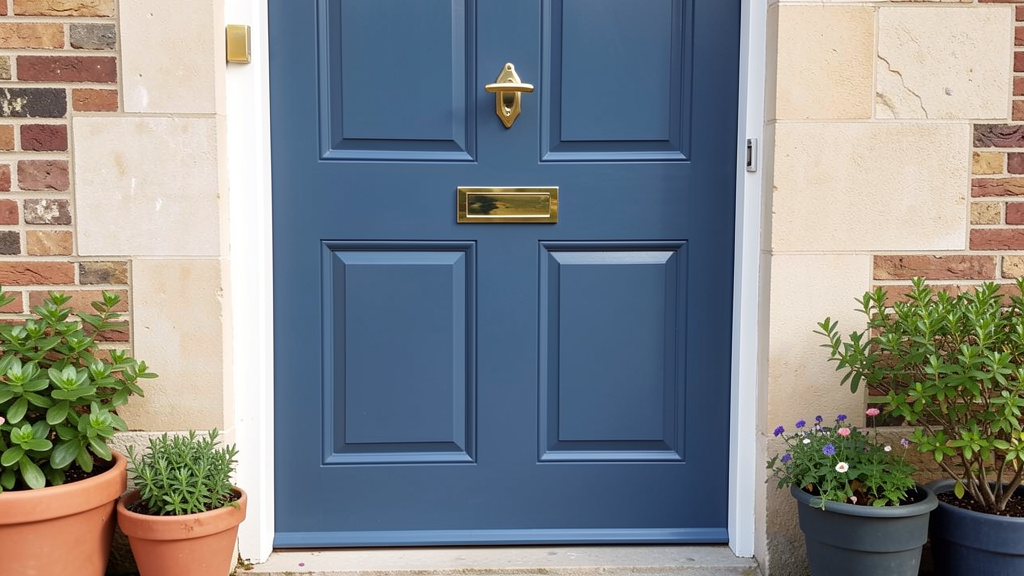
The front door serves as a focal anchor.- Thoughtful Approach: Refresh with a high-quality exterior paint in a tone that complements your home’s permanent features (e.g., deep navy against light siding, forest green beside cream). Update hardware to a finish that feels cohesive—matte black, oil-rubbed bronze, or brushed nickel. Add a single, well-chosen wreath (preserved eucalyptus offers longevity; quality faux boxwood provides lush texture). Install matching lantern-style sconces flanking the door, using warm white bulbs (2700K–3000K) to avoid clinical coolness.
- Budget-Conscious Path: Deep clean the existing door and hardware with a gentle cleaner. Polish brass fixtures with a vinegar-salt paste. Refresh the welcome mat—a frayed mat undermines even a pristine door. Add a single seasonal potted plant beside the step.
- Quick Reset (Under 15 Minutes): Wipe down the door, frame, and hardware. Straighten the mat. Place one thriving potted plant (like a dwarf boxwood or geranium) adjacent to the entry.
- Gentle Guidance: Avoid colors that clash sharply with permanent architectural elements (roof, brick). Test large paint samples at different times of day. Extremely bright or trendy hues may feel dated quickly; timeless depth often serves longer.
- Illustrative Example: A Cape Cod home with white siding felt generic. Painting the door a rich charcoal and updating shiny brass knobs to matte black lever handles introduced quiet character. Neighbors later remarked, “Your house feels more welcoming now.”
- Consideration: In regions with intense sun exposure, very dark door colors may absorb heat. Medium tones like deep green or slate often balance visual weight and practicality. Always verify local guidelines in historic districts before altering exteriors.
-
The Framing Elements (Windows, Trim, Shutters):
These define architectural rhythm. Clean framing makes windows feel intentional—invitations to light and view.- Thoughtful Approach: Refresh trim and shutters with a clean white or soft off-white. Repair visible caulk lines meticulously. Clean windows inside and out—streaks scatter light and subtly signal neglect. If adding shutters, ensure they appear proportional (as if they could close over the window).
- Budget-Conscious Path: Gently pressure wash siding and trim (use low setting on wood). Recaulk visible gaps with paintable exterior caulk. Remove damaged non-functional shutters—sometimes simplicity reads as more intentional. Wash windows with a vinegar-water solution and newspaper for clarity.
- Quick Reset: Wipe sills and frames. Remove cobwebs. Place a small, matching potted herb (rosemary, thyme) on windowsills visible from the street.
- Gentle Guidance: Avoid painting shutters a drastically different color than trim unless your home’s architectural style supports it (e.g., black shutters on a white Colonial). Mismatched tones can fragment the facade.
- Contextual Note: In arid climates, gravel pathways bordered by drought-tolerant agave or ornamental grasses honor regional ecology. In rainy regions, ensure pathways slope gently for drainage to prevent standing water.
-
The Ground Plane (Pathways, Plantings, Lighting):
This layer guides movement and signals ongoing care. Overgrown paths feel uncertain; barren soil feels disconnected.- Thoughtful Approach: Define the walkway clearly. Edge beds sharply. Layer plantings thoughtfully: taller grasses at the rear, medium shrubs in the middle, trailing plants like creeping thyme spilling softly at edges. Install path lights (solar or low-voltage) spaced evenly, angled to graze the path surface—not shine directly into eyes.
- Budget-Conscious Path: Edge existing beds with a spade. Refresh mulch beds with 2–3 inches of shredded hardwood. Replace one struggling plant with a resilient, high-impact specimen like lavender (for scent) or a dwarf hydrangea (for structure). Clean existing path lights or add two new solar lights at the walkway’s start and end.
- Quick Reset: Sweep the walkway and porch. Remove weeds from cracks. Place two matching potted plants flanking the front steps.
- Gentle Guidance: Avoid overcrowding beds. The “thriller, filler, spiller” concept offers balance: one focal plant, supporting elements, trailing texture. Choose warm white (2700K) path lights—they feel inviting, unlike bright white or blue-tinted options.
- Regional Adaptation: In humid climates, select moisture-resistant materials for planters and pathways. In snowy regions, ensure lighting fixtures are rated for wet locations and pathways allow for safe snow clearance.
Triad in Harmony:
Imagine a ranch-style home with beige siding. Before: Faded brown door, dusty trim, cracked walkway with sparse grass. After: Door refreshed in deep sage green; trim cleaned and touched up to soft white; walkway edged and lined with lavender and creeping thyme; two warm-glow path lights installed. Total investment: under $300. The result? The home now reads as intentional, cared-for, and serene. Color draws the eye to the door, clean lines frame the windows, and the planted path invites approach. This is visual storytelling—quiet, coherent, and deeply human.
Step 2: Shape the Entry Sequence—Guiding Movement and Mood from Threshold to Heart
The journey from street to sanctuary is a narrative. A cluttered entry creates friction: fumbling for keys, navigating obstacles, facing visual chaos. A considered sequence reduces cognitive load, signals safety, and sets a gentle emotional tone for the entire home. This step focuses on the critical zone within the first ten feet inside your door—the space where first impressions deepen.
Why the Entry Sequence Matters:
Cognitive load theory suggests humans have limited mental bandwidth for processing environments. A chaotic entry demands attention (“Where do I place my bag?”), depleting energy needed for relaxation or connection. A clear, intuitive sequence conserves mental energy, signaling order and welcome. Real estate professionals often note that buyers begin mentally “moving in” during this moment—if the space feels confusing, envisioning life there becomes harder.
Four Zones for Intentional Flow
-
Zone 1: The Threshold (0–2 Feet In): Transition and Safety
This is where outdoor elements are shed.- Thoughtful Setup: A durable, easy-clean mat inside the door (coir or rubber) catches debris. A wall-mounted hook within arm’s reach holds keys or a light jacket immediately upon entry. Lighting controlled by a switch right beside the door ensures safety.
- Budget Adaptation: Place a shallow tray by the door for keys and small items. Use removable adhesive hooks on the wall or door back for bags. Ensure the existing light switch is accessible.
- Practical Detail: Choose a non-slip surface for the threshold area, especially in wet climates. Avoid deep-pile rugs directly inside the door—they trap moisture.
- Human Insight: Immediate access to hang an item reduces micro-stress. A well-lit threshold feels secure and welcoming.
-
Zone 2: The Drop Zone (2–5 Feet In): Contained Transition
This is the designated spot for items coming off you.- Thoughtful Setup: A narrow console table (12–14 inches deep) against the wall. On top: a shallow bowl for keys, a small tray for mail. Below: a slim bench (with storage if possible) for removing shoes. A full-length mirror nearby serves dual purpose—checking appearance and reflecting light to enhance spaciousness.
- Budget Adaptation: Repurpose a sturdy stool or ottoman as a shoe bench. Use a decorative basket beside it for shoes. Mount a simple floating shelf for keys/mail.
- Gentle Guidance: Keep the drop zone compact and defined. A sprawling entry with scattered furniture can feel inefficient, not generous.
- Space-Saving Idea for Apartments: Install a vertical wall organizer: hooks at varying heights for bags/coats, a small shelf above for keys, a slim shoe rack below. Every inch should serve a clear purpose.
-
Zone 3: The Sightline (5–10 Feet In): The Visual Anchor
What does the eye land on when looking straight ahead from the door? This is your most powerful design tool.- Thoughtful Execution: Create a deliberate focal point:
- A piece of art hung at eye level on the opposite wall.
- A console table with a single sculptural object (ceramic vase, stack of books) and a small lamp.
- A curated view through to another appealing space (a glimpse of a styled sofa, a hallway leading to a window with greenery).
- Critical Consideration: Avoid letting the eye land on a closed closet door, a pile of items, or a completely blank wall. These can feel unresolved.
- Budget Execution: Hang a large framed print or a small gallery wall. Place a resilient snake plant on a side table. Drape a textured throw over the back of a visible chair.
- Human Insight: A pleasing sightline creates gentle anticipation. It answers the unspoken question, “What’s next?” with warmth. In staging practice, this technique encourages visitors to pause and absorb the space positively.
- Thoughtful Execution: Create a deliberate focal point:
-
Zone 4: The Flow Path (Beyond 10 Feet): Unobstructed Movement
Ensure clear, intuitive pathways into main living areas.- Check: Can movement feel natural and unobstructed? Are rugs secured? Are cords managed?
- Quick Adjustment: Pull furniture slightly away from walls to create breathing room. Use furniture sliders for heavy pieces. Secure rug corners with double-sided tape.
- Why It Resonates: Open flow reduces subconscious tension. Cluttered paths can trigger mild anxiety; clear pathways feel generous and calm.
Entry Sequence in Practice:
A family felt morning routines were chaotic—shoes piled by the door, backpacks blocked the hall. Solution: Installed a slim bench with cubbies under the stairs (Zone 2). Added a wall-mounted organizer with labeled bins for each child’s items (Zone 2). Hung a mirror opposite the door to reflect light and depth (Zone 3). Cleared the path to the kitchen (Zone 4). Result: Mornings felt more streamlined. The parent shared, “Walking in after work no longer feels overwhelming. It feels like coming home to calm.” The changes cost under $200 and took one weekend. The emotional shift was profound.
Step 3: Apply the Focal Point Formula—Creating Interior Moments of Calm Attention
Enter a room with no clear focal point. Your eyes dart—TV, bookshelf, window, empty wall—unable to settle. This creates visual fatigue. A strong focal point gives the eye a place to rest, establishes hierarchy, and imbues the space with purpose. The Focal Point Formula offers a repeatable method to identify, enhance, or create focal points in any room, transforming generic spaces into intentional experiences.
The Formula: Anchor + Layer + Frame
Every resonant focal point integrates three elements:
1. Anchor: The primary element (fireplace, bed, large window, statement art).
2. Layer: Supporting elements adding depth (rug under furniture, art above mantel, plants flanking a window).
3. Frame: Elements that visually contain and highlight the anchor (built-in shelves around a TV area, molding around a mirror, a contrasting wall tone behind a bed).
Room-by-Room Application
-
Living Room: Elevating Beyond the Screen
The TV is often the default anchor—but it’s a void when off.- Thoughtful Execution: Treat the TV wall as intentional architecture. Install floating shelves above and beside the screen. Style with a mix: one tall item (sculpture), medium books (stacked varied orientations), a small plant. Paint the wall behind a deeper, complementary tone. Mount the TV at seated eye level. Add ambient lighting: wall sconces flanking the area or subtle LED tape behind the frame to reduce eye strain.
- Budget Execution: Create a gallery wall around the TV using matching frames. Place a large mirror or art piece above the TV (if mounted low). Add two matching floor lamps beside seating to draw the eye upward.
- Alternative Anchor: If you have a fireplace, let it be the focal point. Style the mantel minimally (rule of three: one tall, one medium, one small object). Position seating to encourage conversation and viewing.
- Gentle Guidance: Avoid centering all furniture rigidly around the TV. Angle a chair toward the fireplace or window to invite connection.
- Design Insight: A layered focal point satisfies the brain’s preference for “complexity within order.” Too sparse feels cold; too cluttered feels chaotic. This balance engages without overwhelming.
-
Bedroom: The Sanctuary Anchor
The bed should feel like a retreat.- Thoughtful Execution: Use the wall behind the bed as your canvas. Install a tall headboard (upholstered, wood, or textured panel). Flank with matching bedside tables and lamps with warm bulbs. Layer bedding: crisp sheets, a textured duvet, a folded throw. Add a single piece of large-scale art above the headboard (centered, bottom edge 6–8 inches above).
- Budget Execution: Paint the wall behind the bed a calming, deeper shade than surrounding walls. Use a large tapestry or grid of four identical framed prints. Swap basic lamps for simple ceramic bases with linen shades.
- Practical Detail: Ensure bedside tables align with mattress height for easy access.
- Why It Resonates: Elevating the bed area signals rest. Layered textures (linen, wood, ceramic) engage multiple senses, deepening the feeling of sanctuary. Biophilic design principles note that natural textures can support reduced stress responses.
-
Kitchen: Honoring the Heart
Often overlooked, the kitchen benefits from a visual anchor beyond appliances.- Thoughtful Execution: Create a “coffee station” or “breakfast nook” as a secondary focal point—a small cart styled with a ceramic pour-over set, a small plant, a stack of cookbooks. Or, enhance the sink area: install a beautiful faucet finish, place a small vase with fresh herbs on the windowsill, use a textured runner beside it.
- Budget Execution: Style open shelving intentionally—group items by color or function. Place a small cutting board with a bowl of lemons as a functional vignette. Hang a single piece of art on the largest blank wall.
- Gentle Guidance: Keep the refrigerator surface clear of clutter. Use a dedicated bulletin board or chalkboard nearby for notes.
- Impact: A defined focal point makes the kitchen feel curated and welcoming, transforming routine tasks into moments of care.
-
Bathroom: The Quiet Moment
Transform the vanity or shower area.- Thoughtful Execution: Above the vanity, install a well-lit mirror (integrated lighting if possible). Style the counter minimally: one beautiful soap dispenser, a small tray with hand cream, a single stem in a tiny vase. In the shower, use matching soap dishes and a teak stool.
- Budget Execution: Replace mismatched bottles with uniform amber glass dispensers. Add a small, moisture-resistant framed print opposite the vanity. Place a folded Turkish towel on the counter.
- Sensory Layer: Introduce a subtle, consistent scent (eucalyptus bundle, reed diffuser). Consider sound—a small speaker for morning news or evening calm.
- Why It Resonates: Bathrooms are high-transition zones. A calm focal point reduces morning rush anxiety and elevates daily rituals.
Focal Point Contrast:
Without Intention: A living room with a TV on a bare wall, scattered photos of varying sizes, an overflowing bookshelf, no nearby lighting. The eye has no resting place; the room feels busy yet empty of purpose.
With Intention: The same room. TV mounted on a softly contrasting wall. Floating shelves above hold three curated objects. Matching floor lamps flank the sofa. A large abstract painting in complementary colors hangs nearby. The eye moves calmly: TV → art → shelves → lamps. The room feels collected, calm, and purposeful. The shift required primarily time and intention—not significant expense.
Step 4: Embrace the Lighting Layering System—Revealing Dimension, Mood, and Warmth
Lighting is the silent director of your home’s emotional experience. Flat, overhead-only lighting flattens features, creates harsh shadows, and feels institutional. Layered lighting sculpts space, highlights texture, and adapts to time of day and activity. This system moves beyond “add a lamp” to a precise methodology for building ambiance room by room.
The Three Essential Layers:
1. Ambient (General) Lighting: Soft, overall illumination. Sources: Dimmable recessed lights, ceiling fixtures with fabric shades, cove lighting. Purpose: Safe navigation.
2. Task Lighting: Focused light for specific activities. Sources: Under-cabinet lights, adjustable desk lamps, vanity lights flanking a mirror, reading lamps. Purpose: Enable function without eye strain.
3. Accent Lighting: Light to highlight features. Sources: Picture lights, subtle LED tape behind furniture, wall sconces grazing texture, spotlights on art. Purpose: Create depth and visual interest.
Why Layering Resonates:
Human circadian rhythms respond to light quality and direction. Harsh overhead light can feel stimulating at rest times. Warm, layered light mimics natural daylight patterns, supporting relaxation. Light also reveals texture—without subtle shadows and highlights, walls feel flat, wood grain disappears, and spaces lose dimension. Layering creates the “magic” people feel in beautifully lit spaces.
Room-Specific Layering Guidance
-
Living Room: The Ambiance Engine
- Ambient: Dimmable recessed lights (use adjustable trims to aim light away from seating). If no recessed, choose a central fixture with a fabric drum shade diffusing light softly. Always use dimmers.
- Task: Two matching floor lamps with adjustable arms beside seating areas. Ensure the lampshade bottom aligns with seated eye level to avoid glare.
- Accent: Wall sconces flanking the main focal point to graze the wall surface. Subtle LED tape hidden behind the TV frame or along a bookshelf top for a soft glow.
- Gentle Tip: Use timers or smart plugs to gradually warm lighting 30 minutes before sunset, supporting natural wind-down.
- Budget Path: Begin with task lighting. Replace harsh table lamps with fabric-shaded options and warm LED bulbs (2700K). Add clip-on reading lights to existing chairs. Use plug-in wall sconces for accent layering.
- Common Oversight: Relying solely on a single overhead fixture creates “cave lighting” (bright ceiling, dark floor) and unflattering shadows. Layering resolves this.
-
Kitchen: Safety and Soul
- Ambient: Recessed lights over perimeter counters (not centered in the room). Dimmable.
- Task: Highly Recommended: Under-cabinet lighting along all work surfaces (LED tape is slim and cool-running). Pendant lights centered precisely over the island (height: 30–36 inches above counter). Vanity-style lights flanking the sink mirror (not above) to eliminate facial shadows.
- Accent: Toe-kick lighting under cabinets for a floating effect and nighttime navigation. A small spotlight highlighting a windowsill herb garden.
- Practical Note: Task lighting over counters should minimize shadows. Stand at the counter; your body should not cast a shadow on the work surface. Under-cabinet lights address this effectively.
- Budget Adaptation: Battery-operated LED puck lights under cabinets (stick-on, no wiring). Replace existing bulbs with high-CRI (Color Rendering Index >90) LEDs—they render colors more naturally.
- Why It Matters: Thoughtful kitchen lighting supports safer food preparation and makes cooking feel more enjoyable.
-
Bedroom: The Wind-Down Sanctuary
- Ambient: Recessed lights on a dimmer, or a central fixture with a fabric shade. Avoid bright, bare bulbs.
- Task: Bedside lamps with adjustable arms or swing arms for reading. Ensure switches are reachable from bed.
- Accent: A small picture light over a cherished photo. Subtle LED tape behind the headboard for a soft “halo” effect.
- Circadian Consideration: If possible, use bulbs that shift from cooler tones in the morning to warm amber by evening. Even without smart bulbs, warm white (2700K) bulbs exclusively in bedrooms support restfulness.
- Budget Adaptation: Plug-in wall sconces with USB ports for bedside lighting. A small, dimmable salt lamp on the nightstand offers ultra-warm ambient light.
- Human Benefit: Layered, warm lighting in the bedroom can support a calmer transition to sleep by reducing blue light exposure before bed.
-
Bathroom: Flattering and Functional
- Ambient: Recessed lights over the shower/tub area. Dimmable.
- Task: Strongly Recommended: Vanity lights mounted on the wall, flanking the mirror at approximately eye level. This minimizes shadows under eyes and chin. Choose bulbs with CRI >90 for true color rendering.
- Accent: Recessed light focused on the shower niche. LED tape inside a medicine cabinet for task lighting when open.
- Critical Consideration: A single light above the mirror often casts deep shadows on the face. Flanking lights provide more functional and flattering illumination.
- Budget Fix: Install plug-in wall sconces on either side of the mirror (secure mounting is essential). Replace existing vanity bulbs with high-CRI, warm white LEDs.
- Regional Note: In humid climates, ensure all fixtures are rated for damp/wet locations to support longevity and safety.
Lighting Layering in Practice:
A living room felt “cold and empty” despite nice furniture. Diagnosis: One bright overhead can light. Solution: Added two floor lamps with linen shades (task), installed plug-in wall sconces flanking the sofa (accent), replaced the can bulb with a dimmable warm LED (ambient). Result: “It feels like a different room,” the resident shared. “Now it’s cozy in the evening. We actually sit together here.” Total investment: under $200. The transformation was entirely perceptual—achieved through light.
Step 5: Cultivate Color and Texture Harmony—The Unseen Glue of Cohesive Design
Color and texture operate below conscious awareness yet profoundly shape emotional response. Clashing colors can feel agitating; monotonous texture can feel sterile. Harmony isn’t about matching everything—it’s about creating intentional relationships that feel resolved and deeply personal. This step offers a practical system for selecting and combining colors and textures that feel unified and authentic.
The Harmony Framework: 60-30-10 + Texture Triad
– 60-30-10 Color Guidance:
– 60% Dominant Color (walls, large furniture)
– 30% Secondary Color (upholstery, curtains, area rugs)
– 10% Accent Color (pillows, art, small decor)
This ratio supports visual balance. Significant deviation can leave a space feeling unresolved.
– Texture Triad: Incorporate at least three distinct textures in every main room:
– Smooth (glass, polished wood, lacquer)
– Textured (linen, bouclé, rattan, brick)
– Soft (velvet, wool, faux fur, knit)
Texture adds tactile depth that color alone cannot achieve.
A Practical Workflow for Harmony
-
Step A: Begin with Your Anchor Piece
Start with what you love and won’t change: a vintage rug, a sofa you adore, existing wood floors. Pull colors directly from it.- Example: A rug with deep blues, terracotta, and ivory. Dominant wall color: warm ivory (60%). Secondary: navy upholstery (30%). Accent: terracotta pillows and art frames (10%).
- Gentle Guidance: Avoid choosing paint colors in isolation. Test large swatches (2×2 ft) on your wall. Observe at different times of day—north light is cooler, south light is warmer.
-
Step B: Build Your Texture Palette
For each room, consciously select textures across the triad:- Living Room Example: Smooth (glass coffee table), Textured (jute rug, rattan side chair), Soft (velvet sofa, wool throw).
- Bedroom Example: Smooth (lacquered nightstand), Textured (linen duvet cover, woven wall hanging), Soft (faux fur bench at foot of bed).
- Why It Resonates: Texture engages the sense of touch visually. A room rich in texture feels layered and inviting—even with a neutral palette. A room lacking texture can feel flat, even with bold colors.
-
Step C: Honor Transition Zones
Harmony extends between connected spaces:- Strategy: Use your dominant color (60%) consistently in open-plan areas (e.g., same wall color throughout living/dining/kitchen). Vary secondary (30%) and accent (10%) colors room by room to define zones.
- Example: Open-plan main floor. Walls: consistent warm white (60%). Living room secondary: charcoal sofa (30%); Dining room secondary: walnut table (30%); Kitchen secondary: sage cabinets (30%). Accents shift per room.
- Budget Adaptation: If repainting entire floors isn’t feasible, use area rugs and large textiles (curtains, throws) to introduce the secondary color consistently. A navy rug in the living room and navy curtains in the dining room create subconscious connection.
-
Step D: Understand the Nuance of Neutrals
“Neutral” is not synonymous with “beige void.” True neutrals have undertones:- Warm Neutrals: Cream, greige (gray + beige), taupe, warm white. Effect: Cozy, inviting. Often suitable for north-facing rooms (adds warmth).
- Cool Neutrals: Gray, cool white, greige with blue undertones. Effect: Crisp, serene. Often suitable for south-facing rooms (balances intense sun).
- Practical Tip: Hold paint swatches against your fixed elements (countertops, flooring). A “white” with pink undertones may clash with yellow-toned oak floors. Matching undertones supports harmony.
- Common Consideration: Pure white walls can feel stark and highlight imperfections. An off-white with a subtle undertone (e.g., Sherwin-Williams “Alabaster”) often feels more welcoming.
-
Step E: Introduce Accent Colors with Purpose
Accents (the 10%) should feel deliberate:- Method: Choose one accent color and repeat it in three places within a room (e.g., pillow, art frame, vase). This creates visual rhythm.
- Emotional Resonance:
- Blues/Greens: Calming, trustworthy (ideal for bedrooms, bathrooms)
- Warm Reds/Oranges: Energizing, appetizing (ideal for dining areas—use sparingly as accents)
- Yellows: Cheerful, uplifting (ideal for home offices, north-facing rooms—avoid bright lemon in large doses)
- Budget-Friendly Shift: Change accent colors seasonally with pillows, throws, and small decor. Swap coral for mustard yellow in fall. This refreshes the space without commitment.
Harmony in Practice:
A living room felt disjointed: beige walls, brown leather sofa, blue rug, random colorful pillows. Diagnosis: No dominant color; textures were all smooth (leather, wood) with no softness. Solution: Repainted walls a warm greige (60% dominant). Recovered sofa in textured charcoal bouclé (30% secondary). Kept the blue rug but added charcoal and ivory pillows to bridge colors. Introduced texture triad: Smooth (glass side table), Textured (jute rug layer under blue rug, rattan basket), Soft (ivory wool throw, velvet rust pillow—10% accent). Result: “It finally feels like us,” the resident shared. “Calm but interesting. Guests ask what we did—it’s hard to pinpoint one thing, but the whole room just works.” The investment was primarily paint and reupholstering one pillow; the rest was rearranging existing items with intention. Harmony is alchemy.
Beyond the Framework: Adapting to Your Unique Context
The VIP Framework offers universal principles. True impact comes from adapting them to your reality—your budget, timeline, living situation, and constraints. One-size-fits-all advice rarely serves. This section provides compassionate, actionable pathways for your specific circumstances.
Budget-Conscious Pathways: Meaningful Impact at Every Level
Impact is rarely proportional to cost. Strategic allocation matters far more than total spend. Below is a prioritized guide based on observed perceptual impact and accessibility.
| Improvement | Estimated Cost Range | Perceived Impact | Time Required | Best For |
|---|---|---|---|---|
| Deep Clean + Declutter | $0 (your time) | Very High | 4-8 hours | Everyone. Foundation for all other improvements. |
| Refresh Front Door | $30-$100 | High | 3-5 hours | Maximum curb appeal ROI. Instant visual shift. |
| Update Light Bulbs | $20-$60 | High | 30 mins | Fixes harsh lighting instantly. Warm white (2700K) + high CRI. |
| Style Entry Sightline | $0-$100 | High | 1 hour | Creates powerful first impression inside. Use existing items. |
| Add Layered Lighting | $50-$250 | Very High | 1-3 hours | Most transformative interior upgrade. Lamps, plug-in sconces. |
| Refresh Visible Hardware | $40-$150 | Medium-High | 2-4 hours | Cabinet pulls, door handles. Modernizes instantly. |
| Paint One Accent Wall | $40-$120 | Medium | 4-6 hours | Defines space. Use behind bed or focal point. |
| Install Plug-In Dimmer | $25-$70 | Medium-High | 15 mins | Controls ambiance. Significant mood shift for minimal effort. |
| Layer Textures | $30-$150 | Medium-High | Ongoing | Add throw, rug, pillow. Creates depth and warmth. |
| Professional Deep Clean | $150-$350 | High | 0 (your time) | Worthwhile pre-transition or if time-limited. Resets entire home. |
Strategic Allocation Guidance:
– Under $100 Total: Focus on cleaning, decluttering, and bulb replacement. This resets the baseline perception of care. Then, refresh the front door. This sequence delivers disproportionate impact.
– $100 – $300 Total: Add entry sequence styling (thrifty console table from secondhand store, styled with existing items) and one layered lighting element (a quality floor lamp). Update visible cabinet hardware in kitchen/bath.
– $300 – $600 Total: Incorporate texture layering (area rug, throw blanket, textured pillow) and paint one strategic accent wall. Install plug-in wall sconces for accent lighting.
– $600+ Total: Consider professional help for high-skill items (painting entire room, installing hardwired lighting) while you handle styling. Prioritize improvements in the order of the VIP Framework—curb appeal and entry sequence often yield the strongest initial resonance.
The $25 Reset Challenge:
Prove impact isn’t about budget. With $25:
1. Buy a new welcome mat ($15).
2. Purchase a small potted plant ($10).
Place mat squarely, position plant beside door. Result: An immediate signal of care and welcome. This micro-project builds momentum for larger changes.
Time Investment Spectrum: Matching Effort to Your Available Windows
Time is often the scarcer resource. Align improvements with your realistic availability.
Micro-Moments (Under 15 Minutes):
– Wipe down light switches and door handles.
– Straighten cushions on seating.
– Clear countertops in kitchen and bathroom.
– Adjust lamp shades to sit straight.
– Place a single stem flower in a small vase on the entry console.
Why it works: These “reset” actions combat entropy—the natural drift toward disorder. They signal active care, which subconsciously registers as intention.
Power Hour Projects (60 Minutes):
– Style your entry sightline: Clear surface, add bowl for keys, place one book and a small meaningful object.
– Replace visible light bulbs with warm white (2700K), high-CRI LEDs.
– Edit one bookshelf: Remove 30% of items, group books thoughtfully, add one small plant.
– Deep clean your kitchen sink and faucet until they shine.
Impact: Creates a noticeable “freshened” feeling in high-traffic zones. Builds confidence for larger tasks.
Half-Day Projects (3-4 Hours):
– Refresh your front door (including prep and cleanup).
– Deep clean and organize one closet (entry, linen).
– Install new cabinet hardware throughout kitchen or bathroom.
– Pressure wash front walkway and porch (if accessible).
Strategy: Schedule these on a Saturday morning. The visible result provides immediate gratification and motivates further action.
Weekend Projects (6-8 Hours Total):
– Paint one accent wall (including moving furniture, taping, painting, cleanup).
– Install plug-in wall sconces in living room or bedroom.
– Create a layered lighting plan: Buy and place two new lamps.
– Refresh bedroom bedding with new duvet cover and textured throw.
Gentle Tip: Break into two 3-hour sessions (Saturday AM, Sunday AM) to avoid fatigue. Celebrate completion with a small ritual (light a candle, enjoy tea in the transformed space).
Skill-Level Adaptations: Honoring Your Comfort Zone
Honest self-assessment prevents frustration. Use this compassionate filter:
Confidently DIY If:
– The project involves styling, arranging, cleaning, painting (with proper prep), or plug-in installations.
– Mistakes are reversible or low-cost (e.g., wrong paint color can be repainted; decor can be moved).
– You enjoy the process and have basic tools (screwdriver, level, paintbrushes).
Examples: Painting doors/walls, updating hardware, styling shelves, installing plug-in lights, deep cleaning.
Consider Professional Support If:
– The project involves structural changes, electrical wiring (beyond plug-in), plumbing, gas lines, or significant heights.
– Local building codes require permits or licensed work (check with your municipality).
– The potential consequence of a mistake (water damage, safety hazard) outweighs the professional’s fee.
– You feel significant anxiety or lack foundational skills.
Examples: Installing hardwired lighting, major plumbing fixture replacement, structural modifications.
The Collaborative Approach:
– You handle: Prep work (moving furniture, cleaning surfaces, shopping for materials).
– Professional handles: Skilled execution (painting walls, installing fixtures).
Why it works: You retain aesthetic control and save on labor costs for prep. The professional ensures quality and safety on technical aspects. For painting, hire help for cutting-in edges and rolling large walls; you handle touch-ups. For lighting, hire an electrician for hardwiring; you select fixtures and style placement.
Building Confidence Gradually:
Start small. Successfully refreshing a small bathroom builds skills for larger rooms. Watch reputable tutorial videos before starting. Visit hardware stores—staff often provide free, practical advice. Remember: Imperfect action taken with care often carries more meaning than perfect inaction. A slightly imperfect shelf you installed yourself holds emotional value.
Seasonal Strategy: Working With Nature’s Rhythms
Align improvements with seasonal energy for better results and lower stress.
Spring (Renewal & Growth):
– Focus: Curb appeal, deep cleaning, lightening interiors.
– Actions: Refresh mulch, plant annuals, clean windows inside/out, swap heavy throws for light cotton, introduce fresh greenery indoors.
– Why: Aligns with natural human desire for renewal. Maximizes impact as days lengthen.
Summer (Light & Air):
– Focus: Enhancing outdoor living, optimizing light, cooling tones.
– Actions: Clean patio furniture, add outdoor string lights, ensure window coverings allow breeze while filtering harsh sun, use light-colored linens.
– Why: Supports enjoyment of longer days. Prevents home from feeling closed-off.
Fall (Warmth & Coziness):
– Focus: Creating hygge (coziness), preparing for indoor time, warm lighting.
– Actions: Layer rugs and throws, introduce warm accent colors (terracotta, mustard), service heating system, add ambient lighting (salt lamps, dimmable lamps), display seasonal decor minimally.
– Why: Counters shorter days and cooler temps. Makes home a welcoming refuge.
Winter (Sanctuary & Reflection):
– Focus: Interior comfort, mood lighting, organization.
– Actions: Deep clean and organize storage, add soft textures (faux fur, velvet), ensure all lighting is warm and layered, display meaningful art/photos, maintain fresh air circulation.
– Why: Supports well-being during indoor-heavy months. Creates a nurturing environment.
Regional Seasonal Considerations:
– Hot Climates: Focus curb appeal improvements in cooler months. Prioritize shade solutions (awnings, pergolas) in spring. Use light, reflective colors.
– Cold Climates: Maximize natural light in winter (clean windows, minimize heavy curtains). Ensure entryways are slip-resistant and well-lit for snow/ice. Use warm lighting year-round.
– Humid Climates: Prioritize mold/mildew prevention (bathroom ventilation, dehumidifiers). Choose moisture-resistant materials for outdoor and bathroom projects. Schedule exterior painting in dry season.
Navigating Common Constraints: Compassionate Solutions for Real Life
Theory meets reality. Here’s how to adapt the VIP Framework when faced with genuine constraints.
“I Rent My Home—What Can I Do?” (Landlord-Friendly, Reversible Enhancements)
Rental restrictions are real, but visual impact isn’t off-limits. Focus on non-permanent, removable changes that enhance your experience without violating leases.
Exterior Curb Appeal (With Permission or Discretion):
– Place large, attractive potted plants (in your own containers) on the porch or beside the door. Use matching pots for cohesion.
– Swap the welcome mat (store original safely).
– Hang a removable wreath using a Command™ hook designed for doors.
– Always check your lease first. Many landlords appreciate tenants who enhance curb appeal—ask politely. Frame it positively: “I’d like to add some seasonal plants to make the entry feel welcoming; I’ll maintain them and remove them upon moving.”
Interior Enhancements (Zero Damage):
– Walls: Use removable wallpaper (like Spoonflower or Chasing Paper) on one accent wall or inside a closet door. Apply removable picture hanging strips (Command™) for art—test on an inconspicuous area first. Create a gallery wall using washi tape frames.
– Lighting: Replace builder-grade lampshades with stylish fabric ones. Use plug-in wall sconces (no wiring). Add smart bulbs to existing lamps (control color temp/brightness via app). Place battery-operated LED puck lights under kitchen cabinets.
– Hardware: Use temporary knob covers (silicone sleeves that slip over existing cabinet pulls) in modern finishes. Replace shower curtain and liner with a stylish, mildew-resistant option.
– Flooring: Layer area rugs over dated carpet or vinyl. Use rug pads to prevent slipping and protect floors.
– Kitchen/Bath: Update faucet aerators to a modern finish (matte black, brushed gold)—easily reversible.
– The Golden Rule: Document the original condition with photos before moving in. Return all changes upon moving out. Most landlords value tenants who care for the property, even with minor reversible enhancements.
Renter Experience:
A tenant in a standard apartment felt disconnected from the space. Actions: Added a large removable floral mural on the living room accent wall. Installed plug-in wall sconces beside the bed. Layered a jute rug over the carpet. Used temporary knob covers on kitchen cabinets. Placed tall plants in corners. Result: “It felt like my home, not a temporary stop. My landlord even complimented how ‘lived-in and cared for’ it looked during the final walkthrough. I received my full deposit back.” Total investment: approximately $250. All items were packed and reused in the next home.
“I Have Limited Design Confidence” (Foolproof Formulas and Decision Shortcuts)
Decision fatigue is common. Remove subjectivity with these concrete, compassionate rules.
The 3-Question Filter for Any Design Choice:
1. Does it serve a purpose? (Function: holds keys, provides light, defines space)
2. Does it bring me calm or joy? (Emotion: no guilt, no “shoulds”)
3. Does it connect to something else in the room? (Harmony: repeats a color, shape, or material)
If an item fails two questions, reconsider. This eliminates clutter and ensures intentionality.
Foolproof Color Palette Starter:
1. Find a photo you love (nature scene, artwork, fabric swatch).
2. Identify the lightest neutral (for walls), a medium tone (for large furniture), and a small pop of color (for accents).
3. Take the photo to a paint store; many offer digital color matching.
Example: A photo of a forest stream: Lightest = misty sky (wall color), Medium = wet stones (sofa color), Pop = moss green (pillow color).
The “One In, One Out” Practice for Decor:
Before acquiring a new decorative item, thoughtfully release one existing item. This prevents accumulation and encourages curation. Ask: “Does the new item serve the space more meaningfully than the old one?”
Start with a Calm Base, Then Personalize:
Paint walls a warm off-white (e.g., Sherwin-Williams “Alabaster”). Choose large furniture in charcoal, navy, or warm wood tones. Add personality only through textiles and small decor (pillows, throws, art). This creates a serene, adaptable foundation. You can shift accent colors seasonally without repainting.
Begin With What You Have:
Before purchasing anything:
– Edit existing items. Remove 30% of decor from shelves/surfaces.
– Rearrange furniture. Pull pieces slightly away from walls. Create conversation areas.
– Clean everything thoroughly. Shine makes items feel renewed.
Often, the “missing” element was buried under clutter or poor arrangement.
“My Home Has Unique Architectural Features” (Working With, Not Against, Your Space)
Odd angles, low ceilings, small windows—these aren’t flaws; they’re character. Adapt the framework with compassion.
Low Ceilings:
– Strategy: Create vertical lines to draw the eye upward.
– Actions: Install floor-to-ceiling curtains (hang rod 6+ inches above window frame). Use vertical stripes on an accent wall (removable wallpaper). Choose furniture with slender profiles (leggy sofas, transparent acrylic chairs). Avoid bulky ceiling fixtures; use recessed lights or uplighting. Paint ceiling a shade lighter than walls.
– Why it works: Vertical lines create an optical illusion of height. Lighter ceilings feel less imposing.
Small, Dark Rooms:
– Strategy: Maximize light reflection and minimize visual weight.
– Actions: Paint walls, trim, and ceiling the same light, warm color (creates seamless flow). Use large mirrors opposite windows to bounce light. Choose furniture with exposed legs (creates sightlines). Install multiple light sources (layered lighting) instead of one overhead. Use glossy finishes on surfaces (reflects light).
– Avoid: Dark colors, heavy drapes, large patterned rugs (they can fragment the space).
– Mindset Shift: Frame it as a “cozy nook,” not a “small room.” Lean into intimacy with plush textures and warm lighting.
Awkward Layouts (Odd Angles, Columns):
– Strategy: Define zones and honor the feature.
– Actions: Use area rugs to delineate functional areas (seating zone, dining zone). Place a console table or tall plant against an angled wall to create purpose. Turn a column into a feature: wrap it in rattan, install floating shelves around it, or paint it a contrasting color.
– Mindset Shift: “How can this unique element serve the space?” A column can anchor a seating area. An angled wall can house a built-in bench.
Open-Plan Overwhelm:
– Strategy: Create visual “rooms” within the space.
– Actions: Use area rugs to define zones (living, dining). Vary lighting heights subtly with pendant lights over the island/dining table. Use furniture arrangement: position sofa back toward dining area. Introduce partial dividers: a tall bookshelf (open back), a console table with plants, a folding screen.
– Key: Maintain sightlines. Don’t block light flow. Zones should feel connected, not isolated.
“I Feel Overwhelmed by Choices” (The 3-Question Filter to Simplify Decisions)
When faced with endless options, apply this compassionate filter:
- What is the PRIMARY FUNCTION of this space? (e.g., Kitchen = cooking/connection; Bedroom = rest/restoration). Let function guide form. A kitchen benefits from durable, easy-clean surfaces; a bedroom thrives with soft textures and calming colors. Eliminate options that contradict the primary function.
- What is the ONE FEELING I want people to experience here? (e.g., Calm, energized, welcomed, inspired). Choose colors, textures, and lighting that evoke that specific emotion. Warm neutrals and layered lighting support calm. Bright accents and task lighting support energy. This filters out emotionally mismatched choices.
- Does this choice simplify or complicate my daily life? Be gently honest. High-maintenance surfaces in a busy family kitchen may add stress. Easy-wipe materials simplify. A complex lighting system may complicate; simple dimmers simplify. Prioritize choices that reduce daily friction.
This filter shifts decisions from subjective (“Do I like this?”) to objective (“Does this serve my life?”). It builds a home that works for you, not against you.
Your Questions, Answered
Home enhancement generates thoughtful questions. Here are frequent inquiries, answered with clarity and care.
Q: Can visual improvements support my home’s marketability?
A: Certain improvements can enhance presentation and appeal. Industry reports, such as those from the National Association of Realtors, note that projects like garage door updates, minor kitchen refreshes (focusing on surfaces, fixtures, paint), and exterior painting often recover a meaningful portion of their investment at resale. Additionally, presentation-focused efforts—deep cleaning, decluttering, strategic styling, and curb appeal enhancements—can help a home make a strong first impression, potentially supporting quicker sales and competitive offers. Local market conditions vary, so consider improvements that also bring you daily enjoyment. A well-presented home reduces buyer hesitation and fosters emotional connection.
Q: I’m on a tight budget. What’s the SINGLE most impactful thing I can do right now?
A: Deep clean and thoughtfully declutter the entry sequence (from front door through the first 10 feet inside). This costs nothing but time and delivers significant impact. Why? It’s the first space visitors experience. A clean, organized, intentional entry signals that the entire home is well-maintained. It reduces cognitive load, creates immediate positive emotion, and sets the stage for appreciating the rest of the house. Spend 60 minutes: wipe all surfaces, straighten mats, clear floors, style a simple vignette on the console table (bowl for keys, one book, small plant). This single action reshapes the narrative before anyone sees another room.
Q: How do I choose a front door color that feels timeless and harmonious?
A: Follow this gentle process:
1. Observe your home’s permanent colors: Roof shingles, brick, stone, siding. Take a photo.
2. Select a color family that complements them:
– Warm-toned home (beige siding, red brick, brown roof): Navy, forest green, charcoal gray, deep terracotta.
– Cool-toned home (gray siding, black roof, white trim): Black, deep blue, burgundy, olive green.
– Neutral home (white, light gray): Many colors work—choose based on desired feeling (navy = grounded, black = sophisticated).
3. Test large samples: Paint two 2×2 ft sections on the door (one in sun, one in shade). Observe at dawn, noon, and dusk for 2-3 days.
4. Seek balance: Avoid extremes like neon brights or colors that match exactly to siding/trim (creates visual flatness). Contrast adds depth. When in doubt, deep charcoal gray is a versatile, sophisticated choice for many architectural styles.
Q: Is painting kitchen cabinets worthwhile, or should I focus on hardware?
A: It depends on cabinet condition and your situation.
– Paint cabinets if: Doors are solid wood (not laminate), in good structural condition, and you have budget/time for thorough prep (sanding, priming, cabinet-grade paint). Properly executed painting transforms a kitchen. Skipping prep often leads to poor results.
– Refresh hardware only if: Cabinets are dated but structurally sound, budget is limited, or you rent. New pulls/handles (matte black, brushed brass) modernize instantly. Combine with fresh wall color and updated lighting for significant impact at low cost.
– Consider alternatives if: Cabinets are particleboard with peeling laminate, heavily damaged, or very dark wood you wish to lighten significantly. In these cases, professional assessment may guide next steps. When possible, test paint on the back of a door first.
Q: How many pillows is appropriate on a sofa?
A: The “balanced zone” is typically 3-5 standard pillows on a 3-seater sofa. Apply the 60-30-10 guidance:
– 60% = Solid color pillow matching sofa or dominant room color.
– 30% = Patterned pillow (scale should complement room size).
– 10% = Accent color pillow (ties to art, rug, or another element).
Signs of excess: Pillows must be removed to sit comfortably; visual clutter overwhelms the sofa shape. Gentle Tip: Use varying sizes (22×22 inch squares, 12×20 inch lumbar) for dimension. Store seasonal pillows nearby for easy rotation.
Q: What’s the difference between warm white, cool white, and daylight bulbs? Which should I use where?
A: It’s about color temperature, measured in Kelvins (K):
– Warm White (2700K-3000K): Yellowish hue, like candlelight. Use in: Living rooms, bedrooms, dining rooms—spaces for relaxation. Creates cozy, inviting ambiance. Ideal for: Bedside lamps, entryways, above dining tables.
– Cool White (3500K-4100K): Neutral, clean white. Use in: Kitchens (task areas), bathrooms (vanity lighting), home offices, garages. Supports alertness and clarity for detailed tasks.
– Daylight (5000K-6500K): Bluish-white, mimics midday sun. Use sparingly: Only in utility areas like laundry rooms, workshops, or closets where true color accuracy is critical. Avoid in: Living spaces—it can feel clinical and is unflattering to skin tones.
Critical Upgrade: Choose bulbs with a CRI (Color Rendering Index) of 90+. This ensures colors look true and vibrant (food looks appetizing, skin tones look healthy).
Q: I dislike my builder-grade beige walls. How do I choose a new color without making the space feel dark?
A: Begin with a warm, light neutral—not pure white. Pure white can feel stark against existing trim or flooring. Instead:
1. Identify undertones in your fixed elements: Hold white paper next to your floor. Does it look yellow (warm), pink (cool), or gray (neutral)? Match your wall color’s undertone.
2. Consider a “greige” (gray + beige): This is often a versatile, adaptable neutral. Examples: Sherwin-Williams “Agreeable Gray,” Benjamin Moore “Revere Pewter.” They adapt to light, feeling warm in south-facing rooms and cool in north-facing rooms.
3. Test large samples: Paint 2×2 ft sections on multiple walls. Live with them for 2 days. Observe at different times.
4. Paint connected spaces the same color: Creates flow and prevents a “patchwork” effect. Use accent colors in textiles and decor to add personality.
5. Lighten existing beige: If staying neutral, choose a shade 25-50% lighter than your current wall. This brightens without drastic change.
When unsure, many paint retailers offer color consultation services. Virtual paint apps (like Sherwin-Williams ColorSnap) can also help visualize options.
Q: How can I make a small apartment feel more spacious without structural changes?
A: Leverage thoughtful optical cues and intentional editing:
– Mirrors: Place a large mirror opposite a window to reflect light and view. Lean a floor-length mirror against a wall.
– Lighting: Maximize layered lighting. Avoid heavy overhead fixtures. Use uplighting (floor lamps shining upward) to draw eyes toward ceiling height.
– Furniture Scale: Choose pieces with exposed legs (creates sightlines underneath). Opt for transparent furniture (acrylic chairs, glass tables). Avoid bulky sectionals; use a loveseat + armchair.
– Color: Paint walls, trim, and ceiling the same light, warm color. This eliminates visual breaks that can make rooms feel chopped up.
– Declutter Mindfully: Every item left out can make the space feel smaller. Use vertical storage (tall bookshelves, wall-mounted shelves). Store items out of sight.
– Window Treatments: Hang curtains floor-to-ceiling, rod placed high above window frame. This creates the illusion of taller windows and higher ceilings.
– Rugs: Use one large area rug that fits under the front legs of furniture (not a tiny rug floating in the center). Defines the space without fragmentation.
Q: Are peel-and-stick backsplashes or wallpaper reliable? Will they damage walls?
A: Quality has improved, but success depends on surface prep and product choice.
– Peel-and-Stick Backsplashes (Tile Look): Best for renters or temporary updates. High-quality brands use rigid tiles with strong adhesive. Pros: Easy install, no grout, removable. Cons: May peel at edges over time near heat/splashes; may not adhere well to textured walls. Tip: Clean wall thoroughly. Apply to smooth, primed drywall only. Avoid directly behind stove.
– Peel-and-Stick Wallpaper: Excellent for accent walls or renters. Brands like Chasing Paper or Spoonflower use removable, repositionable vinyl. Pros: Huge design variety, easy to apply/remove. Cons: Can be tricky on textured walls; seams may show if not aligned perfectly. Critical Removal Tip: Pull slowly at a 180-degree angle (parallel to wall). Use a hairdryer on low heat to soften adhesive if needed. Always test a small strip in an inconspicuous area first and check removal after 2 weeks.
Verdict: Worthwhile for low-risk, high-impact updates with quality products and meticulous surface prep. Not a permanent solution, but ideal for refreshing spaces without commitment.
Q: How often should I refresh my home’s visual elements to keep it feeling current?
A: Focus on cyclical care, not constant overhaul:
– Daily/Weekly: Reset surfaces (straighten pillows, clear counters), fresh flowers, open curtains for light.
– Seasonally (Every 3 Months): Swap textiles (light throws in summer, wool in winter), adjust accent colors, refresh outdoor planters.
– Annually: Deep clean windows, wash walls/trim, inspect and touch up paint, evaluate lighting (replace bulbs, clean fixtures).
– Every 3-5 Years: Consider larger updates: repaint a room, replace worn rugs, update hardware, refresh upholstery on one key piece.
The goal isn’t constant change—it’s intentional maintenance. A home that feels cared for through consistent small actions will always feel fresher than one undergoing sporadic major renovations. Listen to your space: When does it start to feel “heavy” or “stale”? That’s your gentle cue for a seasonal refresh.
Q: What’s the most common oversight when enhancing a home’s visual appeal?
A: Attempting too much at once without a compassionate plan. This can lead to:
– Decision fatigue and abandoned projects.
– Incoherent style (buying items that don’t connect).
– Budget strain on low-impact items.
– Increased stress, making the home feel less welcoming.
The antidote is the VIP Framework: Begin with Step 1 (Curb Appeal Triad). Complete it fully. Then move to Step 2. Celebrate each completed layer. This builds momentum, ensures strategic impact, and creates a cohesive result. Remember: A few deeply considered improvements create more resonance than dozens of haphazard ones. Progress, not perfection, is the goal.
Conclusion: Your Path Forward Begins With a Single, Kind Step
You now hold a compassionate, adaptable system for enhancing your home’s visual resonance—not through overwhelming renovation, but through deliberate, strategic action. The VIP Framework (Curb Appeal Triad, Entry Sequence, Focal Point Formula, Lighting Layering, Color/Texture Harmony) offers the map. The contextual adaptations (budget, time, skill, constraints) offer the compass. This isn’t about achieving a magazine-perfect ideal; it’s about crafting a space that genuinely supports your well-being, reflects your intention, and welcomes those you care about.
Recap: Three Anchoring Principles
- Perception Shapes Experience: How your home is experienced—in moments at the curb, in the first steps inside—shapes every subsequent feeling. Honor the visual pathways humans use first.
- Intention Resonates Deeper Than Expense: A $20 potted plant placed with purpose delivers more meaning than a costly item chosen without thought. Every element should serve function, emotion, or harmony.
- Cohesion Cultivates Calm: Harmony across color, texture, and lighting reduces mental load and signals care. A unified whole feels more restorative than a collection of disconnected parts.
The 24-Hour Invitation: Your Gentle, Transformative Action
Before tomorrow ends, complete one of these micro-actions:
– If you own: Wipe down your front door and hardware. Place a single thriving potted plant beside the steps.
– If you rent: Style your entry console: Clear the surface, place a bowl for keys, add one book and a small object you love.
– For everyone: Replace one harsh overhead bulb with a warm white (2700K), high-CRI LED bulb in a lamp you use daily.
This is not about the scale of the action. It’s about honoring your capacity. It proves you can create positive change. It builds evidence that transformation is possible. Momentum begins with a single step taken with care.
The Larger View: Compounding Care Over Time
Visual enhancements are not isolated events. They compound. A clear entry sequence makes you more likely to maintain order inside. Layered lighting encourages evening relaxation. A harmonious color palette reduces daily decision fatigue. These changes reshape not just your space, but your habits, your mood, and your relationship with home. Over months and years, this intentional curation builds a sanctuary that actively supports your life—a place that doesn’t just house you, but restores you. The most valuable return on these efforts isn’t measured in resale value (though that may follow); it’s the quiet pride of walking into a space that feels authentically, peacefully yours.
Start small. Start today. Your home is waiting to welcome you.
Explore Our Complete System:
The Psychology of Home: How Your Space Shapes Your Mind and Mood | Curb Appeal with Care: 20 High-Impact Projects Under $100 | The Layered Lighting Guide: A Room-by-Room Approach to Ambiance | Declutter with Compassion: Beyond Minimalism to Meaningful Spaces | Color with Confidence: A Gentle System for Choosing Palettes You’ll Love | The Renter’s Guide: Transforming Temporary Spaces with Style and Soul | Weekend Projects with Purpose: 10 High-Impact Improvements You Can Complete in 48 Hours