Move beyond fleeting inspiration with a systematic approach to evaluate, prepare, and craft with reclaimed materials—turning everyday discards into meaningful home features while thoughtfully reducing environmental impact.
Household waste streams contain materials with remarkable potential, yet transforming discards into functional home elements raises valid questions: Is that weathered pallet suitable for indoor use? How thoroughly must glass jars be sanitized? What structural considerations ensure stability in repurposed furniture? This guide replaces uncertainty with clarity. We introduce the R.E.C.L.A.I.M. Framework—a repeatable methodology grounded in material science principles and sustainable design practices—to thoughtfully assess, prepare, and transform recycled materials. Whether converting wine bottles into lighting elements or repurposing an old ladder into a plant display, you’ll develop the discernment to create safely, sustainably, and with intention.
Introduction: Recognizing Potential in Everyday Discards
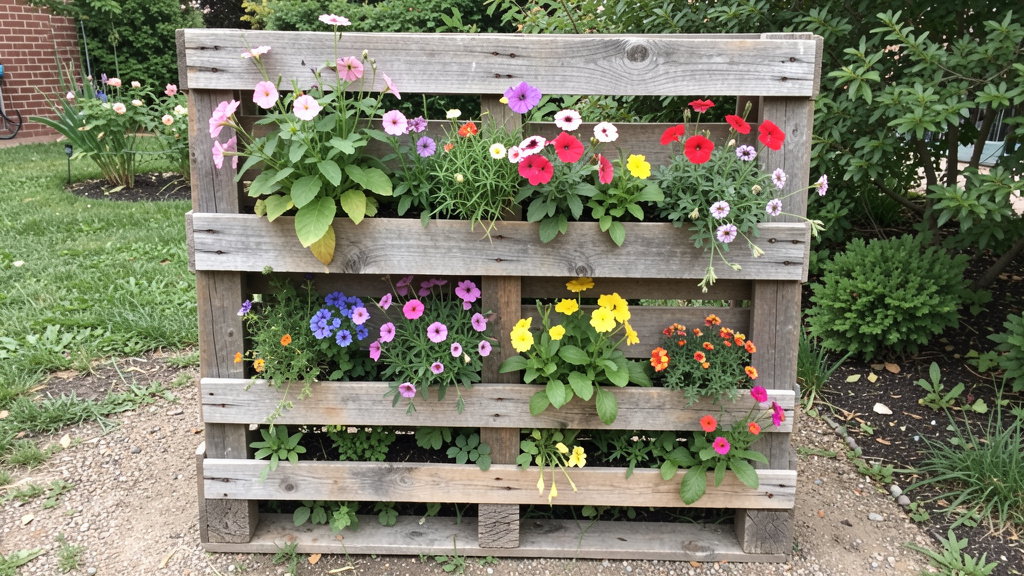
Consider the journey of a standard wooden shipping pallet. After delivering goods, it often faces landfill disposal despite containing usable wood. Within its weathered slats lies potential for a coffee table, vertical garden frame, or children’s play structure. This transformation represents tangible resource stewardship. Construction and demolition debris contribute significantly to global waste streams, while common household items like glass, plastic, and textiles further burden disposal systems. Redirecting even modest amounts of these materials into thoughtfully crafted projects reduces demand for virgin resources, lowers associated manufacturing emissions, and fosters deeper connection to our living environments.
Yet inspiration alone is insufficient. Online project galleries frequently omit critical details: adhesive compositions in composite wood, splinter risks from untreated surfaces, or load limitations of repurposed crates. This gap between visual appeal and functional safety creates hesitation. Without structured guidance, well-intentioned efforts may lead to frustration or unintended hazards. This resource bridges that divide. Synthesized from material safety protocols, sustainable building references, and documented upcycling practices, the following framework equips you to evaluate materials with confidence. We move beyond isolated project lists to cultivate transferable skills—transforming curiosity into capability and discarded items into purposeful additions to your home.
The R.E.C.L.A.I.M. Framework: A Systematic Path to Thoughtful Upcycling
Shifting perspective—from viewing items as “waste” to recognizing them as resources with specific properties—is foundational. The R.E.C.L.A.I.M. Framework provides a phased methodology for this transition. Each phase builds deliberately upon the last, creating a循环 of assessment and adaptation. This is not merely a checklist but a cognitive toolkit for making informed judgments about material suitability, safety, and integration. With practice, you’ll develop an intuitive eye for opportunity—spotting potential in a discarded door, stacked magazines, or collected wine corks—and execute with care.
The Guiding Principle: The lasting value of a recycled material project lies not in the novelty of its source, but in the thoughtfulness of its preparation and harmonious integration into your home’s functional and aesthetic landscape.
Phase 1: Resource Evaluation – Assessing Material Viability and Safety
Thorough evaluation prevents future complications. Approach each potential material with objective inquiry:
-
Origin and History: Where did this item originate? What was its prior use? Wooden crates from hardware suppliers may have contacted chemicals; pallets stamped “MB” (methyl bromide) indicate toxic fumigation and should be avoided. Pallets marked “HT” (heat-treated) are generally suitable for non-food projects. Glass jars from grocery store sauces are typically safe for reuse; containers that held automotive fluids, pesticides, or unknown substances should never be repurposed for household use. When sourcing from businesses, always request explicit permission—many have disposal contracts, and removal without consent is ethically and legally problematic.
-
Structural Integrity: Inspect for cracks, warping, rot, or corrosion. Tap wood gently—a hollow sound may suggest internal decay. Flex plastic items slightly; brittleness indicates UV degradation. For metal, distinguish surface rust (often removable) from deep pitting (compromises strength). Consider prior stress: a ladder with bent rungs or chair with loose joints requires significant reinforcement. Hold wood to light—if pinholes or fine powder (frass) appear, insect activity may be present.
-
Composition and Contaminants: Is the material pure or composite? Particleboard and MDF contain resins that may off-gas; sealing for indoor use requires careful product selection. Pressure-treated lumber (common in pre-2004 decks) contains preservatives unsuitable for edible garden planters. For painted wood predating 1978 (in the US), assume potential lead content; affordable test kits provide clarity. Check plastic recycling codes (♻️ symbol): exercise caution with #3 (PVC) and #6 (polystyrene) for food-contact applications due to potential chemical interactions.
Practical Application: Finding a discarded wooden door? Evaluation steps: 1) Check for treatment stamps or chemical residues. 2) Sight down the edge for warping. 3) Sand a discreet area—if paint chips easily or reveals multiple layers, test for lead. 4) Assess construction: solid-core doors (heavier, consistent tap sound) offer more usable material than hollow-core. Only after passing these checks does the door become a candidate for repurposing. This disciplined evaluation safeguards project longevity and user safety.
Phase 2: Cleaning and Decontamination – Preparing Materials for Safe Use
Cleaning is essential for health, adhesion, and structural integrity. Tailor methods to material type:
-
Wood: Remove hardware using a pry bar. Scrub with warm water, mild soap, and a stiff nylon brush. For mold/mildew, a diluted white vinegar solution (1:3 ratio) effectively neutralizes spores without weakening fibers like chlorine bleach. Avoid pressure washers—they force moisture deep into grain. Dry thoroughly on sawhorses with spacers between slats in a ventilated area for 7–14 days (longer in humid conditions, shorter in arid climates). For persistent odors (smoke, pet accidents), place activated charcoal or baking soda in a sealed container with the wood for 48–72 hours. Key consideration: Wood seeks equilibrium with ambient humidity. Monitor drying progress—rushing invites warping or mold.
-
Glass and Ceramics: Soak to loosen labels. Use a razor scraper (at 45 degrees) with cooking oil to soften adhesive residue. For food-safe reuse, sterilize via dishwasher sanitize cycle or boiling for 10 minutes. Inspect for hairline cracks by tapping gently—a clear ring indicates integrity; a dull thud signals damage. Vintage glass with cloudiness may regain clarity after a 30-minute soak in denture cleaner solution.
-
Metal: Remove rust with wire brush or sandpaper. For heavy rust, a white vinegar soak (24 hours) followed by scrubbing works well. Neutralize with a baking soda rinse (¼ cup per quart of water). Wipe with mineral spirits to remove grease before finishing. For aluminum, citric acid solution is gentler than vinegar. Always wear cut-resistant gloves and eye protection—edges can be exceptionally sharp.
-
Plastics: Wash with mild soap and lukewarm water. Avoid abrasives that create micro-scratches harboring bacteria. Research recycling codes thoroughly; some plastics release fumes when cut or heated. Codes #1 (PET) and #2 (HDPE) are generally preferred for repurposing. Cloudy containers may brighten after a hydrogen peroxide soak in sunlight (several hours).
Common Pitfall: Skipping thorough drying for wood. Trapped moisture causes mold behind finishes or post-assembly warping. Similarly, incompletely dried metal invites flash rusting—wipe thoroughly and apply a light protective oil if storing before finishing.
Phase 3: Adaptation and Modification – Reshaping with Purpose
This phase transforms prepared materials into project components. Precision honors both safety and character.
-
Cutting and Shaping: Match tools to materials. A fine-toothed pull saw minimizes splintering on reclaimed wood. For glass bottle projects, carbide-tipped cutters with running pliers create cleaner breaks than improvised methods—always wear safety goggles and gloves, and smooth edges meticulously with wet/dry sandpaper (progressing from 80 to 400 grit). Secure metal firmly before cutting; use slow, steady pressure with appropriate blades. For plastics, cool blades periodically with water to prevent melting.
-
Joining Techniques: Pre-drill pilot holes (≈70% screw diameter) in reclaimed wood to prevent splitting, especially near edges. For dissimilar materials (wood to metal), use two-part epoxy rated for both substrates—clamp through full cure time. Mechanical fasteners (corner brackets, bolts) often provide more reliable support than adhesives for load-bearing joints. Test methods on scrap pieces first. For textiles, French seams enclose raw edges for durability in rag rugs or pillow covers.
-
Surface Preparation: Sand intentionally. Use coarse grit (60–80) only where needed to remove severe imperfections—aggressive sanding erases desirable patina. Progress to medium (120) and fine (220) grits for touch surfaces. Wipe dust with a tack cloth before finishing. Lightly abrade glass or metal surfaces with 220-grit paper to improve paint adhesion. For textured surfaces like brick, a wire brush attachment aids efficient cleaning.
Pro Tip: Create a “test piece” from scrap material. Experiment with stains, paints, or joints to refine technique before committing to your main project. Photograph results to build a personal reference library.
Phase 4: Integration and Assembly – Building with Intention
Assembly merges design intent with physical execution. Prioritize function, safety, and spatial harmony.
- Dry-Fit First: Assemble components without permanent fasteners. Check alignment, gaps, and stability. For wall-mounted items, use painter’s tape to outline placement before drilling.
- Work Sequence: Build from base upward. Attach supports before adding shelves or surfaces. Use appropriate clamps during adhesive cure—spring clamps for light tasks, bar clamps for frames. Follow manufacturer cure times; rushing compromises bond strength. Maintain a clean, organized workspace.
- Tolerances and Flexibility: Reclaimed materials vary naturally. Embrace subtle irregularities as character while compensating structurally. A slightly warped shelf board can be positioned with the curve upward to enhance load-bearing capacity (like an arch). Use wooden shims to level uneven legs—glue and trim flush after assembly. Photograph floor layouts of multi-piece projects (like pallet walls) before disassembly to replicate patterns accurately.
Real-World Insight: Building a shelf from crates? Dry-fit reveals one crate is shorter. Instead of forcing alignment, design staggered levels—a functional adaptation that becomes a stylistic feature. Attach crates securely to a backing board (¼” plywood) screwed into wall studs, rather than relying solely on crate-to-crate joints. This integration creates a unified, stable system.
Phase 5: Longevity and Protection – Ensuring Durability
A project’s lifespan depends on finishes suited to its use case and environment.
- Indoor vs. Outdoor: Indoor wood benefits from natural oils (linseed, tung) that enhance grain without heavy buildup. High-use surfaces (tables) may require food-safe mineral oil or beeswax blends. Outdoor projects demand UV-resistant, waterproof sealants—spar urethane for wood, marine-grade varnish for moisture exposure. Metal requires rust-inhibiting primer followed by exterior-grade paint. In humid climates, consider mildewcide additives; in sunny areas, prioritize UV inhibitors.
- Eco-Conscious Finishes: Select low-VOC or zero-VOC products. Water-based polyurethanes offer durability with reduced odor. For a natural wood finish, a beeswax and citrus solvent blend (1:4 ratio) provides subtle sheen and water resistance. Always test finishes on hidden areas first—some reclaimed woods (like cedar) contain oils affecting adhesion.
- Maintenance Plan: Include care guidance. A chalkboard surface needs periodic re-seasoning; raw wood tables benefit from oiling every 6–12 months. Attach a discreet care tag. For outdoor items, schedule seasonal checks: tighten hardware, refresh sealant on worn areas, inspect for pest activity.
Phase 6: Impact Reflection – Contextualizing Your Contribution
Sustainability includes mindful reflection. Documenting your project’s context reinforces intentional habits:
– Waste Diverted: Note approximate weight of materials reused (e.g., “This shelf repurposed ≈18 lbs of wood”).
– Resource Context: Acknowledge avoided virgin material demand (e.g., “Repurposed jars reduced need for new plastic containers”).
– Broader Perspective: While precise carbon calculations require specialized tools, recognize reduced manufacturing and transport impacts. EPA references suggest recycling wood conserves significant energy resources—frame your contribution proportionally (“This project represents a small but meaningful step”).
– Personal Documentation: Photograph the journey—from raw material to finished piece. Note challenges overcome and lessons learned. This builds knowledge for future projects and sharing within your community. Reflection transforms a single act into part of an evolving practice.
This phase closes the loop, connecting creation to contemplation. Measuring impact isn’t about perfection; it’s about progress and perspective. Your efforts, however modest, contribute to broader cultural shifts toward resourcefulness.
Project Deep Dive: Four Framework-Driven Applications
Applying the R.E.C.L.A.I.M. Framework transforms principles into tangible outcomes. Below, four distinct projects demonstrate the methodology in action. Each highlights material-specific considerations, safety adaptations, and integration strategies. Steps include “Why This Matters” context, common pitfalls, and adaptable variations—emphasizing process over prescription.
Project 1: Pallet Wood Accent Wall – Industrial Texture, Thoughtful Integration
Why This Project Resonates: Pallet wood offers rich texture and history. Properly prepared, it creates a warm focal point in living areas. This project emphasizes Phase 1 (Evaluation) and Phase 5 (Longevity), where material safety and finish selection are critical. Unlike temporary alternatives, a well-installed reclaimed wood wall develops character over time.
Material Sourcing & Evaluation (Phase 1):
– Source Responsibly: Contact local businesses (warehouses, garden centers) for discarded pallets. Request permission explicitly—many appreciate responsible removal. Prioritize pallets stamped “HT” (heat-treated); avoid “MB” (methyl bromide). Select pallets with minimal cracks, stains, or embedded debris. Ethical Note: Never remove materials without consent—businesses may have disposal agreements.
– Safety First: Wear heavy-duty gloves and a N95 mask during handling. Inspect each slat: discard wood that feels spongy (rot), shows deep discoloration (potential chemical absorption), or has insect evidence (small holes with powder). When uncertain, set the piece aside.
– Quantity Planning: Measure your wall area. A standard pallet yields ≈8–10 usable slats after trimming damaged sections. For a 10’x8′ wall, plan for 12–15 pallets to allow selection flexibility. Surplus is preferable to shortage mid-project.
Cleaning & Preparation (Phase 2):
1. Disassembly: Carefully remove slats using a pry bar. Tap nails upward from the back when possible. A “nail kicker” aids stubborn removal. Recycle hardware separately.
2. Cleaning: Scrub slats with stiff brush and soapy water. For mold, use diluted oxygen bleach (eco-friendly alternative to chlorine bleach). Rinse thoroughly.
3. Drying: Stack slats horizontally with ½” spacers in a dry, ventilated area. Weight the top to minimize warping. Allow 10–14 days (extend in humid seasons; reduce slightly in arid climates). Critical Step: Verify moisture content below 15% with an affordable meter before installation—prevents future warping or finish failure.
4. Sanding: Start with 80-grit to remove rough spots, progress to 120-grit. Preserve desirable character marks (saw marks, nail holes). Wipe with tack cloth.
Adaptation & Layout (Phases 3 & 4):
– Design Planning: Arrange dried slats on the floor. Mix widths, tones, and grain directions for organic rhythm. Photograph the layout from multiple angles.
– Cutting: Trim slats to wall height using a miter saw. Vary end cuts (straight, angled) to avoid a manufactured appearance. Label pieces lightly per your layout photo. For outlets, use a jigsaw with fine blade—turn off power at the breaker first.
– Wall Preparation: Locate studs with a reliable finder. Install horizontal furring strips (1×2 lumber) screwed into studs every 16″. This provides secure nailing, creates an essential air gap behind wood, and accommodates wall irregularities.
– Installation: Start at a bottom corner. Attach slats to furring strips using an 18-gauge brad nailer (1.5″ nails). Alternate nail placement to avoid splitting. Leave small, irregular gaps (⅛” to ¼”) between slats for rustic character and natural wood movement with humidity changes. Check level frequently. Step back periodically to assess the overall pattern.
Finishing for Longevity (Phase 5):
– Finish Selection: For natural grain, apply clear matte water-based polyurethane. For whitewash, dilute white chalk paint (1:1 with water), brush on, and wipe excess immediately—let paint settle into grain. Seal with polyurethane. In high-humidity areas (bathrooms), select finishes with moisture resistance.
– Avoid These Pitfalls:
– Skipping furring strips: Nailing directly to drywall risks pull-out and traps moisture.
– Over-sanding: Removing all weathering erases historical character.
– Uniform gaps: Perfect spacing appears manufactured; irregularity reads as authentic.
– Ignoring expansion: Tight joints cause buckling in humid conditions—gaps are functional.
Reflection (Phase 6): This project diverted ≈60 lbs of wood from potential landfill. The wall’s textured surface invites interaction and serves as a daily reminder of resourcefulness. Maintenance involves simple dusting; finishes may be refreshed in 5–10 years. Document: “Transformed 14 responsibly sourced pallets into a 96 sq. ft. accent wall, preserving material history while enhancing living space.”
Project 2: Upcycled Glass Jar Organizers – From Pantry Clutter to Curated Storage
Why This Project Resonates: Glass jars are abundant, inert when properly cleaned, and endlessly adaptable. This project highlights Phase 2 (Cleaning) and Phase 4 (Integration), emphasizing sanitation and modular design. Unlike plastic containers that stain or retain odors, glass offers reusable, non-porous storage for diverse needs.
Material Sourcing & Evaluation (Phase 1):
– Selection Criteria: Collect jars from pasta sauce, pickles, or baby food. Prioritize straight-sided jars for stability. Inspect meticulously under bright light for chips, cracks, or star fractures—discard compromised jars. Note: Jars with shoulders (curved tops) suit narrow items like spices but are harder to label uniformly.
– Safety Check: Verify lid integrity. For food storage, glass is ideal for dry goods, refrigerated items, or freezer use (leave headspace for expansion). Avoid jars that held strongly scented items (garlic, fish sauce) if repurposing for non-food uses where odor transfer is undesirable.
Deep Cleaning Protocol (Phase 2):
1. Label Removal: Soak jars in hot soapy water (30–60 mins). Peel paper labels. For adhesive residue, apply cooking oil, rubbing alcohol, or sticker remover gently. Avoid steel wool—it scratches glass.
2. Sterilization (Critical for Food Use): For pantry storage of dry goods, thorough washing suffices. For refrigerated/frozen items or canning reuse, sterilize via boiling (10 mins) or dishwasher sanitize cycle (≥150°F). Air-dry upside down on a clean rack—never towel-dry.
3. Lid Preparation: Remove rubber gaskets from metal lids if present (potential bacteria harborage). Clean lids with vinegar for mineral deposits. For uniform aesthetics, replace mismatched lids or paint existing ones.
Adaptation & Customization (Phase 3):
– Unified Aesthetic Strategies:
– Painting: Apply chalkboard paint to lids for writable labels (two thin coats; cure 72 hours). Spray-paint lids in a single color (matte black, sage green) for cohesion. Use painter’s tape for geometric patterns.
– Labeling: Label maker with clear tape ensures durability. Chalk markers work on chalkboard lids. Hand-letter kraft paper tags tied with twine for rustic charm. Group jars by category using color-coded labels.
– Mounting Options (Phase 4 Integration):
– Freestanding: Arrange on shelves. Place larger jars rearward for visibility. Use non-slip shelf liner.
– Wall-Mounted (Space-Saving): Adhere jar lids to a finished wooden board using strong adhesive (E6000) or small screws. Secure board firmly into wall studs. Jars screw into mounted lids—ideal for kitchens, workshops, or bathrooms. Safety Note: Test board stability with double the expected weight before full use. For heavy jars (quart+), add support brackets.
– Under-Cabinet: Use magnetic strips for steel lids. Verify magnet strength holds jar weight plus contents—test with water-filled jar first. Ideal for spices or small tools.
Longevity & Use Cases (Phases 5 & 6):
– Care & Durability: Glass resists stains and odors. Avoid thermal shock—never pour boiling liquid into a cold jar. Hand-wash painted lids to preserve finish. Inspect periodically for new cracks.
– Versatile Applications: Bathrooms (cotton balls, bath salts), offices (pens, clips), craft rooms (beads, brushes), children’s rooms (LEGO, art supplies—involve kids in decorating lids).
– Reflection: A set of 25 repurposed jars reduces reliance on single-use plastics and new container production. Document: “Repurposed 25 household glass jars into a modular storage system, eliminating need for new containers and reducing plastic consumption.”
Project 3: Reclaimed Door Headboard – Architectural Character, Personalized Comfort
Why This Project Resonates: Solid-core doors offer substantial wood, interesting details, and ideal scale for headboards. This project showcases Phase 1 (Structural Evaluation) and Phase 3 (Adaptation), transforming architectural salvage into a deeply personal bedroom focal point. Each knot and mark tells a story absent in mass-produced alternatives.
Material Sourcing & Evaluation (Phase 1):
– Finding the Door: Habitat for Humanity ReStores, architectural salvage yards, or online marketplaces (with verified history) are ethical sources. Prioritize solid wood doors (oak, pine) over hollow-core. Check for warping by sighting down the edge against a straight edge. Avoid doors with water damage (dark stains, soft spots), insect holes, or deep cracks compromising integrity. Tip: Tap the surface—solid core produces a consistent dull thud; hollow core sounds drum-like.
– Hardware Removal: Remove knobs, plates, and hinges carefully. Save hardware for other projects or donate. Fill old holes with wood filler if desired, or incorporate them into the design (e.g., hinge cutouts as shadow lines). Note door thickness—standard interior doors are 1⅜”; exterior are 1¾”—this affects weight and mounting.
Preparation & Modification (Phases 2 & 3):
1. Cleaning: Wipe thoroughly with a TSP substitute solution to remove grime and prepare for finishing. Rinse and dry completely. Use an old toothbrush for intricate moldings.
2. Sanding: Start with 80-grit to remove old finish, progress to 120-grit, finish with 150-grit for touch surfaces. Use sanding sponges for carved details—preserve edges without rounding.
3. Sizing (If Needed): Standard doors (80″ tall) suit queen/king beds. For smaller beds, trim width using a circular saw with straight-edge guide. Safety: Secure door firmly on sawhorses; cut with “good” side up to minimize visible splintering.
4. Design Adaptations:
– Panel Enhancement: For recessed panels, add fabric-covered inserts for softness and sound absorption. Cut thin plywood to size, wrap with batting and fabric (spray adhesive), secure inside frame with small brads. Choose fabric complementing bedding.
– Mounting System: French cleats provide secure, hidden mounting. Attach a beveled wooden cleat (30–45 degrees) to the door’s back top edge. Attach mating cleat to wall studs. This distributes weight evenly. Renter Alternative: Use heavy-duty picture hooks rated for the door’s weight (typically 50–80 lbs for solid wood). Install multiple hooks across the width. Test stability thoroughly before use.
Finishing & Integration (Phases 4 & 5):
– Finish Options:
– Distressed Heritage: Apply dark stain, wipe excess. Follow with light gray/white chalk paint, dry-brushing to let stain show in grooves. Seal with furniture wax.
– Modern Minimalist: Strip finish completely; apply natural tung oil to highlight grain. Or paint entire door in matte navy, charcoal, or forest green.
– Two-Tone: Paint frame one color, panels another for architectural interest.
– Installation: Locate wall studs precisely. Attach wall cleat to studs with 3″ structural screws. Lift headboard onto cleat—ensure secure seating. Critical Safety Check: Gently pull down firmly to verify stability before placing against bed. Ensure no sharp edges remain on back or sides.
– Safety Enhancement: If glass panels exist, verify tempered glass (look for etched corner mark) or securely frame glass with additional molding. For homes with young children, consider replacing glass panels with fabric-covered plywood.
Reflection: This headboard gives renewed purpose to a door that might have been landfilled. Its unique history becomes a daily conversation piece. The project required ≈6–8 hours of active work, demonstrating meaningful transformation need not be excessively time-intensive. Document: “Repurposed one solid-core oak door (≈70 lbs) from salvage stream into a functional headboard, preserving craftsmanship and avoiding new resource consumption.”
Project 4: Tire Ottoman – Repurposing Challenging Waste Streams
Why This Project Resonates: Discarded tires present significant disposal challenges. Their inherent durability and shape make them suitable for ottomans or plant stands when handled responsibly. This project emphasizes Phase 1 (Safety Evaluation) and Phase 5 (Longevity), transforming problematic waste into functional, conversation-starting furniture with industrial appeal.
Material Sourcing & Evaluation (Phase 1):
– Tire Selection: Source from tire shops, auto facilities, or municipal collection events (call ahead—many welcome responsible removal). Choose standard passenger car tires (avoid truck/tractor tires due to weight). Inspect thoroughly: avoid tires with deep cuts, exposed steel belts, dry rot (spider-web cracking), or embedded debris. Ensure interior is completely dry—moisture trapped within can foster mold. Critical Note: Check local regulations regarding tire storage; never take without explicit permission.
– Size Consideration: Standard passenger tires yield ottomans ≈25–28″ diameter and 8–10″ tall—ideal for footrests. Larger tires create statement pieces but require more materials.
Cleaning & Decontamination (Phase 2):
1. Initial Wash: Scrub thoroughly inside and out with stiff brush, hot water, and heavy-duty degreaser (e.g., Simple Green). Pay close attention to tread grooves. Rinse until water runs clear.
2. Deodorizing: Tires may retain rubber odor. Soak in a tub with water and 1 cup baking soda for 24–48 hours. Alternatively, wipe with equal parts water and white vinegar. Sunlight is an effective natural deodorizer—place tire in direct sun for 3–5 days, turning occasionally. Patience is essential: Rushing leaves lingering odors.
3. Drying: Stand tire on its side in a ventilated area. Insert rolled towels or newspaper inside to absorb moisture. Replace absorbent material daily until completely dry (typically 2–3 days). Verify dryness deep within tread grooves.
Adaptation & Upholstery (Phases 3 & 4):
– Base Preparation (Critical for Stability): Cut a circular plywood base (¾” thick) to match the tire’s inner diameter (hardware stores often provide cutting). Attach securely to the tire’s bottom using heavy-duty construction adhesive (e.g., Liquid Nails FuzeIt) and 1¼” exterior-grade screws through pilot holes. This creates a flat, stable surface, prevents rolling, and supports padding/legs. Safety Check: Ensure base is level—sand edges if needed.
– Padding System:
– Top Cushion: Cut high-density upholstery foam (2–3″ thick) to fit the top opening. For comfort, layer 1″ softer foam atop the dense base.
– Side Padding (Recommended): Cut foam strips to line the inner sidewall—softens edges and improves aesthetics. Attach with spray adhesive.
– Batting Layer: Wrap entire padded structure with polyester batting, pulling taut and securing to the plywood underside with a staple gun. Creates smooth, rounded edges.
– Upholstery Process:
– Fabric Selection: Choose durable indoor-outdoor fabric (Sunbrella, Crypton) for stain/fade resistance. Upholstery-weight cotton or canvas also works. Measure carefully: fabric must cover top and wrap down sides with 4–5″ extra for stapling underneath. Add 10% for pattern matching.
– Attachment: Center fabric over padded top. Pull taut and staple to plywood underside every 2″, starting at cardinal points for even tension. Work outward, smoothing continuously. For the tire sidewall, use a heavy-duty staple gun. Start at the top edge, working downward while smoothing. Tip: Apply contact cement to the tire sidewall before stapling for extra hold on slick rubber—allow to become tacky first.
– Legs (Recommended):* Screw hairpin legs (12–16″), wooden bun feet, or casters to the plywood base for elevation and floor protection. Pre-drill holes to prevent splitting. For casters, choose locking wheels for stability.
Longevity & Maintenance (Phase 5):
– Protection: Apply UV-resistant fabric protector spray if near windows. For exposed rubber (if not fully covered), a small amount of silicone-based tire dressing may protect against cracking—test in an inconspicuous area first. Avoid petroleum-based dressings which degrade rubber over time.
– Cleaning Routine: Vacuum fabric regularly. Spot-clean stains promptly with mild soap and water. Wipe rubber base (if exposed) with a damp cloth. For future projects, design removable cushion covers with zippers for deep cleaning.
– Weight Capacity & Safety: This ottoman supports up to 250 lbs when constructed with a solid plywood base and secure upholstery. For heavier use, reinforce the plywood base with a cross-brace underneath. Periodically check leg attachments and staple integrity. Designate its purpose clearly—do not use as a step stool.
Reflection: Repurposing one passenger tire prevents decades of landfill burden while creating unique, durable seating. The ottoman’s aesthetic bridges rustic, modern, and eclectic styles. Document: “Transformed one responsibly sourced passenger tire (≈25 lbs) into functional furniture, extending material life and reducing waste stream impact.”
Material Mastery: A Reference Guide for Common Recycled Substrates
Understanding material properties underpins successful upcycling. This guide details characteristics, preparation needs, safety considerations, and ideal applications for six core recycled materials. Refer here during Phase 1 (Resource Evaluation). Each entry includes practical insights and critical cautions.
Wood: The Versatile Foundation
Common Sources: Pallets, crates, discarded furniture, dimensional lumber, doors, windows, flooring.
Key Insight: Wood is hygroscopic—it absorbs/releases moisture with ambient humidity, causing expansion/contraction across the grain (width), not along it (length). Grain direction awareness is critical for stability. Hardwoods (oak, maple) offer density and durability; softwoods (pine, fir) are easier to work but dent more readily.
Safety Considerations:
– Lead Paint: Assume painted wood predating 1978 contains lead. Use EPA-recognized test kits ($10–$20). If positive, do not sand or heat—encapsulate with specialized sealant (e.g., LeadStop) or consult professionals.
– Chemical Treatments: Avoid wood stamped “CCA” (pre-2004 decks), “Penta,” or “Creosote” (railroad ties). These contain compounds unsuitable for indoor or garden use.
– Dust Control: Sanding creates fine particulates. Wear a NIOSH-approved N95 respirator; work in ventilated areas. Use HEPA-filtered shop vacuums when possible.
Preparation Protocol:
1. Disassemble carefully; remove all hardware.
2. Clean with appropriate solution (see Phase 2).
3. Dry thoroughly to equilibrium moisture content (use meter).
4. Sand progressively (80 → 120 → 220 grit), preserving desirable patina.
5. Fill cracks only if structurally necessary—character marks add value.
Ideal Projects: Shelving, picture frames, accent walls, non-edible garden planters (use untreated wood), headboards, tables, wall art.
Use Caution With: Soft, rotten, heavily painted (without testing), or chemically treated wood for load-bearing structures, children’s furniture, or food-contact surfaces without professional assessment. Hollow-core doors lack structural integrity for tabletops without significant reinforcement.
Plastic: Lightweight and Adaptable
Common Sources: Beverage bottles (PET #1), milk jugs (HDPE #2), detergent containers (HDPE #2), buckets, toys, packaging trays.
Key Insight: Plastics are polymers with varying stability. Recycling codes (♻️ #1–7) indicate resin type, not safety for repurposing. UV exposure causes photodegradation (brittleness); heat can warp or release additives.
Safety Considerations:
– Chemical Leaching: Exercise caution with #3 (PVC), #6 (PS), and #7 (other) for food-contact or children’s projects. Prioritize #1 (PET), #2 (HDPE), #4 (LDPE), and #5 (PP) which are generally more stable.
– Fume Hazards: Never melt, burn, or excessively heat plastics—fumes can be toxic. Work in well-ventilated areas; wear appropriate respiratory protection when cutting/sanding extensively.
– Chemical History: Never repurpose containers that held automotive fluids, pesticides, solvents, or unknown chemicals—residues may persist.
Preparation Protocol:
1. Wash thoroughly with mild soap and lukewarm water; avoid abrasive scrubbers.
2. For cutting, use sharp blades (utility knife, scroll saw) at slow speeds to prevent melting. Cool blade periodically.
3. Lightly sand cut edges with fine grit (220+) to remove sharpness.
4. For cloudy containers, soak in hydrogen peroxide under sunlight to restore clarity.
Ideal Projects: Non-food storage bins, plant pots (drill drainage holes), mosaic tiles, organizers, craft supply containers.
Use Caution With: Thin, brittle, or unknown-history plastics for structural elements, prolonged outdoor sun exposure (without UV stabilizer), or food/beverage contact without verifying resin safety. Avoid plastic bags for structural weaving—they degrade rapidly.
Glass: Elegant and Inert
Common Sources: Food jars, beverage bottles, windows, tabletops, vases, light fixtures.
Key Insight: Glass is non-porous and amorphous. Annealed glass (most bottles/jars) breaks into large shards; tempered glass (some tabletops) shatters into small cubes; laminated glass (windshields) has a plastic interlayer. Never assume type—handle all glass with caution.
Safety Considerations:
– Personal Protection: Always wear cut-resistant gloves and ANSI-approved safety goggles when handling, cleaning, or cutting glass. Work over a soft surface (cardboard, towel).
– Chemical History: Never repurpose glass that held toxic substances without professional sterilization. When uncertain, discard.
– Cutting Hazards: Cutting creates razor-sharp edges. Smooth all cut edges thoroughly with wet/dry sandpaper or a diamond file. Never handle cut glass bare-handed during finishing.
Preparation Protocol:
1. Sterilize for food use (boil or dishwasher sanitize cycle).
2. Remove labels and adhesive thoroughly (soak, oil, scraper).
3. Inspect meticulously for cracks under bright light.
4. For cutting (advanced): Use proper tools (glass cutter, running pliers) and techniques; smooth edges completely. Consider professional cutting for complex shapes.
Ideal Projects: Food storage containers, vases, candle holders, mosaic art, window greenhouse panels, pendant light shades (with proper electrical components), terrariums.
Use Caution With: Glass with cracks, chips, or unknown history for functional items. Never use leaded glass (stained glass with lead came) for food contact. Avoid large, unsupported glass panels for shelving without professional engineering.
Metal: Strong and Structural
Common Sources: Cans, pipes, wire, shelving units, car parts, license plates, filing cabinets, bed frames.
Key Insight: Metals conduct heat and electricity. Ferrous metals (iron, steel) rust with moisture exposure; non-ferrous (aluminum, copper) corrode differently (aluminum oxidizes to powder; copper develops patina). Repeated bending causes work-hardening (brittleness).
Safety Considerations:
– Sharp Edges: Metal edges can be razor-sharp. Always wear heavy-duty leather or cut-resistant gloves. File or sand sharp edges immediately after cutting.
– Dust and Fumes: Sanding, grinding, or welding creates sparks and particulates. Wear safety goggles, a respirator rated for metal dust, and flame-resistant clothing. Never weld galvanized steel without professional ventilation—zinc fumes cause “metal fume fever.”
– Chemical Residues: Clean thoroughly to remove oils or unknown residues. Never repurpose containers that held hazardous materials.
Preparation Protocol:
1. Remove rust with wire brush, sandpaper, or vinegar soak (for iron/steel). For aluminum, use citric acid solution.
2. Degrease with mineral spirits or acetone.
3. Prime immediately after cleaning to prevent flash rusting (for steel). Use rust-inhibiting primer.
4. For painting, lightly abrade surface with fine sandpaper for adhesion.
Ideal Projects: Shelving brackets, plant stands, wall art, tool organizers, furniture frames, hooks, candle holders, garden edging.
Use Caution With: Thin, rusted-through, or structurally compromised metal for weight-bearing applications. Never use metal containers that held fuel, chemicals, or unknown substances. Avoid heating unknown metals due to potential toxic fume risks.
Textiles: Soft and Expressive
Common Sources: Clothing, curtains, upholstery fabric, towels, bedding, sweaters, denim jeans.
Key Insight: Natural fibers (cotton, linen, wool) are breathable but may shrink or mildew. Synthetics (polyester, nylon) resist wrinkles but can melt under heat. Blends offer compromise properties. Fabric weight determines suitability—heavyweight for rugs, lightweight for pillows.
Safety Considerations:
– Cleaning is Essential: Wash thoroughly before use to remove dyes, finishes, or contaminants. For thrifted items, consider hot wash with oxygen-based bleach (color-safe) or disinfectant.
– Chemical Treatments: Avoid fabrics treated with flame retardants (common in older upholstery, children’s sleepwear) or permanent press finishes for baby items or close-contact projects. When uncertain, choose natural fibers with minimal processing.
– Allergens: Wash pet bedding or heavily soiled items separately. Freezing fabric for 48 hours can kill dust mites before washing.
Preparation Protocol:
1. Wash and dry according to fiber content (check care labels on source garments).
2. Iron to remove wrinkles and ease cutting.
3. Pre-shrink natural fibers by washing in hot water before cutting.
4. For denim or heavy fabrics, remove zippers/buttons before washing to protect your machine.
Ideal Projects: Quilts, pillow covers, reusable bags, rag rugs, upholstery recoveries, fabric baskets, patchwork wall hangings.
Use Caution With: Stained, torn beyond repair, mildew-smelling, or chemically treated fabrics for children’s items or projects requiring structural integrity. Never use fabrics with unknown chemical histories for baby products.
Paper & Cardboard: Accessible and Versatile
Common Sources: Magazines, newspapers, cardboard boxes, egg cartons, paper bags, junk mail, book pages.
Key Insight: Paper is cellulose-based and highly absorbent. Acidic paper (newsprint) yellows and becomes brittle; archival paper is acid-free. Cardboard’s fluted layers provide strength-to-weight ratio. Moisture causes rapid degradation and mold.
Safety Considerations:
– Inks and Coatings: Modern soy-based inks are generally low-toxicity, but glossy/coated papers may contain additives. Avoid paper that held food (grease stains) or unknown substances for skin-contact projects.
– Mold Risk: Paper is highly susceptible to mold in humid environments. Keep projects dry; consider sealing with non-toxic sealant for longevity.
– Fire Hazard: Paper projects should be kept away from heat sources, candles, or open flames. Never use near stoves or fireplaces.
Preparation Protocol:
1. Flatten cardboard; remove tape and labels.
2. For decoupage, tear paper edges for seamless blending (vs. cutting).
3. Seal projects with non-toxic Mod Podge or diluted white glue to protect from moisture and wear.
4. For papier-mâché, use non-toxic flour paste or white glue mixture.
Ideal Projects: Decoupage trays, papier-mâché sculptures, woven baskets (rolled magazine pages), wall art, gift wrap, seed starter pots (unglazed cardboard), organizational dividers.
Use Caution With: Paper/cardboard for structural furniture, outdoor projects, or moisture-prone applications without thorough sealing. Never use for children’s toys that may be mouthed. Avoid glossy/coated papers for seed pots—they may contain plant-harmful chemicals.
Navigating Challenges: Safety, Ethics, and Creative Friction
Even with a robust framework, uncertainties arise. This section addresses common concerns—transforming friction into informed action through logical analysis and practical solutions.
“Is This Material Actually Safe?” – A Decision Path for Uncertainty
When doubt arises, follow this sequence:
1. Identify Precisely: What is the material? (e.g., “Plywood crate with dark stain and metal brackets.”)
2. Trace Documented History: What was its prior use? Source? (e.g., “Held machinery parts at a local factory—confirmed by owner.”)
3. Consult Authoritative Sources: Search “[material] + safety + repurposing” using trusted domains: .gov (EPA, OSHA), .edu (university extensions), or reputable non-profits (Habitat for Humanity). Review material safety data sheets (MSDS) if available. Prioritize verified information over anecdotal forum posts.
4. Test When Feasible: Use lead test kits for painted wood. For soil concerns (garden projects), contact your local agricultural extension about low-cost testing. pH strips can check surface residues.
5. Mitigate or Release Logically: If risks are manageable (e.g., sealing wood with non-toxic barrier), proceed with documented precautions. If risks are high or unknown (e.g., container with no history that held unknown liquids), respectfully discard through proper hazardous waste channels. Ethical Note: Choosing not to use a questionable item is a responsible, expert decision—not failure. Document your reasoning: “Released crate due to unknown chemical exposure history; prioritized household safety.”
Structural Integrity: Distinguishing Character from Compromise
Reclaimed materials bear marks—knots, dents, faded patterns. Differentiate aesthetic character (adds value) from structural weakness (creates hazard):
– Wood: A small knot on a non-load-bearing surface (wall art) adds charm. The same knot on a shelf edge where weight concentrates is a potential failure point. Solution: Reinforce with hidden brackets, or repurpose that board for a non-structural element. Check for “shake”—separation along grain lines—which severely weakens wood.
– Metal: Surface rust on a decorative bracket can be removed and sealed. Deep pitting reducing metal thickness by >25% compromises strength. Gently bend a small area—if it cracks or feels brittle, the metal is fatigued and unsafe for structural use. Solution: Use for wall art only.
– Universal Guideline: Apply the “Failure Consequence Test.” If this material failed during normal use, would it cause injury? (e.g., chair leg snapping vs. decorative hook bending). If injury is possible, do not use for that purpose. Repurpose for lower-risk applications (e.g., wood becomes a picture frame; metal becomes a key holder). Document modifications: “Reinforced shelf joints with steel brackets after identifying grain weakness.”
Ethical Sourcing: Mindful Material Acquisition
While household discards are straightforward, external sourcing requires respect and transparency:
– Permission is Essential: Never take pallets, crates, or materials from businesses, construction sites, or public spaces without explicit, documented consent. Many have disposal contracts or safety protocols. A polite request (“I’m working on a sustainable project—would you consider donating discards you’d otherwise pay to remove?”) builds community goodwill. Get permission in writing when possible.
– Support Ethical Salvage: Habitat for Humanity ReStores, architectural salvage yards, and community reuse centers ethically source materials (often from deconstruction projects) and fund charitable work. Purchasing from them supports circular economies. Ask about their sourcing policies—they often provide material history.
– Avoid Gray Areas: “Dumpster diving” on private property is trespassing and illegal in most jurisdictions. Taking items from municipal bulk waste without authorization may violate local ordinances. Focus on legal channels: Freecycle, Buy Nothing groups, Nextdoor alerts, or municipal “swap shop” events. Express gratitude for donations—this fosters ongoing community support.
– Cultural Sensitivity: Avoid repurposing items with cultural or religious significance (e.g., ceremonial objects, sacred textiles) without deep understanding and explicit permission. When uncertain, choose alternative materials.
Time Investment: Aligning Scope with Expectations
Beginners often underestimate preparation time. A pallet wall may require 25+ hours (disassembly, cleaning, drying, sanding, installation) versus 2 hours for new wallpaper. Reframe the value thoughtfully:
– Process Value: Hands-on work reduces stress, builds practical skills (measuring, finishing), and cultivates patience. Document skill growth: “Mastered French cleat mounting during headboard project.”
– Outcome Value: No two reclaimed projects are identical—yours carries unique story, texture, and authenticity absent in mass-produced items. This uniqueness holds emotional and aesthetic value.
– Start Strategically Small: Build confidence with low-stakes projects:
– Under 2 hours: Jar organizers, painted tin can pencil holders.
– 2–5 hours: Small crate shelf, fabric-covered bulletin board.
– 5–15 hours: Pallet stool, tire ottoman (simplified).
Avoid beginning with complex furniture. Success fuels motivation.
– Time-Saving Adaptations:
– Batch Processing: Clean and sand multiple pallets at once for future projects.
– Tool Sharing: Borrow specialized tools (glass cutter, orbital sander) from friends, family, or community tool libraries.
– Pre-Prepped Materials: Purchase cleaned/sanded reclaimed wood from salvage yards if time-constrained—still supports reuse with less labor.
Learning from Setbacks: A Reflective Practice
A warped shelf, peeling finish, or unstable joint—these are data points, not failures. Adopt this reflective cycle:
1. Document Objectively: “Shelf warped after one week. Cause: Wood moisture content was 18% at installation; ambient humidity rose to 70%.”
2. Analyze Root Cause: Insufficient drying? Inadequate support? Missed evaluation flaw?
3. Develop Solution: “Next time: Verify moisture content <15% pre-installation; add center support bracket; select straighter boards.”
4. Repurpose the Outcome: “Warped shelf board became a unique wall-mounted key holder with intentional curve.”
5. Share Knowledge: Post lessons in online communities (Reddit’s r/upcycling, Facebook groups). Example: “Learned the hard way: Always check wood moisture content! Here’s how I adapted my warped shelf project…” This transforms frustration into community contribution and reinforces your growth.
Your Questions, Answered
Q: How do I know if wood has lead paint, and what should I do if it does?
A: For wood items manufactured before 1978 (in the US), assume lead paint is present until verified otherwise. Inexpensive EPA-recognized lead test kits (available at hardware stores) provide results—follow instructions precisely, testing multiple areas. If lead is detected:
– Do NOT sand, scrape, or heat the paint—this creates hazardous dust/fumes.
– Encapsulation: Apply a specialized lead-safe sealant (e.g., LeadStop, EcoBond) rated to bind lead particles permanently. Follow product instructions for surface prep and application. Once sealed, conventional paint may be applied.
– Professional Guidance: For high-risk items (children’s furniture, high-wear surfaces), consult a certified lead abatement professional.
– Alternative Use: If encapsulation isn’t feasible, consider outdoor use (e.g., garden art) where exposure risk is lower, and clearly label “Contains Lead Paint—Do Not Sand.” When uncertain, prioritize safety and select a different project. Document your decision process for future reference.
Q: Can I use pressure-treated lumber for raised garden beds?
A: Modern pressure-treated lumber (post-2003 in the US/Canada) primarily uses alkaline copper quaternary (ACQ) or copper azole (CA) preservatives, considered safer than older chromated copper arsenate (CCA) treatments banned for residential use in 2003. However, copper may leach into soil over time, particularly in acidic conditions. For edible gardens:
– Barrier Method: Line the interior with heavy-duty landscape fabric (6+ oz) or food-grade plastic sheeting (like pond liner) to create a physical barrier between wood and soil. Extend the barrier over the top edge.
– Alternative Materials: Choose naturally rot-resistant woods like cedar, redwood, or black locust. Recycled plastic lumber (from milk jugs) is inert and long-lasting. Concrete blocks or bricks are excellent non-wood options.
– Avoid Older Wood: Never use lumber stamped “CCA” or predating 2004 for vegetable gardens. If you have existing CCA-treated beds, consult your local agricultural extension about soil testing. When sourcing reclaimed wood for gardens, prioritize known-history materials like untreated HT-stamped pallets or salvaged cedar fencing.
Q: What’s the safest approach to cutting glass bottles for crafts?
A: Glass cutting requires patience, proper tools, and rigorous safety protocols. For beginners, the carbide-wheel glass cutter method is most reliable:
1. Safety First: Wear ANSI-approved safety goggles and cut-resistant gloves. Work in a well-lit area over a soft surface (cardboard). Have ice water ready.
2. Score the Bottle: Clean and dry thoroughly. Using a glass cutter with firm, even pressure, make one continuous score line around the bottle. Do not re-score the same line.
3. Thermal Shock (Controlled): Alternate the score line between hot tap water (15 seconds) and cold water (15 seconds). Repeat 3–4 times until the bottle separates cleanly. Avoid fire-based methods (e.g., string soaked in acetone)—these present significant fire and injury risks and are not recommended for home use.
4. Smooth Edges Thoroughly: Immediately after separation, smooth the sharp edge using wet/dry sandpaper (start 80-grit, progress to 400-grit) while submerged in water to control dust. Finish with a diamond file. Test smoothness gently with a gloved finger.
Critical Reminder: Never use glass with unsmoothed edges. Practice on inexpensive bottles first. For complex shapes or large quantities, consider professional glass cutting services. If discomfort persists, choose alternative projects—safety is paramount.
Q: How do I remove strong odors from reclaimed materials (like smoke or pet smells)?
A: Odor removal requires a multi-stage approach tailored to material porosity:
– Porous Materials (Wood, Fabric, Upholstery):
1. Clean surface thoroughly with appropriate solution.
2. Place item in a sealed container (large plastic bin) or heavy-duty trash bag with odor absorbers: activated charcoal (most effective), baking soda, or coffee grounds. Use ≈1 cup absorber per cubic foot of space.
3. Seal container for 48–72 hours. Replace absorbers if odor persists; repeat.
4. For biological odors (pet urine), use an enzymatic cleaner (like Nature’s Miracle) which breaks down odor compounds—follow instructions precisely.
– Non-Porous Materials (Glass, Metal, Plastic):
1. Wash with vinegar solution (1:1 water/vinegar) or oxygen bleach.
2. For persistent smells, fill container with crumpled newspaper and seal for 24 hours—newsprint absorbs odors.
3. Sunlight is a natural deodorizer—place items in direct sun for several days, turning occasionally.
– Universal Tips:
– Test cleaning solutions on a hidden area first.
– Increase airflow during drying—use fans in well-ventilated areas.
– For severe smoke damage on wood, light sanding may be necessary after initial cleaning.
– Patience is essential—some odors require multiple treatment cycles. Document what works for your specific material.
Q: Are there recycled materials I should absolutely avoid for home projects?
A: Prioritize safety by avoiding these categories:
1. Unknown Chemical History: Industrial drums, containers that held pesticides, solvents, automotive fluids, or unknown substances. Residues can persist despite cleaning.
2. Asbestos-Containing Materials: Common in pre-1980s insulation, vinyl floor tiles, pipe wrap, or siding. Never disturb—if suspected, contact licensed asbestos professionals. Do not sand, cut, or handle.
3. Hazardously Treated Woods: Items stamped “CCA,” “Penta,” or “Creosote”; railroad ties; utility poles. These contain toxins unsuitable for any home project.
4. Upholstered Furniture of Unknown Origin: Potential for bed bugs, mold, or chemical treatments (flame retardants). Unless fully disassembled, cleaned, and reupholstered, avoid.
5. Electronics Casings and Components: May contain brominated flame retardants, lead solder, or mercury switches. Recycle through e-waste programs.
6. Medical or Laboratory Waste: Syringes, containers, tubing—never repurpose. Dispose through proper hazardous waste channels.
Guiding Principle: “When in doubt, release it responsibly” applies to personal safety, not environmental guilt. Dispose of questionable items via household hazardous waste programs. Choosing safety reinforces ethical DIY practice. Document avoided materials: “Released crate due to unknown chemical exposure history—prioritized household safety.”
Q: How can I make upcycled projects look cohesive in a modern home?
A: Cohesion stems from intentional design choices, not uniformity:
– Curated Color Palette: Apply consistent finishes across projects. Examples: Whitewash all wood elements; paint metal accents in matte black; use natural oil finishes for warmth. Limit accent colors to 2–3 hues complementing your existing decor.
– Strategic Repetition: Use the same material in multiple rooms (e.g., glass jar organizers in kitchen and bathroom; reclaimed wood shelves in living room and office). Creates visual rhythm.
– Scale and Proportion: Ensure project sizes relate harmoniously to room dimensions and existing furniture. A large pallet wall suits a spacious living area; small jar sets work in compact spaces. Avoid overcrowding—allow each piece breathing room.
– Styling Integration: Group upcycled items with store-bought pieces sharing design elements. Example: A reclaimed wood shelf holds modern ceramic vases; a tire ottoman pairs with a sleek sofa. Use textiles (throws, cushions) to bridge styles.
– Embrace Imperfection Intentionally: A slightly uneven shelf edge or visible saw mark adds authenticity. Frame these as “evidence of making” rather than flaws. Photograph projects in styled settings to showcase integration. Thoughtful curation transforms eclectic elements into a cohesive narrative of mindful living.
Q: What tools are essential for a beginner upcycler on a budget?
A: Start with versatile, multi-use tools under $150 total. Prioritize safety and core functions:
1. Safety Gear ($25): ANSI-approved safety goggles, N95 respirator mask, cut-resistant gloves, hearing protection. Non-negotiable foundation.
2. Disassembly ($30): Pry bar (18″), claw hammer, cat’s paw nail puller, screwdriver set.
3. Measuring & Marking ($20): 25′ tape measure, 4′ level, carpenter’s square, pencil.
4. Cutting ($40): Japanese pull saw (for wood), utility knife with extra blades, hacksaw (for metal/plastic).
5. Fastening ($25): Cordless drill/driver kit (with bits), assorted wood screws, picture hooks.
6. Finishing ($20): Orbital sander (or sanding block with grits: 80, 120, 220), tack cloth.
7. Support ($10): 2–4 spring clamps, painter’s tape.
Budget Strategies:
– Borrow specialized tools (glass cutter, jigsaw) from friends or community tool libraries.
– Check Facebook Marketplace, garage sales, or Habitat ReStores for gently used tools.
– Start with hand tools before investing in power tools—builds skill and patience.
– Many successful projects (jar organizers, fabric baskets) require only cleaning supplies and adhesive. Document your toolkit growth as skills develop.
Q: How do I contextualize the environmental impact of my project?
A: While precise life cycle assessment requires specialized tools, you can meaningfully frame your contribution:
1. Weight Diverted: Note approximate weight of materials reused (e.g., “This shelf used ≈22 lbs of reclaimed wood”).
2. Resource Context: Reference general conservation principles: Repurposing materials reduces demand for virgin resources and associated manufacturing impacts. EPA resources indicate recycling wood conserves significant energy—frame your project proportionally (“This project represents a small but meaningful step”).
3. Waste Stream Context: Note what landfill stream you diverted (e.g., “Prevented 25 glass jars from potential contamination in single-stream recycling”).
4. Personal Metrics: Track reductions: “Using jars eliminated buying 6 new plastic containers”; “Pallet wall avoided purchase of new panel material.”
5. Holistic Documentation: Include time invested, skills learned, and emotional value. Example log: “Transformed 14 responsibly sourced pallets (≈65 lbs) into accent wall. Impact context: Diverted material from potential landfill stream; conserved resources associated with new material production; created unique focal point with personal meaning. Skills gained: Moisture meter use, French cleat mounting.” Share reflections to inspire others—thoughtful context builds credibility and motivation.
Q: Can I sell items made from recycled materials? What considerations exist?
A: Yes, with ethical and legal mindfulness, especially for small-scale sales (craft fairs, Etsy):
– Transparent Disclosure: Clearly state materials used: “Made from reclaimed HT-stamped pallet wood,” “Glass jars sanitized for food storage.” Disclose limitations: “For indoor use only,” “Not suitable for outdoor exposure.”
– Liability Awareness: Include disclaimers where appropriate: “For decorative use only” on non-structural items. Avoid unverified weight claims for furniture. Consider product liability insurance for regular sales.
– Intellectual Property: Create original designs. Do not replicate copyrighted/trademarked imagery (e.g., brand logos, character art). Transform inspiration significantly.
– Local Regulations: Verify if your municipality requires business licenses, sales tax permits, or home occupation permits for handmade goods. Many areas exempt occasional craft sales, but confirm locally.
– Ethical Transparency: Disclose material sourcing if relevant: “Wood sourced from local business with permission,” “Materials diverted from landfill stream.” Avoid implying endorsement by salvage organizations without formal partnership.
– Professional Presentation: Provide care instructions, contact information, and a brief material story. This builds trust. When uncertain, consult a small business attorney or local Small Business Development Center (SBDC). Ethical selling strengthens the upcycling community.
Q: How do I involve children safely in upcycling projects?
A: Choose age-appropriate tasks with close supervision, emphasizing safety and storytelling:
– Ages 3–6: Focus on decorating pre-prepared items. Examples: Painting sanded wood pieces with washable paints; decorating jar lids with stickers; sorting fabric scraps by color. Use only non-toxic, washable materials (child-safe glue, washable markers).
– Ages 7–12: Introduce simple assembly with supervision. Examples: Using a hand drill (with adult guiding); applying glue sticks to collage projects; sanding with fine-grit sandpaper under guidance. Teach tool safety rules explicitly.
– Ages 13+: Can learn supervised use of cordless drills, sanders, or sewing machines. Focus on skill-building with clear safety protocols.
– Universal Safety Rules:
1. Pre-prepare all materials (clean, sand sharp edges, remove hazards).
2. Use only non-toxic, washable materials.
3. Maintain constant adult supervision during active work.
4. Frame the activity around storytelling: “This jar held cookies at Grandma’s house; now it holds your art supplies—a new chapter in its story.”
5. Celebrate effort and creativity over perfection. This cultivates environmental stewardship and creative confidence from a young age.
Conclusion: Your Journey of Resourceful Creation
You now hold a adaptable framework—not a rigid rulebook—for engaging thoughtfully with recycled materials. The R.E.C.L.A.I.M. process empowers you to evaluate with discernment, prepare with care, and create with intention. Remember these anchors:
- Safety and Ethics Come First: No project is worth compromising health, safety, or community trust. When uncertainty arises, pause, research, or choose a different path. Documenting your reasoned decisions builds wisdom.
- Embrace the Learning Curve: Warped wood, peeling finishes, or unexpected challenges are not failures—they are data points refining your skill. Each project deepens your understanding of materials and methods.
- Value Lies in Intention, Not Perfection: A slightly uneven shelf edge tells a story of hands-on creation. The unique character of reclaimed materials is their gift—honor it rather than striving for factory uniformity.
- Start Small, Build Confidence: Begin with a jar organizer or painted tin can. Success fuels motivation for more complex endeavors. Your skills will grow organically with each project.
- Connect to the Bigger Picture: Every material diverted, every skill learned, every conversation sparked by your creation contributes to a cultural shift toward resourcefulness. Your efforts matter.
The 24-Hour Invitation
Within the next day, take one small, concrete step:
– Identify one item in your home currently destined for disposal (a glass jar, a worn t-shirt, a broken tool).
– Apply Phase 1 of the framework: Note its material, origin, and condition. Ask: “Could this serve another purpose with thoughtful preparation?”
– Document your observation in a notebook or phone note. No action required yet—just awareness.
This micro-practice builds the observational habit that transforms how you see everyday objects. It costs nothing but attention, and it plants the seed for your next creation.
True sustainability isn’t about perfection—it’s about persistent, mindful progress. Your hands, your curiosity, and your care are the most essential tools. Begin where you are. Use what you have. Create with purpose.
Continue Your Resourceful Journey:
Creative Storage Solutions from Household Items | Sustainable Garden Projects Using Reclaimed Materials | Textile Upcycling: From Old Clothes to New Treasures | Ethical Sourcing Guide for DIY Enthusiasts | Seasonal Maintenance for Outdoor Upcycled Furniture | Building a Home Tool Library on a Budget | Community Sharing Models for Creative Reuse