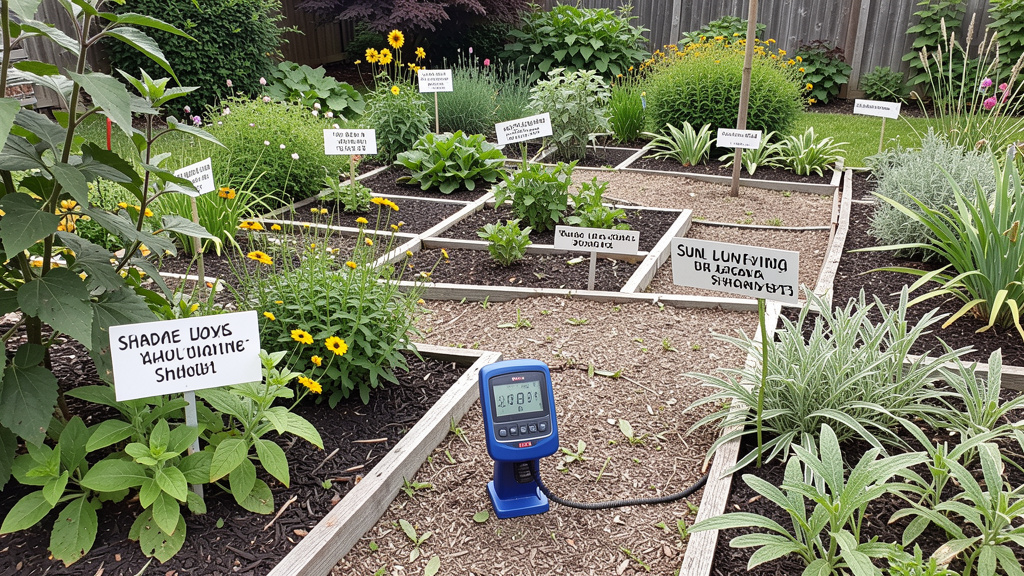
Stop wasting money on plants that struggle. Discover a layered, adaptable system used by landscape professionals to match vegetation to your garden’s unique conditions—transforming uncertainty into informed, sustainable choices.
Choosing plants that thrive begins with understanding your USDA Hardiness Zone, yet this single number is merely the foundation of a richer diagnostic process. True gardening success emerges when you thoughtfully layer microclimate awareness, soil characteristics, sunlight patterns, water dynamics, and personal goals into a cohesive selection strategy. This guide offers a practical, adaptable methodology informed by horticultural science, cooperative extension resources, and ecological design principles. You’ll move beyond generic zone lists to cultivate a resilient, joyful garden uniquely suited to your patch of earth—requiring fewer inputs, supporting local ecology, and bringing consistent satisfaction through seasons.
Introduction
Walk into any garden center in early spring, and you’ll witness hopeful gardeners cross-referencing zone maps while hesitating over whether this hydrangea will handle their afternoon sun or if that rosemary will tolerate their clay soil. This uncertainty isn’t a reflection of skill—it’s a sign that plant selection involves more than a single number. For decades, the USDA Plant Hardiness Zone Map has served as a vital starting point across North America. Its 2023 update—incorporating refined topographic data and extended climate records—enhances its utility while underscoring a key truth: hardiness zones address winter cold tolerance alone. Site-specific factors like microclimate, soil structure, moisture, aspect, and human context often determine whether a plant merely survives or truly flourishes.
Horticultural experience and extension resources indicate that hardiness zones represent one essential filter among many. This guide synthesizes established science, regional growing knowledge, and ecological awareness into a clear, actionable framework. By treating your garden not as a uniform zone number but as a dynamic mosaic of conditions, you cultivate landscapes that align with nature’s rhythms—reducing water needs, minimizing interventions, and deepening your connection to place. This isn’t about memorizing plant lists; it’s about developing a diagnostic lens that serves you season after season.
The Right Plant, Right Place Framework: Your 5-Layer Diagnostic System
Imagine selecting plants using a funnel. At the wide top, thousands of botanical possibilities exist. With each layer of thoughtful analysis, unsuitable candidates fall away until only resilient, purpose-driven choices remain. This 5-Layer Filter System transforms overwhelming choice into confident decision-making. Two gardens sharing Zone 7a—one on a windy coastal bluff with sandy soil, another in a sheltered urban courtyard with compacted clay—demand entirely different plant palettes. The framework’s strength lies in its sequential logic: each layer builds on the last. Proceed with curiosity, not pressure.
Layer 1: Understand Your Hardiness Zone (and Its Purpose)
Your USDA Hardiness Zone reflects the average annual extreme minimum winter temperature for your location. Updated in 2023 through collaboration between the USDA Agricultural Research Service and Oregon State University’s PRISM Climate Group, the map offers greater geographic precision. To find your zone:
– Visit the official USDA Plant Hardiness Zone Map website
– Enter your ZIP code or enable location services
– Zoom to street-level detail (critical in mountainous or coastal regions where zones shift within miles)
Why this layer matters: Zone ratings indicate a plant’s evolved capacity to withstand cold. When temperatures fall below a species’ threshold, cellular damage can occur. Lavandula angustifolia (English lavender) typically tolerates Zone 5 lows due to physiological adaptations; planting it unprotected in Zone 4 invites significant risk. Conversely, Musa basjoo (hardy banana) may survive Zone 5 winters only with substantial mulch—a nuance zone maps don’t capture but later layers address.
Important context:
– Zones measure cold hardiness only. They do not account for summer heat (see AHS Heat Zone Map), humidity, wind, snow cover (which insulates roots), or urban heat effects.
– Urban areas often function one-half to one full zone warmer than surrounding rural zones due to heat-retaining surfaces. A downtown patio officially rated Zone 5b may reliably support Zone 6 plants.
– The 2023 update reflects gradual climate shifts. Many locations shifted approximately half a zone warmer. Existing plantings acclimated to prior conditions may remain viable, but new selections can thoughtfully account for evolving patterns.
Table: Zone Context and Thoughtful Plant Considerations
| Zone | Avg. Annual Extreme Min. | Perennial Examples | Shrub Examples | Tree Examples | Site Consideration |
|——|—————————|——————-|—————-|—————|———————|
| 3a | -40°F to -35°F | Aquilegia canadensis, Pulsatilla vulgaris | Juniperus communis, Rosa acicularis | Picea glauca, Betula papyrifera | Snow cover often protects roots; avoid late-season pruning |
| 5b | -15°F to -10°F | Hemerocallis, Hosta sieboldiana | Syringa vulgaris, Viburnum dentatum | Acer rubrum, Malus spp. | Late spring frosts may affect early bloomers; sheltered placement helps |
| 7a | 0°F to 5°F | Nepeta × faassenii, Salvia nemorosa | Buxus sempervirens, Hydrangea macrophylla | Cercis canadensis, Magnolia grandiflora | Southern Magnolia may need shelter from wind/scorch in exposed sites |
| 9a | 20°F to 25°F | Agapanthus africanus, Kniphofia uvaria | Laurus nobilis, Rosa ‘Mutabilis’ | Quercus virginiana, Phoenix canariensis | Verify winter chilling requirements for fruiting plants |
Note: Southern Magnolia (listed for Zone 7a) illustrates nuance—it may survive temperatures yet suffer leaf damage in windy, exposed locations. Zone is the entry point, not the full story.
Common considerations:
– Cautious expansion: Planting a Zone 8 Camellia in Zone 7a may succeed in a verified sheltered microclimate (Layer 2), but carries risk during anomalous cold.
– Embracing hardiness: Zone 6 gardeners can confidently grow exceptionally resilient Zone 5 natives like Asclepias tuberosa (Butterfly Weed).
– Root vs. top survival: Some plants (e.g., Fuchsia magellanica) die back top-growth in Zone 7 but reliably resprout from roots. Zone ratings typically reference top survival.
Begin here with awareness, not limitation. Your zone defines possibility boundaries—not the complete picture.
Layer 2: Map Your Garden’s Microclimates with Observation
A microclimate is a localized area where conditions differ from the surrounding landscape. A typical residential lot contains multiple microclimates. Ignoring them is like dressing for a city’s average temperature rather than today’s actual weather. Mapping relies on patient observation, not assumption.
Conduct a Simple Microclimate Audit:
Tools: Notebook, camera, compass app
– Sun Tracking: Over 2–3 days, note sun exposure at 9 AM, 1 PM, and 5 PM. Categorize:
– Full Sun: 6+ hours direct sun (south/west exposures in Northern Hemisphere)
– Part Sun: 4–6 hours, often with afternoon intensity
– Part Shade: 2–4 hours morning sun or dappled light
– Full Shade: <2 hours direct sun or consistent filtered light
– Wind Patterns: Observe grass movement, hang lightweight ribbons, or note where snow accumulates/drifts. Identify wind tunnels (between structures) and sheltered pockets (courtyards, behind hedges).
– Thermal Variations: At dusk, gently touch surfaces. South-facing brick walls radiate stored heat, creating pockets several degrees warmer than open lawn. North sides of structures stay cooler longer in spring.
– Moisture Patterns: After rain, note where water pools >2 hours (low spots, compacted areas) versus where it drains rapidly (slopes, sandy patches).
– Human Activity Zones: High-traffic paths compact soil; play areas benefit from durable, non-toxic plants; pet routes need urine-tolerant species.
Illustrative microclimate scenarios:
– South-Facing Foundation Bed: Intense sun and reflected heat. Ideal for drought-tolerant herbs (Rosmarinus officinalis, Thymus vulgaris) but challenging for moisture-loving Astilbe.
– North Side of Garage: Deep shade until afternoon, stays damp. Suited for Helleborus orientalis or Polystichum acrostichoides, while sun-needing Rudbeckia may stretch weakly.
– Low Spot Near Downspout: Periodically saturated, then dry. Requires adaptable species like Iris ensata or Chelone glabra—not Lavandula, which prefers sharp drainage.
– Rooftop Terrace: Exposed to wind, intense sun, rapid drying. Benefits from windbreaks, deep containers, and resilient plants like Sedum spectabile or Festuca glauca.
Creating supportive microclimates: Plant a dense evergreen windbreak (Thuja occidentalis ‘Emerald Green’) northwest of a vegetable patch to moderate temperatures. Use light-colored gravel mulch around heat-loving plants to reflect warmth. These thoughtful adjustments expand possibilities without overriding Layer 1 boundaries.
The Guiding Insight: Your garden is a mosaic of micro-habitats. Matching plants to these specific pockets significantly increases the likelihood of low-maintenance success.
Layer 3: Assess Sunlight, Soil, and Water Realities
Layer 2 identifies where conditions exist; Layer 3 clarifies what those conditions truly are. Objective assessment prevents recurring frustrations.
Sunlight: Beyond General Labels
Plant tags use simplified terms, but light quality varies:
– Intensity: Southern sun (in the Northern Hemisphere) carries greater intensity than northern sun at equal duration. A “part sun” plant on a south exposure may need afternoon protection.
– Seasonal Shift: Deciduous trees create full sun in winter/spring, deep shade in summer. Hydrangea arborescens ‘Annabelle’ often thrives under this pattern; Hosta may struggle when summer canopy blocks light.
– Quality: Filtered light through pines differs from dense shade under maples. Try the “shadow test” at solar noon: Hold your hand 12″ above soil. Sharp shadow = full sun. Soft shadow = part shade. No shadow = full shade.
Action: Revisit sun observations seasonally. Adjust placements as trees grow or structures change.
Soil: Understanding Your Foundation
Soil is a living ecosystem of minerals, organic matter, water, air, and microbes. Three accessible assessments help:
1. Texture Observation (Jar Method):
– Fill a clear jar ⅓ with soil, ⅔ with water. Shake vigorously.
– Let settle 24 hours. Layers form: Sand (bottom), silt (middle), clay (top film).
– Clay-rich: Drains slowly, holds nutrients. Amend gradually with compost. Consider Helenium autumnale or Iris pseudacorus.
– Sandy: Drains rapidly, low nutrients. Amend with compost + coconut coir. Consider Coreopsis verticillata or Artemisia schmidtiana.
– Loam: Balanced texture. Most plants thrive with minimal amendment.
- pH Awareness (Critical for Specific Plants):
- Use an affordable test kit or contact your local extension office.
- Acidic (<6.5): Preferred by Rhododendron, Azalea, Blueberry.
- Neutral (6.5–7.5): Suitable for most vegetables, Roses, Peonies.
- Alkaline (>7.5): Tolerated by Lavender, Clematis, Lilac.
-
Note: Hydrangea macrophylla flower color shifts with pH—a visible indicator, though not all cultivars respond.
-
Drainage & Structure:
- Dig a 12″x12″ hole. Fill with water. Time drainage.
- <1 hour: Fast drainage
- 1–4 hours: Moderate drainage
-
4 hours: Slow drainage
- Squeeze moist soil: Crumbles = good structure; hard ball = compacted; sticky gum = high clay.
Water: Honest Hydrology
– Regional Rainfall: Zone 7a in Virginia (higher rainfall) differs from Zone 7a in New Mexico (arid). Consult local climate data. Xeriscape principles benefit all gardens during dry spells.
– Your Commitment: Be realistic. Will you hand-water daily? Use drip irrigation? Rely primarily on rainfall? Align plant choices:
– Low Water Needs: Sedum, Yucca, Agastache (once established)
– Moderate Water Needs: Heuchera, Salvia, Nepeta
– Higher Water Needs: Astilbe, Lobelia cardinalis, Canna
– Water Quality: Hard water may gradually affect soil pH. Rainwater collection benefits sensitive seedlings.
Layer 3 in practice: A gardener in Zone 6b plants Hydrangea macrophylla (tagged “Part Shade”) in a north-facing bed. It survives but rarely blooms. Assessment reveals dense shade (<2 hours sun) and alkaline soil (pH 7.8). Relocating to an east-facing spot with amended acidic soil (pH ~5.5) supports healthier growth and flowering. The zone was suitable; the site conditions required adjustment.
Layer 4: Define Your Garden Goals and Human Context
Plants serve purposes beyond aesthetics. Ignoring human factors leads to frustration. Reflect honestly:
Functional Intentions:
– Privacy: Need screening? Thuja occidentalis ‘Green Giant’ (Zone 5) grows steadily but requires space. For narrow areas, Ilex crenata ‘Sky Pencil’ (Zone 6).
– Erosion Control: Steep slope? Juniperus horizontalis (Zone 3) or native Festuca idahoensis stabilize soil.
– Wildlife Support: Specify targets:
– Pollinators: Asclepias tuberosa (Monarch host), Monarda fistulosa
– Birds: Ilex verticillata (Winterberry—requires male/female plants), Amelanchier
– Butterflies: Parsley (Black Swallowtail host), regionally appropriate nectar plants
– Edibles: Prioritize sun exposure (6+ hours for fruiting crops). Consider harvest timing and space needs.
– Maintenance Level: Define “low”:
– <1 hr/week: Native grasses (Schizachyrium scoparium), self-sowing annuals (Calendula)
– Seasonal focus: Helleborus, Heuchera, Carex sedges
Personal Context (Be Kindly Honest):
– Time: <2 hrs/week? Focus on perennials, groundcovers, drought-tolerant natives. Avoid high-maintenance crops or roses needing daily attention.
– Physical Considerations: Limited bending? Raised beds, containers, vertical options reduce strain.
– Budget:
– Immediate impact: Invest in 2–3 structural plants; fill gradually with divisions or smaller specimens.
– Long-term: Start with smaller “liner” plants—they often establish faster and cost less.
– Community resources: Check native plant society sales, municipal tree programs, or seed libraries.
– Aesthetic Preferences:
– “Prefer cool colors” → Salvia nemorosa ‘Caradonna’, Nepeta ‘Walker’s Low’
– “Avoid thorns” → Choose Spiraea japonica over Rosa rugosa
– “Deer pressure” → Allium, Narcissus, Lavandula (Note: No plant is 100% deer-proof during food scarcity)
Thoughtful Alignment Guide:
| If Your Priority Is… | Plants to Approach Cautiously | Consider These Alternatives | Why |
|————————|——————————-|—————————–|—–|
| Minimal Chemical Use | Disease-prone Hybrid Tea Roses | Rosa ‘Knock Out’ series, Rugosa roses | Naturally resilient genetics reduce intervention needs |
| Child/Pet Safety | Convallaria majalis (toxic), Digitalis | Campanula, Coreopsis, Tagetes | Non-toxic foliage/flowers; avoid small choking hazards |
| Year-Round Interest | Single-season bloomers alone | Itea virginica (winter stems), Calamagrostis (winter form), Helleborus | Layered seasonal features maintain visual engagement |
| Water Conservation | Impatiens, Begonia (high need) | Sedum, Yucca, native prairie species | Adapted to regional rainfall; deep root systems enhance resilience |
This layer transforms gardening from passive selection to intentional design. A plant perfectly matched to environmental layers may still cause frustration if it conflicts with your life. Honor your reality with compassion.
Layer 5: Synthesize and Select with Awareness
You now hold four diagnostic filters. Layer 5 weaves them into thoughtful choices. Follow this reflective workflow:
- Generate Initial Candidates:
- Consult trusted resources:
- State Native Plant Society databases
- University Cooperative Extension publications
- Lady Bird Johnson Wildflower Center native plant database
- Arbor Day Foundation tree selector
- Filter by Zone (Layer 1) + Sun/Soil needs (Layer 3) + Goals (Layer 4).
-
Example: Zone 6b, clay soil, part sun, pollinator focus, moderate maintenance → Monarda fistulosa, Echinacea purpurea, Asclepias tuberosa.
-
Microclimate Final Check (Layer 2):
- Does your specific site align with the plant’s preferences?
- Echinacea prefers full sun but may accept light afternoon shade in hot zones.
- Asclepias tuberosa requires excellent drainage—avoid low spots even if soil is amended.
-
Adjust placement: Site Monarda away from high-traffic zones (spreads readily); place Asclepias where sap contact is minimized.
-
Seasonal Awareness Scan:
- Spring: Will emerging bulbs (Crocus) be protected from foot traffic?
- Summer: Does intense afternoon sun require temporary shade for new transplants?
- Fall: Will fallen leaves smother low growers (Ajuga)? Plan gentle cleanup.
-
Winter: Will heavy snow burden brittle branches (Hydrangea paniculata)? Prune appropriately in late winter.
-
Source Mindfully:
- Local Nurseries: Staff understand regional challenges; plants are often locally acclimated. Ask: “Is this cultivar proven in our area?”
- Native Plant Sales: Support regionally appropriate genetics and conservation efforts.
- Inspect Carefully: Avoid root-bound pots, pests, or yellowing leaves. Big-box store plants may originate from distant climates.
-
Pro Tip: Perennials in 1-gallon pots often establish more reliably than tiny 4″ pots.
-
Plant with Care:
- Timing:
- Spring: Ideal for most perennials, trees, shrubs (establish before summer heat)
- Fall: Excellent for bulbs, cool-season grasses, trees/shrubs in mild climates (Zone 7+)
- Avoid: Peak summer heat or deep winter freeze for planting
- Technique:
- Dig hole 2x wider than root ball, same depth.
- Gently loosen pot-bound roots.
- Backfill with native soil + modest compost (avoid rich “potting mix” amendments).
- Water thoroughly; apply 2–3″ mulch (keep away from stems).
- Critical: Consistent moisture during the first growing season supports root establishment more than any other post-planting factor.
Reflective Checklist Before Purchase:
☑️ Suitable for my USDA Zone range (Layer 1)
☑️ Matches observed sun exposure (Layers 2 + 3)
☑️ Tolerates my soil type/pH (Layer 3)
☑️ Aligns with my water commitment (Layer 3)
☑️ Supports my functional goals (Layer 4)
☑️ Respects my time/budget context (Layer 4)
☑️ Fits the specific microclimate pocket (Layer 2)
☑️ Sourced from a reputable, locally informed supplier (Layer 5)
When most boxes align, you’re making a well-considered choice. Proceed with informed confidence.
Beyond the Zone: Cultivating Ecological Harmony
Applying the 5-Layer Framework reduces common pitfalls. Integrating these considerations nurtures a garden that functions as part of a living system.
Wind as a Partner, Not an Obstacle:
Persistent wind increases moisture loss and physical stress. Work with it:
– Strategic Windbreaks: Staggered plantings—tall outer layer (Pinus strobus), medium middle (Cornus sericea), dense inner (Juniperus)—reduce wind speed significantly.
– Wind-Tolerant Choices: Festuca, Carex, Artemisia, Lavandula. Avoid large-leaved plants (Hosta, Rodgersia) in exposed sites.
– Supportive Practices: Use flexible tree ties during establishment; avoid rigid staking that inhibits natural trunk strengthening.
Soil Life: Nurturing the Unseen Community:
Healthy soil hosts mycorrhizal fungi, bacteria, and earthworms that support plant health.
– Feed the Soil: Top-dress with 1″ compost annually. Minimize synthetic fertilizers that may disrupt microbial balance.
– Mycorrhizal Support: Consider inoculants when planting natives, trees, or in degraded soils—especially beneficial for Quercus, Pinus.
– Gentle Approach: Minimize soil disturbance to preserve fungal networks. Use sheet mulching for new beds.
Companion Planting with Evidence-Based Awareness:
Move beyond folklore to observed interactions:
– Nitrogen Support: Amorpha fruticosa (False Indigo) enriches soil for neighboring plants.
– Habitat Diversity: Mix flower shapes and bloom times to support varied pollinators.
– Spatial Harmony: Shallow-rooted Thymus under deep-rooted Rosa reduces competition.
– Allelopathy Awareness: Black walnut (Juglans nigra) releases juglone—toxic to tomatoes, potatoes, azaleas. Site thoughtfully.
Building Adaptive Resilience:
As weather patterns evolve, gardens benefit from flexibility:
– Diversity Over Monoculture: Mix species with varying tolerances. If one struggles, others maintain function.
– Succession Planning: Include early, mid, and late-season bloomers to support pollinators year-round.
– Water Wisdom: Direct downspouts to rain gardens planted with Iris, Juncus, Carex. Reduces runoff while sustaining plants.
– Observational Learning: In gradually warming zones, trial plants rated for one zone warmer only in verified protected microclimates. Document results patiently.
Ethical Stewardship:
– Avoid Known Invasives: Lonicera japonica, Euonymus alatus, Berberis thunbergii escape cultivation, displacing native flora. Consult your state’s Department of Natural Resources list.
– Verify “Native” Claims: Source regionally appropriate genetics from native plant societies when possible.
– Support Conservation: Choose nursery-propagated plants over wild-collected specimens (e.g., Trillium, native orchids).
These practices help your garden become a resilient, contributing part of the local ecosystem—supporting biodiversity and adapting gracefully over time.
Navigating Common Selection Considerations
Even experienced gardeners encounter these situations. Awareness fosters patience.
Consideration 1: “Zone 7 Plants Should All Thrive Here”
Why it’s nuanced: Zone defines cold tolerance, not suitability for all site conditions. A Zone 7 Camellia may fail on a windy hilltop yet flourish in a sheltered courtyard.
Path Forward: Apply all layers. Zone is the essential starting filter, not the sole criterion.
Consideration 2: Overlooking Mature Size
Why it matters: Planting a large shrub too close to structures leads to future conflict.
Path Forward: Before purchasing, note mature width and growth rate. Use painter’s tape on the ground to visualize future spread. Choose dwarf cultivars or slower growers where space is limited.
Consideration 3: Interpreting “Deer-Resistant” Labels
Why context matters: Hunger drives behavior. No plant is universally deer-proof.
Path Forward: Layer strategies: plant densely (deer avoid brushing foliage), use repellents consistently, install barriers for high-value plants, or designate a “sacrificial” area with preferred plants away from focal points.
Consideration 4: Seasonal Interest Gaps
Why it happens: Gardens focused on one season may feel sparse later.
Path Forward: Sketch a simple bloom calendar:
– Early Spring: Helleborus, Crocus, Cornus mas
– Late Spring: Peony, Lilac, Aquilegia
– Summer: Echinacea, Rudbeckia, Buddleia
– Fall: Aster, Sedum ‘Autumn Joy’, Ornamental Grasses
– Winter: Ilex verticillata (berries), Cornus sericea (stems), persistent seed heads
Aim for overlapping interest across seasons.
Consideration 5: Amending Individual Planting Holes
Why it can backfire: In clay soil, amended holes may hold water like a bathtub; in sand, roots may circle without expanding.
Path Forward: Amend entire beds uniformly when possible. For single plantings in poor soil: dig wide (3x root ball width), mix native soil with modest compost, backfill with blend, and mulch widely.
Consideration 6: Planting Depth Awareness
Why it matters: Burying the root flare (where roots meet stem) invites rot and girdling roots.
Path Forward: Locate the root flare (gently scrape soil if needed). Position so flare sits level with or slightly above surrounding soil. Slope soil away from the stem.
Consideration 7: Watering New Plants
Why balance matters: Both underwatering and overwatering stress roots. Wilting at noon is normal for some plants (Hydrangea); check soil moisture 2″ down before watering.
Path Forward: Water deeply but less frequently to encourage deep roots. Use drip irrigation or soaker hoses. Adjust for rainfall and temperature.
Consideration 8: Garden Center Impulse Buys
Why it happens: Plants look vibrant under nursery conditions.
Path Forward: Shop with your checklist. Photograph problem spots beforehand. Consider waiting 24 hours before purchasing non-essential plants. Fall often offers better prices and less transplant stress.
Each consideration reflects the complexity of living systems. The framework offers guidance, not rigid rules—inviting observation and adaptation.
Seasonal Awareness: Responding to Nature’s Rhythms
Plant needs shift with the seasons. Observing and responding thoughtfully prevents stress and deepens connection.
Spring: Gentle Establishment
– Focus: Root development, gradual growth
– Supportive Actions:
– Water consistently after planting; keep soil moist (not soggy)
– Delay heavy fertilizing until active growth begins
– Protect tender new growth from late frosts with floating row covers
– Apply mulch after soil warms to moderate temperature swings
– Observation Tips:
– Watch for frost heave (plants pushed up by freeze-thaw); gently reset and mulch
– Note slug activity on new shoots; use beer traps or diatomaceous earth if needed
– Insight: Spring bulbs (Narcissus, Tulipa) need sun during bloom but often tolerate summer shade under deciduous trees—a natural Layer 2 alignment.
Summer: Heat and Hydration Management
– Focus: Moisture conservation, heat mitigation
– Supportive Actions:
– Water early morning to reduce evaporation
– Maintain 2–3″ mulch layer to conserve moisture and suppress weeds
– Avoid fertilizing during extreme heat
– Deadhead spent blooms to encourage rebloom in suitable species
– Observation Tips:
– Midday wilting may be temporary; check soil moisture before watering
– Leaf scorch (brown edges) signals water stress or root competition—assess drainage
– Improve air circulation around mildew-prone plants (Phlox, Monarda)
– Insight: In hot climates, temporary afternoon shade (30% shade cloth) can protect sensitive plants during record heatwaves.
Fall: Root Growth and Preparation
– Focus: Root development, winter readiness
– Supportive Actions:
– Ideal time to plant trees, shrubs, perennials (roots grow until soil freezes)
– Apply balanced, low-nitrogen fertilizer if soil tests indicate need
– Cut back disease-prone foliage (Peony, Phlox) after hard frost
– Leave seed heads on Echinacea, Rudbeckia for winter bird food
– Observation Tips:
– Prepare frost protection for tender plants if early freeze threatens
– Reduce watering frequency as temperatures drop
– Insight: Fall is optimal for soil amendment. Adding compost now allows microbial activity to integrate nutrients over winter. Test soil pH now to allow time for amendments before spring.
Winter: Rest and Reflection
– Focus: Protection, planning
– Supportive Actions:
– Water evergreens deeply before ground freezes (prevents winter desiccation)
– Apply mulch after ground freezes to maintain consistent soil temperature
– Wrap young tree trunks with guards to prevent sunscald and rodent damage
– Avoid walking on frozen soil to prevent compaction
– Observation Tips:
– Gently brush heavy snow from branches with upward motion
– Note winter damage on broadleaf evergreens (Rhododendron)—site selection (Layer 2) is key prevention
– Insight: Winter offers quiet time for garden reflection. Review photos from the past year. Note successes, gaps, and ideas. Order seeds or bare-root plants for spring. Your Layer 5 checklist is ready.
Seasonal awareness transforms gardening from reactive tasks to responsive partnership. Plants communicate through their growth—learn their language with patience.
Your Questions, Answered
Q: My zone changed from 6b to 7a in the 2023 USDA update. Do I need to replace existing plants?
A: No. Zone updates reflect long-term climate patterns, not immediate changes. Your established Zone 6 plants are acclimated to your site. This update primarily informs new selections. You may now confidently trial plants previously considered marginal (e.g., certain Canna varieties as annuals; Musa with winter protection). Continue monitoring microclimates and protect tender plants during unexpected cold snaps, which remain possible.
Q: I garden on an apartment balcony. How does this framework apply?
A: Balconies present distinct microclimates. Adapt the layers:
– Layer 1: Confirm your zone, but select container-hardy plants (roots in pots experience colder temps—choose plants rated for one zone colder).
– Layer 2: Track sun hourly (reflective surfaces intensify light); note wind tunnels between buildings.
– Layer 3: Use quality potting mix (never garden soil); ensure drainage holes; water needs vary by pot material (terracotta dries faster).
– Layer 4: Prioritize compact varieties (Rosa ‘Sweet Drift’, Hydrangea ‘Little Lime’); verify weight limits; choose non-invasive roots.
– Layer 5: Select container-proven plants: Sedum, Heuchera, dwarf conifers, herbs. Group plants with similar water needs.
Q: Are native plants always the best choice?
A: Natives often excel in supporting local ecology and adapting to regional conditions with fewer inputs. However, “best” depends on your Layer 4 goals. For a formal hedge, non-native Buxus sempervirens may suit your aesthetic. For erosion control, native Juniperus horizontalis is ideal. Prioritize natives for:
– Pollinator and wildlife habitats
– Naturalized or low-input areas
– Sites matching their evolved conditions
Thoughtfully incorporate non-invasive non-natives for specific needs. Always avoid plants listed as invasive by your state’s natural resources agency.
Q: How do I work with heavy clay soil without massive soil replacement?
A: Partner with clay’s strengths (nutrient retention, moisture holding). Strategies:
– Amend widely: Spread 3–4″ compost over entire bed; incorporate 8–12″ deep. Repeat annually.
– Choose clay-tolerant plants: Helenium, Iris pseudacorus, Aster novae-angliae, Rudbeckia fulgida.
– Raised beds: Build frames filled with quality soil for vegetables or clay-sensitive plants.
– Avoid: Adding sand (can create concrete), walking on wet clay, or deep individual holes.
– Patience: Soil structure improves gradually with consistent organic matter.
Q: My “full sun” area has intense afternoon heat. What plants tolerate this?
A: This is a critical microclimate distinction (Layer 2). For intense afternoon sun + heat:
– Perennials: Agastache, Yucca, Hesperaloe, Gaura, Salvia greggii
– Shrubs: Ceanothus, Rosa ‘Knock Out’, Lavandula, Artemisia
Key: Ensure good drainage, apply mulch to cool roots, and provide deep watering during establishment. Avoid plants labeled “prefers afternoon shade” (Astilbe, Heuchera).
Q: How do I select plants for a rain garden handling wet and dry cycles?
A: Rain gardens need adaptable species. Zone thoughtfully:
– Bottom (wettest): Iris ensata, Juncus effusus, Chelone glabra
– Middle slope: Asclepias incarnata, Monarda didyma
– Top edge (driest): Echinacea purpurea, Schizachyrium scoparium
Critical: Soil should drain within 24–48 hours. Amend heavy clay with compost to improve infiltration. Avoid plants intolerant of periodic saturation (Lavandula, most Sedum).
Q: Can I grow blueberries in alkaline soil?
A: Blueberries (Vaccinium corymbosum) require acidic soil (pH 4.5–5.5). Options:
– Containers: Grow in large pots (15+ gal) with acidic potting mix (peat-based). Easier pH control.
– In-ground: Dig wide hole (3x root ball), amend heavily with peat moss + elemental sulfur. Mulch with pine needles. Test pH annually.
– Alternative: Plant pH-tolerant natives like Aronia melanocarpa (Chokeberry) for similar wildlife value with less amendment.
Q: How do I protect plants during unexpected late spring frosts?
A: Preparedness helps:
– Monitor forecasts: Enable frost alerts on weather apps.
– Have supplies ready: Frost cloth, old sheets, cardboard boxes.
– Cover plants before sunset; anchor edges to trap ground heat. Remove by mid-morning.
– Lightly water soil before frost (moist soil releases heat slower).
Note: Tender annuals (Basil, Tomato) are most vulnerable. Many perennials recover from minor frost damage.
Q: What’s the difference between USDA Zones and AHS Heat Zones?
A: USDA Zones measure winter cold hardiness (average annual extreme minimum temperature). AHS Heat Zones (American Horticultural Society) measure summer heat tolerance (number of days above 86°F, when plants experience heat stress). Example:
– Rosa ‘New Dawn’ is USDA Zone 5–9, AHS Heat Zone 9–1.
– In Zone 7 with moderate summer heat (Heat Zone 7), it thrives.
– In Zone 7 with intense, prolonged heat (Heat Zone 3), it may struggle despite correct USDA zone.
Action: In hot climates, consult both resources. Local extension offices offer region-specific guidance.
Q: How do I choose plants that minimize bee visits due to allergies?
A: True bee allergies are uncommon (most reactions involve wasps/yellow jackets). To reduce pollinator visits:
– Select: Wind-pollinated plants (Ornamental Grasses, Ferns), double-flowered cultivars (petals block pollen), plants with subtle flowers (Hosta, Heuchera).
– Avoid: Single-petaled blooms, blue/purple/yellow flowers, highly fragrant plants (Lavandula, Buddleia).
– Critical: Never use pesticides to deter bees—they harm essential pollinators. Focus on plant selection and placement (locate high-bloom areas away from seating). Consult an allergist to confirm triggers.
Conclusion and Next Step
You now hold a adaptable framework—one that shifts gardening from hopeful guessing to informed, place-based design. The Right Plant, Right Place approach isn’t merely about plant survival; it’s about cultivating harmony between your intentions and your land’s inherent character. When plants align with their environment, they often require fewer resources, support local wildlife, and bring enduring beauty through attentive partnership. This is sustainable gardening at its heart: working with nature’s patterns, not against them.
Three guiding principles to carry forward:
1. Zone sets the stage, not the entire story. Your USDA Hardiness Zone defines cold tolerance boundaries, but microclimates, soil, and water shape daily reality.
2. Observe before you select. The 5-Layer Filter System (Zone → Microclimate → Site Conditions → Goals → Selection) builds confidence through understanding.
3. Gardens are living relationships. Seasonal awareness and ethical stewardship help your space evolve into a resilient, contributing part of the local ecosystem.
The 24-Hour Observation Invitation: Before purchasing your next plant, spend 24 hours observing your garden with gentle curiosity. At dawn, noon, and dusk, walk your property. Sketch where sun falls. Note where water gathers after a shower. Feel the wind direction. Identify the quiet corner perfect for morning coffee, the bare spot needing soft screening. This simple act of presence—of truly seeing your garden—grounds the entire framework in your unique reality. Jot down three specific observations. These become your first filter for every future plant decision.
The Wider View: Every garden, however small, connects to a larger ecological tapestry. When you select plants attuned to your place, you contribute to watershed health, pollinator pathways, and community resilience. You create a sanctuary that nourishes not only your spirit but the intricate web of life around you. This is gardening at its most meaningful: a quiet, consistent act of reciprocity with the earth. Start where you are. Use what you have. Move forward with patience. Your thriving garden unfolds not as a distant dream, but as the natural result of thoughtful, informed choices—season by season.
Explore Our Complete Garden Stewardship Collection:
Understanding Soil pH: A Practical Guide to Testing and Gentle Amendment | Creating a Year-Round Bloom Calendar for Continuous Garden Interest | Native Plant Profiles by Region: Ecological Partners for Your Landscape | Water-Wise Gardening: Rain Harvesting, Swales, and Drought-Adapted Designs | The Ethical Gardener’s Companion: Avoiding Invasives and Supporting Biodiversity | Seasonal Garden Care Guide: Gentle Tasks for Each Month | Container Gardening with Confidence: Thriving Plants on Patios, Balconies, and Small Spaces