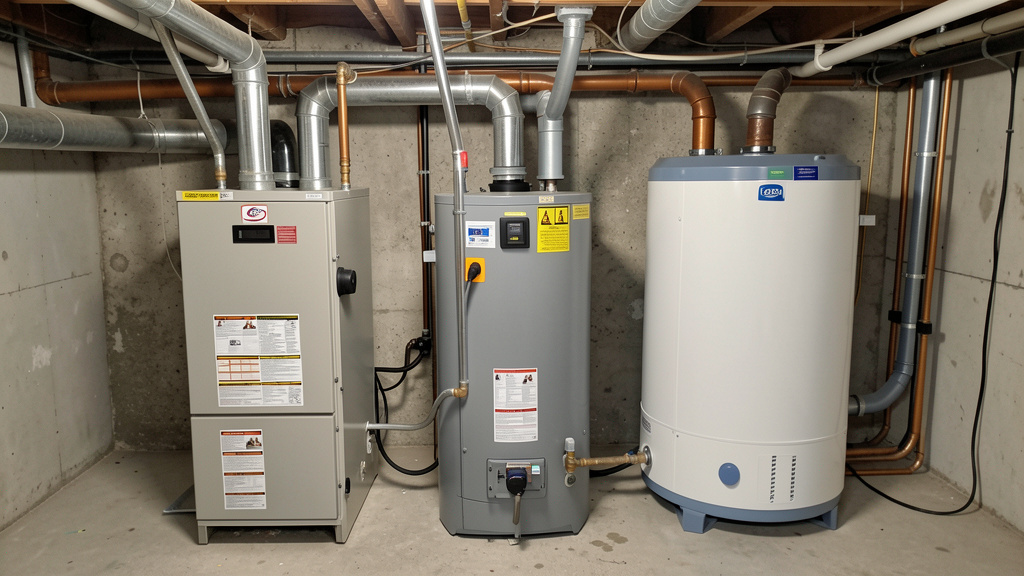
Stop Guessing, Start Choosing: A Climate-Smart, Budget-Aware Framework to Select the Heating System That Actually Fits Your Home—Without Costly Regrets
Selecting a home heating system ranks among the most consequential decisions a homeowner will make—a choice impacting comfort for 15–25 years, monthly utility bills, indoor air quality, environmental considerations, and long-term home value. Yet most guidance oversimplifies: “Heat pumps are efficient!” or “Furnaces are reliable!” without addressing your home’s unique climate constraints, structural realities, or lifestyle rhythms. This comprehensive guide moves beyond generic comparisons. We dissect furnace, boiler, and heat pump technologies through a practical, three-pillar framework informed by building science principles and real-world installation patterns. You’ll learn how regional climate data influences equipment viability, why existing infrastructure often outweighs theoretical efficiency ratings, and how to evaluate true lifecycle value—not just sticker prices. Whether replacing aging equipment, building new, or planning a future upgrade, this guide delivers nuanced clarity to support confident, personalized decision-making.
Introduction
Imagine waking on a frigid January morning to silence where warmth should be. The heating system has failed. Pressure mounts—not just from dropping temperatures, but from the urgency to choose a replacement now, often without full context. This scenario repeats across households annually, sometimes leading to mismatched systems, unexpected operating costs, or lingering comfort issues. The root cause isn’t homeowner oversight; it’s fragmented information. Articles highlight “top heat pumps” without clarifying regional limitations. Sales discussions emphasize features irrelevant to your home’s physical constraints. Social media showcases installations stripped of context: Was that home recently insulated? Did it have existing ductwork? What local utility rates apply?
According to U.S. Energy Information Administration data, heating represents a significant portion of residential energy use. Paired with equipment lifespans exceeding fifteen years, the importance of an informed choice becomes clear. This guide synthesizes engineering fundamentals, climate considerations, building science insights, and practical homeowner experiences into an actionable evaluation pathway. You won’t find brand promotions or oversimplified rankings. Instead, we provide diagnostic lenses professionals use—translated into accessible language—to assess what actually aligns with your specific situation. The goal isn’t to declare one technology universally superior, but to equip you with a structured framework to identify your optimal solution. As energy landscapes evolve, this understanding also supports leveraging available incentives, enhancing household resilience, and making choices aligned with personal values.
The Triad Framework: Climate, Structure, Lifestyle
Successful heating system selection hinges on aligning three interconnected pillars. Overlooking any one may compromise comfort, efficiency, or long-term value. This framework—refined through analysis of diverse residential scenarios—replaces guesswork with methodical evaluation. Begin here before researching specific equipment.
Pillar 1: Climate Reality – Your Geographic Context
Climate isn’t merely “cold” or “mild.” Quantifiable metrics shape technological suitability. Two factors provide essential grounding:
- Heating Degree Days (HDD): Annual accumulation of degrees below 65°F (18°C). HDD < 3,000 = mild climate (e.g., Atlanta, Sacramento). HDD 3,000–6,000 = mixed climate (e.g., Chicago, Denver). HDD > 6,000 = severe climate (e.g., Minneapolis, Burlington).
- Design Temperature: The lowest temperature your region reliably experiences (e.g., -15°F in Fargo vs. 25°F in Portland).
Why this matters: Heat pump performance relates directly to ambient air temperature. Boiler fuel consumption correlates with heat loss demands. Climate data provides objective parameters—not opinion.
Regional Considerations:
– Severe Cold Climates (HDD > 6,000):
Traditional air-source heat pumps historically faced limitations below freezing. However, modern cold-climate heat pumps (CCHPs) with variable-speed compressors, enhanced refrigerants (R-32), and vapor injection technology operate effectively down to -13°F to -22°F in many models. Supplemental heat (electric resistance or gas furnace) is often included for extended extreme cold. High-efficiency gas furnaces (90%+ AFUE) or condensing boilers remain robust options where natural gas infrastructure exists. Oil systems persist in legacy Northeast installations but face evolving regulatory and cost considerations.
Important nuance: In very high HDD zones (e.g., northern Maine), ground-source (geothermal) heat pumps leverage stable earth temperatures (50–60°F year-round) but require significant land access and upfront investment.
-
Mixed Climates (HDD 3,000–6,000):
Often favorable for modern air-source heat pumps. Systems commonly achieve 200–400% efficiency (COP 2.0–4.0) across most heating seasons. Dual-fuel systems (heat pump + gas furnace) offer strategic flexibility: the heat pump handles mild/moderate conditions; the furnace activates below a user-defined threshold (e.g., 25°F). High-efficiency condensing gas furnaces (95–98% AFUE) remain cost-effective where gas is accessible. -
Mild Climates (HDD < 3,000):
Heat pumps frequently excel—providing both heating and cooling. Ductless mini-splits suit homes without ductwork (common in older California or Florida homes). Electric resistance heat may be viable only with very low electricity rates or significant solar generation. Gas furnaces can be oversized for heating needs; boilers rarely justified unless paired with radiant floors.
Practical Step: Verify your ZIP code’s HDD via the National Weather Service or ENERGY STAR’s climate zone resources. A Minneapolis homeowner (HDD ~7,800) selecting a CCHP with intelligent backup strategy may achieve better real-world performance than an oversized legacy furnace. Context shapes outcomes.
Pillar 2: Home Structure – Physical Constraints
Your home’s architecture, age, and existing infrastructure establish practical boundaries. Evaluate these factors thoroughly before favoring a system type.
Ductwork Assessment (Critical for Forced-Air Systems):
– Existing, Well-Maintained Ducts: Furnaces or air-handler-based heat pumps integrate smoothly. First inspect: Leaky ducts in unconditioned spaces (attics, crawlspaces) can waste significant conditioned air. Sealing and insulating ducts before new equipment installation is often the highest-return preparatory step.
– No Ducts / Poor Condition Ducts: Installing new ductwork typically involves substantial cost ($3,000–$10,000+) and disruption to finishes. Ductless mini-split heat pumps (single or multi-zone) become a pragmatic alternative. Hydronic (boiler) systems with baseboard radiators or radiant floors avoid duct dependency entirely.
– Duct Location Matters: Ducts within the conditioned envelope lose minimal energy. Ducts in hot attics lose heat in winter and gain cooling load in summer—addressing duct integrity amplifies any new system’s effectiveness.
Insulation and Air Sealing Baseline:
A poorly insulated home demands oversized equipment, leading to short-cycling (frequent on/off cycles) and uneven temperatures. Before selecting any system:
1. Conduct a basic air leak check (drafts around windows, doors, outlets).
2. Assess attic insulation depth (R-38+ recommended in cold zones; R-30+ in mild zones).
3. Consider a professional energy audit with blower door testing for precise data.
Why this precedes equipment choice: Envelope improvements often deliver greater comfort and efficiency gains than equipment upgrades alone. Spending $2,000 on air sealing and attic insulation may enable selecting a appropriately sized $7,000 system instead of an oversized $10,000 unit—yielding recurring savings. Building science consistently affirms: a tight, well-insulated envelope maximizes any heating system’s performance.
Fuel Availability and Infrastructure:
– Natural Gas: Available to approximately 70% of U.S. homes. Enables high-efficiency furnaces/boilers with generally lower operating costs than oil/propane in many regions. Verify local utility policies—some municipalities have restrictions on new gas connections.
– Propane: Requires on-site tank (leased/purchased). Fuel prices fluctuate seasonally. Suitable for rural areas without gas lines. High-efficiency propane models (95%+ AFUE) help mitigate fuel cost considerations.
– Electricity: Universally available. Essential for heat pumps. Review your utility’s rate structure: Time-of-Use (TOU) plans may make overnight heating more economical. Confirm electrical panel capacity (200-amp service often recommended for heat pumps with backup heat).
– Oil: Legacy infrastructure in some regions. Involves on-site storage, delivery scheduling, and maintenance. Environmental regulations are evolving in several states. Conversion to alternative systems is frequently evaluated during replacement cycles.
Home Age and Layout Considerations:
– Pre-1950 Homes: Often feature plaster walls, minimal insulation, single-pane windows, and existing radiator systems. Replacing an aging boiler with a modern condensing boiler can preserve infrastructure while improving efficiency. Retrofitting ducts is frequently impractical.
– Open-Concept Modern Homes: Benefit from zoned systems. A multi-head ductless heat pump can maintain different temperatures in living areas versus bedrooms—offering flexibility single-zone systems cannot match.
– Multi-Story Homes: Heat rises naturally. Forced-air systems with zoning dampers or multiple thermostats help address temperature stratification more effectively than single-zone hydronic systems.
Illustrative Scenario: A 1920s bungalow in Boston with original cast-iron radiators, no ducts, and moderate insulation. Replacing a failing oil boiler with a high-efficiency gas condensing boiler (after fuel line conversion) leverages existing infrastructure, avoids significant duct installation costs, and reduces fuel consumption. Installing a ductless heat pump would require running refrigerant lines through historic walls—a potentially costly and invasive proposition. Structure informed the solution path.
Pillar 3: Lifestyle and Values – The Human Element
Technology must serve daily life. A technically sound system may not suit if misaligned with household rhythms. Reflect honestly on these dimensions:
Comfort Preferences:
– Air Temperature vs. Radiant Heat: Do you prefer the responsive warmth of forced hot air (furnace) or the gentle, even heat radiating from floors/walls (boiler)? Radiant heat often feels comfortable at slightly lower air temperatures. Forced air enables integrated whole-house humidification/dehumidification—valuable in dry winters or humid summers.
– Noise Sensitivity: Furnaces produce audible airflow (30–60 dB). Modern modulating furnaces operate more quietly at low speeds. Boilers are nearly silent at the source (only circulator pump hum). Ductless heat pump indoor units emit a soft airflow sound (19–26 dB)—comparable to a quiet library.
– Air Quality Needs: Forced-air systems integrate high-efficiency filters (MERV 13+), UV lights, or energy recovery ventilators (ERVs). Beneficial for households with respiratory sensitivities. Hydronic systems don’t circulate air—reducing dust movement but requiring separate ventilation strategies.
Financial Horizon:
– Upfront Budget: Heat pumps (especially ductless) often have higher installation costs than mid-efficiency furnaces. Factor in available incentives: U.S. federal tax credits (up to $2,000 via Inflation Reduction Act), state rebates (e.g., Mass Save, NYSERDA), and utility programs can meaningfully reduce net costs.
– Ownership Timeline: Planning to stay 5 years? Lower initial investment may be prioritized. Staying 15+ years? Lifecycle cost analysis becomes more relevant. A higher-initial-cost system saving $800/year may surpass a lower-cost system saving $400/year after a decade.
– Risk Tolerance: Fuel prices fluctuate. Electricity rates trend variably by region. Fixed-cost geothermal offers long-term stability but higher entry cost.
Environmental Considerations:
– Carbon Footprint: Heat pumps powered by grid electricity generally have lower emissions than fossil fuel systems in regions with cleaner grids (e.g., Pacific Northwest, Northeast). In areas with higher coal dependency, high-efficiency gas may currently show lower lifecycle emissions—but grid decarbonization is accelerating nationally.
– Refrigerant Impact: Newer heat pumps use R-32 (lower global warming potential than legacy R-410A). Discuss refrigerant type and leak-prevention protocols with contractors.
– Future-Proofing: Electrification aligns with many municipal sustainability goals. Some jurisdictions restrict gas in new construction. Choosing electric-ready systems may support long-term adaptability.
Maintenance Commitment:
– Furnaces: Annual professional inspection recommended. Homeowner tasks: regular filter changes (critical for efficiency and air quality).
– Boilers: Annual inspection. Occasional radiator bleeding (if needed). Monitoring system pressure. Less frequent filter changes but potentially more complex repairs if components fail.
– Heat Pumps: Annual inspection. Outdoor unit coil cleaning (seasonally in dusty areas). Filter changes (if ducted). Ductless units benefit from indoor coil cleaning every 1–2 years.
The Fundamental Principle: The optimal heating system achieves sustainable alignment across your specific climate context, home structure constraints, and lived human experience—transforming technical specifications into daily comfort, predictable operation, and lasting confidence.
Deep Dive: Furnace Systems – The Forced-Air Workhorse
Furnaces generate heat by burning fuel (natural gas, propane, oil) or using electricity to warm air, which a blower fan then distributes through ductwork. They remain prevalent in North American homes due to integration with central air conditioning and established installation practices in ducted homes.
How Furnaces Operate: Core Sequence
At its core, a furnace follows a precise sequence:
1. Thermostat Call: Temperature drops below setpoint; thermostat signals furnace.
2. Ignition Sequence: Gas valve opens; hot surface igniter (or spark igniter) lights burners. Flame sensor confirms ignition within seconds (critical safety function).
3. Heat Exchange: Burners heat the primary heat exchanger—a series of metal tubes/fins. Combustion gases exit via flue.
4. Air Circulation: Blower fan activates once heat exchanger reaches temperature (prevents cold air discharge). Room air passes over the hot exchanger, absorbing heat.
5. Distribution: Warm air travels through supply ducts to registers. Return air ducts pull cooler air back to furnace.
6. Shutdown: Thermostat satisfied; burners shut off. Blower may continue briefly to extract residual heat (“post-purge”).
Critical Component Insight: The heat exchanger is central to safe operation. Cracks can develop from thermal stress or corrosion. A compromised exchanger risks carbon monoxide (CO) leakage—a serious safety hazard requiring immediate professional attention. Annual inspections include CO testing and visual exchanger checks.
Fuel Type Considerations
Natural Gas Furnaces (Most Common):
– Potential Advantages: Generally lower operating costs where gas infrastructure exists; high efficiency models available (80–98.5% AFUE); clean combustion; relatively quiet operation.
– Considerations: Requires gas line access; subject to utility policies; vulnerable to supply disruptions during extreme weather events (rare).
– Efficiency Tiers:
– 80% AFUE (Mid-Efficiency): Standard in some mild climates. Uses metal vent pipe (Type B). Lower initial cost.
– 90%+ AFUE (High-Efficiency/Condensing): Extracts additional heat by condensing water vapor in exhaust. Requires PVC venting (cooler exhaust). May offer 15–25% fuel savings vs. 80% models in climates with significant heating demand. Often recommended in colder regions where runtime is high.
– Illustrative Cost Context: In a mixed-climate region (gas ~$1.20/therm), a 96% AFUE furnace heating a 2,200 sq ft home might use approximately 650 therms/year versus ~800 therms for an 80% model—suggesting potential annual savings. Actual savings depend heavily on local rates, usage patterns, and home efficiency. Payback on higher initial cost varies by household.
Propane Furnaces:
– Potential Advantages: Viable where natural gas is unavailable; similar efficiency profiles to gas models.
– Considerations: Fuel cost typically higher than natural gas; requires tank management and delivery scheduling; efficiency may decrease slightly in very cold temperatures (propane vaporization slows below 0°F).
– Practical Tip: Insulate propane tank and lines in cold climates. High-efficiency models (95%+) may help offset fuel costs. Monitor tank levels diligently during winter months.
Oil Furnaces (Legacy Systems):
– Potential Advantages: High heat output per BTU; existing infrastructure in some regions.
– Considerations: Fuel cost volatility; requires on-site storage tank (maintenance, potential leak risks); soot buildup demands more frequent cleaning; efficiency ceiling typically lower (80–87% AFUE); evolving environmental regulations in some states.
– Strategic Note: Many homeowners evaluate conversion to gas or heat pump during replacement cycles, weighing long-term operational costs against conversion expenses.
Electric Furnaces:
– Potential Advantages: Simple installation (no flue); 100% AFUE (all electricity converted to heat at point of use); suitable for mild climates or supplemental applications.
– Considerations: Operating costs can be high where electricity rates exceed $0.15/kWh; generally less effective as primary heat in cold climates due to high runtime costs.
– When Considered: Small homes in regions with very low electricity rates; backup heat in heat pump systems; homes with significant solar generation offsetting electricity use.
Technology Tiers: Operational Nuances
Single-Stage Furnaces:
– Operation: Runs at full capacity or off. Simple design.
– Considerations: Potential for temperature fluctuations; louder operation at full speed; short-cycling in mild weather may reduce efficiency; less consistent heating.
– Typical Fit: Budget-conscious replacements in very cold climates (near-constant runtime); rental properties; secondary homes.
Two-Stage Furnaces:
– Operation: Low-fire (60–70% capacity) for mild conditions; high-fire for extreme cold.
– Potential Benefits: Improved efficiency over single-stage; quieter low-speed operation; more stable temperatures; reduced short-cycling.
– Typical Fit: Most climates; homes with moderate insulation levels; households valuing consistent comfort.
Modulating Furnaces (Variable-Capacity):
– Operation: Adjusts heat output incrementally (e.g., 40% to 100%) based on real-time demand. Paired with variable-speed ECM blower motor.
– Potential Benefits: Very stable temperatures (±0.5°F); near-silent operation at low speeds; enhanced efficiency; optimal dehumidification in cooling mode (when paired with AC); potentially extended equipment life (reduced thermal stress).
– Considerations: Highest initial investment ($1,500–$3,000+ more than two-stage).
– Typical Fit: High-comfort priorities; households with respiratory sensitivities (continuous low-speed airflow supports filtration); well-insulated homes; pairing with smart thermostats.
Installation Essentials:
– Sizing is Critical: An oversized furnace short-cycles—wasting energy, causing temperature swings, and reducing dehumidification effectiveness. A Manual J load calculation (per ACCA standards) is essential. Request it from contractors.
– Ductwork Integration: Existing ducts should be sealed (mastic sealant recommended) and insulated. Undersized return ducts may cause airflow noise and reduced performance.
– Venting Requirements: High-efficiency models require condensate drain lines (installed with trap to prevent sewer gas entry). PVC vent pipes must slope correctly.
– Clearance Zones: Maintain manufacturer-specified space around furnace for service access and combustion air. Store flammables away.
Common Maintenance Points:
– Igniter: Most common component failure. Symptoms: furnace clicks but won’t light. Prevention: annual cleaning; avoid short-cycling.
– Flame Sensor: Fouling can cause repeated ignition attempts. Symptoms: burner lights then shuts off after seconds. Prevention: gentle cleaning during tune-ups.
– Blower Motor: Restricted airflow (dirty filter) is a frequent cause of strain. Prevention: change 1″ filters monthly; 4–5″ filters every 6–12 months.
– Draft Inducer Motor: Critical for venting combustion gases. Symptoms: furnace won’t start; error code. Prevention: keep outdoor vent clear of snow/debris.
Lifecycle Perspective:
A mid-efficiency gas furnace ($4,500 installed) in a mixed climate might cost approximately $900/year to operate. A modulating 98% AFUE model ($7,500 installed) might cost $700/year. Over 15 years:
– Mid-efficiency estimate: $4,500 + ($900 × 15) = $18,000
– High-efficiency estimate: $7,500 + ($700 × 15) = $18,000
Break-even timing varies. Factor in potential $1,200 in federal/state incentives for the high-efficiency model? Net cost drops—altering the calculation. Always model your local fuel/electricity rates and usage patterns. Comfort and air quality benefits also hold subjective value.
Deep Dive: Boiler Systems – The Radiant Comfort Specialist
Boilers heat water (or glycol mixture) and circulate it through pipes to deliver warmth via radiators, baseboard units, or radiant floor tubing. Unlike furnaces, they provide hydronic (liquid-based) heat—a fundamentally different comfort experience valued for its silent, even, draft-free warmth. While less common in new U.S. construction than forced air, boilers serve millions of homes, particularly where legacy radiator systems exist.
Hydronic Heat Mechanics: Comfort Characteristics
Heat transfer physics explains boiler appeal:
– Water holds significantly more heat energy per volume than air.
– Radiant surfaces (floors, walls, radiators) emit infrared energy that directly warms objects and people—not just the air. This can create perceived warmth at slightly lower thermostat settings.
– Minimal air movement means reduced dust/allergen circulation—beneficial for sensitive households.
– Zoning is inherently straightforward: individual thermostats control circulator pumps or zone valves per area.
System Components:
1. Boiler Unit: Burns fuel (gas, oil, propane) or uses electricity to heat water in a heat exchanger.
2. Circulator Pump(s): Moves heated water through loops. Modern ECM pumps use significantly less electricity than older models.
3. Distribution Network:
– Radiators: Cast iron (slow heat-up/cool-down) or modern panel radiators (faster response).
– Baseboard Convectors: Fins on copper pipes; rely on natural convection (quiet) or fan-assisted units (faster heat).
– Radiant Floor: PEX tubing embedded in slab, underfloor, or within floor channels. Often considered the most comfortable option; requires careful design.
4. Expansion Tank: Absorbs pressure changes as water heats/cools.
5. Air Vents/Purging Valves:* Release trapped air (critical for efficiency; air pockets block heat flow).
6. Controls:* Aquastat (water temperature regulator), zone valves, thermostats.
Boiler Types: Functional Differences
Conventional (Non-Condensing) Boilers:
– Operation: Exhaust gases vent at high temperatures (300–400°F) via metal chimney. Water return temperature must stay >130°F to avoid flue gas condensation (which can corrode the heat exchanger).
– Efficiency: Typically 80–86% AFUE.
– Typical Fit: Replacing legacy systems where chimney exists; budget-conscious retrofits; homes with high-temperature radiator systems (older cast iron).
– Limitation: Cannot leverage lower return water temperatures for efficiency gains.
Condensing Boilers (Contemporary Standard):
– Operation: Secondary heat exchanger captures latent heat from exhaust vapor, condensing it into water. Exhaust temperatures drop to 100–130°F, allowing PVC venting. Requires return water temperature <130°F to enter condensing mode—achieved via outdoor reset controls or radiant floor systems.
– Efficiency: 90–98% AFUE. Real-world fuel reduction of 15–30% versus conventional boilers is possible in suitable applications.
– Critical Design Note: Pairing a condensing boiler with old high-temperature radiators without outdoor reset control may prevent it from operating efficiently. Outdoor reset control dynamically adjusts water temperature based on outdoor conditions (e.g., 180°F water when it’s 0°F outside; 120°F when it’s 40°F).
– Typical Fit: New installations; radiator system upgrades; radiant floor heating; climates where fuel costs are a consideration.
Combi (Combination) Boilers:
– Operation: Single unit provides space heating and domestic hot water (DHW) on demand. Heats water instantly as taps open—no storage tank needed.
– Potential Advantages: Space-saving (ideal for condos, small homes); eliminates standby heat loss from DHW tank; high efficiency.
– Considerations: Limited simultaneous hot water flow (may struggle with multiple showers); requires careful sizing for peak DHW demand; higher initial cost.
– Key Spec: Check “GPM at ΔT” rating (e.g., 4.0 GPM at 77°F rise). Ensure it meets household peak demand.
– Typical Fit: Small-to-medium homes with moderate hot water needs; urban dwellings; tankless water heater replacement scenarios.
Fuel Considerations for Boilers
Gas Boilers (Common Choice):
– Natural gas condensing boilers represent a prevalent efficiency option. Modulating burners match heat output to demand.
– Propane Note: Requires slightly derated sizing (propane has lower BTU content per cubic foot than natural gas). Verify contractor adjusts for this.
Oil Boilers (Legacy Transition):
– Modern oil boilers reach ~87% AFUE but face considerations: fuel cost trends, tank maintenance, evolving regulations.
– Conversion Path: Many homeowners evaluate replacing oil boilers with gas condensing boilers or air-to-water heat pumps. Factor conversion costs (gas line run, tank removal) into lifecycle analysis.
Biomass Boilers (Specialized):
– Burn wood pellets, chips, or cordwood. Require significant storage space, ash removal, and feeding mechanisms.
– Viability: Generally practical only with low-cost/local fuel source; ample storage; homeowner committed to operation. Rarely cost-effective versus modern alternatives outside specific rural contexts.
Distribution Methods: Radiator vs. Baseboard vs. Radiant Floor
Cast Iron Radiators (Legacy Charm):
– Potential Advantages: Aesthetic appeal; thermal mass (holds heat after boiler cycles off); silent operation.
– Considerations: Slow response time (30+ minutes to feel warmth after thermostat call); difficult to zone individually; heavy; painting requires high-temperature paint.
– Modernization Tip: Install thermostatic radiator valves (TRVs) on each unit. Enables room-by-room temperature control without rewiring—potentially improving comfort and efficiency.
Modern Panel Radiators:
– Potential Advantages: Faster heat-up than cast iron; lighter weight; available in colors/designs; often include built-in TRVs.
– Considerations: Less thermal mass; visible on walls.
– Typical Fit: Retrofitting older homes wanting radiator aesthetics with improved responsiveness.
Hydronic Baseboard:
– Potential Advantages: Low profile; relatively inexpensive; straightforward installation.
– Considerations: Easily blocked by furniture/carpets; dust accumulation on fins reduces efficiency; limited heat output per linear foot.
– Maintenance: Vacuum fins annually. Ensure 12+ inches of clearance in front.
Radiant Floor Heating (Premium Comfort):
– Potential Advantages: Ultimate comfort (warm floors, even temperatures head-to-toe); invisible; silent; ideal for tile/stone floors; may allow slightly lower thermostat settings.
– Considerations: Highest installation cost ($6–$15/sq ft); slow response time (hours to heat up/cool down—requires smart scheduling); complex retrofit in existing homes (may raise floor height).
– Critical Design Factors:
– Tubing Spacing: 6″ spacing for primary heat in cold climates; 12″ for supplemental.
– Floor Covering: Tile, stone, engineered wood conduct heat well. Solid wood risks warping; thick carpets insulate heat.
– Manifold Location: Central placement minimizes pipe runs. Include flow meters and actuators for zoning.
– Typical Fit: New construction; major remodels; bathrooms/kitchens; homes with occupants sensitive to air movement.
Installation Essentials:
– Outdoor Reset Control is Highly Recommended for Condensing Boilers: This control ($200–$400) dynamically lowers boiler water temperature as outdoor temperatures rise. Helps maintain high-efficiency condensing mode operation. Skipping it may reduce potential savings.
– Piping Design for Multiple Zones: Primary-secondary piping prevents flow conflicts between zones. Essential for systems with 3+ zones or combi-boiler DHW priority.
– Expansion Tank Sizing: Undersized tanks cause pressure fluctuations. Size based on total system water volume.
– Air Elimination: Install automatic air vents at high points. Purge system thoroughly after installation/service. Air locks cause cold radiators and pump strain.
Illustrative Retrofit Scenario:
A 1940s Philadelphia rowhome with original cast-iron radiators, no ducts, and aging oil boiler. Homeowner values historic integrity and quiet comfort. Solution path: Install high-efficiency gas condensing boiler with outdoor reset control and TRVs on each radiator. Retains architectural character, reduces fuel use, adds room-by-room control. Avoids significant duct installation costs. Total project estimate: ~$12,000. With PA state rebate ($1,500) and federal tax credit ($1,200), net cost reduced. Annual savings estimated at $650. Payback timeline extends beyond pure financials—but delivers irreplaceable comfort and preserves home character.
Maintenance Protocol for Longevity:
– Annual Professional Inspection: Combustion analysis, flue inspection, pump check, safety controls.
– Monthly Homeowner Checks: Monitor system pressure (12–15 PSI typical when cold); listen for unusual pump noises; check for water leaks.
– Seasonal Tasks: Bleed radiators/baseboards in fall (release trapped air); inspect expansion tank pre-charge.
– Every 3–5 Years: Flush system to remove sludge (magnetic filter installation recommended during boiler replacement to capture iron oxide).
– Critical Warning Sign: Frequent pressure drops may indicate hidden leaks. Address promptly.
Deep Dive: Heat Pump Systems – The Energy-Transfer Specialist
Heat pumps don’t “create” heat—they transfer it. Using refrigeration principles, they extract low-grade heat from outdoor air (air-source), ground (ground-source/geothermal), or water (water-source) and concentrate it for indoor use. In cooling mode, the cycle reverses. This fundamental approach—moving heat versus generating it through combustion—underpins their efficiency profile, especially as technology advances address historical cold-weather limitations.
Core Physics Simplified: Heat Transfer Process
Imagine a refrigerator working in reverse. A heat pump circulates refrigerant through four key stages:
1. Evaporation (Outdoor Unit): Cold liquid refrigerant absorbs ambient heat from air/ground/water, turning into low-pressure gas—even when outdoor temperatures are below freezing (molecules retain kinetic energy).
2. Compression: Compressor squeezes gas, significantly raising its temperature (120–140°F).
3. Condensation (Indoor Unit): Hot gas flows through indoor coil, releasing heat to home air/water while condensing back to liquid.
4. Expansion: Liquid passes through metering device, pressure drops, temperature plummets—ready to absorb heat again.
Efficiency Context:
– Electric resistance heat (baseboards) = ~100% efficient (1 kWh electricity → 1 kWh heat).
– Gas furnace = 80–98% efficient (some heat lost in flue).
– Heat pump = 200–400%+ efficient (1 kWh electricity moves 2–4+ kWh of heat energy). Measured as Coefficient of Performance (COP) or Heating Seasonal Performance Factor (HSPF).
– COP 3.0 = 300% efficiency (3 units heat moved per 1 unit electricity used).
– HSPF 10 = ~290% average seasonal efficiency.
Why this matters: In regions with moderate electricity rates, a heat pump’s operating cost can be lower than propane or electric resistance heat—and competitive with natural gas depending on local pricing.
Air-Source Heat Pumps (ASHP): Mainstream Options
Ducted Central ASHP Systems:
– Operation: Resembles a standard AC condenser outside; pairs with air handler (indoor unit containing coil and blower) connected to existing ductwork.
– Cold-Climate Advancements:
– Variable-Speed Inverter Compressors: Adjust speed precisely to demand, avoiding inefficient on/off cycling.
– Enhanced Vapor Injection (EVI): Injects additional refrigerant mid-cycle to maintain capacity and efficiency in cold temperatures.
– Advanced Defrost Logic: Minimizes unnecessary defrost cycles (which use backup heat). Sensors detect actual coil frost versus timed cycles.
– Refrigerant Upgrades: R-32 offers better heat transfer and lower global warming potential than legacy R-410A.
– Performance Context: Modern CCHPs maintain substantial capacity down to 5°F and useful heat down to -13°F to -22°F (model-dependent). Below this threshold, supplemental heat (electric resistance or furnace) activates—but runtime is typically minimal in most climates.
– Typical Fit: Homes with existing, well-sealed ductwork; mixed/mild climates; homeowners wanting a single system for heating and cooling.
Ductless Mini-Split Systems:
– Operation: One outdoor condenser connects to one or more indoor air-handling units (wall-mounted, ceiling cassette, floor console) via small refrigerant/electrical lines. No ducts required.
– Zoning Advantage: Each indoor unit has independent thermostat control. Heat only occupied rooms—potentially reducing energy use versus whole-house systems.
– Installation Flexibility: Linesets run through small holes in walls. Minimal disruption versus duct installation. Ideal for room additions, garages, historic homes, or supplementing weak zones.
– Aesthetic Options: Slim wall units (7–12″ tall); concealed ceiling cassettes; floor-standing units.
– Multi-Zone Capability: Single outdoor unit can support multiple indoor heads (capacity-dependent). Suitable for whole-home coverage without ducts.
– Typical Fit: Homes without ducts; room-by-room temperature control needs; additions; historic homes; efficiency-focused retrofits.
Cold-Climate Performance Context (Verified):
Independent testing (Northeast Energy Efficiency Partnerships) confirms modern CCHPs:
– At 17°F: Deliver 100–120% of rated capacity; COP 2.5–3.0 (250–300% efficient)
– At 5°F: Deliver 85–100% capacity; COP 2.0–2.5
– At -4°F: Deliver 70–85% capacity; COP 1.7–2.2
Translation: A 24,000 BTU mini-split may provide ~20,000 BTU of heat at 0°F—sufficient for a well-insulated 1,000 sq ft space. Paired with intelligent backup strategy, reliability concerns are addressed.
Ground-Source (Geothermal) Heat Pumps: High-Efficiency Option
How It Works:
Uses earth’s stable underground temperature (50–60°F year-round) as heat source/sink. Loops of durable HDPE pipe buried vertically (deep wells) or horizontally (trenches) circulate water/glycol.
Loop Field Types:
– Vertical Closed Loop: Pipes in 150–400 ft deep boreholes. Minimal surface disruption. Ideal for small lots. Higher installation cost ($20,000–$35,000+).
– Horizontal Closed Loop: Pipes in 4–6 ft deep trenches. Requires large yard (2x loop length per ton of capacity). Lower cost than vertical but land-intensive.
– Pond/Lake Loop: Coils submerged in deep, clean water body. Most cost-effective if site qualifies.
– Open Loop: Uses well water directly (discharges to surface/return well). Highest efficiency but requires abundant, clean water and regulatory permits. Rarely used today.
Potential Advantages:
– Highest efficiency (COP 3.5–5.0 year-round); unaffected by air temperature swings.
– Longest lifespan (25+ years for heat pump; 50+ years for ground loop).
– Quietest operation (no outdoor fan unit).
– Eligible for highest incentives (federal tax credit covers 30% of total installed cost through 2032).
Considerations:
– Very high upfront cost ($25,000–$50,000+ for average home).
– Requires significant land/access for drilling/trenching.
– Complex design/installation—requires specialized geothermal contractor.
When It May Make Sense:
– New construction on large lot (loop field installed during excavation).
– High heating/cooling loads with expensive fuel alternatives (propane, oil).
– Homeowner planning long-term occupancy; qualifies for favorable financing.
– Environmental priorities strongly influence decision-making.
Water-Source Heat Pumps (Specialized Application)
Utilize lakes, rivers, or wells as heat source. Similar efficiency to geothermal but highly site-specific. Requires water rights, permits, and water quality analysis. Primarily for commercial or waterfront residential properties with professional engineering oversight.
Critical Sizing and Installation Factors
Manual J Load Calculation is Essential:
Oversized heat pumps short-cycle, reducing dehumidification effectiveness (critical in humid climates) and comfort. Undersized units run constantly in extreme cold, straining components. Request a room-by-room Manual J report from your contractor. Red flags: “We’ll match the old unit’s size” or “Square footage estimate.”
Ductwork Compatibility (For Ducted Systems):
– Heat pumps move more air than furnaces for equivalent heating (lower air temperature requires higher volume). Existing ducts may be undersized.
– Solution: Airflow verification test during commissioning. May require duct modifications or higher-CFM air handler.
– Duct Sealing Priority: Leaky ducts diminish the efficiency gains heat pumps provide. Seal with mastic before installation.
Refrigerant Line Set Best Practices:
– Lines must be evacuated to deep vacuum before charging—critical for efficiency and compressor life. Verify contractor uses micron gauge.
– Insulate liquid/suction lines properly to prevent efficiency loss and condensation.
– Keep lineset runs as short/straight as possible. Long runs reduce capacity.
Defrost Cycle Management:
All air-source heat pumps periodically reverse cycle to melt frost on outdoor coil. Modern units:
– Use demand-defrost (sensors detect actual frost) vs. timed defrost.
– Minimize duration and frequency.
– Activate backup heat only if needed during defrost.
Homeowner Note: Brief cool air from vents during defrost is normal. If defrost cycles last >10 minutes or occur hourly in mild weather, contact your service provider.
Backup Heat Strategy (Cold-Climate Consideration):
– Electric Resistance Strips: Built into air handler. Simple but higher operating cost. Sized minimally (only for defrost/extreme cold).
– Dual-Fuel Systems: Pair heat pump with gas/propane furnace. Heat pump runs during mild/moderate conditions; furnace activates below a set temperature (e.g., 25°F). Smart thermostats can optimize switchover.
– Staged Backup: Use smaller resistance strips for mild backup; furnace for deep cold. Maximizes efficiency.
Critical Design Question: “What is the economic balance point?” (Outdoor temperature where heat pump operating cost equals backup heat cost). Set switchover above this point for lowest bills.
Illustrative Installation Scenario:
Portland, Oregon (HDD ~3,800). 1,800 sq ft 1990s home with leaky ducts in attic, aging 80% gas furnace. Homeowner goals: lower bills, better humidity control, future solar readiness.
– Step 1: Sealed and insulated ducts ($1,800 investment).
– Step 2: Installed 3-ton cold-climate ducted heat pump (HSPF 10, COP 3.2 at 17°F) with variable-speed air handler.
– Step 3: Retained existing furnace as backup (dual-fuel setup via smart thermostat).
– Result:
– Heating costs reduced approximately 45% versus old furnace.
– Summer cooling costs reduced approximately 30%.
– Humidity control improved (variable-speed blower runs longer at low speed).
– Federal tax credit ($1,500) + utility rebate ($800) offset portion of net cost.
– System supports future solar array integration.
Why it worked: Addressed structural constraint (ducts) first; leveraged climate suitability; used existing infrastructure wisely; aligned with homeowner values.
Navigating the Overlap: Hybrid and Dual-Fuel Systems
Pure-system thinking may overlook optimal solutions. Hybrid configurations intelligently combine technologies to leverage strengths and address limitations—especially valuable in transitional climates or complex retrofit scenarios.
Dual-Fuel Systems: Heat Pump + Fossil Fuel Furnace
How It Works:
A single thermostat controls both systems. The heat pump handles heating down to a user-defined outdoor temperature (e.g., 30°F). Below this “switchover point,” the furnace automatically activates. Modern communicating thermostats optimize based on real-time conditions.
Strategic Switchover Point Setting:
– Too High (e.g., 45°F): Furnace runs unnecessarily; misses heat pump efficiency gains.
– Too Low (e.g., 15°F): Heat pump operates inefficiently in deep cold; backup strips run excessively.
– Optimal: Calculate the “economic balance point”—where cost per BTU of heat pump equals cost per BTU of furnace. Example:
– Electricity: $0.18/kWh → Heat pump COP 2.5 = $12.00/MMBTU
– Natural Gas: $1.50/therm → 95% AFUE furnace = $15.80/MMBTU
Balance point: ~28°F. Set switchover to 30°F. Heat pump runs whenever more economical.
Contractor Tip: Request this calculation. Many default to arbitrary switchover points, potentially leaving savings unrealized.
Installation Integration Essentials:
– Air Handler Compatibility: Must accommodate furnace heat exchanger and heat pump coil. Often requires larger cabinet.
– Control Wiring: Thermostat must communicate with both outdoor unit and furnace. Equipment from same manufacturer may simplify integration.
– Duct Sizing: Verify airflow meets requirements for both systems. Heat pumps need higher CFM than furnaces for equivalent heat output.
– Venting: High-efficiency furnace still requires PVC venting. Plan routing during design phase.
Typical Scenarios:
– Mixed climates (HDD 3,500–5,500) with variable fuel prices.
– Homes with existing high-efficiency gas furnace being paired with new heat pump for cooling upgrade.
– Households wanting redundancy during extreme weather events.
Air-to-Water Heat Pumps: Bridging Hydronic and Electric
Technology Explained:
These units extract heat from outdoor air but deliver it to a water-based distribution system (radiators, baseboard, radiant floor). They replace the boiler in a hydronic system while retaining existing piping and emitters.
Key Advantages:
– Enables electrification path in homes with existing radiator systems—avoiding duct installation costs.
– Operates effectively with lower water temperatures (100–120°F) than boilers, maximizing heat pump efficiency.
– Compatible with thermal storage tanks (heat water when electricity is inexpensive or solar generation is high).
Critical Retrofit Considerations:
– Emitter Compatibility: Older cast-iron radiators designed for 180°F water may feel less effective at 120°F. Solutions:
– Add supplemental radiator surface area.
– Improve home insulation to reduce heat loss.
– Adjust comfort expectations (radiant heat feels warmer at lower air temperatures).
– Water Temperature Strategy: Pair with outdoor reset control to dynamically match water temperature to outdoor conditions.
– Backup Heat: Integrate electric immersion elements in buffer tank or retain existing boiler as backup.
Real-World Application:
A 1950s Boston triple-decker with original radiators, no ducts, and aging oil boiler. Homeowner seeks to eliminate oil delivery, reduce environmental impact, but preserve radiator aesthetics. Solution path: Install air-to-water heat pump with buffer tank and outdoor reset control. Retain oil boiler as emergency backup (valved off during normal operation). Result: Significant reduction in heating fuel use; radiators provide familiar comfort; qualifies for Massachusetts Clean Heat Program rebates. Payback timeline extended by incentives, but aligns with long-term electrification goals.
Geothermal + Solar Synergy
Ground-source heat pumps paired with rooftop solar can significantly reduce annual electricity use for heating/cooling. The heat pump’s high efficiency means a modest solar array (5–8 kW) may cover its annual electricity demand. This combination gains viability with:
– Falling solar panel costs
– Federal tax credits covering 30% of both systems
– Time-of-Use electricity rates (heat pump pre-heats home using inexpensive overnight power)
Planning Tip: Design solar array size based on total home electricity use including projected heat pump load. Oversize slightly for future needs like EV charging.
The Decision Matrix: Your Personalized Selection Pathway
Stop comparing spec sheets in isolation. Answer these diagnostic questions to narrow your optimal path. Circle your responses, then observe the dominant pattern.
Step 1: Climate Diagnostic
- What is your approximate Heating Degree Day (HDD) count?
[ ] < 3,000 (Mild: Atlanta, Sacramento)
[ ] 3,000–6,000 (Mixed: Chicago, Denver)
[ ] > 6,000 (Severe: Minneapolis, Burlington) - What is your region’s typical lowest temperature?
[ ] Rarely below 25°F
[ ] Occasionally drops to 0°F
[ ] Regularly below -10°F
Step 2: Home Structure Audit
- Do you have existing, well-sealed ductwork?
[ ] Yes, in conditioned space
[ ] Yes, but in attic/crawlspace (leaky?)
[ ] No ducts - What is your home’s insulation level?
[ ] Well-insulated (R-49+ attic, sealed envelope)
[ ] Moderate (R-30 attic, some air leaks)
[ ] Poor (R-19 attic, drafty windows) - What fuel is available?
[ ] Natural gas
[ ] Propane/Oil (with tank)
[ ] Electricity only
Step 3: Lifestyle & Values Assessment
- Primary comfort priority?
[ ] Even, silent radiant heat
[ ] Fast warm-up, integrated air filtration
[ ] Zoned room-by-room control - Budget focus?
[ ] Lowest upfront cost
[ ] Lowest 15-year operating cost
[ ] Environmental impact reduction - Maintenance tolerance?
[ ] Prefer “set and forget”
[ ] Willing to perform seasonal tasks
[ ] Want professional service only
Interpretation Guide
If “Mild Climate” + “No Ducts” + “Zoned Control” Dominates → Ductless Mini-Split Heat Pump
Why: Avoids duct installation costs; leverages heat pump efficiency in favorable climate; zoning matches lifestyle. Prioritize models with HSPF > 10 and verified cold-weather performance data.
If “Mixed Climate” + “Good Ducts” + “Lowest Operating Cost” Dominates → Cold-Climate Ducted Heat Pump (Dual-Fuel Optional)
Why: Maximizes efficiency across heating/cooling seasons. If gas is accessible and economical, dual-fuel adds cold-weather flexibility without sacrificing mild-weather savings.
If “Severe Climate” + “Natural Gas” + “Reliability Focus” Dominates → High-Efficiency Modulating Gas Furnace (95%+ AFUE)
Why: Proven performance in extreme cold; generally lower operating cost than oil/propane where gas is available; integrates with existing ducts. Consider future compatibility with cooling upgrades.
If “Any Climate” + “Existing Radiators” + “Radiant Comfort” Dominates → High-Efficiency Condensing Boiler (Gas) OR Air-to-Water Heat Pump
Why: Preserves architectural integrity and comfort preference. Choose boiler for simplicity/fuel cost alignment; choose air-to-water heat pump for electrification path (if climate, budget, and infrastructure allow).
If “Severe Climate” + “New Construction/Large Lot” + “Long-Term Ownership” Dominates → Geothermal Heat Pump
Why: Highest efficiency and longevity may justify upfront cost over extended ownership. Maximizes incentive value. Requires specialized contractor vetting.
Critical Final Filter: Run your top candidate through the “24-Hour Reality Check”:
1. Contact 3 local HVAC contractors. Ask: “Based on my home’s specifics [share ZIP, square footage, fuel type], what system do you recommend and why?”
2. Request Manual J load calculations in writing for any proposal.
3. Ask about incentives: “What federal, state, or utility rebates apply to this installation?”
4. Verify licenses, insurance, and references. Check BBB and local trade association memberships.
Red Flags: Proposals without load calculations; pressure to sign same-day; vague warranty terms; refusal to provide written scope.
Cost Analysis Beyond the Sticker Price: Lifecycle Economics
Equipment quotes represent only part of the picture. True cost spans purchase, installation, maintenance, energy use, and eventual replacement. We model realistic scenarios using national averages (adjust for your locality).
Upfront Cost Ranges (National Averages, Installed)
| System Type | Typical Range | Key Variables |
|---|---|---|
| Mid-Efficiency Gas Furnace (80% AFUE) | $3,500 – $5,500 | Duct modifications, gas line run |
| High-Efficiency Gas Furnace (95%+ AFUE) | $5,000 – $8,000 | PVC venting, condensate drain |
| Oil Boiler (85% AFUE) | $6,000 – $9,000 | Tank removal/installation, chimney liner |
| High-Efficiency Gas Boiler (95% AFUE) | $7,000 – $11,000 | Piping modifications, outdoor reset control |
| Ductless Mini-Split (Single Zone) | $3,500 – $6,000 | Lineset length, wall type |
| Ductless Mini-Split (Multi-Zone, 3 Heads) | $8,000 – $14,000 | Number of heads, complexity |
| Ducted Cold-Climate Heat Pump | $7,000 – $12,000 | Duct sealing/modifications, electrical upgrades |
| Geothermal Heat Pump (Vertical Loop) | $25,000 – $45,000 | Loop field depth, soil conditions |
Potential Additional Upfront Costs:
– Duct Sealing/Insulation: $1,000–$3,000 (highly recommended for ducted systems)
– Electrical Panel Upgrade: $1,500–$3,000 (if under 200-amp service)
– Permits and Inspections: $200–$800 (varies by municipality)
– Asbestos/Mold Abatement: $500–$5,000+ (in older homes; test first)
Operating Cost Modeling: The 15-Year View
Assumptions: 2,200 sq ft home; HDD 4,500 (Chicago); current fuel rates (gas $1.20/therm, electricity $0.16/kWh, oil $3.50/gal); 3% annual fuel inflation; maintenance costs included. Actual costs vary significantly by location and usage.
| System | Year 1 Cost | Year 15 Cost | 15-Year Total | vs. Baseline Savings |
|---|---|---|---|---|
| 80% Gas Furnace | ~$1,150 | ~$1,780 | ~$21,200 | Baseline |
| 96% Gas Furnace | ~$920 | ~$1,420 | ~$16,800 | ~$4,400 |
| Oil Boiler (85%) | ~$2,400 | ~$3,710 | ~$35,900 | ~-$14,700 |
| Ducted CCHP (Dual-Fuel) | ~$780 | ~$1,210 | ~$13,500 | ~$7,700 |
| Geothermal | ~$520 | ~$800 | ~$9,100 | ~$12,100 |
Key Insights:
– High-efficiency gas furnace may pay back premium over 80% model in approximately 6 years.
– Dual-fuel heat pump shows significant savings versus baseline over 15 years—before incentives.
– Geothermal’s higher upfront cost is offset by lower operating costs; ideal for long-term owners.
– Oil heating may be financially challenging for many; conversion ROI often evaluated case-by-case.
Incentive Maximization Strategy
Federal Level (U.S.):
– Inflation Reduction Act (IRA) Tax Credits:
– Heat pumps (air/ground-source): 30% of project cost, up to $2,000 annually (through 2032).
– High-efficiency gas/oil boilers/furnaces (95%+ AFUE): 30% up to $600.
– Bonus: Additional $1,200 for home energy upgrades (duct sealing, insulation) done concurrently.
– Claiming: File IRS Form 5695 with tax return. Keep all receipts and manufacturer certification statements.
State & Utility Programs (Examples):
– Massachusetts: Mass Save offers $1,500–$3,000 rebates for heat pumps; 0% financing.
– New York: NYSERDA Clean Heat Program: $500–$2,000 rebates + low-interest loans.
– California: TECH Clean California: Up to $3,000 for heat pumps in qualifying communities.
– Utility-Specific: Check your provider’s website—many offer $500–$1,500 rebates for high-efficiency equipment.
Action Plan:
1. Visit DSIRE database (dsireusa.org) → Enter ZIP code → Filter “Heating Equipment.”
2. Contact local utility customer service: “What rebates apply to [system type] installations?”
3. Ask contractors: “Do you handle incentive paperwork?” (Reputable ones often assist.)
4. Time installation: Some programs have annual caps; apply early in fiscal year.
Illustrative Incentive Impact:
Chicago homeowner installs $10,500 ducted cold-climate heat pump.
– Federal tax credit (30%): $2,000
– ComEd rebate: $1,000
– Illinois state rebate: $750
– Net installed cost: $6,750
Operating savings vs. old furnace: ~$370/year.
Effective payback: ($6,750 – $3,750 incentives) / $370 ≈ 8.1 years—plus years of lower bills after payback.
Installation Realities: What to Expect and How to Prepare
Installation quality significantly influences system performance and longevity. A premium unit poorly installed may underperform a mid-tier unit installed meticulously. Know what excellence looks like.
Pre-Installation Homeowner Checklist
- Clear Access Paths: Remove furniture, decorations, or obstacles around equipment location, outdoor unit site, and electrical panel.
- Verify Permits: Confirm contractor secured necessary building/mechanical permits. You are liable for unpermitted work.
- Protect Belongings: Cover nearby furniture/floors with drop cloths (contractors should do this, but verify).
- Pet/Child Safety: Arrange containment for curious pets or children during work.
- Document Existing System: Take photos of current setup, wiring, piping—helpful for future reference.
The Gold-Standard Installation Process (What to Observe)
For Heat Pumps (Ducted or Ductless):
1. Load Calculation Verification: Technician reviews Manual J report with you. Confirms room-by-room BTU requirements.
2. Ductwork Audit (If applicable): Uses smoke pencil or pressure testing to identify leaks. Seals all joints with mastic (not duct tape!). Insulates ducts in unconditioned spaces.
3. Refrigerant Line Handling:
– Cuts lines with tubing cutter (no burrs).
– Caps ends immediately to prevent moisture/debris entry.
– Pulls deep vacuum (500 microns) for 15+ minutes before charging—verified with micron gauge.
– Charges by subcooling/superheat per manufacturer specs (not just “by weight”).
4. Electrical Work: Dedicated circuit with correct breaker size; conduit secured; outdoor disconnect installed per code.
5. Commissioning Tests:
– Airflow measurement (CFM) at registers.
– Temperature split verification (supply vs. return air).
– Defrost cycle test.
– Thermostat calibration check.
– Refrigerant pressure/temperature logging.
For Furnaces/Boilers:
1. Venting Inspection: Verifies correct pipe type (PVC for high-efficiency), slope, support, and termination clearance.
2. Gas Piping: Pressure tests lines for leaks; verifies correct pipe sizing for BTU input.
3. Combustion Analysis: Uses digital analyzer to measure:
– CO levels (< 50 ppm ideal)
– Stack temperature
– Oxygen content
– Efficiency calculation
Request to see the printout.
4. Boiler-Specific: Checks expansion tank pre-charge; verifies pump operation; purges air from system; sets aquastat temperatures.
5. Safety Checks: Confirms flame rollout switches, limit switches, and CO detectors function.
Red Flags During Installation
- Skipping vacuum process for heat pumps (“We’ve always done it this way”).
- Using duct tape on ducts or refrigerant lines.
- Not performing combustion analysis on fuel-burning equipment.
- Rushing commissioning tests or refusing to show results.
- Leaving excessive debris or failing to clean work area.
Action: Stop work immediately. Cite contract specifications. Reputable contractors welcome oversight.
Post-Installation Handoff Essentials
A professional contractor provides:
– As-Built Diagrams: Labeled photos of piping, wiring, thermostat locations.
– Manufacturer Manuals: Physical or digital copies.
– Warranty Registration: Proof they registered equipment (extends parts warranty).
– Maintenance Schedule: Specific tasks and frequencies.
– Emergency Contact Info: After-hours service number.
– Incentive Paperwork: Completed forms for rebates/tax credits.
Verify: All components match proposal (model numbers, SEER/HSPF/AFUE ratings). Test every thermostat zone and function.
Maintenance Mastery: Extending System Life and Performance
Preventative maintenance supports reliable operation and longevity. Follow this system-specific protocol.
Furnace Maintenance Calendar
Monthly (Homeowner):
– Replace/clean air filter. Critical: A clogged filter restricts airflow, causing overheating and reduced efficiency. Use pleated MERV 8–11 filters; change 1″ filters monthly, 4–5″ filters every 6 months.
– Check thermostat operation; replace batteries.
– Listen for unusual noises (grinding, squealing).
Annually (Professional Tune-Up – Schedule Early Fall):
– Inspect heat exchanger for cracks/corrosion (camera scope if needed).
– Clean burners and ignition assembly.
– Test flame sensor; clean if dirty.
– Lubricate inducer motor and blower motor (if applicable).
– Check gas pressure and combustion analysis.
– Verify safety controls (limit switch, rollout switches).
– Inspect flue pipe for blockages/corrosion.
– Test blower capacitor.
– Clean condensate drain line (high-efficiency models).
Every 3–5 Years:
– Clean evaporator coil (if paired with AC).
– Inspect ductwork for leaks/damage.
Boiler Maintenance Calendar
Monthly (Homeowner):
– Check system pressure gauge (should read 12–15 PSI when cold).
– Listen for unusual pump noises (grinding = bearing concern).
– Feel radiators/baseboards for cold spots (indicates air lock).
Annually (Professional Tune-Up – Early Fall):
– Perform combustion analysis; adjust for peak efficiency.
– Inspect heat exchanger and flue.
– Test aquastat and high-limit controls.
– Check expansion tank pressure; recharge if needed.
– Inspect circulator pump operation.
– Test pressure relief valve.
– Clean burner assembly and flame sensor.
– Check for water leaks at valves, pumps, connections.
Seasonally (Homeowner – Fall):
– Bleed radiators/baseboards to remove trapped air.
– Verify zone valves operate smoothly.
Every 3–5 Years:
– Flush system to remove sludge/sediment.
– Install magnetic filter on return line to capture iron oxide (supports pump longevity).
Heat Pump Maintenance Calendar
Monthly (Homeowner):
– Clean/replace air filter (ducted systems).
– Clear debris (leaves, grass) from outdoor unit within 2 ft radius.
– Check indoor unit coils (ductless) for dust; gently vacuum if accessible.
Biannually (Homeowner – Spring and Fall):
– Outdoor Unit Coil Cleaning:
1. Turn off power at disconnect.
2. Spray coil fins gently with garden hose (top down, against airflow direction).
3. Use fin comb to straighten bent fins (prevents airflow restriction).
Never use pressure washer!
Annually (Professional Tune-Up – Spring for Cooling Focus; Fall for Heating Focus):
– Measure refrigerant charge; check for leaks.
– Inspect electrical connections; tighten terminals.
– Test capacitor health.
– Verify defrost cycle operation.
– Clean condensate drain line (ducted systems).
– Check compressor contactor for pitting.
– Measure airflow and temperature splits.
– Inspect ductwork for leaks (ducted systems).
Ductless Mini-Split Specific:
– Clean indoor unit air filters every 2–4 weeks (washable).
– Schedule professional indoor coil cleaning every 1–2 years (requires disassembly).
– Verify refrigerant line insulation integrity.
Maintenance Cost vs. Failure Cost Context
| Task | DIY Cost | Pro Cost | Cost of Neglect |
|---|---|---|---|
| Annual Tune-Up | $0 | $100–$150 | $500+ repair (e.g., inducer motor) |
| Filter Changes | $20/year | N/A | $1,500+ heat exchanger replacement |
| Outdoor Coil Clean | $0 | $75 | 15% efficiency loss; compressor strain |
| Bleed Radiators | $0 | N/A | Cold rooms; pump failure |
| Industry Insight: Systems with documented annual maintenance often operate longer and use 5–15% less energy. The annual tune-up investment may yield recurring returns. |
Environmental Impact: Heating Your Home Responsibly
Heating represents a significant portion of residential energy use. Your system choice has environmental implications—but regional context matters greatly.
Carbon Footprint Context (Per Million BTU Delivered)
Based on U.S. national grid average (EPA eGRID 2022); adjust for your region:
– Natural Gas Furnace (95% AFUE): ~135 lbs CO2
– Oil Boiler (85% AFUE): ~195 lbs CO2
– Propane Furnace (95% AFUE): ~150 lbs CO2
– Standard Heat Pump (HSPF 9): ~110 lbs CO2
– Cold-Climate Heat Pump (HSPF 12): ~85 lbs CO2
– Geothermal Heat Pump (COP 4.0): ~65 lbs CO2
– Electric Resistance: ~180 lbs CO2
Critical Regional Variation:
– In Pacific Northwest (hydro-heavy grid): Heat pump CO2 drops to ~40 lbs/MMBTU—lower than gas.
– In Midwest (coal-heavy grid): Heat pump CO2 rises to ~140 lbs/MMBTU—comparable to gas.
Action: Use EPA’s Power Profiler tool to check your grid’s emissions factor. As grids incorporate more renewables, heat pump emissions decrease further.
Refrigerant Responsibility
- Legacy R-410A: High Global Warming Potential (GWP 2,088). Phasedown underway per AIM Act.
- Modern R-32: 30% lower GWP (675); better heat transfer; becoming industry standard.
- Emerging Options: R-454B (GWP 466), R-290 (propane, GWP 3) in development.
Homeowner Action: - Choose contractors committed to leak prevention (proper evacuation, pressure testing).
- Ensure end-of-life refrigerant recovery (EPA Section 608 certified technicians).
- Ask: “What refrigerant does this model use?” Prioritize R-32 or lower-GWP options where available.
The Electrification Pathway: Context Matters
“Electrify everything” oversimplifies. Strategic electrification makes sense when:
– Your grid is clean or rapidly decarbonizing.
– You pair heat pumps with on-site renewables (solar).
– You eliminate fossil fuel infrastructure (oil tank removal, gas line decommissioning).
– Local incentives significantly offset costs.
Avoid: Installing resistance heat (baseboards) on a coal-heavy grid—it may increase emissions versus high-efficiency gas.
Sustainable Practices Beyond Equipment
- Envelope First: Every dollar spent on air sealing/insulation reduces heating load, enabling smaller, more efficient equipment.
- Smart Thermostats: May save 5–10% on heating via intelligent setbacks (e.g., lower temperatures when asleep/away).
- Thermal Mass Utilization: In radiant systems, leverage thermal mass for “load shifting”—heat floors during off-peak electricity hours.
- End-of-Life Recycling: Ensure old equipment is recycled responsibly (copper, steel, refrigerant recovery).
Troubleshooting Common Concerns and Misconceptions
Let’s address persistent myths with evidence-based clarity.
Myth: “Heat pumps don’t work when it’s below freezing.”
Reality: Modern cold-climate heat pumps operate effectively down to -13°F to -22°F in many models. Field studies (Northeast Energy Efficiency Partnerships) show CCHPs meeting heating demands at 5°F in real homes. Backup heat handles extremes with minimal runtime. This myth stems from pre-2010 technology.
Myth: “Boilers are always more expensive than furnaces.”
Reality: Installed costs overlap significantly. A basic gas boiler ($7,000) may cost less than a modulating furnace with zoning ($9,000). Lifecycle cost depends on fuel prices, home heat loss, and usage patterns—not just equipment type.
Myth: “Higher AFUE/SEER/HSPF always means lower bills.”
Reality: Oversized high-efficiency equipment short-cycles, wasting energy and reducing comfort. Correct sizing via Manual J is more impactful than chasing the highest rating. A properly sized 95% AFUE furnace typically outperforms an oversized 98% model.
Myth: “Ductless mini-splits are ugly and noisy.”
Reality: Modern indoor units are sleek (7–12″ tall), available in colors, and operate at 19–26 dB—quieter than a whisper. Ceiling cassettes hide entirely within drop ceilings. Aesthetics are subjective, but technology has evolved significantly.
Myth: “Geothermal installations are prohibitively expensive with no payback.”
Reality: While upfront costs are higher, geothermal systems deliver the lowest operating costs and longest lifespans. With federal tax credits covering 30% of total installed cost (through 2032) and state/utility incentives, the effective payback period often falls to 7–12 years in high-heating-load homes. For homeowners planning 15+ years of occupancy, geothermal frequently represents the lowest lifecycle cost option. Always model your specific fuel costs and incentive availability.
Your Questions, Answered
Q: How do I find my home’s Heating Degree Days (HDD)?
A: Look up your ZIP code on the National Weather Service website or use the ENERGY STAR climate zone map. Many energy audit tools also provide this data. Local HVAC contractors can supply region-specific HDD values during consultations.
Q: Can I install a heat pump if I have allergies?
A: Yes, and it may improve air quality. Ducted heat pumps work with high-MERV filters (up to MERV 13) and can integrate UV lights or energy recovery ventilators (ERVs). Ductless mini-splits have washable filters and avoid circulating dust through ducts. Discuss air quality add-ons with your contractor.
Q: What is the typical lifespan of each system?
A: Furnaces: 15–20 years; Boilers: 15–25 years (cast iron radiators can last 50+ years); Air-source heat pumps: 15–20 years; Geothermal heat pumps: 20–25 years (ground loops: 50+ years). Lifespan depends heavily on installation quality and maintenance.
Q: Will a heat pump increase my electricity bill dramatically?
A: While electricity usage rises, the heat pump’s high efficiency (moving heat vs. generating it) typically reduces total heating costs compared to oil, propane, or electric resistance. In