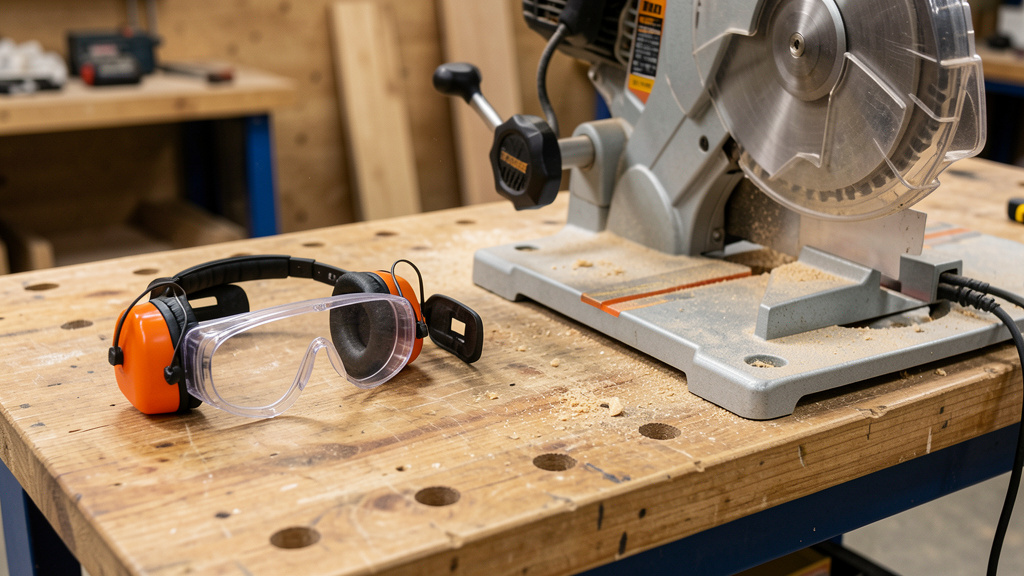
Help make every project—from hanging a picture frame to building a deck—a more controlled and confident experience with a system designed for both weekend warriors and seasoned craftspeople.
Every year, emergency departments across North America treat hundreds of thousands of tool-related injuries—many occurring during routine tasks perceived as simple or quick. A slipped chisel while carving, a circular saw kickback during a deck repair, a ladder shift while hanging seasonal decorations. These are not random misfortunes. They represent predictable intersections of human factors, tool dynamics, and environmental conditions where safeguards were absent or overlooked. This guide moves beyond fragmented safety tips to deliver a unified, actionable philosophy. Built on three interlocking pillars—Mindset, Method, and Maintenance—you will gain clear protocols to anticipate hazards, execute tasks with greater precision, and cultivate a workspace that actively supports your well-being. No fear. No guesswork. Just practical, sustainable confidence.
Introduction: Why “Common Sense” Often Falls Short in the Workshop
Safety is not restriction—it is liberation. True freedom in craftsmanship emerges when anxiety diminishes, allowing full attention to grain patterns, precise measurements, and creative flow. Yet many well-intentioned resources rely on vague warnings (“be careful!”) or assume universal prior knowledge. Effective safety is intentionally designed into systems, rituals, and environments. It operates quietly in the background, guiding behavior without demanding constant mental effort.
Consider aviation: pilots use pre-flight checklists not due to incompetence, but because human cognition narrows under pressure, fatigue, or distraction. Similarly, a homeowner rushing to secure a loose railing before guests arrive might overlook a frayed extension cord. A gardener switching from pruning shears to a hammer might forget safety glasses. These are not character flaws—they reflect well-documented human tendencies. By designing resilient systems that account for these patterns, safety transitions from a burdensome chore into an effortless rhythm.
This framework synthesizes widely recognized principles from OSHA guidelines, ANSI standards (including B107.1 for hand tools and B11.20 for machinery), CPSC incident pattern analyses, and human factors research. It avoids rigid dogma, focusing instead on adaptable protocols validated across diverse settings. Let’s begin where all safety originates: within.
The Safety Triad Framework: Mindset, Method, Maintenance
Imagine safety as a three-legged stool. Remove any leg—Mindset, Method, or Maintenance—and stability vanishes. The Safety Triad creates layered redundancy. A lapse in one pillar is often caught by another. This architecture, refined through decades of incident pattern analysis, transforms safety from a checklist into a living practice. Each pillar reinforces the others, building cumulative protection.
Pillar 1: Mindset — The Cognitive Foundation That Prevents Most Preventable Incidents
Mindset is your internal operating system. It transforms reactive caution into proactive awareness. This pillar cultivates habits so ingrained they operate automatically, even during fatigue or distraction.
Step 1: The 60-Second Hazard Scan Ritual
Before touching any tool, pause. Conduct a deliberate scan across three dimensions:
– Environment: Is lighting adequate at the work surface? Are cords secured away from walkways? Is the floor clear of oil, sawdust, or loose tools? Are flammables stored safely from potential sparks? Is ventilation sufficient for dust or fumes?
– Body: Are you wearing closed-toe shoes? Are sleeves secured, jewelry removed, and long hair tied back? Are you alert—not fatigued, stressed, or under medication causing drowsiness? Is your posture balanced for the task ahead?
– Task: What is the single highest-risk moment in this operation? (e.g., “The moment the circular saw exits the board during a cross-cut.”) Do you have the correct tool for this material and cut type? Is the workpiece securely clamped?
Why this step is crucial: Data from the Consumer Product Safety Commission indicates that a majority of workshop injuries occur during setup, transitions, or cleanup—phases where attention naturally wanes. This ritual anchors focus. Research published in the Journal of Safety Research has shown that structured pre-task assessments can significantly reduce incidents in controlled environments—a principle directly transferable to home workshops. The physical act of scanning (pointing to hazards, verbalizing checks) engages multiple senses, strengthening retention.
Common mistake to avoid: Performing the scan while already reaching for the tool. True effectiveness requires full presence. Stand still. Breathe. Scan deliberately. If interrupted, restart the scan. This is invested time, not wasted time.
Step 2: The “What-If” Scenario Drill
For tasks involving rotating blades, elevation, electricity, or significant force, dedicate two minutes to mental rehearsal:
– Example (Table Saw): “If the board binds mid-cut, I will release the power switch immediately and wait for the blade to stop completely before assessing. I will not attempt to force the wood.”
– Counter-Example: “If I try to push through binding wood, the saw could kick back violently toward my torso.”
– Example (Ladder): “If I feel the ladder shift while painting, I will grip the rails firmly, descend slowly without rushing, and reposition the base before continuing.”
This technique, adapted from high-stakes fields like emergency response, primes the nervous system for calm, competent reactions under stress. You are not inviting disaster—you are programming resilience. Visualize the correct sequence vividly: hand positions, tool sounds, body movements. This builds neural pathways that activate instinctively during actual events.
Step 3: The Solo Worker’s Accountability System
Working alone demands intentional safeguards. “Buddy” refers to systems, not necessarily a person:
– Timer Protocol: For tasks exceeding 25 minutes, set a visible timer. When it chimes, pause. Reassess posture, tool condition, focus level, and workspace hazards. This combats “task fixation,” where prolonged concentration narrows situational awareness.
– Voice Memo Anchor: Before starting, record a brief note on your phone: “Beginning deck repair with circular saw. Safety glasses on, blade guard functional, workpiece clamped.” Hearing your own voice stating safety commitments reinforces intentionality.
– Digital Check-In: Text a trusted contact: “Starting workshop project at 10 AM.” Follow with “Project complete, all safe” upon finishing. This creates gentle external accountability and provides critical information if an incident occurs.
Real-world application: A homeowner building a bookshelf alone uses the timer protocol. At the 22-minute mark, the chime prompts her to notice her circular saw’s blade depth is set too deep for the ¾” plywood. Correcting it prevents potential kickback during the next cut—a near-miss avoided through systematic pause.
The Fundamental Principle: Safety is not the absence of risk, but the presence of preparation. Your mindset is the most adaptable, always-available safety feature you possess.
Pillar 2: Method — Precision Protocols for Every Tool Category
Method translates mindset into exact, repeatable actions. Vague advice like “keep hands clear” fails because it lacks how. This section delivers granular, tool-specific sequences grounded in safety engineering principles. Each protocol follows a consistent structure: Core Hazard, Pre-Use Checklist, Operation Sequence, Common Mistakes, and Emergency Response Guidance.
Hand Tools: Respecting the “Simple” Tools That Cause Significant Injuries
Hand tool injuries often stem from complacency—their simplicity masks real hazards. CPSC data confirms slips, punctures, and repetitive strain dominate this category.
Hammers and Striking Tools
– Core Hazard: Missed strikes causing hand trauma, flying metal fragments from damaged heads, or handle failure ejecting the head.
– Pre-Use Checklist:
– Inspect wooden/metal handle for cracks, splinters, or looseness. Tap the head lightly—if it sounds hollow or moves, retire the tool.
– Examine striking face for “mushrooming” (metal deformation around the edge). A chipped or mushroomed face can fragment on impact, sending sharp metal shards flying.
– Verify striking surface is clean, dry, and free of oil for optimal grip and energy transfer.
– Operation Sequence:
1. Grip the hammer firmly near the very end of the handle. This maximizes leverage and control while minimizing vibration transfer to your wrist.
2. Secure the workpiece in a vise or with heavy-duty clamps. Never hold material with your non-dominant hand near the strike zone.
3. Focus your eyes solely on the target point (e.g., nail head), not the hammer’s arc. Peripheral vision tracks hand position.
4. Use smooth, controlled swings. Avoid excessive “wind-up” which reduces accuracy and increases miss probability.
– Common Mistake: Using a hammer with a hairline crack in the handle “just for this one nail.” Wood fibers degrade progressively under impact stress. Failure is unpredictable and violent. Replace immediately.
– Emergency Response Guidance: For a struck hand: Apply firm, direct pressure with a clean cloth to control bleeding. Elevate above heart level if possible. Seek medical evaluation for deep lacerations, suspected fractures (inability to move fingers, deformity), or numbness (potential nerve injury). Never ignore persistent tingling.
Utility Knives and Blades
– Core Hazard: Severe lacerations from blade slippage, retraction failure, or improper handling during blade changes.
– Pre-Use Checklist:
– Confirm blade is sharp. Dull blades require excessive force, increasing slip risk. Replace blades proactively.
– Test retraction mechanism vigorously: Does the blade lock securely in both extended and fully retracted positions? Does the slider move smoothly without sticking?
– Check handle for cracks, oil residue, or worn grip texture that compromises control.
– Operation Sequence:
1. Always cut away from your body and limbs. Position material so your free hand is never in the blade’s potential path—even during a slip.
2. Place material on a stable, non-slip surface (cutting mat, scrap wood). Never cut while holding material against your leg or torso.
3. Apply steady, moderate pressure. Let the sharp blade do the work; forcing causes loss of control.
4. Retract the blade immediately after completing the cut—even during brief pauses to adjust material.
– Pro Tip for Left-Handed Users: Seek ambidextrous knives with symmetrical handles and dual-sided sliders. If using a right-handed knife, modify your stance: position your body to the right of the cut line, ensuring the blade path moves away from your core. Practice cuts on scrap cardboard first.
– Critical Counter-Example: Cutting packaging tape while holding the box against your thigh. A slip can cause deep, tendon-damaging leg lacerations. Always secure the box on a table.
Chisels and Sharpening Stones
– Core Hazard: Blade slipping off workpiece and striking hand holding the chisel, or stone shattering during use.
– Pre-Use Checklist:
– Inspect chisel handle for cracks or mushrooming (from mallet strikes). Check blade for chips or excessive roll.
– Verify sharpening stone is intact (no cracks) and securely mounted in a non-slip holder or vise.
– Ensure mallet (if used) has a tight head and smooth striking face.
– Operation Sequence:
1. For paring cuts: Place chisel bevel-down on the workpiece. Push with the heel of your hand behind the blade—never place fingers in front of the cutting edge.
2. For mallet cuts: Hold chisel vertically with dominant hand near the blade (but behind the cutting edge). Strike the handle squarely with the mallet. Keep non-dominant hand clear of the strike zone.
3. When sharpening: Maintain consistent angle. Apply even pressure. Keep fingers clear of the stone’s edge and the blade path. Use a honing guide for stability if inexperienced.
– Common Mistake: Using a chisel as a pry bar. This bends the blade, damages the edge, and risks sudden slip. Use a dedicated pry bar for leverage tasks.
– Emergency Response Guidance: For a deep puncture or slice: Flush thoroughly with clean water. Apply pressure. Seek medical care promptly—chisel wounds often track deep, risking tendon or nerve damage and infection. Update tetanus vaccination status as recommended by healthcare providers.
Power Saws: Mastering Force with Finesse
Power saws account for a significant portion of serious workshop injuries. Respect their capability; eliminate fear through knowledge. Precision protocols transform high-risk tools into reliable partners.
Circular Saws: The Portable Powerhouse
– Core Hazard: Kickback (blade binding and ejecting saw backward), accidental blade contact during plunge cuts, cord entanglement, or loss of control from improper support.
– Pre-Use Checklist:
– Blade condition: Inspect for missing teeth, cracks, or heavy pitch/resin buildup. Clean blades cut smoother and reduce binding risk. Verify blade is appropriate for material (e.g., fine-tooth for plywood, coarse for framing).
– Depth setting: Blade should extend no more than ¼ inch below the material thickness. Deeper settings increase kickback potential, tear-out, and blade exposure.
– Safety features: Test blade guard retraction—does it spring back smoothly and fully cover the blade when lifted? Verify electric brake function (if equipped) by listening for rapid deceleration after trigger release.
– Cord management: Position cord behind your cutting path. Use a cord keeper clipped to your belt loop to prevent tripping or accidental yanking.
– Operation Sequence:
1. Secure workpiece firmly with clamps to a stable surface. Never rely on foot pressure or body weight.
2. Align the saw’s shoe plate flat against the material. Start the saw before contacting the wood; allow blade to reach full RPM.
3. Maintain steady, moderate forward pressure. If the saw bogs down (slows significantly), release the trigger and reassess—do not force through.
4. Complete the cut fully before lifting the saw. Confirm the blade guard has re-engaged before setting the saw down.
– Advanced Technique – Plunge Cuts: For starting cuts in the middle of a board (e.g., for a recess): Tilt the saw base so only the rear touches the wood. Start the blade. Slowly and smoothly lower the front of the base until the blade is fully engaged. Maintain control throughout. Reverse the motion to exit the cut.
– Common Mistake: Removing or disabling the blade guard for “better visibility.” Modern guards are engineered for minimal interference. If yours sticks, clean the pivot mechanism or replace the guard assembly—never bypass it. Guard removal is frequently cited in severe laceration incident reports.
– Emergency Drill: Practice the “power-off reflex.” During dry runs (unplugged), simulate kickback: hand instantly moves to hit the off switch. Train this motion until it becomes automatic.
Table Saws: Precision Demands Protocol
– Core Hazard: Blade contact (often during kickback or reaching over a spinning blade), kickback from improper fence alignment or lack of push tools.
– Pre-Use Checklist:
– Blade alignment: Use a precision square to verify the blade is parallel to the miter slots. Misalignment causes binding and dangerous kickback.
– Fence calibration: Ensure the fence is parallel to the blade along its entire length. A misaligned fence pinches the workpiece against the blade’s back teeth.
– Safety equipment: Is the riving knife (or splitter) installed? This thin metal plate behind the blade prevents the kerf from closing and pinching the blade—a critical kickback deterrent. Are push sticks readily accessible? Is the blade guard functional?
– Zero-clearance insert: For thin materials (under ½”), use a zero-clearance throat plate to prevent small off-cuts from falling into the blade well and becoming projectiles.
– Operation Sequence:
1. Stand slightly to the side of the blade path (not directly behind the workpiece) to avoid the kickback trajectory zone.
2. Use push sticks or push blocks for all cuts where hands would be within 6 inches of the blade. Your hands should never approach the blade during operation.
3. Feed material steadily and firmly against the fence. Maintain consistent pressure. Never reach over the spinning blade to adjust or retrieve cut-offs.
4. Wait for the blade to stop completely (use the brake if equipped) before clearing scraps from the table.
– Critical Insight: Kickback occurs in milliseconds. The riving knife maintains separation between the workpiece and the blade’s rear teeth. Never remove it for standard through-cuts. For non-through cuts (dadoes, rabbets), use a splitter guard designed for that operation.
– Pro Tip: Create dedicated push sticks from scrap ¾” plywood. Cut a notch to hook over the workpiece’s top edge. This provides positive control without hand proximity to the blade. Keep multiple sizes handy.
Miter Saws: Accuracy with Awareness
– Core Hazard: Blade contact during lowering/raising cycle, material shifting mid-cut, accidental trigger activation, or kickback on long boards.
– Pre-Use Checklist:
– Blade condition and tightness: Ensure blade is sharp, undamaged, and the arbor nut is securely tightened. A loose blade wobbles, causing inaccurate cuts and vibration.
– Fence stability: Verify both fence sections are solid, square to the blade, and free of debris that could prevent flat contact.
– Clamp functionality: Test the built-in clamp (if equipped). For small pieces (<12″), have secondary clamps ready.
– Operation Sequence:
1. Secure the workpiece firmly against the fence. Use clamps for pieces under 12 inches or for repetitive cuts.
2. Hold the trigger lock (if equipped) and lower the blade slowly until the teeth just kiss the material. Note this position—this is your safe starting point.
3. Lift the blade fully, start the saw, wait for full RPM, then lower smoothly and steadily through the cut.
4. Release the trigger only after the blade has cleared the material and begins its upward return motion.
– Advanced Technique – Stop Blocks: For multiple identical cuts, clamp a stop block to the fence. This allows consistent positioning while keeping hands clear of the blade path. Ensure the block is securely clamped and doesn’t interfere with the blade guard.
– Common Mistake: “Bump cutting”—tapping the trigger repeatedly to make micro-adjustments. This wears the motor brushes, increases accidental activation risk, and reduces cut quality. Make one deliberate, clean cut.
Reciprocating Saws (Sawzalls): Controlled Demolition
– Core Hazard: Blade binding in material causing violent kickback, loss of control from vibration, or accidental contact with hidden objects (nails, pipes, wires).
– Pre-Use Checklist:
– Blade selection: Match blade type precisely to material (demolition blade for nails/wood, bi-metal for metal, carbide-grit for masonry). Verify blade is fully seated and locked in the chuck.
– Shoe adjustment: Extend the shoe plate fully forward to maximize stability and control during the cut.
– Variable speed setting: Set to lower speed for metal or precise cuts; higher speed for wood demolition.
– Operation Sequence:
1. Secure the workpiece if possible. For cutting pipes or studs in place, brace your body firmly against a stable surface.
2. Start the saw before contacting the material. Allow blade to reach speed.
3. Apply firm, steady pressure. Let the blade cut—don’t force. If binding occurs, release trigger immediately.
4. Be hyper-aware of what lies beyond the cut line. Use a stud finder or inspection camera to check for hidden hazards before cutting into walls.
– Critical Warning: Never cut overhead with a reciprocating saw unless specifically designed and rated for it. Standard models lack the balance and safety features for safe overhead use. Use a dedicated oscillating tool or handsaw for overhead tasks.
Drills, Drivers, and Rotary Tools: Beyond the Chuck
- Core Hazard: Bit binding (especially high-torque cordless drills), kickback on hole saws, chuck slippage, or cord entanglement.
- Pre-Use Checklist:
- Bit selection: Use the correct bit geometry and material for the job (brad-point for clean wood holes, spade bits for rough framing, masonry bits with carbide tips for concrete). A mismatched bit can shatter or wander dangerously.
- Chuck tightness: Insert bit fully. Tighten chuck jaws securely using the key (if keyed) or by hand (keyless). Test by trying to wiggle the bit—it should not move.
- Torque/clutch setting: For driving screws, start at a low clutch number. Test on scrap material. Increase incrementally until the screw sets correctly without stripping the head or sinking too deep.
- Speed setting: Use low speed/high torque for driving screws or drilling large holes; high speed for small bits or soft materials.
- Operation Sequence:
- Mark the drill point with a center punch or awl. This prevents “bit walking” and ensures accurate hole placement.
- Hold the drill perpendicular to the surface. For deep holes (>2x bit diameter), periodically withdraw the bit to clear chips and prevent overheating/binding.
- For hole saws or large spade bits: Secure the workpiece firmly. Use both hands on the drill. Start slowly. Apply steady pressure. Have a helper support long workpieces to prevent binding.
- Special Case – Right-Angle Drills: Ideal for tight spaces but prone to wrist strain and loss of control due to torque reaction. Maintain a firm two-handed grip. Brace your body against a stable surface to absorb rotational force. Use lower speed settings.
- Rotary Tools (Dremel-type): Always use the appropriate collet size for the accessory shaft. Never force an accessory. Use light pressure. Wear safety glasses and a face shield for grinding/cutting tasks due to high-speed fragment risk. Secure small workpieces in a vise—never hold them in your hand.
Sanders, Grinders, and Abrasives: Managing Invisible Threats
- Core Hazard: Dust inhalation (long-term respiratory impact), abrasive disc disintegration (grinders), loss of control from vibration, or fire from sparks.
- Pre-Use Checklist:
- Abrasive condition: Inspect sanding discs, belts, or grinding wheels for tears, cracks, delamination, or uneven wear. A damaged abrasive can fragment violently at high RPM. Critical for grinders: Verify the grinding wheel’s RPM rating exceeds the tool’s maximum speed. Check for cracks by performing a “ring test”—gently tap the wheel with a non-metallic object; it should produce a clear ring, not a dull thud.
- Guard installation: Angle grinders must have the guard properly positioned between you and the grinding wheel. Never operate without it. Verify guard is securely fastened.
- Dust collection: Attach a vacuum hose to the tool’s dust port if available. Ensure filters are clean. For sanders without ports, position a shop vacuum nozzle nearby.
- Operation Sequence:
- Start the tool away from the workpiece. Allow it to reach full operating speed before making contact.
- Apply light, even pressure. Let the abrasive do the work. Forcing causes overheating, tool strain, uneven surfaces, and increases kickback risk.
- Move the tool continuously in the direction of rotation (for grinders) or in smooth patterns (for sanders) to avoid creating divots or overheating one spot.
- For grinders: Keep sparks directed away from flammables, yourself, and others. Maintain a firm grip with both hands.
- Respiratory Protection Guidance:
- Light sanding (wood): N95 respirator minimum.
- MDF, plywood, painted surfaces: P100 respirator (filters fine particles and potential chemical residues).
- Metal grinding, concrete: P100 respirator + eye protection with side shields. Consider a powered air-purifying respirator (PAPR) for extended sessions.
- Critical Warning: Never use a grinding wheel rated below the tool’s RPM. Never modify a guard. Never use a damaged wheel. These practices are consistently emphasized in safety documentation.
Ladders and Elevated Work Platforms: Stability is Everything
- Core Hazard: Falls from improper setup, overreaching, ladder slippage, or structural failure.
- Pre-Use Checklist:
- Inspection: Check rails for cracks, bends, or corrosion. Inspect rungs for bends, cracks, or loose rivets. Verify feet are intact, non-slip pads are present, and spreaders/locks function smoothly (for stepladders). For extension ladders, test all locks and pulleys.
- Setup surface: Place on firm, level ground. Use ladder levelers or shims on uneven surfaces. Never place on boxes, barrels, or unstable bases.
- The 4-to-1 Rule: For extension ladders, position the base 1 foot away from the wall for every 4 feet of height to the support point. (e.g., For a 16-foot reach point, base should be 4 feet from the wall). Secure the top and bottom if possible (tie-offs, ladder stabilizers).
- Load rating: Confirm the ladder’s duty rating (Type IAA: 375 lbs, Type IA: 300 lbs, Type I: 250 lbs, Type II: 225 lbs, Type III: 200 lbs) exceeds your weight plus tools and materials.
- Operation Sequence:
- Maintain three points of contact at all times (two hands and one foot, or two feet and one hand).
- Keep your torso centered between the rails. A useful cue: keep your belt buckle between the side rails. If you can’t reach comfortably, descend and reposition the ladder.
- Face the ladder when ascending/descending. Never slide down the rails.
- For stepladders: Never stand on the top cap, pail shelf, or top step. The highest safe standing level is two steps down from the top.
- Pro Tip: For painting or extended work at height, use a ladder stabilizer (standoff) to increase reach safely, protect gutters, and provide a wider, more stable working platform. For frequent elevated work, consider a mobile scaffold platform—it offers vastly superior stability and workspace.
Pillar 3: Maintenance — The Silent Guardian of Safety
A well-maintained tool operates predictably. Maintenance eliminates hidden failure points before they cause incidents. It’s not just about tool longevity—it’s a core safety practice.
Daily/Pre-Use Maintenance Rituals
- Visual Inspection: Scan cords for frays, cuts, or exposed wires (power tools). Check handles for cracks, splinters, or looseness (hand tools). Inspect blades, bits, and abrasives for damage. Look for oil leaks, loose fasteners, or obstructions in moving parts.
- Functional Test: Run the tool briefly without load (unplugged for hand tools). Listen for unusual noises (grinding, screeching, knocking). Feel for excessive vibration or wobble. Verify switches, triggers, and safety locks operate smoothly and return to off position reliably.
- Cleaning: Wipe down handles and surfaces to remove oil, sap, dust, or moisture that compromises grip. For saws, clean pitch/resin buildup from blades using a dedicated blade cleaner and soft brush—pitch increases friction, heat, and binding risk. Clear dust ports and vents to prevent overheating.
Weekly/Monthly Deep Maintenance
- Lubrication: Apply manufacturer-recommended lubricant (light machine oil, dry lubricant) to pivots, chucks, adjustment mechanisms, and moving parts. Avoid over-lubrication which attracts dust and grime. Wipe away excess.
- Calibration & Alignment: Check squareness of saw blades to tables/fences. Verify drill chuck runs true (no wobble). Test level accuracy. Misaligned tools force compensatory user actions that increase risk.
- Safety Feature Audit: Systematically test every safety mechanism: blade guards retract and re-engage smoothly, electric brakes function, riving knives are secure, trigger locks engage. Replace worn springs, pins, or guards immediately. Document maintenance in a logbook for high-use tools.
- Battery Care (Cordless Tools): Store batteries in a cool, dry place. Avoid extreme temperatures. Charge according to manufacturer instructions. Inspect battery contacts for corrosion. Never store batteries fully depleted. Retire swollen, damaged, or excessively hot batteries immediately—dispose of properly at a recycling center.
Workspace Maintenance: The 5S System for Home Workshops
Adapted from organizational principles, 5S creates order that actively prevents accidents:
1. Sort (Seiri): Remove all unnecessary items. Keep only tools and materials needed for current or imminent projects. Donate, sell, or discard duplicates and broken items. Clutter is a tripping hazard and obscures hazards.
2. Set in Order (Seiton): Assign a specific, logical home for every tool. Use shadow boards (pegboard with outlines), labeled bins, and drawer organizers. Tools should be visible and accessible. Frequently used items within easy reach; heavy items at waist level.
3. Shine (Seiso): Clean the workspace daily. Sweep floors to remove sawdust, oil spills, and debris. Wipe down benches. Empty dust collectors. A clean floor prevents slips; a clean bench prevents tool damage and improves focus.
4. Standardize (Seiketsu): Create simple, visual standards. Post the 60-second hazard scan checklist near the main workbench. Use floor tape to mark “red zones” (high-traffic paths kept clear) and “green zones” (tool storage areas). Standardize end-of-session shutdown routine: “Unplug tools, sweep floor, return safety glasses to hook, log maintenance.”
5. Sustain (Shitsuke): Make 5S a non-negotiable habit. Dedicate 10 minutes at the end of every session to reset the space. Involve family members. A sustained orderly environment reduces cognitive load, prevents tool damage, and eliminates countless minor hazards that accumulate over time.
Documented Impact: CPSC analysis links cluttered workshops to a notably higher incidence of slips, trips, and falls. A dedicated “clean zone” mat (3’x5′) under the primary workbench defines a safe standing area, kept perpetually clear of tools and materials.
Navigating Real-World Frictions: Practical Solutions for Common Objections
Safety protocols only succeed if they integrate seamlessly into real life. Let’s address friction points head-on with evidence-based, practical strategies.
“I Don’t Have Time for All These Steps”
- Reframe the Narrative: Safety saves time. A single minor injury can halt a project for days. A severe injury can derail life for months. The 60-second hazard scan prevents hours of downtime, medical visits, and project delays. View safety steps as integral to the task—not an add-on.
- Tiered Implementation Strategy:
- Tier 1 (Non-Negotiable, <10 seconds): Safety glasses on before entering workshop. Workpiece clamped before tool powers on. Cord positioned safely before starting.
- Tier 2 (High-Risk Tasks, 30 seconds): Push sticks for table saw cuts under 6″. Hearing protection for saws/sanders. Dust mask for sanding.
- Tier 3 (Ideal Optimization, 2 minutes): Full PPE ensemble. Workshop lighting check. Digital check-in for solo work.
Start rigorously with Tier 1. Master it. Then integrate Tier 2. Progress is cumulative. Perfection is not required; consistent improvement is.
“Safety Gear is Uncomfortable or Too Expensive”
- Budget-Conscious Solutions:
- Safety Glasses: Seek ANSI Z87.1+ rated glasses. Basic models start at $5-$15 at hardware stores. Look for anti-fog coating (prevents fogging in humid workshops) and UV protection. Try multiple styles—wraparound for side protection, prescription inserts if needed. Comfort drives compliance.
- Hearing Protection: Reusable silicone earplugs ($8 for a pack of 10) offer excellent noise reduction (NRR 25-33dB). Earmuffs ($15-$25) are ideal for intermittent noise. For frequent loud tool use, consider electronic earmuffs ($40-$80) that amplify speech but suppress harmful noise spikes.
- Respirators: For occasional sanding, a quality N95 mask ($10 for 10-pack) suffices. For regular work with MDF, paint, or composites, invest in a reusable half-face respirator ($25-$40) with P100 filters ($10 for pair). Replace filters regularly per manufacturer guidelines.
- Gloves: Cut-resistant gloves (ANSI Level A3 or higher) for material handling ($12-$20). Never wear gloves near rotating blades, bits, or drill chucks—they can catch and pull your hand in.
- Comfort Hack: Visit a safety supply store to try gear on. Adjust nose bridges on glasses. Choose earmuffs with padded headbands. Safety gear that fits well and feels comfortable will be worn consistently.
“I’ve Done It This Way for Years Without Incident”
- Debunking the Gambler’s Fallacy: Past experience does not guarantee future outcomes. Incident analysis consistently shows that experienced users are represented in severe injury reports—complacency can erode vigilance over time. Each bypass of a safety step introduces incremental risk. Cumulative risk escalates with repeated exposure.
- Pattern Insight: Analysis of incident reports indicates that a significant majority of experienced workers injured in accidents had consciously bypassed a specific safety step they deemed “unnecessary” for that particular task. The hazard wasn’t new; the decision to skip the safeguard was the variable.
Working Alone: Mitigating Isolation Risk
- Pre-Work Notification Protocol: Text a contact: “Starting workshop project [brief description] at [time]. Will confirm completion.” Include expected finish time.
- Emergency Kit Accessibility: Keep a well-stocked first aid kit within arm’s reach of your primary workstation—not in a distant closet. Include: pressure bandages, gauze, medical tape, antiseptic wipes, instant cold pack, emergency blanket, and a printed list of emergency contacts/allergies. For workshops, add a tourniquet (CAT Gen 7 recommended) and trauma shears. Review kit contents quarterly.
- Communication Strategy: Keep your charged phone in a dedicated, visible spot (e.g., magnetic mount on bench). Consider a wearable emergency alert button if you have pre-existing health conditions. Test your workshop’s cell signal strength; install a signal booster if weak.
Special Scenarios: Safety Beyond Standard Projects
Teaching Children Workshop Safety: Age-Appropriate Progression
- Ages 3-6: Focus on observation, vocabulary, and boundaries. “This is a hammer. It is a tool, not a toy. We only use tools with a grown-up.” Store all tools securely out of reach. Involve them in safe tasks: holding a tape measure end, sorting screws by size (under supervision).
- Ages 7-10: Introduce basic hand tools under direct, continuous supervision. Start with a child-sized hammer, sandpaper block, or hand drill on soft materials (balsa wood, clay). Emphasize core rules: “Tools stay on the bench,” “Hands clear of the strike zone,” “Ask before touching.” Use visual aids (pictures of safety gear).
- Ages 11-14: Gradually introduce supervised power tool use. Begin with a drill on scrap wood. Require verbal repetition of safety rules before each use (“What’s the first thing we do before plugging in?”). Mandate safety glasses. Focus on one tool at a time. Celebrate safe habits, not just project completion.
- Ages 15+: Treat as apprentices. Teach full Safety Triad framework. Allow supervised operation of more complex tools (miter saw, sander) after demonstrating consistent safe habits with simpler tools. Discuss anonymized incident reports to build risk awareness.
- Golden Rule: Model impeccable safety behavior consistently. Children absorb actions far more deeply than words. Your consistent use of safety glasses, clamps, and pre-checks is the most powerful lesson.
Seasonal Tool Transitions: The Spring Tune-Up Protocol
Tools stored over winter require careful reactivation:
1. Battery-Powered Tools: Charge batteries fully. Inspect contacts for corrosion (clean with baking soda/water mix if needed). Test run each tool. Check for firmware updates (some modern tools).
2. Gas-Powered Tools (Chainsaws, Lawnmowers, Trimmers): Critical: Drain old fuel (ethanol-blended gasoline degrades in 30 days, gumming carburetors). Refill with fresh fuel + stabilizer. Replace air filter. Check spark plug condition/gap. For chainsaws: verify chain tension (should snap back when pulled), sharpen chain, check oil level and bar groove cleanliness.
3. Blades and Bits: Sharpen dull saw blades, chisels, and plane irons. Replace damaged or excessively worn bits. Clean pitch/resin from blades. Organize by type/size.
4. Workspace Refresh: Deep clean floors and benches. Check fire extinguisher pressure gauge and expiration date. Test smoke/carbon monoxide detectors near the workshop. Restock first aid kit.
First Aid for Common Tool Injuries: Immediate, Calm Response
Disclaimer: This is not medical advice. Always seek professional medical evaluation for significant injuries. These steps are for immediate response until help arrives.
– Minor Cuts/Abrasions:
– Rinse gently under cool, clean running water for several minutes to remove debris.
– Apply direct, firm pressure with a clean cloth or gauze to stop bleeding. Elevate above heart level if possible.
– Once bleeding stops, apply antibiotic ointment and cover with a sterile bandage.
– Monitor for: Increasing redness, swelling, pus, red streaks, or fever—signs of infection requiring medical care. Discuss tetanus vaccination status with a healthcare provider for deep or dirty wounds.
– Embedded Debris (Metal Sliver, Wood Splinter):
– Do not probe deeply or dig. Flush area with clean water.
– If superficial and visible, use sterilized tweezers (wipe with alcohol) to grasp and remove straight out.
– If deep, near a joint, eye, or if bleeding won’t stop, seek medical removal. Embedded debris can introduce infection or damage nerves/tendons.
– Eye Irritation (Dust, Chemical Splash):
– IMMEDIATE ACTION: Flush eye continuously with clean, lukewarm water or sterile saline solution for at least 15 minutes. Hold eyelids open. Tilt head so water flows from nose outward (prevents contaminating the other eye).
– DO NOT RUB. Rubbing can scratch the cornea.
– Seek emergency medical care immediately, even if pain subsides. Corneal abrasions or chemical burns require professional evaluation. Bring the chemical container if applicable.
– Suspected Fracture or Deep Laceration:
– Immobilize the area. Use a splint (rolled magazine, cardboard, ruler) padded with cloth. Secure above and below the injury site with bandages or cloth strips—not too tight (check for pulse, color, sensation beyond the splint).
– Apply ice pack wrapped in thin cloth to reduce swelling. Do not apply ice directly to skin.
– Call emergency services. Do not move the person unnecessarily. Keep them calm and warm.
– Electric Shock:
– DO NOT TOUCH THE PERSON if they are still in contact with the electrical source. Turn off power at the breaker/main switch first.
– Once power is confirmed off, check responsiveness and breathing. Begin CPR if trained and necessary. Call emergency services immediately. Even minor shocks require medical evaluation—internal damage can be delayed.
Your Questions, Answered
Q: Are cordless tools inherently safer than corded tools?
A: Safety depends more on user practices than power source. Cordless tools eliminate tripping hazards and offer mobility but introduce battery-specific considerations (thermal events if damaged, unexpected activation if trigger is bumped in storage). Corded tools provide consistent power but demand rigorous cord management. Critical safety practice applies universally: unplug/remove battery before blade/bit changes or adjustments; keep cords clear of cut lines; inspect cords/batteries regularly. Always prioritize the tool’s safety features and your adherence to protocols over the power type.
Q: How often should safety glasses be replaced?
A: Replace immediately if scratched (scratches impair vision and weaken impact resistance), cracked, or if the frame is bent. Even without visible damage, replace every 2-3 years as lens materials degrade with UV exposure, cleaning chemicals, and general wear. For daily users, annual replacement is prudent. Always verify the ANSI Z87.1+ (or Z87.1-2020) marking for certified impact protection. Prescription safety glasses require the same vigilance—scratched lenses compromise both vision and safety.
Q: What is the single most critical safety rule for all power tools?
A: Maintain conscious awareness of the tool’s energy source and moving parts at all times. This manifests in three consistent actions: (1) Unplug the tool or remove the battery before changing blades, bits, or making any adjustments; (2) Keep hands, hair, clothing, and accessories clear of moving parts during operation; (3) Never leave a running tool unattended. This rule addresses the root cause of the majority of severe incidents documented in safety reports—complacency around the tool’s active state.
Q: Is it ever acceptable to repair a frayed extension cord with electrical tape?
A: No. Electrical tape is only suitable for minor, superficial nicks in the outer insulation where the inner conductors remain completely intact and undamaged. If the cord is frayed, cut, shows exposed wire, or has damaged insulation revealing conductors, replace the entire cord immediately. Damaged cords pose severe risks of electric shock, short circuits, or fire. For workshop use, select heavy-duty (12- or 14-gauge) cords rated for the tool’s amperage and labeled for outdoor use (even indoors) for superior durability and safety. Inspect cords before each use.
Q: How can I determine if my workshop ventilation is adequate for dust control?
A: Perform the “visibility test”: After sanding or cutting for 5 minutes with normal workshop activity, can you clearly see across the room? If dust particles are visibly hanging in the air, ventilation is insufficient. Ideal setup combines: (1) Source capture (tool dust port connected directly to a shop vacuum or dust collector), and (2) Ambient air exchange (exhaust fan in a window blowing outward, supplemented by an intake fan if possible). For materials producing fine or hazardous dust (MDF, lead paint, composites), add a HEPA air scrubber running continuously. When in doubt about air quality, wear appropriate respiratory protection (P100 respirator). Your respiratory health is irreplaceable.
Q: When is it safe to wear gloves while using power tools?
A: Glove use requires tool-specific judgment. NEVER wear gloves when operating tools with rotating cutting edges (table saws, circular saws, drill presses, lathes, angle grinders)—gloves can catch on the tool and pull your hand into danger. Gloves are recommended for: handling sharp materials (sheet metal, glass, rough lumber), chemical applications (stains, adhesives), tasks with high vibration (demolition hammers) to reduce hand-arm vibration syndrome risk, and cold environments where dexterity isn’t compromised. For general workshop material handling, cut-resistant gloves (ANSI Level A3+) offer protection without excessive bulk. Prioritize bare-hand dexterity and grip security for tool operation itself.
Q: What should I do immediately if a power tool starts smoking or emits a burning smell?
A: Execute this sequence without delay: (1) Stop operation immediately. (2) Unplug the tool or remove the battery. (3) Move the tool to a non-flammable surface (concrete floor, metal tray)—away from flammables. (4) Do not use water. Allow it to cool completely undisturbed. Smoking indicates severe internal failure—motor burnout, bearing seizure, or electrical short. Do not attempt to use or repair it unless you are a qualified technician. Contact the manufacturer; many have safety recall or repair programs. Document the incident (photos, description) for potential warranty or safety reporting.
Q: What are the essential elements of a workshop-specific first aid kit?
A: Beyond standard bandages and antiseptic, a workshop kit must address tool-specific injuries: (1) Pressure bandages and trauma gauze for severe bleeding; (2) A CAT Gen 7 tourniquet (with clear instructions); (3) Trauma shears for cutting clothing; (4) Eye wash solution (16oz bottle) and sterile saline pods; (5) Burn gel packets; (6) Splinting materials (SAM splint or rolled cardboard); (7) Nitrile gloves; (8) Emergency contact list and medical info card. Store in a clearly marked, waterproof container within 10 seconds’ reach of your main workstation. Review and restock quarterly. Ensure all household members know its location.
Q: Are there specific safety considerations for left-handed users?
A: Absolutely. Many power tools are engineered with right-handed operation as the default (e.g., blade guard orientation on circular saws, trigger placement). Left-handed users should: (1) Seek ambidextrous tools where available (many modern drills, sanders, and oscillating tools); (2) Adjust stance and workpiece orientation to maintain clear visibility of the cut line and keep the body out of the kickback path; (3) Practice cuts extensively on scrap material to build muscle memory; (4) Be extra vigilant about blade paths and material feed direction. Never modify a tool’s safety features (like reversing a circular saw guard) to accommodate handedness—this creates new, unpredictable hazards. Consult tool manuals for left-hand operation notes; some manufacturers provide specific guidance.
Q: What is the functional difference between a riving knife and a splitter on a table saw, and why does it matter?
A: Both devices prevent kickback by maintaining separation between the workpiece and the blade’s rear teeth. A splitter is a fixed-height metal fin mounted behind the blade. It must be removed for non-through cuts (like dados or rabbets), leaving the saw unprotected for subsequent through-cuts if not reinstalled. A riving knife is attached directly to the blade arbor, moving up and down with the blade and maintaining perfect alignment at all heights. It stays in place for nearly all operations (removed only for non-through cuts requiring the blade to rise above the workpiece). Modern safety standards (ANSI B11.20) strongly favor riving knives due to their consistent presence and alignment. Never operate a table saw without one of these devices installed for rip cuts and cross-cuts—this is a primary defense against kickback.
Q: How can I safely store sharp tools and blades to prevent accidents during storage?
A: Implement a layered storage strategy: (1) Blade Guards: Always use manufacturer-provided blade guards on saws, knives, and chisels before storage. For loose blades (utility knife, Exacto), store in original packaging or dedicated blade cases. (2) Secure Mounting: Hang sharp hand tools (chisels, planes, knives) on pegboard with blade points facing downward or use magnetic strips designed for tools. Store power tools in locked cabinets if children or unauthorized users have access. (3) Battery Safety: Store cordless tool batteries on a non-conductive shelf, away from metal objects that could cause short circuits. Keep terminals covered. (4) Chemical Storage: Store fuels, solvents, and finishes in original, labeled containers within a well-ventilated, fire-rated cabinet away from heat sources and living areas. (5) Workspace Clearing: Adopt a “clean bench” policy at day’s end—no tools left lying on surfaces. A systematic storage approach prevents accidental cuts, tool damage, and fire hazards.
Conclusion and Your 24-Hour Safety Commitment
Tool safety is not a destination reached after memorizing rules. It is a continuous practice—a mindful integration of awareness, precise action, and environmental stewardship. The Safety Triad (Mindset, Method, Maintenance) provides a resilient framework adaptable to any project, tool, or circumstance. You now hold specific, actionable protocols to prevent common incidents, navigate real-world constraints with practical solutions, and respond effectively should the unexpected occur.
Recap the three enduring principles:
1. Mindset is Primary: The 60-second hazard scan is your most powerful, immediate safety tool. Perform it without exception.
2. Method is Non-Negotiable: Follow tool-specific protocols precisely. They exist because patterns of injury have been observed and solutions engineered. Trust the process.
3. Maintenance is Mercy: A clean, organized, well-maintained workspace and toolset silently protect you every single day. Invest in this foundation.
The 24-Hour Rule: One Tiny Action to Cement Your Commitment
Within the next 24 hours, complete this single, specific task: Inspect your most frequently used tool. Examine the power cord (or handle), the cutting edge/bit, all safety features (guards, brakes, locks), and overall condition. Clean it thoroughly. Test its operation safely. If anything is amiss—frayed cord, dull blade, sticky guard—repair or replace it before using it again. This small, deliberate act reinforces the entire framework. Safety is built not in grand gestures, but in consistent, mindful moments.
The Big Picture
Every project completed without incident is a victory. Every safety habit reinforced makes the next project safer. You are not merely protecting your hands; you are preserving your capacity to create, to provide, to teach, and to experience the profound satisfaction of making something tangible with skill and care. Share this knowledge generously. Model safe practices visibly. Mentor others with patience. By choosing preparation over presumption, you contribute to a culture where “be careful” evolves into “be prepared.” Your workshop becomes a sanctuary of confidence—a place where creativity flourishes, supported by thoughtful practice.
Explore Our Complete Workshop Mastery System:
Building a Safe Home Workshop from Scratch: Layout, Lighting & Zoning | Power Tool Buying Guide: Decoding Safety Features & Value | First Aid Kit Deep Dive: Workshop-Specific Supplies & Training | Dust Control Systems Compared: From Shop Vac to Central Collection | Teaching Kids Workshop Skills: Age-by-Age Safety Progression | Emergency Preparedness for DIYers: Beyond the First Aid Kit | Advanced Sharpening Techniques: Restoring Tools for Peak Performance & Safety