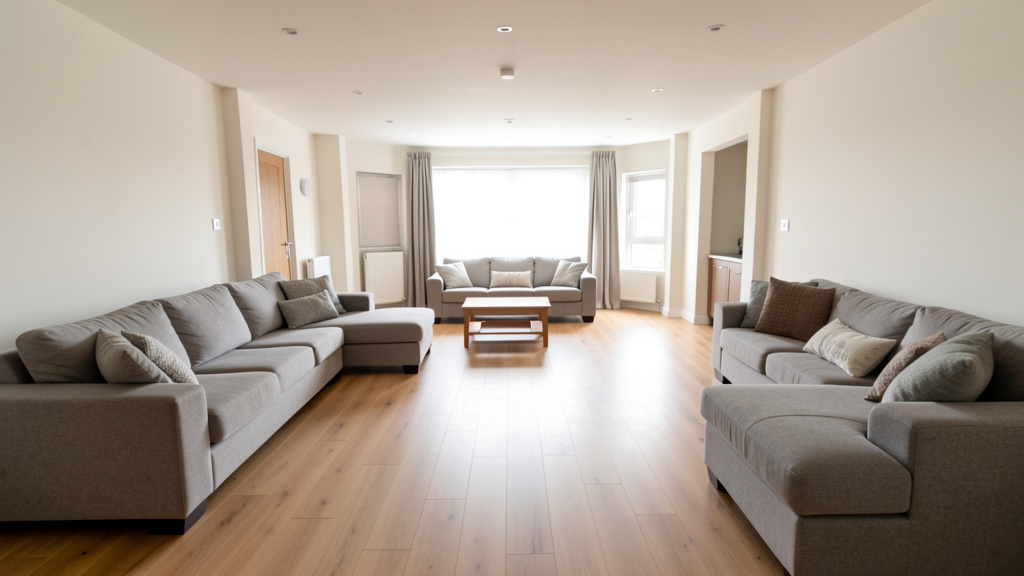
Transform Cluttered Chaos into Intentional Flow with Science-Backed Principles That Work for Any Space, Style, or Lifestyle
Imagine walking into your living room after a long day. Instead of navigating an obstacle course of misplaced ottomans and narrow pathways, you glide effortlessly toward your favorite chair. Conversation flows as naturally as movement. Children play safely without tripping hazards. Guests feel intuitively guided through the space without awkward pauses or blocked routes. This isn’t magic—it’s intentional traffic flow design. By understanding the invisible pathways that govern how humans move through space, you can transform your living room from a source of daily friction into a sanctuary of seamless connection and comfort.
Introduction: Why Traffic Flow Is the Silent Foundation of Great Living Rooms
Most furniture arrangement guides begin—and end—with aesthetics. They show perfectly styled vignettes with artfully draped throws and precisely angled lamps. But behind every beautiful photo lies a critical, often overlooked question: Does this layout actually work for real human beings living real lives? A stunning sofa arrangement means little if you must perform a contortionist act to reach the hallway or if guests consistently bump into the coffee table during conversations. Traffic flow—the intentional design of movement pathways through a space—is the silent architecture beneath every functional living room. It operates at the intersection of environmental psychology, spatial ergonomics, and observed human behavior patterns. When flow is optimized, stress decreases, social interaction deepens, and the room feels inherently right. When ignored, even thoughtfully selected furnishings create daily friction. Drawing from established principles in interior architecture and human-centered design methodology, this guide moves beyond superficial styling tips to deliver a comprehensive, actionable system for engineering flow into any living room—regardless of size, shape, architectural constraints, or lifestyle demands. Whether you’re arranging a compact urban apartment, a sprawling open-concept great room, or a multi-generational family hub, these principles provide the structural blueprint for a space that serves people first, aesthetics second.
The Flow Mapping Framework: A Five-Step System for Human-Centered Layouts
Forget vague advice like “float furniture away from walls” or “create conversation areas.” True traffic flow mastery requires a deliberate, repeatable process. The Flow Mapping Framework transforms abstract concepts into tangible actions through five sequential phases. Each step builds upon the previous one, creating a cascading effect where early decisions inform later placements with precision. This isn’t about rigid rules—it’s about understanding why certain arrangements work and how to adapt them to your unique reality. By the end, you’ll possess a personalized flow map that serves as your layout’s nervous system: invisible to guests but essential to the room’s function.
Step 1: Audit Your Space and Lifestyle—The Non-Negotiable Foundation
Before moving a single cushion, you must gather intelligence. This phase separates enduring layouts from temporary fixes. Rushing past this step often leads to layouts requiring frequent adjustments and ongoing frustration. The audit has two parallel tracks: spatial documentation and behavioral analysis.
Spatial Documentation: Measure Twice, Arrange Once
Grab a tape measure, graph paper (or a digital app like MagicPlan), and a notepad. Document everything with precision:
– Exact room dimensions (length, width, ceiling height)
– All fixed elements: Door swings (measure the arc!), window placements, fireplace protrusions, built-in shelves, radiator locations, electrical outlet positions (note which are switched), HVAC vents, and architectural features like columns or soffits
– Critical clearances: Minimum doorway width (standard interior doors are 30–36 inches), hallway connections, and stairwell proximity
– Light sources: Track sun patterns across morning, noon, and evening. Note where glare hits screens or where shadows pool
Why this matters: A door swinging inward consumes 18–24 inches of usable floor space. Placing a side table within that arc guarantees collisions. Similarly, positioning a reading chair where afternoon sun blinds the occupant creates immediate dysfunction. Measurements prevent emotional decisions (“I love this spot for the sofa!”) from overriding physical reality.
Behavioral Analysis: Map Your Life, Not Just Your Room
Now, observe human patterns. For three days, carry a small notebook (or use voice memos) to record:
– Peak traffic times: When do multiple people move through simultaneously? (e.g., weekday mornings between kitchen and front door)
– Primary pathways: Trace the most frequent routes with colored tape on the floor (removable painter’s tape works). Common paths include:
– Kitchen ↔ Living Room (for meal carry-in or socializing while cooking)
– Front Door ↔ Core Living Area (guest entry flow)
– Living Room ↔ Hallway/Bathroom/Bedrooms (daily transit)
– Activity hotspots: Where do people stop? (e.g., near the TV remote station, by the bookshelf, at the window seat)
– Pain points: Note existing frustrations: “Tripped over rug edge near hallway,” “Can’t open closet door fully,” “Blocked view of TV when sitting on loveseat”
– Household specifics:
– Families with young children: Toy storage access points, safe play zones away from high-traffic paths
– Pet owners: Litter box routes, dog bed placement relative to door access
– Remote workers: Path from desk to kitchen/coffee station
– Entertainers: Beverage station access, crowd circulation during gatherings
– Accessibility considerations: Minimum clearances for mobility devices, turning radii near seating
Real-world example: Sarah noticed her family consistently walked around the coffee table to reach the hallway—a small detour that accumulated into significant unnecessary movement over time. Her audit revealed the table was positioned slightly into the main path. A modest adjustment eliminated the detour. This micro-correction, born from observation, reduced daily friction meaningfully.
Common Audit Mistakes to Avoid
– Measuring only floor space: Ignoring vertical elements (e.g., a low-hanging pendant light that forces ducking)
– Assuming “typical” behavior: Your household’s habits are unique. Design for your Tuesday evenings, not a magazine spread.
– Skipping time-based observation: Human movement patterns shift throughout the day. A path clear at 9 a.m. may become congested at 6 p.m. when activities expand across the floor.
– Overlooking sensory factors: Drafts near seating, screen glare at certain hours—these influence where people actually settle.
The Fundamental Principle: Traffic flow isn’t about furniture—it’s about people. Every measurement and observation must serve human behavior, not aesthetic ideals.
Step 2: Identify Primary and Secondary Pathways—Engineering the Invisible Highways
With your audit complete, translate data into a flow map. Visualize your living room as a city: primary pathways are essential routes (like main streets), secondary pathways are destination-focused connectors, and activity zones are intentional pauses. Misclassifying these leads to congestion.
Defining Pathway Types with Precision
– Primary Pathways: Must accommodate comfortable passage (minimum 36 inches wide, ideally 42–48 inches). These connect critical zones:
– Main entrance to living area core
– Living area to kitchen/dining
– Living area to primary hallway/stairs
Critical guideline: Keep these routes completely unobstructed by furniture legs, rug edges, or decorative objects.
– Secondary Pathways: Single-person routes (minimum 24–30 inches wide) serving specific functions:
– Access to a reading chair or side table
– Path to a window for opening/closing
– Route to a media console for device access
Critical guideline: Allow clearance for opening cabinet doors or drawers along these paths.
– Activity Zones: Defined areas where movement stops (seating clusters, play areas). These require buffer zones (see Step 3) but no continuous pathways through them.
– Dead Zones: Low-traffic corners ideal for floor plants, tall bookcases, or art—never for high-use items requiring frequent access.
Creating Your Flow Map: A Practical Exercise
1. On your room sketch, draw thick blue lines for primary pathways. Ensure they form logical, direct routes between key zones. Gentle curves often feel more intuitive than sharp turns.
2. Draw thinner green lines for secondary pathways branching from primary paths toward activity zones.
3. Shade activity zones in soft yellow. Note required buffer space around each (e.g., 18 inches in front of a sofa for legroom).
4. Mark dead zones in gray.
5. The Clearance Check: Using a scaled ruler, verify:
– All primary paths ≥ 36″ wide at narrowest point (including rug edges or furniture overhangs)
– Secondary paths ≥ 24″ wide
– No pathway narrows abruptly (creates hesitation points)
– Pathways avoid cutting through activity zones (e.g., a path shouldn’t slice between two chairs meant for conversation)
Why pathway width matters: Human shoulders average 18–20 inches wide. A 30-inch path forces sideways movement—a subtle stressor. At 36 inches, passage feels respectful. At 42+ inches, movement feels expansive. For context: ADA accessibility guidelines recommend 36-inch minimum clearances—a standard benefiting all users through intuitive design.
Pathway Psychology: How Width Influences Behavior
– < 24 inches: Creates anxiety. People feel confined. Avoid entirely in living areas.
– 24–30 inches: Functional for low-traffic secondary paths but may feel tight with frequent use.
– 36 inches: The psychological “sweet spot” for primary paths—feels intentional and respectful.
– 42+ inches: Generates a sense of ease. Ideal for entertaining zones or rooms where multiple paths converge.
Illustrative scenario: Mark placed his sectional to maximize seating, narrowing the path from the front door to the kitchen to 28 inches. Guests consistently hesitated at the entrance. Widening the path to 38 inches by shifting the sectional transformed entry flow—guests moved through confidently, and seated occupants felt less intruded upon.
Special Case: Open-Concept Layouts
In great rooms combining living, dining, and kitchen areas, pathways become multi-directional. Map all cross-traffic:
– Kitchen cook’s path to dining table
– Living room to patio door
– Hallway to powder room
Use area rugs to visually define zones without blocking paths. A rug under the dining table should extend sufficiently beyond chairs to allow pulling out seats safely. In open plans, maintain consistent width for primary circulation corridors between zones. These “flow buffers” prevent visual and physical chaos.
Step 3: Define Activity Zones with Flow Buffers—Creating Purposeful Pauses
Activity zones are where life happens: conversation clusters, media viewing areas, reading nooks, play corners. But zones placed too close together create visual noise and physical interference. Flow buffers—the intentional negative space around zones—are essential for serene functionality. Without buffers, zones bleed into each other, causing cognitive load and movement conflicts.
The Four Essential Living Room Zones (and Their Buffer Requirements)
1. Conversation Zone:
– Core elements: Seating arranged for eye contact (sofas/chairs facing each other, not all aimed at TV)
– Minimum buffer: 18 inches between seating edge and pathway. Allows people to sit/stand without blocking traffic.
– Critical nuance: For deep sofas (over 40″ deep), increase buffer to 24 inches for comfortable rising.
– Buffer consideration: A chair placed with its armrest too close to a pathway forces seated occupants to adjust posture when others pass—a subtle but persistent irritation.
- Media Viewing Zone:
- Core elements: Seating oriented toward screen with unobstructed sightlines
- Minimum buffer: 24 inches between front-row seating and coffee table (for leg stretch and safe walking).
- Critical nuance: Calculate viewing distance using screen diagonal: Ideal distance = screen size (inches) × 1.5 to 2.5. A 65″ TV benefits from 8–13 feet of clear viewing space. Place pathways behind seating rows, not between seating and screen.
-
Buffer consideration: A narrow path between sofa and TV forces people to walk through the viewing field, disrupting immersion and creating safety concerns in low light.
-
Reading/Relaxation Zone:
- Core elements: Comfortable chair, dedicated light source, small side table
- Minimum buffer: 30 inches of clear space around the chair (allows easy approach from multiple sides, accommodates floor lamps)
- Critical nuance: Position away from high-traffic paths. Place near natural light but avoid direct glare on reading material.
-
Buffer consideration: A reading chair tucked into a corner with minimal clearance makes accessing the side table awkward and blocks the path when standing.
-
Play/Activity Zone (for families):
- Core elements: Open floor space, accessible toy storage, durable surfaces
- Minimum buffer: 36 inches of clear perimeter space. Children move unpredictably; wider buffers prevent collisions.
- Critical nuance: Locate away from primary pathways but visible from seating areas for supervision. Use low, rounded storage bins.
- Buffer consideration: Placing play items directly under furniture creates tripping hazards. Elevated storage keeps floor space clear.
Buffer Visualization Technique
Stand in your space (or clear existing furniture temporarily). Have a partner walk the mapped pathways at normal speed. As they pass potential zone locations, observe:
– Do they instinctively slow down or alter their path? (Indicates insufficient buffer)
– Does their movement feel respectful of the “zone” space?
– Can someone seated in the zone make eye contact with the walker without straining?
Adjust zone boundaries until movement feels fluid and zones feel protected. Buffers aren’t wasted space—they’re respect space.
Zone Integration Strategies
– For small rooms: Combine zones intentionally. A loveseat can serve both conversation and media zones if angled correctly. Use a narrow console table (14″ deep) behind a sofa as a room divider and secondary pathway buffer.
– For large rooms: Create distinct zone “islands” with clear pathways between them. A 48-inch-wide pathway between conversation and media zones prevents sound bleed and visual clutter.
– Multi-functional zones: In studio apartments, use furniture height to define buffers. A bookshelf 48+ inches tall creates a visual barrier between zones while maintaining airflow and light.
The Psychology of Negative Space
Environmental psychology research indicates that clearly defined buffers reduce cognitive load. When pathways and zones are intentionally separated, the brain expends less energy navigating the space, freeing mental resources for relaxation or connection. Cluttered transitions create subconscious vigilance—”Am I in someone’s way?” Buffers signal safety and intentionality. They communicate: This space was designed for comfortable coexistence.
Step 4: Select and Position Furniture with Flow in Mind—From Theory to Tangible Layout
With your flow map and zone buffers defined, furniture selection and placement become strategic. This step addresses common pitfalls: choosing pieces that overwhelm the space, ignoring functional clearances, and prioritizing style over human-scale ergonomics.
Furniture Sizing: Guiding Principles for Flow
Before shopping or rearranging, consider your room’s spatial balance:
– Furniture footprint guidance: Should generally not exceed 60% of total floor area in small rooms (< 250 sq ft), 50% in medium rooms (250–400 sq ft), and 40% in large rooms (> 400 sq ft). This preserves adequate pathway space.
– Critical clearance dimensions:
| Furniture Type | Minimum Front Clearance | Minimum Side Clearance | Pathway Adjacency Guidance |
|—————-|————————-|————————|—————————-|
| Sofa (standard depth 36″) | 18″ for walking, 24″ for coffee table | 6″ from wall (for cleaning) | Keep outside primary pathways |
| Armchair | 12″ on all sides | 3″ from wall | Ensure secondary path allows full use |
| Coffee Table | 14–18″ from sofa seat edge | Centered under seating zone | Should not extend beyond zone buffer |
| Console Table (behind sofa) | 10–12″ deep max | Full length of sofa | Must leave ≥36″ pathway behind sofa |
| Media Console | 18″ clearance in front | 3″ on sides for ventilation | Pathway should run parallel |
| Ottoman | Treat as movable element | Store against wall when not in use | Never leave in primary pathways |
Why these dimensions matter: A coffee table placed too close to a sofa forces uncomfortable reaching. At 16 inches, it’s accessible without strain. Similarly, a console table deeper than 12 inches behind a sofa consumes critical pathway space.
Strategic Placement Tactics by Room Challenge
Challenge: The Narrow Rectangular Room (Common in Older Homes)
– Problem: Long, narrow shape encourages “bowling alley” effect with furniture lining both long walls.
– Flow Solution:
1. Place largest seating piece (sofa) on the longest uninterrupted wall, offset toward one end to create asymmetrical zones.
2. Position armchairs at a 45-degree angle to the sofa on the opposite wall, forming a conversational triangle.
3. Run primary pathway along the center of the room (minimum 36″ wide).
4. Use a narrow console (10″ deep) on the wall opposite the sofa for lamps/storage without encroaching on flow.
5. Place area rug under front legs of sofa and chairs only—keeps pathway edges visually clear.
– Observed impact: This layout transforms a tunnel-like space into two distinct zones with a clear, dignified central pathway.
Challenge: The Open-Concept Great Room
– Problem: Undefined zones cause furniture to “float” randomly, creating chaotic cross-traffic.
– Flow Solution:
1. Define the living zone’s perimeter using an area rug (minimum 8’x10′ for standard seating group). All seating front legs should rest on the rug.
2. Position the sofa with its back to the dining area. This creates a visual and physical buffer.
3. Leave a minimum 42-inch-wide “flow corridor” between living and dining zones, aligned with main traffic paths.
4. Use a low bookshelf (36″ high max) or console table behind the sofa to anchor the living zone.
5. Angle armchairs toward the sofa but slightly away from the dining zone to reinforce separation.
– Observed impact: Guests moving between zones no longer cut through seating areas. Dining feels protected during meals; living zone conversations remain intimate.
Challenge: The Small Apartment Living Room (< 200 sq ft)
– Problem: Every inch counts; poor choices amplify claustrophobia.
– Flow Solution:
1. Prioritize one primary activity zone (e.g., conversation over media viewing).
2. Choose appropriately scaled furniture: loveseat (54–60″ wide) instead of sofa, nesting tables, wall-mounted media console.
3. Float furniture slightly away from walls to create implied breathing room.
4. Use transparent or leggy furniture (acrylic chairs, sofa with exposed legs) to maintain visual sightlines.
5. Designate a “flex zone”: A clear 4’x4′ area for adaptable use. Keep completely furniture-free.
– Observed impact: Strategic negative space prevents crowding. Floating furniture enhances perceived spaciousness; multi-functional pieces maximize utility.
Furniture Selection Criteria for Flow-Conscious Buyers
When evaluating pieces, consider:
– Scale: Will this complement my room’s proportions? (Measure your space and bring dimensions shopping)
– Footprint: Does the base design allow easy cleaning underneath? (Tapered legs often support better flow maintenance than solid bases)
– Mobility: Can this be moved easily for cleaning or reconfiguration? (Lightweight frames, furniture sliders)
– Function: Does it solve a verified need from my behavioral audit? (Avoid impulse purchases)
– Clearance: Does it require special space for use? (e.g., recliners need space behind them; swivel chairs need room to rotate)
Adaptable Solutions:
– Ideal path: Custom-sized sectional designed precisely for your flow map.
– Budget-conscious path: Two apartment-sized sofas arranged in an L-shape with a narrow console between them to define the pathway edge.
– Immediate adjustment: Temporarily remove one seating piece. Better to have fewer seats with smooth flow than crowded seating with constant friction.
The Coffee Table Consideration: Shape Influences Flow
– Rectangular tables: Best for long sofas. Ensure length is approximately 2/3 the sofa length. Creates defined pathways on both sides.
– Round/Oval tables: Ideal for tight spaces or conversational clusters. No sharp corners; pathways flow around it naturally. Minimum 36″ diameter for usability.
– Nesting tables: Perfect for small rooms. Tuck away when not needed, freeing pathway space instantly.
– Ottomans with trays: Dual-purpose (seating + surface). Store against a wall when not in use. Avoid leaving in pathways.
Critical tip: Maintain 14–18 inches between sofa seat edge and table front edge. Less feels cramped; more feels disconnected.
Step 5: Test, Refine, and Adapt for Real Life—The Living Layout
A layout isn’t finished when furniture is placed—it’s finished when it works consistently. This final framework step embraces iteration. Human behavior is dynamic; your layout should be too. Implement these testing protocols before considering the arrangement complete.
The 72-Hour Flow Trial
After arranging furniture:
1. Walk the paths: At different times of day, walk all mapped pathways at normal speed. Note:
– Pinch points where you slow down or adjust posture
– Furniture edges you instinctively avoid
– Zones that feel exposed or cramped
2. Simulate real scenarios:
– Carry a tray from “kitchen” to “seating zone”
– Have two people enter simultaneously from different doors
– Sit in every chair—can you reach a side table? See the TV? Make eye contact?
– Open all cabinet doors/drawers on media consoles
3. Observe others: Invite a family member or friend to move through naturally. Watch where they hesitate, detour, or comment.
4. Night test: Turn off overhead lights; use only ambient or task lighting. Can pathways be navigated safely? Are rug edges visible?
Refinement Triggers: When to Adjust
Make micro-adjustments (1–3 inches) if you observe:
– Repeated near-misses with furniture corners
– Someone consistently taking a “shortcut” through a zone
– Seated occupants leaning forward excessively to reach surfaces
– Pathways feeling acoustically unbalanced (too echoey or muffled)—adjust rug placement or add soft furnishings
Adapting for Life’s Changes
Build flexibility into your system:
– Seasonal shifts: In colder months, add a floor pouf near the fireplace (store in closet when not needed).
– Guest mode: Keep two folding chairs stored vertically. Place them in the flex zone during visits.
– Child development: As toddlers become more mobile, widen play zone buffers. Swap sharp-cornered tables for rounded ones.
– Evolving needs: Proactively widen primary pathways if future mobility considerations arise. Install discreet support elements near seating before they’re needed (disguised as towel racks or decorative elements).
The Maintenance Ritual
Flow degrades gradually. Schedule periodic “flow check-ins”:
1. Re-measure critical pathways (tape measure provides objective data)
2. Re-observe behavioral patterns (has remote work changed traffic?)
3. Declutter zone buffers (items accumulating on console tables narrow pathways)
4. Rotate rugs if wear patterns indicate uneven traffic
The Fundamental Principle: A thoughtful layout serves evolving human needs. Embrace iteration as evidence of responsive design, not imperfection.
Navigating Complex Scenarios: Flow Solutions for Real-World Challenges
Theory meets reality in these nuanced situations. Each scenario includes actionable adaptations of the core framework.
The Entertainer’s Dilemma: Hosting Multiple Guests Without Gridlock
When your living room transforms for gatherings, standard flow maps require adaptation. The solution lies in zoning for density and creating circulation loops.
Pre-Event Flow Engineering
– Clear secondary pathways: Temporarily remove ottomans, floor lamps, or decorative stools that become obstacles in crowds.
– Widen primary pathways: Shift seating inward slightly if needed. Crowds move like water—narrow channels cause bottlenecks.
– Create a “service loop”: Position beverage station, snack table, and trash can in a triangular arrangement with clear access from kitchen and seating areas. Guests circulate around this loop without crossing main traffic paths.
– Designate standing zones: Use area rugs to define “linger areas” away from pathways. Place high-top tables (30″ tall) in these zones for drinks—people stand comfortably without blocking seated guests.
– Lighting strategy: Brighten pathways (use floor lamps aimed at walls for indirect light) while keeping seating zones slightly dimmer. This visually guides movement.
Practical tip: Place a small tray table behind the main seating area (within the buffer zone) for drink refills. Guests access it without cutting through conversation clusters. During gatherings, this buffer zone becomes a functional asset.
Family Life with Young Children: Safety, Play, and Flow Resilience
Children create dynamic movement patterns. Design for resilience, not rigidity.
Child-Centric Flow Adaptations
– Rug strategy: Use low-pile, washable rugs (flatweaves, indoor/outdoor) in play zones. Avoid thick shag rugs where toys hide and tripping occurs. Secure all rugs with non-slip pads.
– Furniture anchoring: Secure bookshelves, TV stands, and tall cabinets to wall studs with anti-tip kits. Prevents furniture from shifting into pathways.
– Toy traffic management:
– Place open bins within play zones, not along pathways
– Use labeled bins so cleanup is intuitive (“Blocks go here”)
– Install low hooks near entryways for backpacks/stuffed animals—prevents hallway clutter
– Pathway width: Consider increasing primary pathway minimums to 42 inches. Extra width accommodates unpredictable movement.
– Seating choices: Opt for performance fabrics and rounded furniture corners. Avoid glass-topped tables.
Real-world adaptation: One family created a “toy corral”—a defined zone in the room’s corner using a colorful rug. All play happens here. A low bookshelf along one edge holds bins. The primary pathway curves around this zone with ample buffer. When playtime ends, toys are contained, and the main flow path remains clear. This intentional zone definition significantly streamlined their daily cleanup routine.
Accessibility Integration: Flow for Diverse Abilities (Without Compromising Style)
Inclusive design benefits everyone. Integrating accessibility is intelligent spatial planning.
Universal Flow Principles
– Pathway widths: Maintain 36-inch minimum clearances everywhere (aligned with ADA accessibility guidelines). In practice, aim for 42 inches in primary paths for universal comfort.
– Turning space: Ensure sufficient clear space near seating areas for maneuverability.
– Furniture heights: Seat heights of 17–19 inches (including cushion compression) support easier transfers. Avoid excessively deep seats that may trap occupants.
– Clear floor space: Leave adequate space in front of all seating and key surfaces for approach from multiple angles.
– Surface transitions: Ensure rugs are flush with flooring or use very low-profile transitions.
Stylish Accessibility Solutions
– Instead of clinical grab bars: Install decorative wall rails in wood or brass near seating areas. Use as towel racks or coat hooks.
– Instead of bulky lift chairs: Choose sofas with firm, resilient foam and sturdy arms for pushing up. Add discreet armrest extensions if helpful.
– Lighting: Install motion-sensor path lights along primary routes (under cabinets, baseboard LEDs). Choose warm 2700K light to maintain ambiance.
– Storage: Use pull-down shelves in media consoles or lazy Susans in corner cabinets—reduces reaching strain for everyone.
Key insight: These adaptations create a calmer, more intuitive space for all users. Wider pathways feel generous. Thoughtful lighting enhances ambiance. Universal design is simply thoughtful design.
Rental Restrictions: Non-Permanent Flow Solutions
Can’t drill holes? Can’t move walls? Flow mastery still applies.
Landlord-Friendly Flow Tools
– Removable visual cues: Use painter’s tape to mark pathway edges during layout planning. Remove after furniture is placed.
– Rug-defined zones: Area rugs (secured with rug tape) create instant zone boundaries without permanent changes.
– Furniture sliders: Felt pads under all furniture legs allow easy repositioning for cleaning or flow tweaks.
– Temporary anchors: For tall bookshelves, use museum putty or removable anti-tip straps that leave no residue.
– Modular furniture: Choose pieces that can be reconfigured (sectionals with movable ottomans, nesting tables). Adapt layout seasonally without new purchases.
Budget flow hack: Use a large floor mirror leaned against a wall to visually expand a narrow pathway. Place it opposite a window to amplify light. Secure with museum putty at the base. This creates perceived space without structural changes.
When to Adapt the Framework: Intentional Exceptions and Creative Solutions
Rigid adherence to flow principles can stifle creativity. True mastery knows when and why to adapt—and how to mitigate consequences thoughtfully.
The “Conversation Over Circulation” Adaptation
In intimate settings designed purely for deep connection (e.g., a dedicated reading nook), you might intentionally narrow pathways to 30 inches to create coziness.
– When it may work: Small rooms (< 150 sq ft) with low traffic volume, where psychological safety through enclosure is the priority.
– Mitigation strategy: Ensure at least one clear egress path (36+ inches) to the nearest exit. Never block all escape routes. Use soft, rounded furniture edges.
– Psychological cue: Add warm lighting and textured textiles to signal “this closeness is intentional.”
The Architectural Feature Consideration
Sometimes, a fireplace, bay window, or built-in bookshelf influences furniture placement.
– Decision framework:
1. How frequently is the feature used?
2. Can the pathway be rerouted around the feature with minimal detour?
3. Does the functional or emotional value outweigh the flow adjustment?
– Adaptation approach: If placing a chair near a secondary pathway is necessary:
– Choose a chair with slender, visible legs (creates visual permeability)
– Add subtle lighting behind the chair to illuminate the path edge
– Place a textured rug runner along the altered path to provide tactile guidance
– Prioritize keeping primary pathways unobstructed
The “Contained Creativity” for Multi-Use Spaces
Artists or writers may need tools accessible during creative work.
– Containment strategy: Define the work zone with a distinct rug or floor marking. Keep all pathways outside this zone completely clear.
– Tool management: Use rolling carts that tuck under tables when not in use. Pathways remain open during non-creative hours.
– Time-based practice: “Creative setup” is permitted during active work sessions; space resets to flow-optimized state afterward.
The Guiding Question: Does this adaptation serve a documented human need from my behavioral audit, or is it an aesthetic preference? If the answer leans toward preference without functional justification, revisit the framework.
Your Questions, Answered
Q: How wide should the path be between my sofa and coffee table?
A: Maintain 14–18 inches between the front edge of the sofa seat and the coffee table. Less than 14 inches forces uncomfortable reaching; more than 18 inches creates a disconnected feel and wastes zone space. For deep sofas (over 40 inches deep), lean toward 18 inches for comfortable leg extension.
Q: My living room has two doorways on opposite walls. How do I prevent it from becoming a hallway?
A: First, confirm usage patterns of both doors. If one is rarely used, place a low bookshelf or console table partially discouraging shortcutting. For active dual-door flow: position your main seating cluster perpendicular to the traffic flow, creating a visual barrier. Use an area rug under seating to define the zone distinctly. Add a narrow console table (10–12 inches deep) along one wall within the pathway to slow traffic visually without blocking it. The goal is to acknowledge the path while making the seating zone feel intentionally separate.
Q: Can I put a rug under just the front legs of my sofa?
A: Yes—and this is often ideal for flow. In smaller rooms or when defining a seating zone within a larger space, having only the front legs on the rug anchors the furniture visually while keeping pathway edges clear. Ensure the rug extends at least 6–12 inches beyond the sofa arms on the sides. For large rooms with ample space, placing all furniture legs on the rug creates a more cohesive zone. Consistency across seating pieces is key.
Q: How do I arrange furniture in a living room with a fireplace as the focal point?
A: Position seating to face the fireplace at a comfortable viewing distance (typically 7–10 feet for safety and ambiance), but avoid placing furniture directly in the pathway to the hearth. Create a conversational triangle: sofa opposite the fireplace, two chairs angled inward. Leave a clear pathway along the room’s perimeter for accessing the fireplace. If the mantel is deep, ensure no seating is closer than 36 inches. For media viewing, consider a swivel chair or properly shielded TV mount above the mantel to serve dual purposes without compromising flow.
Q: What’s the minimum clearance needed behind a dining table in an open-concept living/dining area?
A: Allow 42–48 inches between the back of dining chairs (when pulled out) and any adjacent furniture, wall, or pathway edge. This provides space for someone to walk behind seated diners comfortably. In tight spaces, choose chairs with arms that don’t extend beyond the seat width, or use benches on one side. Never allow the dining zone’s clearance to encroach on the living room’s primary pathway—maintain that flow corridor between zones.
Q: My partner and I have different seating preferences (I want to face the window; they want to face the TV). How do we compromise?
A: Create two distinct micro-zones within the room: a media viewing zone with the TV as focal point, and a relaxation zone near the window with a comfortable chair, floor lamp, and small side table. Position them so their buffer zones don’t overlap pathways. Use a room divider (like a tall plant or low bookshelf) to visually separate them if space allows. Flow isn’t about uniformity—it’s about intentional separation of functions that honor multiple needs.
Q: Are there specific furniture shapes that improve flow in small spaces?
A: Yes. Prioritize pieces with:
– Tapered or exposed legs: Creates visual lightness and maintains sightlines to pathways
– Round or oval shapes: Eliminates sharp corner hazards (round coffee tables, oval dining tables)
– Nesting or stackable designs: Tables that tuck away, stools that store under consoles
– Wall-mounted or floating: Media consoles, desks, or shelves that free floor space
Avoid bulky, skirted furniture or large rectangular ottomans that dominate floor area. In small spaces, visual permeability supports perceived spaciousness.
Q: How do I handle flow when my living room doubles as a home office?
A: Treat the desk as its own activity zone with strict buffer rules. Position the desk so its primary access path doesn’t cut through the living zone. Ideal placements: in a corner with clear approach from the side, or against a wall with 36+ inches of clearance behind the chair. Use a room divider (bookshelf, folding screen) to visually separate zones. Store office supplies in closed cabinets. During non-work hours, close the laptop and cover the desk to “deactivate” the zone psychologically.
Q: What’s a common traffic flow oversight in living room designs?
A: Prioritizing static aesthetics over dynamic human behavior. This can manifest as:
– Coffee tables placed too close to sofas for “perfect styling”
– Pathways narrowed to fit extra seating that’s rarely used
– Rugs sized too small, making zones feel disconnected
– Ignoring door swings in planning (a chair placed where a door opens)
Always validate layouts against your behavioral observations—not idealized images.
Q: How can lighting improve traffic flow perception?
A: Strategic lighting guides movement subconsciously. Install subtle path lighting along primary routes: low-voltage LED strips under console tables, wall sconces at 60-inch height to illuminate pathways without glare, or recessed lights spaced evenly along circulation corridors. Avoid placing bright lights directly over seating zones while leaving pathways in shadow—that encourages people to cut through zones. Warm, even illumination along paths makes them feel safe and intentional. Dimmable circuits allow adjusting light levels for different activities.
Q: My living room has an awkward column in the middle. How do I work with it?
A: Transform the feature intentionally. First, measure its location relative to your flow map. If it sits within a primary pathway:
– Wrap it with padded material to prevent injury
– Mount shallow shelves on one side for display (keeps the other side clear)
– Use it to anchor a zone: Place two chairs back-to-back with the column between them, creating two intimate nooks
– Add vertical interest: Train a vine up the column or install upward-facing accent lighting
Integrate architectural features deliberately into your flow narrative rather than fighting them.
Q: How often should I re-evaluate my living room traffic flow?
A: Schedule informal reviews seasonally and after major life changes: new household members, shifted work patterns, or furniture replacement. Also, listen to subtle cues: increased near-misses, tripping near rugs, or family members consistently rearranging items. Flow is dynamic—your layout should evolve with your life. Keep your original flow map handy for quick reference during adjustments.
Conclusion and Next Step
Mastering living room traffic flow transforms your home from a static backdrop into an active participant in daily life. It reduces friction in subtle but profound ways: fewer bumped shins, smoother guest interactions, deeper conversations uninterrupted by movement anxiety, and a pervasive sense of calm that comes from space designed for you. The principles outlined here—auditing behavior before aesthetics, mapping pathways with precision, buffering activity zones with intention, selecting furniture scaled to human movement, and embracing iterative refinement—form a timeless system applicable across styles, budgets, and square footages. This isn’t about achieving perfection on the first try; it’s about cultivating awareness. Every inch of cleared pathway, every widened buffer zone, every furniture piece chosen for function and form accumulates into a living environment that honors how you actually live.
Recap: The Three Anchors of Flow Mastery
- People precede furniture: Your behavioral audit is the compass. Never let a beautiful piece override documented human patterns.
- Clearance is compassion: Those extra inches in pathways and buffers aren’t wasted space—they’re respect for bodies, movement, and peace of mind.
- Flow is fluid: Your layout should adapt as your life evolves. Schedule check-ins; celebrate micro-adjustments as victories.
The 24-Hour Rule: Your Tiny, Transformative Action
Within the next 24 hours, complete one concrete step:
– If your room is furnished: Use removable painter’s tape to outline your primary pathways on the floor. Walk them. Notice where tape overlaps furniture. Shift one item 2 inches to restore clearance.
– If your room is empty: Sketch your room to scale. Draw blue lines for primary paths (minimum 36 inches wide). Before placing any furniture, verify these paths remain unobstructed in your layout.
This micro-action builds momentum. Progress, not perfection, is the goal.
The Big Picture: Flow as a Living Practice
Traffic flow principles extend far beyond the living room. Apply this mindset to kitchen work triangles, bedroom pathways to closets, or home office circulation. When we design spaces that honor human movement, we design spaces that honor human dignity. We reduce daily stressors, foster connection, and create environments where life unfolds with grace. Your home should feel like a deep breath—a place where movement is effortless and presence is possible. By mastering the invisible architecture of flow, you gift yourself and everyone who enters your space the profound luxury of ease.
Explore Our Complete Home Harmony System:
Small Living Room Layouts That Feel Spacious | Furniture Scale Guide: Choosing Pieces That Fit Your Space | The Psychology of Color in Home Design | Creating Multi-Functional Rooms Without Sacrificing Style | Lighting Layers: A Room-by-Room Guide to Ambiance and Function | Decluttering with Purpose: Systems That Last | Home Accessibility Upgrades That Blend Seamlessly