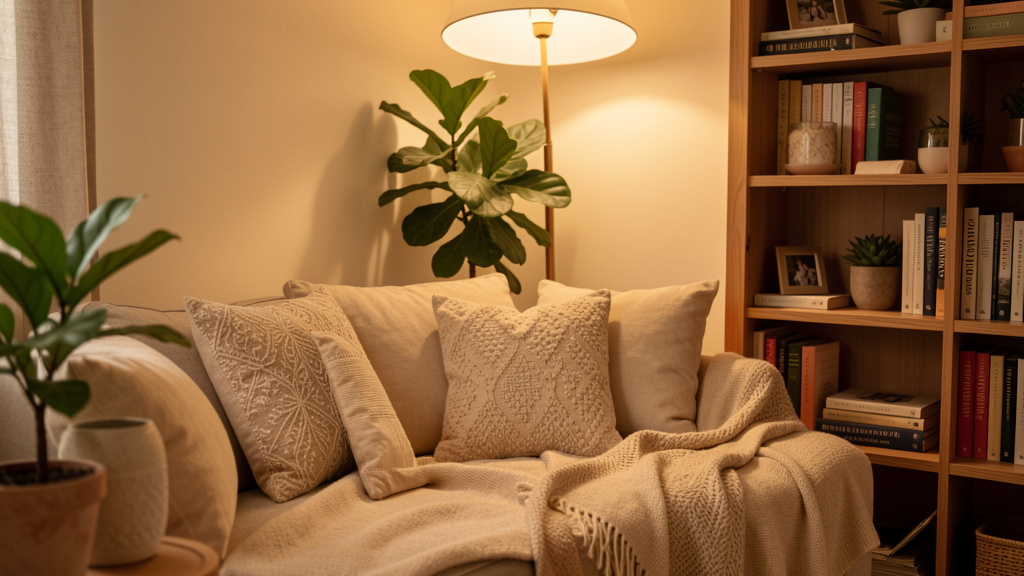
Move beyond Pinterest inspiration with a step-by-step system to transform any corner of your home into a thoughtfully designed sanctuary for daily renewal—no renovation required.
In today’s relentless cycle of notifications, deadlines, and demands, the longing for a true personal retreat has never been more urgent. Yet scrolling through perfectly curated social feeds often leaves us feeling further from peace, not closer. A genuine home sanctuary isn’t about achieving aesthetic perfection or replicating someone else’s serene corner. It is a deliberately crafted environment—however small—that actively supports moments of restoration woven into your daily life. This guide provides a psychologically grounded, sensory-aware, and deeply practical system to design a sanctuary that aligns with your space, rhythm, constraints, and well-being needs. No prior design experience required. No major budget necessary. What follows is a complete, adaptable framework: three interdependent layers (Foundation, Sensory Calibration, Ritual Integration), tailored pathways for real-world constraints, compassionate friction-solving guidance, and science-informed answers to nuanced questions. This is sanctuary design as a sustainable practice—not a one-time project.
Introduction: Why “Just Add Plants” Isn’t Enough
Walk into any bookstore or scroll social media, and you’ll find endless images of minimalist reading nooks, sun-drenched meditation corners, and spa-like bathrooms draped in linen. These visuals spark desire but rarely deliver lasting transformation. Why? Because they focus exclusively on the output—the finished look—while ignoring the essential inputs: your nervous system’s needs, daily behavioral patterns, spatial constraints, and the psychological triggers that either invite calm or amplify anxiety. A throw pillow in sage green won’t support relaxation if the space holds visual reminders of unfinished tasks. A softly glowing lamp won’t quiet mental chatter if the environment remains acoustically chaotic.
True sanctuary design begins not with decor, but with intention rooted in environmental psychology. Decades of research in biophilic design, sensory processing, and spatial cognition confirm that our surroundings directly influence physiological and emotional states. Cluttered visual fields correlate with increased cognitive load. Natural light exposure supports circadian regulation. Textural variety can engage calming physiological pathways. These are not abstract concepts—they are intentional levers we can adjust. A sanctuary is not merely a physical location but a thoughtfully calibrated environment that signals safety and restoration to the nervous system. It is where spatial design aligns with personal well-being.
This guide rejects the myth of the “perfect sanctuary.” Instead, we offer a resilient, adaptable framework designed for real life. Whether you live in a studio apartment, share a home with others, work remotely from a multipurpose room, or have only fifteen minutes a day to reclaim—you will find actionable pathways here. We move beyond vague inspiration to deliver precise, layered strategies you can implement immediately. What follows is a complete system: a three-layer blueprint (Foundation, Sensory Calibration, Ritual Integration), contextual adaptations, friction-aware protocols, and nuanced answers to questions often overlooked. This is sanctuary design as an evolving practice—not a static destination. Let’s begin.
The Sanctuary Blueprint Framework: Three Layers to Transform Any Space
Imagine building a house. You wouldn’t start by choosing paint colors. You’d lay a foundation, frame the walls, install systems, then add finishes. Sanctuary creation follows the same logic. Most attempts falter because they skip straight to aesthetics—the “paint colors”—without establishing the structural integrity beneath. The Sanctuary Blueprint Framework corrects this. It is a sequential, interdependent system of three layers. Each layer builds upon the previous one. Skipping Layer 1 to jump into sensory elements is like hanging art on an unstable wall—it may appear pleasing temporarily, but it won’t sustain its purpose. This framework is built upon established principles in environmental psychology and biophilic design, adapted to be practical across diverse living situations. Its strength lies in universality: the same core principles apply whether you’re claiming a windowsill or converting a spare room.
The Fundamental Principle: A sanctuary is defined not by aesthetics alone, but by the consistent alignment between its physical attributes and the user’s internal state—a space that becomes a reliable anchor for returning to center.
Layer 1: The Foundation – Establishing Physical and Psychological Boundaries
The Foundation Layer addresses the spatial and psychological prerequisites that make deeper sanctuary work possible. Without this layer, sensory elements may feel superficial, and rituals lack containment. This layer answers: Where is this space? What makes it distinct? How does it protect your focus? It is less about what you place in the space and more about how the space functions as a container for restoration.
Why Boundaries Support Psychological Safety
Boundaries—both physical and perceptual—are foundational to psychological safety. In open-plan homes, shared living situations, or compact apartments, the absence of clear boundaries can keep the nervous system in a low-grade state of vigilance, subconsciously monitoring movement, sound, and potential interruptions. Neuroscience indicates that perceived safety is a prerequisite for the parasympathetic nervous system (associated with “rest and digest” states) to engage. A sanctuary without intentional boundaries is like attempting quiet reflection in a high-traffic area—you may close your eyes, but your body remains alert.
Consider a person working remotely from a studio apartment where the desk doubles as a dining and craft station. Adding a plant and a warm lamp (aesthetic layer) may not resolve the underlying tension. Relief often arrives only after implementing Foundation Layer strategies: placing a room divider behind the chair (physical boundary), establishing a consistent “shutdown ritual” of closing the laptop and covering it with a cloth at day’s end (psychological boundary), and communicating clear expectations with housemates. The visual footprint may change minimally, but the functional purpose of the zone transforms. Over time, the body learns: This space now signals transition and restoration.
Step 1: Define the Physical Footprint (Even If It’s Tiny)
You do not need a dedicated room. Sanctuary is measured in intention, not square footage. The goal is to claim a defined zone—however small—that your brain can consistently associate with restoration.
- The Minimum Viable Sanctuary (MVS): Identify the smallest viable footprint. This could be:
- A single armchair + side table (3′ x 3′)
- A cleared windowsill with a cushion (2′ x 1′)
- The floor space beside your bed (4′ x 4′)
- A closet nook with a stool (2′ x 2′)
- A section of balcony or patio (even 2′ x 2′)
Action: Use painter’s tape on the floor to outline your proposed sanctuary zone. Live with the tape for 24 hours. Does it feel intrusive? Does it block household flow? Adjust until the footprint feels feasible, not aspirational. The tape creates a visual cue for yourself and others.
- Creating Perceptual Boundaries in Open Spaces: If walls aren’t an option, use strategic dividers:
- Vertical Dividers: A tall bookshelf (open back allows light flow), a folding screen, a curtain on a tension rod, a tall plant (like a bamboo palm), or a hanging textile.
- Horizontal Cues: A distinct rug that only lives in the sanctuary zone. Stepping onto the rug becomes a transition cue. A change in flooring texture or a dedicated mat serves the same purpose.
- Sightline Management: Position seating so your back is to a wall (a primal safety cue) and you face away from high-traffic areas. If unavoidable, use a small screen or plant to soften direct sightlines to doorways.
Common Mistake: Choosing a divider that creates claustrophobia for you. A heavy, opaque screen might block external distractions but also induce confinement. Test options: Does this divider create calm containment or isolation? Adjust accordingly.
Step 2: Execute the Purposeful Declutter Protocol
Clutter represents unresolved decisions and cognitive load. Research in neuroscience indicates that visual complexity can compete for attentional resources, potentially increasing mental fatigue. Your sanctuary cannot function as a restorative zone if it holds reminders of pending tasks.
This is not about minimalist perfection. It’s about intentional curation. Follow this three-bucket protocol:
- The Sanctuary Zone Sweep: Remove everything from your defined footprint. Wipe surfaces. Start empty.
- The Three-Bucket Sort:
- Bucket A (Sanctuary-Only): Items that exclusively serve restoration in this space (e.g., journal, specific blanket, meditation cushion, one meaningful photo).
- Bucket B (Temporary Resident): Items that belong elsewhere but are currently here (mail, laundry, work files). Relocate these immediately.
- Bucket C (Ambiguous): Items you’re unsure about (“I might need this,” “It was a gift”). Place these in a labeled box stored outside the sanctuary zone. Revisit in 30 days. If untouched, consider donating.
- The 5-Item Rule (For Micro-Sanctuaries): If your footprint is under 4 sq ft, limit visible items to five: 1) Seating surface, 2) One textural element (blanket/pillow), 3) One sensory anchor (small plant, essential oil roller), 4) One ritual object (journal, candle), 5) One visual anchor (small framed image, stone). This constraint encourages intentionality and reduces visual noise.
Why This Works: The protocol shifts decluttering from an emotional decision (“Should I keep this?”) to a functional filter (“Does this item actively support restoration here?”). It honors sentimentality without letting it compromise the space’s purpose. Someone applying this to a small balcony might remove gardening tools and broken furniture (Bucket B), keeping only a cushioned stool, a small succulent, a wind chime, a dedicated tea mug, and a smooth river stone (Bucket A). The transformation stems from clarity, not emptiness. Stepping into that defined zone can trigger a subtle physiological shift—shoulders softening before even sitting down.
Step 3: Establish the Psychological Boundary Ritual
Physical boundaries benefit from reinforcement. A psychological boundary ritual is a consistent, brief action signaling transition: “Sanctuary mode activated.” This leverages well-documented principles of classical conditioning.
- Entry Ritual Examples:
- The Breath Anchor: Take three slow, deep breaths before stepping onto your sanctuary rug or crossing the taped line. Inhale calm, exhale tension.
- The Object Touch: Gently touch a specific object upon entry—a smooth stone, the frame of your divider, a particular leaf on your plant. This tactile cue grounds you.
- The Sound Shift: Play a specific, short sound (30 seconds of a singing bowl tone, a single chime) as you enter. Over time, that sound alone may trigger relaxation.
-
The Phrase: Silently state an intention: “I am here,” “This time is mine,” “Release.”
-
Exit Ritual Examples (Equally Important):
- The Gratitude Pause: Before leaving, name one thing appreciated during the time (e.g., “the warmth of the sun,” “the quiet,” “my steady breath”).
- The Physical Reset: Smooth the cushion, straighten the blanket, close the journal. This provides psychological closure.
- The Transition Breath: Three breaths facing outward, setting an intention for re-entering your day (“Patience with the next task,” “Carry this calm with me”).
Critical Nuance: Rituals must feel authentic to you. If chanting feels forced, skip it. If touching a stone feels unnatural, choose breath. Power lies in consistency, not complexity. Start with one 10-second ritual. Practice it for one week. Notice subtle shifts in how your body enters the space. This ritual is the invisible architecture of your sanctuary—more vital than any decor.
Layer 2: The Sensory Layer – Calibrating Your Environment for Nervous System Support
With the Foundation Layer in place, we refine the sensory experience. This layer is where many guides begin (and end), but without Layer 1, sensory inputs lack contextual power. Here, we intentionally engage sight, sound, touch, smell, and taste to send consistent, supportive signals to the nervous system. This isn’t about overwhelming the space with stimuli; it’s about curating inputs to reduce cognitive load and promote physiological ease. We address each sense not in isolation, but as an integrated system of calm.
The Principle of Sensory Calibration: Why “More” Isn’t Better
Your senses are gateways to your autonomic nervous system. Harsh fluorescent light can signal alertness. Sudden loud noises may trigger startle responses. Rough textures can feel abrasive when depleted. Conversely, warm, diffused light supports evening wind-down. Consistent, gentle sound masks jarring interruptions. Soft textures signal safety. The goal of the Sensory Layer is regulation, not stimulation. We aim for sensory inputs that are:
– Predictable: Minimal sudden changes.
– Pleasant but Subtle: Noticeable enough to anchor, not so strong they demand attention.
– Aligned with Your Intent: Calming for rest, gently supportive for morning focus.
Think of tuning a radio. You’re not blasting static; you’re carefully adjusting the dial to find a clear, steady signal. Your sanctuary should feel like that clear signal—a reliable frequency of calm your nervous system can recognize instantly.
Sight: Crafting a Visually Restful Landscape
Vision processes a significant portion of environmental information. A visually chaotic space can contribute to mental fragmentation. Sanctuary sightlines should minimize “visual noise” and maximize restorative cues.
- Light Quality Over Quantity:
- Natural Light: Maximize it where possible. Position your sanctuary to face a window. Clean the glass. Remove heavy, light-blocking curtains during sanctuary hours. Observe how light moves through the space at different times. Adjust seating to avoid glare or harsh shadows.
- Artificial Light: Avoid cool-white LEDs (5000K+), which mimic midday sun. Opt for warm-white bulbs (2700K or lower). Use layered lighting:
- Ambient: A dimmable floor lamp with a fabric shade (softens shadows).
- Task: A small, adjustable arm lamp for reading (positioned to avoid screen glare).
- Accent: A salt lamp, LED candle, or fairy lights in a glass jar (creates gentle, non-directional glow).
-
Critical Tip: Use dimmer switches or smart bulbs to gradually shift light temperature in the evening (e.g., from 3000K to 2200K over 30 minutes), mimicking natural dusk. No tech? Consciously lower lights as evening approaches.
-
Color and Visual Composition:
- Walls/Surfaces: If painting is an option, consider earthy, muted tones: warm whites, soft clay, sage green, dusty blue. These colors tend to have lower visual vibration. Avoid high-contrast patterns on large surfaces.
- Accents: Introduce color intentionally through textiles or art. A single deep terracotta pillow. A small framed print with muted botanicals. Avoid rainbows of color or clashing patterns—they can create visual tension.
-
The View Matters Most: What do you see when seated? This is critical. If your view is a brick wall, busy street, or cluttered closet:
- Hang a small mirror to reflect light or a pleasant indoor element.
- Place art or a woven tapestry directly in your line of sight.
- Position a thriving plant between you and the undesirable view.
- Use a sheer curtain to soften harsh outdoor visuals while maintaining light.
-
Biophilic Sightlines (Bringing the Outside In):
- Direct Nature: A low-maintenance potted plant (snake plant, ZZ plant, pothos). Position it where you’ll see subtle movement in a breeze.
- Indirect Nature: Art featuring natural landscapes (forests, water, mountains—not chaotic cityscapes). Choose images suggesting “prospect” (a view through the scene) and “refuge” (a sense of shelter).
- Dynamic Elements: A small desktop fountain (visual + sound), a window feeder to attract birds, or simply watching clouds move. Movement in nature is often calming; movement in human environments (traffic, people) can be stressful. Curate accordingly.
Common Mistake: Over-accessorizing. One meaningful object holds more power than ten decorative trinkets. Apply the “glance test”: Sit in your sanctuary spot. Glance around slowly. Does your eye land peacefully on 2-3 points of interest, or does it jump frantically? Remove items until the glance feels calm.
Sound: Designing an Acoustic Cocoon
Sound is processed by primal brain regions before reaching conscious awareness. Unwanted noise (traffic, appliances, voices) can trigger low-grade stress responses. Sanctuary sound design isn’t about absolute silence (which can feel unnerving); it’s about replacing disruptive sounds with supportive ones.
- Sound Masking vs. Sound Blocking:
- Blocking: Use physical barriers. Heavy curtains absorb street noise. A bookshelf against a shared wall dampens neighbor sounds. Acoustic panels (fabric-wrapped foam) on walls reduce echo—helpful in hard-surfaced rooms. Even a thick tapestry helps.
-
Masking: Introduce a consistent, non-intrusive sound layer to cover unpredictable noises. Often more accessible than blocking.
- White Noise: Steady “shhh” sound (like a fan). Good for masking speech.
- Pink Noise: Deeper, balanced spectrum (like steady rain or rustling leaves). Some research suggests pink noise may support focus and rest.
- Brown Noise: Deeper rumble (like distant waterfall). Effective for masking low-frequency traffic noise.
- Nature Sounds: Gentle rain, ocean waves, forest ambiance. Choose recordings without sudden bird calls.
- Instrumental Music: Slow-tempo (60-80 BPM), no lyrics. Cello, piano, ambient electronic. Avoid complex melodies that engage analytical thinking.
-
Practical Implementation:
- Budget Option: A small desktop fan on low setting. Free apps offer customizable soundscapes. A dedicated Bluetooth speaker for sanctuary use.
- Ideal Option: A sound machine with multiple noise color options. Place it behind you or to the side—not directly in front—to create an immersive field.
-
Pro Tip: Record your own sounds. Capture rain on your roof, waves at a local beach, or wind in your backyard trees. Playback feels deeply personal.
-
The Silence Protocol: Schedule 5-10 minutes of intentional silence within your sanctuary time. No music, no noise machine. Just listen. Notice subtle sounds you usually miss: your breath, the hum of the refrigerator, distant birds. This isn’t about achieving perfect quiet; it’s about recalibrating your relationship with sound and building tolerance for stillness. Start small. If silence feels uneasy, return to your sound machine. Gradually extend silent intervals.
Illustrative Scenario: Someone living in a noisy urban apartment might struggle to decompress after work. Combining a thick rug under the chair (reducing floor vibration), heavy curtains over the window (dampening street noise), and a pink noise machine set to “deep rain” positioned behind the seating area can create a perceived acoustic buffer. The consistent sound doesn’t erase the city but provides a calming layer that allows the nervous system to soften. Adding a short silent interval at the end of sanctuary time can further support recalibration.
Touch: Engaging the Body’s Wisdom Through Texture
Touch is a primal sense. Textural input directly influences emotional regulation. Rough, cold, or stiff surfaces can feel abrasive when depleted. Soft, warm, varied textures signal comfort. Sanctuary touch elements should invite gentle interaction and provide subtle sensory feedback.
- The Seating Foundation:
- Chair/Cushion: Prioritize comfort and support. Can you sit comfortably for 15–20 minutes? Add a lumbar roll (a small towel rolled tightly in a sock works) if needed. For floor seating, use a zabuton or thick folded blanket.
-
Textural Layers: Combine 3-4 textures within arm’s reach:
- Soft: A chunky knit blanket, faux fur throw, velveteen pillow.
- Smooth: A silk eye pillow, a polished river stone, a ceramic mug.
- Natural: A woven seagrass basket, a raw wood tray, a linen napkin.
- Weighted: A weighted lap pad (3-5 lbs) or heavy blanket. Deep pressure touch is associated with calming physiological responses for many people.
-
Temperature Awareness:
- Feet: Cold floors can signal alertness. Keep slippers or thick socks nearby. A small sheepskin rug provides instant warmth and texture.
- Hands: Have a warm beverage option (tea, warm water with lemon). The ritual of holding a warm mug is grounding. In summer, keep a cool stone or chilled eye mask accessible.
-
Ambient: Use a small space heater (with tip-over protection) for chilly mornings. A personal fan for warm evenings. Layer blankets for easy adjustment.
-
Interactive Touch Objects (Tactile Anchors):
- Worry Stone: A smooth, palm-sized stone to rub between fingers during anxious moments.
- Fidget Tool: A silicone pop-it, smooth wooden bead bracelet, or kinetic sand in a small container. Provides discreet sensory input.
- Textile Swatch: A small square of favorite fabric (cashmere, velvet) tucked in a journal. Rub it when needing comfort.
- Clay: Keep a small container of modeling clay. Kneading engages hands and provides satisfying resistance.
Why Texture Variety Matters: Monotexture environments (all smooth plastic, all hard surfaces) can feel sterile. Strategic texture variety creates micro-moments of sensory interest without overwhelm. Run your hand over the knit blanket. Feel the cool smoothness of the stone. Notice the weight of the lap pad. These tiny interactions anchor you firmly in the present moment—a core mechanism of mindfulness. Avoid textures that trigger personal discomfort (e.g., scratchy wool). Sanctuary touch must feel inviting, not demanding.
Smell: The Direct Pathway to Memory and Emotion
Olfaction (smell) has direct neural pathways to brain regions involved in emotion and memory. A scent can instantly evoke a feeling of safety or trigger unease. Sanctuary scent design leverages this intentionally, using aroma to cue calm and create associative anchors—while respecting individual sensitivities.
- Natural Scent Sources (Preferred):
- Plants: Lavender (calming for many), jasmine (uplifting yet relaxing), rosemary (clarifying), eucalyptus (clearing). Place near your seating area. Crush a leaf gently to release scent when needed.
- Essential Oils (Used Safely): Important: Never apply undiluted oils to skin. Never ingest. Use a diffuser with water, or place 1-2 drops on a cotton ball tucked discreetly. Start with low concentrations.
- Calming Blend: 3 drops lavender + 2 drops bergamot + 1 drop frankincense.
- Grounding Blend: 3 drops cedarwood + 2 drops vetiver + 1 drop orange.
- Clearing Blend: 3 drops lemon + 2 drops peppermint + 1 drop rosemary (use sparingly; peppermint can be stimulating for some).
- Simmer Pots: On the stove (not in sanctuary, but scent carries): citrus peels, cinnamon sticks, cloves, rosemary sprigs in water. Creates a warm, inviting home scent without synthetic chemicals.
-
Dried Botanicals: Lavender sachets in drawers, a small bowl of dried orange slices and star anise.
-
Avoiding Scent Pitfalls:
- Synthetic Fragrances: Candles, plug-ins, and air fresheners often contain compounds linked to headaches or respiratory irritation for sensitive individuals. They can also cause “scent fatigue.” Opt for 100% beeswax or soy candles with cotton wicks if using candles. An oil diffuser is often a gentler option.
- Overpowering Scents: Less is more. If the scent is immediately strong upon entering, it’s likely too intense. Sanctuary scent should be subtle—a whisper, not a shout. Test: Step out for 2 minutes. Step back in. Can you just barely detect it? Perfect.
-
Personal Sensitivity: If you have migraines, asthma, or chemical sensitivities, skip added scents entirely. Rely on natural ventilation (open window) or the subtle scent of clean cotton/linen. Your sanctuary must feel safe, not triggering.
-
The Scent Anchor Ritual: Pair a specific, subtle scent only with sanctuary time. Diffuse lavender only during evening wind-down. Keep a small vial of bergamot oil to inhale deeply only when entering your sanctuary. Over 1-2 weeks, your brain may form a powerful association: This scent = safety, calm, restoration. This becomes an efficient trigger. On a stressful day, carrying a cotton ball with one drop of your anchor scent can offer a momentary reset.
Principle from Inclusive Design: In trauma-informed and inclusive spaces, user-controlled scent is emphasized. Offer choices rather than imposing a single fragrance. A small tray might hold three options: a lavender sachet, a eucalyptus leaf, a plain cotton ball. Users select only if desired. This principle applies universally: scent must be optional and controllable to feel truly safe. Honor individual responses without judgment.
Taste: The Often-Overlooked Sanctuary Sense
While not central for everyone, taste can be a powerful ritual anchor, especially for morning or evening transitions. The key is simplicity and intentionality—avoiding complexity that adds cognitive load.
- Hydration as Ritual:
- Morning: Warm lemon water in a special mug. The warmth is soothing; the ritual marks a fresh start.
- Evening: Caffeine-free herbal tea (chamomile, lemon balm, passionflower). The act of brewing—measuring leaves, watching steam rise—is part of the wind-down. Use a dedicated sanctuary mug.
-
Hydration Station: Keep a beautiful carafe of water with cucumber slices or mint leaves within the sanctuary zone. Sipping cool water is grounding.
-
Mindful Tasting Moments:
- Place a single piece of dark chocolate (70%+ cacao) on a small dish. Eat it slowly. Notice the snap, the melt, the bitterness. This is a 60-second mindfulness practice.
- A small bowl of almonds or walnuts. The crunch is satisfying.
-
Avoid: Sugary snacks, heavy meals, or anything requiring cleanup that disrupts the sanctuary flow. Taste elements should enhance calm, not create mess or blood sugar fluctuations.
-
The “No-Taste” Option: For many, especially during meditation or deep rest, taste is irrelevant. That’s perfectly valid. Sanctuary design honors your current needs. If taste doesn’t resonate, focus energy on the other four senses. There is no requirement to engage all senses simultaneously. The framework is a toolkit, not a checklist.
Layer 3: Ritual Integration – Weaving Intentional Practices into Your Sanctuary
A thoughtfully designed space remains inert without consistent, intentional use. Ritual Integration is the layer that breathes life into your sanctuary. It transforms the space from a passive location into an active partner in your well-being. Rituals are not grand ceremonies; they are small, repeatable actions that anchor intention to action. They leverage neuroplasticity—each repetition strengthens the neural pathway linking your sanctuary to feelings of safety and restoration. This layer answers: How do I use this space? What happens here? How does it fit into my real life?
Why Rituals Support Consistency
Willpower is a finite resource, depleted by decision fatigue and daily stress. Relying on “I’ll remember to go to my sanctuary when I feel stressed” sets you up for difficulty. Stress can impair the prefrontal cortex—the part of the brain needed to initiate self-care. Rituals bypass this. They are pre-decided actions triggered by consistent cues. “After I pour my morning coffee, I sit in my sanctuary for 5 minutes.” “When I close my work laptop, I light the salt lamp and take three breaths.” Rituals automate restoration, making it accessible even on demanding days.
Rituals also address the “guilt barrier”—the feeling that taking time for yourself is selfish. Framing sanctuary time as non-negotiable self-maintenance (like brushing your teeth) reframes it as essential care, not luxury. It’s not “me time”; it’s “system maintenance time.” This subtle shift in language can reduce internal resistance significantly.
Designing Your Core Sanctuary Rituals
Start with one micro-ritual. Master it. Then add another. Overwhelm is the enemy of consistency. Below are templates categorized by time of day and intent. Mix, match, and adapt.
- The Micro-Restoration Ritual (3-5 Minutes):
- Trigger: Feeling overwhelmed, after a difficult call, pre-transition (work to home).
- Action: Enter sanctuary. Perform Entry Ritual (3 breaths). Sit. Place hands on knees, palms up (receiving) or down (grounding). Close eyes. Breathe naturally for 60 seconds. Notice one sensation in your body (feet on floor, breath in nostrils). Open eyes. Perform Exit Ritual (gratitude phrase). Return to task.
-
Why it Works: Short enough to feel achievable. Focuses on somatic awareness (body sensation), which interrupts rumination. Builds the “sanctuary = quick reset” association.
-
The Morning Anchoring Ritual (7-10 Minutes):
- Trigger: After morning hygiene, before checking phone/email.
- Action: Enter sanctuary with warm lemon water. Sit. Perform Entry Ritual. Spend 2 minutes observing natural light (no phone). Spend 3 minutes journaling: “One intention for today,” “One thing I’m grateful for.” Sip water slowly. Exit with phrase: “I carry this calm with me.”
-
Why it Works: Sets a calm tone before the day’s demands hit. Journaling reduces morning anxiety by externalizing thoughts. Avoiding digital input preserves mental clarity.
-
The Evening Unwinding Ritual (12-15 Minutes):
- Trigger: 60 minutes before target bedtime.
- Action: Dim main lights. Enter sanctuary. Light salt lamp/candle (safely). Perform Entry Ritual. Spend 5 minutes with herbal tea, no screens. Spend 5 minutes gentle stretching or restorative pose (legs-up-the-wall against a wall). Spend 2 minutes reflecting: “One small win today.” Perform Exit Ritual. Proceed to bedtime routine.
-
Why it Works: Creates a clear buffer between “doing” and “sleeping.” Reduces blue light exposure. Gentle movement releases physical tension. Reflection shifts focus from lack to sufficiency.
-
The Weekly Sanctuary Refresh Ritual (10 Minutes):
- Trigger: Sunday evening or Monday morning.
- Action: Enter sanctuary. Remove all items. Wipe surfaces. Refresh water for plants. Fluff cushions. Replace tea supplies if needed. Light a candle (safely) for 2 minutes while setting intention for the week. Extinguish candle. Step out feeling the space is “reset.”
- Why it Works: Prevents clutter creep. Reinforces ownership and care. The physical act of refreshing mirrors mental renewal.
Troubleshooting Ritual Consistency
- “I keep forgetting”: Attach the ritual to an existing habit (habit stacking). “After I [brush my teeth], I will [do my 3-minute sanctuary breath].” Place a visual cue: a small stone on your pillow (for morning ritual), a note on your laptop lid (“Sanctuary after shutdown”).
- “I don’t have time”: Start with 90 seconds. Set a gentle timer. Consistency of showing up matters more than duration. Two minutes daily builds stronger patterns than 30 minutes once a month.
- “It feels forced”: Simplify further. Remove steps. Focus on the feeling you want (calm, clarity) rather than perfect execution. Adjust until it feels authentic. Does journaling feel like homework? Swap for silent sitting. Does tea feel like a chore? Swap for sipping water.
- “My family interrupts me”: Communicate boundaries clearly. “From 7:00-7:15 p.m., this is my quiet time. I’ll be available after.” Use a visual signal: a specific pillow placed on the chair (“Sanctuary Time”), or close the curtain on your divider. Start with times when interruptions are least likely (early morning, during naptimes). Negotiate reciprocal quiet time.
The Ritual Evolution Principle
Your sanctuary rituals are not static. They must evolve with life seasons. A new parent’s 3-minute breath ritual is deeply valuable. A retiree might enjoy a 30-minute morning meditation. During high-stress periods (job transition, illness), simplify rituals to the absolute core: “Enter space. Breathe three times. Leave.” During stable periods, expand: add journaling, longer meditation, creative expression. Check in quarterly: “Is this ritual still serving me? Does it feel nourishing or burdensome?” Give yourself permission to adapt, pause, or restart. The goal is sustainable integration, not rigid adherence. A sanctuary that bends with your life is a sanctuary that lasts.
Adapting the Framework to Your Unique Constraints
Theory gains value through practical application. The true strength of any framework lies in its resilience under real-world constraints. Below, we address common barriers—and provide precise, actionable adaptations. These are not compromises; they are intelligent applications of core principles. Your constraints are not obstacles to sanctuary; they are the very parameters that will make your sanctuary uniquely powerful and sustainable.
“I Only Have a Closet-Sized Space” (Micro-Sanctuary Mastery)
When space is minimal, intentionality becomes essential. Every inch must earn its place. The Foundation Layer is more critical here—boundaries are everything.
- Footprint Strategy: Claim vertical space. Install a single floating shelf at seated eye level. This becomes your entire sanctuary surface. On it: one small plant, one ritual object (stone, photo), one sensory item (essential oil roller). Your seating is a foldable stool stored outside the zone, or you sit directly on the floor with a dedicated cushion stored nearby. The “rug” is a 12″x18″ piece of faux sheepskin that rolls up.
- Boundary Reinforcement: Use a tension rod across the doorway with a lightweight, opaque curtain (linen, cotton). Closing the curtain is your powerful Entry Ritual. The physical act of drawing the curtain signals transition. Add a small hook inside for sanctuary-only items (eye mask, journal).
- Sensory Calibration for Micro-Spaces:
- Sight: A small battery-operated LED candle (flickering effect) provides warm light without heat/fire risk. A tiny mirror on the back wall reflects light and creates illusion of depth.
- Sound: A single earbud (not both—maintains situational awareness if needed) playing pink noise or a calming track. Or, a miniature desktop fountain (4″ tall) for gentle sound and visual movement.
- Touch: Keep your weighted lap pad folded on the shelf. The texture of the curtain fabric itself becomes a tactile anchor—run your fingers over it upon entry.
- Smell: A single drop of essential oil on the curtain fabric (test for staining first) or on a cotton ball tucked in a small mesh bag hung on the rod. Subtle and contained.
- Ritual Design: Micro-sanctuaries thrive on ultra-short rituals. “Draw curtain. Sit. Breathe 60 seconds. Open curtain.” That’s it. The power is in the consistency of the boundary ritual. Someone working long shifts might use a tiny closet this way: “Two minutes behind that curtain resets my nervous system between tasks. It’s not about the space; it’s about the ritual of closing the door on the chaos.”
“My Budget is Under $100” (Resourceful Sanctuary Creation)
Sanctuary is an investment in well-being, not a shopping list. The most impactful elements often cost little or nothing. Focus spending on one high-leverage item; source the rest creatively.
- The $100 Allocation Strategy:
- Priority 1 (Non-Negotiable): Comfort. Spend $40-$60 on one item that directly supports your body: a high-quality lumbar cushion, a thick floor cushion (zafu), or a weighted lap pad. Physical discomfort undermines sanctuary potential. This is the wisest investment.
- Priority 2 (High Impact): Light. Spend $20-$30 on a warm-white (2700K) dimmable LED bulb or a simple plug-in dimmer switch. Transforming harsh light has immediate psychological impact.
- Priority 3 (Sensory Anchor): Spend $10-$20 on one intentional item: a small low-light plant (snake plant from a local nursery), a natural beeswax candle, or a set of essential oils (lavender, bergamot) with a diffuser pad.
-
Remaining Funds: For textiles—a thrifted wool blanket, a remnant of linen fabric for a small pillow cover.
-
Zero-Cost Sanctuary Elements:
- Decluttering: Free. The most powerful sanctuary upgrade costs nothing but time.
- Natural Light: Free. Reposition existing furniture to face a window.
- Nature: Free. Collect a smooth stone on a walk. Place a fallen leaf in a small dish. Open a window for fresh air and birdsong.
- Sound: Free. Use a fan you already own. Find free nature soundtracks online (download for offline use). Record your own rain sounds.
- Rituals: Free. Breathwork, gratitude reflection, mindful observation require no tools.
-
Art: Free. Print a calming image from a free stock site on your home printer. Frame it in a thrifted frame or simply tape it to the wall.
-
Thrift & Repurpose Like a Pro:
- Textiles: Visit thrift stores on discount days. Look for wool blankets (heavy, warm), linen tablecloths (can be cut into pillow covers), silk scarves (hung as wall art).
- Containers: Glass jars (from pasta sauce, pickles) become candle holders, plant pots, or storage for ritual items. Sand the edges smooth.
- Furniture: A sturdy wooden crate becomes a side table. Sand and oil it. A vintage suitcase (thrifted) stores sanctuary items and doubles as seating.
- Community Resources: Freecycle, Buy Nothing groups, neighborhood apps. Someone may be giving away a perfectly good cushion or small shelf. Ask respectfully.
Illustrative Scenario: A student in a dorm room created a sanctuary with $35. She bought a $25 lumbar cushion for her desk chair (Foundation Layer comfort). She used a $5 thrifted bandana as a small wall hanging behind her chair (visual boundary). She repurposed a mason jar as a pencil holder for her journaling pen (ritual object). She used free campus resources for a printed mindfulness script. “My sanctuary is my desk chair turned away from my laptop,” she noted. “The bandana is my curtain. The cushion is my comfort. It costs almost nothing, but it’s the place I go to feel grounded. It’s mine.”
“I Share My Home With Others” (Sanctuary Diplomacy)
Creating personal space in a shared environment requires communication, creativity, and mutual respect. The goal isn’t isolation; it’s negotiated restoration.
- The Boundary Conversation Framework:
- Frame Positively: “I’m creating a small space/time for myself to recharge so I can be more present and patient with everyone.”
- Be Specific & Time-Bound: “I’d like to use the armchair in the corner from 7:00-7:15 p.m. each evening. During that time, I’d appreciate not being interrupted unless it’s urgent.”
- Offer Reciprocity: “I’m happy to support you having your own quiet time too. When would work for you?”
- Create a Visual Signal: Agree on a non-verbal cue: a specific pillow placed on the chair = “Sanctuary Time,” a small sign on the door, closing a curtain. This reduces the need for repeated verbal reminders.
-
Start Small: Propose a one-week trial. “Let’s try this for a week and check in.” Reduces resistance.
-
Shared-Space Sanctuary Tactics:
- Portable Sanctuary Kit: A dedicated basket containing core items: eye mask, earbuds, small journal, essential oil roller, lap blanket. When needed, take the basket to a quiet corner (even a bathroom with the door locked for 5 minutes). The kit is the boundary.
- Time-Shifting: Claim sanctuary time during natural lulls: early morning before others wake, during lunch breaks if working from home, right after someone leaves for an appointment.
-
Collaborative Sanctuary: Involve others! Create a “family calm corner” with shared rules: “This is a space for anyone to take a breath when feeling big emotions.” Include items for all ages: stress balls, coloring books, a feelings chart. This models self-regulation and builds shared respect. Crucially: Ensure you still have private sanctuary time. The family corner supports emotional regulation; your personal sanctuary supports deep restoration. Both are valuable.
-
Navigating Resistance: If met with skepticism (“Why do you need that?”), avoid defensiveness. Reiterate the benefit to the household: “When I take this short time to reset, I’m less irritable and more engaged afterward. It helps our whole home feel calmer.” Focus on observable outcomes. If resistance persists, start quietly. Use your portable kit during natural breaks. Let positive changes in your demeanor become the evidence. Actions often speak louder than explanations.
“My Sanctuary Must Pull Double Duty” (Multi-Functional Space Integration)
Most of us don’t have rooms to spare. Your sanctuary might be your bed, your home office chair, or your kitchen table. The key is context switching—using rituals and micro-adjustments to signal the space’s changing purpose.
- Bed-as-Sanctuary Protocol:
- Critical Boundary: To support both sleep hygiene and sanctuary integrity, it is strongly recommended to reserve your bed for sleep and sanctuary rituals only, avoiding work or screen-based activities.
- Sanctuary Activation: Upon waking, make the bed neatly. This “resets” it from sleep space to potential sanctuary space. For evening sanctuary time: sit upright against the headboard (not lying down). Use a dedicated lap desk for journaling. Keep sanctuary-only items in a bedside drawer (eye mask, journal, calming oil). Perform a distinct Entry Ritual (e.g., placing a specific pillow behind your back). When sanctuary time ends, remove all items, fluff pillows, and mentally “close” the space. The physical reset reinforces the psychological boundary.
-
Note: If you struggle with insomnia, consider using another location for sanctuary time to avoid associating the bed with wakefulness.
-
Home Office Sanctuary Integration:
- Physical Shift: At the end of work, perform a “shutdown sequence”: Close all tabs. Organize desk surface. Cover laptop with a cloth (psychological boundary). Turn chair 90 degrees to face away from the desk. This physical reorientation is critical. Your body now faces a different “space.”
- Sensory Shift: Change the lighting (turn off task lamp, turn on warm ambient light). Swap your work mug for your sanctuary mug. Apply a drop of calming oil to your wrists.
-
Ritual Shift: Your work ritual was “open laptop, check email.” Your sanctuary ritual is “turn chair, light salt lamp, breathe three times.” The distinct actions create cognitive separation. Even 10 minutes in this reoriented space signals “work is done” to your nervous system.
-
Kitchen Table Transformation:
- The 5-Minute Reset: After meals, clear the table completely. Wipe it down. Place one sanctuary item in the center: a small plant, a candle, your journal. This act of clearing transforms the surface.
- Time Blocking: “From 4:00-4:15 p.m., the kitchen table is sanctuary space.” Communicate this. Store sanctuary items in a nearby cabinet for quick access.
- Sensory Anchor: Keep a small essential oil roller (lavender) in the cabinet. Roll on wrists before sitting. The scent becomes the trigger.
The Golden Rule for Multi-Functional Spaces: The transition ritual is MORE important than the space itself. The act of covering the laptop, turning the chair, clearing the table—these deliberate actions create the psychological container that the physical space alone cannot provide. Invest energy here. Someone converted their dining nook: “After dinner dishes, I clear the table, light a single candle in a holder that lives in the hutch, and sit for 10 minutes with tea. My family knows: candle lit = quiet time. It’s not a separate room, but the ritual makes it sacred.”
Navigating Common Frictions and Missteps
Even with a strong framework, friction arises. This section addresses subtle, often unspoken challenges that can derail sanctuary efforts—the internal resistance, practical hiccups, moments of doubt. Consider this your compassionate troubleshooting guide. These insights address patterns many encounter. Recognizing these frictions before they strike builds resilience. You are not failing; you are encountering predictable human experiences. Here’s how to navigate them with grace.
Friction 1: “I Feel Guilty Taking Time/Space for Myself”
This is a common barrier, especially among caregivers, parents, and those raised with self-sacrifice as a virtue. The guilt whispers: “This is selfish. Others need you. You should be productive.” This friction stems from a misperception: that self-care depletes resources available to others. Systems theory and wellness research suggest the opposite.
- Reframe the Narrative: Your well-being is not a luxury; it is foundational to your capacity to care for others. Think of the oxygen mask analogy on an airplane: you secure your own mask first so you can effectively help others. A depleted caregiver cannot provide sustainable care. A stressed parent cannot offer patient presence. Your sanctuary time is not taking away from others; it is investing in your ability to show up fully for them. It is stewardship, not selfishness.
- Start Microscopically: Guilt thrives on perceived magnitude. Reduce the “ask.” Instead of “I need 30 minutes alone,” start with “I am sitting in this chair for 90 seconds while I breathe.” The smaller the commitment, the harder guilt is to justify. Success with tiny actions builds evidence against the guilt narrative.
- Connect to Core Values: Write down your deepest values (e.g., “being a patient parent,” “showing up fully for my team,” “maintaining my health to care for aging parents”). Next to each, write: “How does my sanctuary practice support this value?” Example: “When I take 10 minutes to reset after work, I enter family time with more patience and presence—directly supporting my value of being a connected parent.” Keep this list visible. When guilt arises, reread it. You are aligning action with values.
- Observe the Ripple Effect: Pay attention. After your sanctuary time, do you speak more calmly? Listen more attentively? Handle challenges with greater clarity? These are tangible outcomes. Share them: “Taking those few minutes to breathe really helped me stay calm during that tough conversation today.” Making the benefit visible reduces internal and external resistance.
In contexts focused on caregiver sustainability, reframing sanctuary time as “preventative maintenance” often resonates deeply. Just as you wouldn’t skip maintenance for essential tools, nervous system care is practical stewardship. This non-judgmental framing can dissolve guilt more effectively than abstract concepts.
Friction 2: “It’s Not Working— I Still Feel Stressed in My Sanctuary”
You’ve set up the space, followed the steps, but sitting there feels… empty. Or worse, it amplifies anxiety. This is not failure; it is valuable data. It signals a misalignment between the space/ritual and your current state. Common causes and solutions:
- Cause: Sensory Mismatch. The space feels “off” because an element is triggering, not calming. Solution: Conduct a sensory audit. Sit quietly. Scan each sense:
- Sight: Is there visual clutter you missed? A harsh reflection? An object with negative association? Remove it immediately.
- Sound: Is the noise machine too loud? Is there an underlying hum (fridge, AC) causing irritation? Adjust volume, change sound type, or add sound blocking (rug, curtain).
- Touch: Is the chair uncomfortable? Is the blanket scratchy? Swap one element. Comfort is essential.
- Smell: Is the scent too strong? Causing headache? Eliminate added scent entirely. Rely on fresh air.
-
Action: Change one variable at a time. Test for 2 days. Note subtle shifts in your body (jaw tension, shoulder tightness, breath depth).
-
Cause: Ritual Inauthenticity. The ritual feels forced because it doesn’t resonate with you. Solution: Strip it back to the absolute core. Remove journaling if it feels like homework. Skip the candle if lighting it feels like a chore. Return to the simplest possible ritual: Enter space. Sit. Breathe three times. Leave. Does this feel neutral or slightly better? Build from there. Authenticity > aesthetics. Your ritual must feel like yours.
-
Cause: Unprocessed Emotional Load. Sometimes, sitting in stillness brings suppressed emotions to the surface (anxiety, sadness). This isn’t the sanctuary failing; it’s your nervous system finally having space to process. Solution:
- Short-term: Pair sanctuary time with gentle movement first (5 minutes of stretching, walking in place). Movement helps discharge activation before stillness.
- Medium-term: Add a “release” element to your ritual: Tear up scrap paper with worries and discard. Squeeze a stress ball vigorously for 60 seconds before sitting. This provides an outlet for the energy.
-
Long-term: If emotions feel overwhelming or persistent, seek support from a qualified mental health professional. A sanctuary supports well-being; it is not a substitute for professional care. Recognizing this boundary is wisdom.
-
Cause: Expectation vs. Reality Gap. You expect instant calm, but your mind races. Solution: Adjust expectations. Sanctuary time is not about achieving calm; it’s about practicing return. The value is in noticing your mind has wandered and gently bringing it back to your breath, your stone, the sound of rain. Each “return” is a repetition that strengthens awareness. Celebrate the noticing, not the stillness. Progress is measured in increased awareness, not absence of thought.
Friction 3: “I Can’t Maintain It—Clutter Creeps Back”
Sanctuaries naturally attract “temporary” items: a book left overnight, mail set down “just for a minute,” laundry draped over the chair. This is normal. The goal isn’t perfection; it’s a sustainable maintenance rhythm.
- The 2-Minute Daily Reset: Attach this to an existing habit. After your morning coffee, spend 2 minutes resetting your sanctuary: fluff cushion, return stray items, wipe surface. Before bed, do a 2-minute sweep. Consistency of tiny actions prevents major clutter buildup. Set a timer if needed—knowing it’s only 2 minutes reduces resistance.
- The “One In, One Out” Rule: For every new item you consider adding to your sanctuary zone (a new candle, a second pillow), remove one existing item. This maintains intentional curation and prevents slow creep.
- Designated “Overflow” Zone: Place a small, attractive basket just outside your sanctuary footprint. Label it “Sanctuary Overflow.” Items that don’t belong but can’t be dealt with immediately go here. Once a week, empty the basket. This contains clutter without letting it invade the space.
- Weekly Sanctuary Refresh Ritual (Revisited): Schedule 10 minutes each Sunday. This isn’t cleaning; it’s reconsecration. Wipe surfaces, refresh plants, check lightbulbs, fluff textiles. Light a candle (safely) and set intention for the week. This ritual reinforces ownership and care. It transforms maintenance from a chore into a meaningful practice.
Remember: A slightly imperfect sanctuary used consistently is infinitely more valuable than a perfect sanctuary abandoned due to maintenance pressure. Prioritize use over perfection. If clutter returns, reset with compassion, not criticism. “Ah, life happened. Time for my 2-minute reset.” Self-kindness is part of the practice.
Friction 4: “My Sanctuary Feels Like a Chore, Not a Refuge”
When sanctuary time triggers resistance (“Ugh, I should go sit in my sanctuary”), the framework has become rigid. This friction signals a need for playfulness and adaptation.
- Inject Novelty (The “Sanctuary Spark”): Our brains habituate to stimuli. Introduce tiny, low-effort variations:
- Sight: Rotate a piece of art. Add a single fresh flower. Change the angle of a lamp.
- Sound: Try a new sound type (switch from rain to forest sounds). Play one favorite calming song instead of ambient noise.
- Touch: Swap your blanket for a different texture. Place a cool stone in your hand instead of a warm mug.
- Ritual: Change the order. Do your gratitude reflection before sitting. Try sitting on the floor instead of the chair for one session.
- Follow Curiosity, Not Prescription: Ask yourself each day: “What does my nervous system need right now?” Some days it’s silence. Some days it’s music. Some days it’s stretching. Some days it’s staring out the window. Give yourself permission to adapt the ritual in the moment. Sanctuary is a responsive practice, not a rigid script.
- Reconnect to “Why”: Write your core reason for creating this sanctuary on a small card. Keep it in the space. Read it when motivation wanes: “I created this space to feel calm before bedtime,” “I created this space to reset after work so I can be present with my kids.” Reconnecting to purpose reignites intrinsic motivation.
- Take a Sanctuary Sabbatical: If resistance is strong, pause for 3-7 days. Don’t force it. Often, absence rebuilds desire. Use the break to observe: Do you miss the space? What specifically do you miss? Return with fresh eyes and adjusted expectations. Permission to pause reduces the pressure that fuels resistance.
The most resilient sanctuaries are those treated with flexibility and kindness. They evolve with your needs. They forgive missed days. They prioritize feeling over format. If your sanctuary ever feels like an obligation, it has strayed from its purpose. Return to the simplest question: “What would feel genuinely nourishing right now?” Let that be your guide.
Your Questions, Answered
Sanctuary creation sparks specific, practical questions. Below are ten of the most frequently asked—answered with clarity, nuance, and actionable insight. These address subtle concerns often overlooked in superficial guides.
Q: How do I know if my sanctuary is “working”? What are the signs?
A: Look for subtle, somatic shifts—not dramatic transformations. Within minutes of entering: Do your shoulders drop slightly? Does your jaw unclench? Does your breath deepen without effort? Over days/weeks: Do you find yourself looking forward to sanctuary time? Do you notice slightly quicker recovery from stressors (“That meeting was tough, but I reset faster”)? Do others comment on increased calmness? Trust these micro-signals. They are evidence of nervous system regulation. Environmental psychology research often uses self-reported measures; your own consistent observations are valid data.
Q: Can children have their own sanctuaries? How do I guide them?
A: Absolutely—and it’s a profound gift. For children, sanctuaries should be co-created, not imposed. Start small: “Let’s make a cozy corner just for you.” Use their input: favorite colors, stuffed animals, textures. Keep it simple: a tent made of chairs and a blanket, a dedicated cushion in a quiet closet nook, a “calm-down kit” (stress ball, glitter jar, favorite book). Frame it positively: “This is your special place to feel big feelings or take a quiet break.” Model using your own sanctuary. Never use it as punishment (“Go to your calm corner!”). Instead, offer it as a tool: “Would your calm corner help right now?” This teaches emotional regulation skills that last a lifetime.
Q: I live somewhere with no natural light (basement apartment, windowless room). Can I still create a sanctuary?
A: Yes—light quality becomes even more critical. Prioritize full-spectrum light bulbs (2700K-3000K) that mimic natural daylight cycles. Consider a light therapy lamp (10,000 lux) for 15-20 minutes upon waking to support circadian rhythm—place it on your sanctuary shelf while you sip tea. Maximize reflected light: position a mirror opposite your main light source. Incorporate biophilic elements intentionally: thriving low-light plants (ZZ plant, snake plant), nature sounds, natural textures (wood, stone, wool). Focus intensely on the other senses—sound masking, comforting textures, calming scents—to create balance. The sanctuary’s psychological boundary (ritual, defined footprint) becomes your primary anchor. Many find that a thoughtfully crafted environment in a light-limited space provides deep refuge precisely because it is a deliberate creation of calm.
Q: What if I share a bedroom and can’t have a dedicated sanctuary zone?
A: Portable and temporal strategies are key. Create a “sanctuary kit” in a small basket: eye mask, earplugs or noise-canceling headphones, a small journal, a calming essential oil roller. Your sanctuary time happens in bed but with clear boundaries: “From 8:30-8:45 p.m., I am using my sanctuary kit. Please do not interrupt unless urgent.” Use the visual signal of putting on the eye mask. Alternatively, claim temporal sanctuary: “I take my 10-minute sanctuary time in the living room after dinner while my partner handles bedtime.” Communicate clearly and negotiate reciprocal time. If space allows, even a single armchair in a corner with a dedicated throw blanket can serve as a shared-but-respected zone with agreed-upon signals.
Q: Are there scents or sounds that are universally calming, or is it all personal?
A: While individual preferences vary greatly (due to personal history and culture), some anchors show broad resonance in research. For scent: lavender is frequently associated with relaxation, though some find it medicinal. Citrus scents (bergamot, orange) often uplift without overstimulating. For sound: pink noise (steady rain, rustling leaves) and low-frequency nature sounds (ocean waves) show efficacy in masking disruptive noise for many. However, personal association trumps general research. If lavender reminds you of a hospital, avoid it. If rain reminds you of a difficult memory, choose forest sounds. Always prioritize your own nervous system’s response. Test scents/sounds outside sanctuary time first. If your body relaxes (deepened breath, softened muscles), it’s a candidate. If tension arises, discard it without judgment. Your sanctuary must feel safe to you.
Q: How often should I use my sanctuary to see benefits?
A: Consistency outweighs duration. Daily micro-doses (3-5 minutes) create stronger patterns than weekly hour-long sessions. Aim for “minimum viable consistency”: What is the smallest, most achievable frequency you can sustain? For many, that’s “every weekday morning for 5 minutes.” For others, “twice a week after work.” Start there. Research on habit formation suggests that consistent repetition over several weeks supports integration. Don’t aim for perfection. Missing a day isn’t failure; it’s data. Notice what disrupted you and adjust. The goal is sustainable integration into your life rhythm. Even using your sanctuary 3 times a week reliably will yield noticeable benefits in stress resilience over several weeks.
Q: Can my sanctuary include technology (phone, tablet)?
A: Proceed with caution. Technology is often designed to capture attention and blur boundaries. Generally, keep technology out. However, strategic, limited use can support sanctuary goals:
– Allowed: A dedicated tablet only loaded with calming apps (guided meditations, nature sounds), used with airplane mode on. A smart speaker only for playing pre-selected soundscapes (no voice commands that invite distraction).
– Strictly Avoid: Phones (notifications, endless scroll), laptops, TVs. The temptation to “just check one thing” shatters the sanctuary container.
– Critical Rule: If technology enters, it must serve a single, pre-defined purpose (play sound X) and be removed immediately after. Never use it for browsing, social media, or work. For most people, a tech-free sanctuary yields significantly greater restoration. If you feel you “need” tech to relax, explore what underlying need it’s meeting (boredom? anxiety?) and address that directly with a non-tech ritual (fidget tool, journaling prompt).
Q: What’s the difference between a sanctuary and just a tidy corner of my house?
A: Intention and ritual. A tidy corner is a passive location. A sanctuary is an active system. The tidy corner lacks the deliberate sensory calibration (specific light temperature, curated sound), the psychological boundary ritual (entry/exit practices), and the consistent, purposeful use. You might sit in a tidy corner and still feel work stress because the space hasn’t been “coded” by your nervous system as safe. The sanctuary framework intentionally layers physical boundaries, sensory inputs, and ritual actions to create a powerful associative anchor: This specific combination of cues = safety, restoration, return to self. It’s the difference between a room and a refuge.
Q: I tried meditation apps in my sanctuary but felt more anxious. What now?
A: This is common. Guided meditations can feel demanding (“Am I doing it right?”), and voice guidance can be intrusive when depleted. Sanctuary time does not require meditation. Shift focus to somatic (body-based) anchors:
– Breath Awareness: Simply notice your natural breath—no need to change it. Count 5 inhales/exhales.
– 5-4-3-2-1 Grounding: Name 5 things you see, 4 things you feel (texture of chair, feet on floor), 3 things you hear, 2 things you smell, 1 thing you taste.
– Object Focus: Hold your worry stone. Feel its weight, temperature, texture. When mind wanders, return to the stone.
– Silent Sitting: Set a gentle timer for 3 minutes. Sit. Stare at a plant or candle flame (safely). No goal. Just be.
Release the expectation of “clearing your mind.” The goal is noticing without judgment. If apps increase anxiety, set them aside. Your sanctuary practice is valid without them. Start with 60 seconds of silent sitting. Gradually extend only if it feels nourishing.
Q: How do I handle seasonal changes (winter darkness, summer heat) affecting my sanctuary?
A: Sanctuary design is dynamic. Build seasonal flexibility into your framework:
– Winter (Dark/Cold): Prioritize warmth and light. Add a soft throw blanket. Use warmer light bulbs (2200K amber). Incorporate cozy elements: a small safe candle (LED if concerned), warm beverages. Focus rituals on inward reflection. Open curtains during daylight hours to maximize natural light exposure.
– Summer (Bright/Hot): Prioritize coolness and airiness. Use lighter textiles (linen, cotton). Keep a chilled eye mask or cool stone accessible. Use fans for gentle airflow and sound. Incorporate refreshing scents (peppermint sparingly, citrus). Position sanctuary away from direct afternoon sun. Focus rituals on lightness and release.
– General Rule: Conduct a quarterly “Sanctuary Seasonal Check-In.” Ask: “What does my body need most right now?” Adjust one sensory element accordingly. This practice of responsive adaptation keeps your sanctuary relevant and deeply attuned to your lived experience.
Conclusion and Your Next Step
Creating a home sanctuary is not a destination you reach; it is a practice you cultivate. It is the daily choice to honor your need for restoration, to listen to the subtle whispers of your nervous system before they become urgent signals, and to build a tangible anchor of calm within the beautiful complexity of life. You have now been equipped with a complete, resilient framework—the three interdependent layers of Foundation, Sensory Calibration, and Ritual Integration—along with precise adaptations for your unique constraints and compassionate strategies for navigating inevitable frictions. This is more than a design guide; it is a methodology for weaving intentional moments of peace into the fabric of your everyday existence.
Let’s crystallize the journey:
1. The Foundation Layer is your essential base: Defined boundaries (physical and psychological) and intentional decluttering create the container of safety. Without this, deeper work lacks stability.
2. The Sensory Layer speaks your nervous system’s language: By deliberately calibrating sight, sound, touch, smell, and taste, you send consistent, supportive signals that bypass cognitive resistance and engage physiological pathways of calm.
3. Ritual Integration bridges design and daily life: Small, repeatable actions transform your space from a passive location into an active partner in well-being, leveraging neuroplasticity to build lasting resilience.
This framework thrives on imperfection. Your sanctuary will evolve. Some days it will feel deeply nourishing; other days, you’ll sit there distracted. Both are part of the practice. Release the myth of the “perfect sanctuary.” Embrace the reality of the living sanctuary—one that bends with your life, learns from missteps, and grows more potent with consistent, compassionate use. The goal is not a Pinterest-perfect corner; it is a reliable touchstone you can return to again and again, a place where you remember your own center.
The 24-Hour Rule: Your Tiny, Transformative Action
Knowledge without action remains potential. Today, within the next 24 hours, take one microscopic step. Do not aim for completion. Aim for initiation. Choose only one of these:
– If you have no space claimed: Use painter’s tape to outline a 3’x3′ zone on your floor. Live with the tape for 24 hours.
– If you have a space but it’s cluttered: Set a timer for 2 minutes. Remove only items that do not belong (mail, dishes, work files). That’s it.
– If your space is ready but unused: Tonight, sit in your sanctuary for 90 seconds. Breathe three times. That is a complete success.
This tiny action breaks the inertia of “someday.” It builds evidence that you can do this. It creates momentum. Tomorrow, you may choose another tiny step. But today, honor this single action. It is the seed from which your sanctuary grows.
The Big Picture: Sanctuary as a Ripple
Your personal sanctuary is not an island of calm in a sea of chaos. It is a source. Each time you step into that space and recalibrate your nervous system, you carry that restored state back into your world. You respond with slightly more patience to your child. You listen with slightly more presence to your colleague. You make decisions with slightly more clarity. This is how individual restoration fuels collective well-being. In a world that often feels fractured, choosing to cultivate peace within your own environment is a quietly revolutionary act. It is a declaration that your well-being matters—and that from a place of genuine restoration, you have more to offer the people and causes you care about.
You now hold the blueprint. The materials are already within your reach—your breath, your attention, the space you inhabit. Begin not with grand gestures, but with one intentional breath in one intentionally claimed corner. Trust the process. Be kind to yourself. Your sanctuary awaits—not as a perfect destination, but as a faithful companion on the journey of living well.
Explore Our Complete System:
Biophilic Design Principles for Urban Dwellers | The Science of Color in Home Environments | Minimalist Sanctuary: Creating Calm in 100 Square Feet | Sensory Tools for Anxiety Relief at Home | Daily Rituals to Anchor Your Sanctuary Practice | The Caregiver’s Guide to Micro-Restoration | Decluttering with Compassion: A Room-by-Room Framework